A Reflection on My Journey at UIII
A Reflection on My Journey at UIII
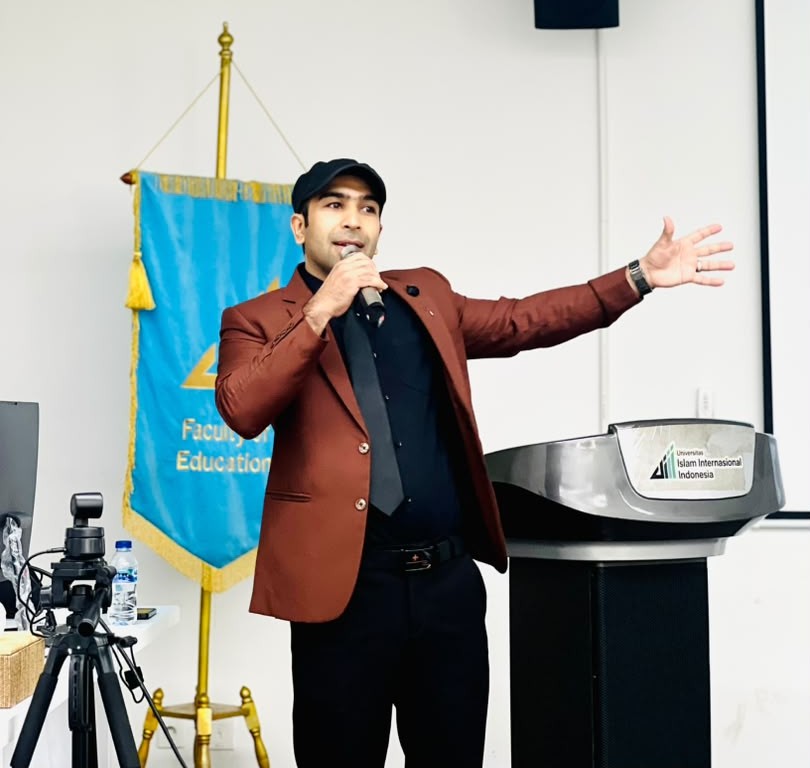
By Mohammad Dawood Alkozay (M.A in Education batch 4 student)
I still remember, as if it happened only yesterday, the day I held my ticket and my visa in my hand, ready to travel to Indonesia. That feeling has not faded from my memory even a little bit, although now, when I look back, I cannot believe that it has already been two years since that day. Time here has passed so fast, faster than I ever expected. Maybe it is because Indonesia does not have four different seasons like my home country, so the days blend into each other without me noticing. Or maybe, and I think this is the real reason, it is because I have been happier here than I thought I would be, and happiness always makes time move quickly without permission.
Since I was young, it had always been my dream to study abroad one day and to know, with my own eyes and ears, what it truly means to live inside an international community, surrounded by people from every corner of the world. I have always held the belief that human beings do not learn only from the pages of a book. We learn, perhaps even more, from experience and from meeting people who are different from us. To me, every person is like a book waiting to be read, because every person carries their own ideas and their own beliefs inside them, and once we open ourselves to interaction with them, a new window opens in our mind that shows us a way of thinking we had never considered before.
Honestly speaking, when I first started this program, I was not very interested in the field of Education itself. My heart and my mind were somewhere else. But slowly, day by day, I began to learn things that I could never have learned if I had not come to Indonesia. Most of what I gained did not come only from my lecturers or from the articles I read, though those were valuable too, but from the interactions I had with different individuals around me. I built friendships here, real friendships, the kind that I believe will remain with me until the end of my life. At the same time, the lessons I received from my professors and from the books they gave me opened new horizons in the way I see the world. They deepened my understanding of education, of how important it is for mankind, and of how much it contributes to shaping individuals who can, in turn, shape a better society.
Beyond the classroom, living in Indonesia taught me lessons of a more practical kind, lessons that no amount of money could ever buy, no matter how much I paid for my studies. Here, I learned the value of things I had always taken for granted back home. Cooking my own food, washing my own clothes, cleaning my own room, going out to buy groceries, all these small and ordinary tasks made me finally understand how much time and effort my mother and my sisters had been saving for me all those years, quietly, without me ever noticing. I did not know the true value of what they did for me until I had to do it all by myself, far away from them. There is a well-known saying in the Persian language, which, translated simply, means that a man cannot become a complete man without traveling. I feel, now, that I have become more complete, and that I have gained a kind of maturity that I believe will help me live a happier and more grounded life once I return to my country.
I truly believe that studying here will open many doors for me in the future, even though I come from a country that has suffered from war for a long time, where finding proper employment is never an easy task. But even if those doors do not open as I hope, I will never regret the decision I made to come and study at UIII. What I have learned here, I would not exchange for millions of dollars. I am deeply thankful to the administration of UIII for giving me this opportunity, and I am equally thankful to my instructors, who I once thought were not doing enough to help me, but whom I later understood were doing exactly what a teacher should do.
I remember, for instance, during my thesis writing I went to my first thesis supervisor, with a question about which theory I should use for my research. Instead of simply telling me the answer, he would point to a book on his shelf and ask me to read it myself. At first, I found this frustrating, even a little strange, and I wondered why he would not simply name the correct theory and save my time. It was only later that I came to understand that what he was doing was, in fact, the right way to teach. By guiding me toward books instead of giving me easy answers, he was showing me the most practical way to learn how to think and work as a proper researcher. I once believed this method was a waste of time, but now I know how much I gained from those very books he recommended. There are many more stories like this one that I wish I could share, but the limits of this reflection do not allow me to write them all here.
As I sit here now, trying to gather all these memories into words, I realize that no reflection, however long, could ever truly capture what these years in Indonesia have given me. UIII was not only a place where I studied for a degree; it was a place where I grew, quietly and slowly, into a person I did not know I could become. I came here as a student searching for knowledge, but I am leaving as someone who has also found friendship, patience, humility, and a deeper love for learning itself. Whatever the future holds for me, whether the doors of opportunity open easily or not, I will always carry this chapter of my life close to my heart. To Indonesia, to UIII, and to everyone who walked a part of this journey with me, I owe a debt of gratitude that words alone cannot repay.

Learning to Look Beyond the Individual: Reflections on the Thesis Journey
Learning to Look Beyond the Individual: Reflections on the Thesis Journey
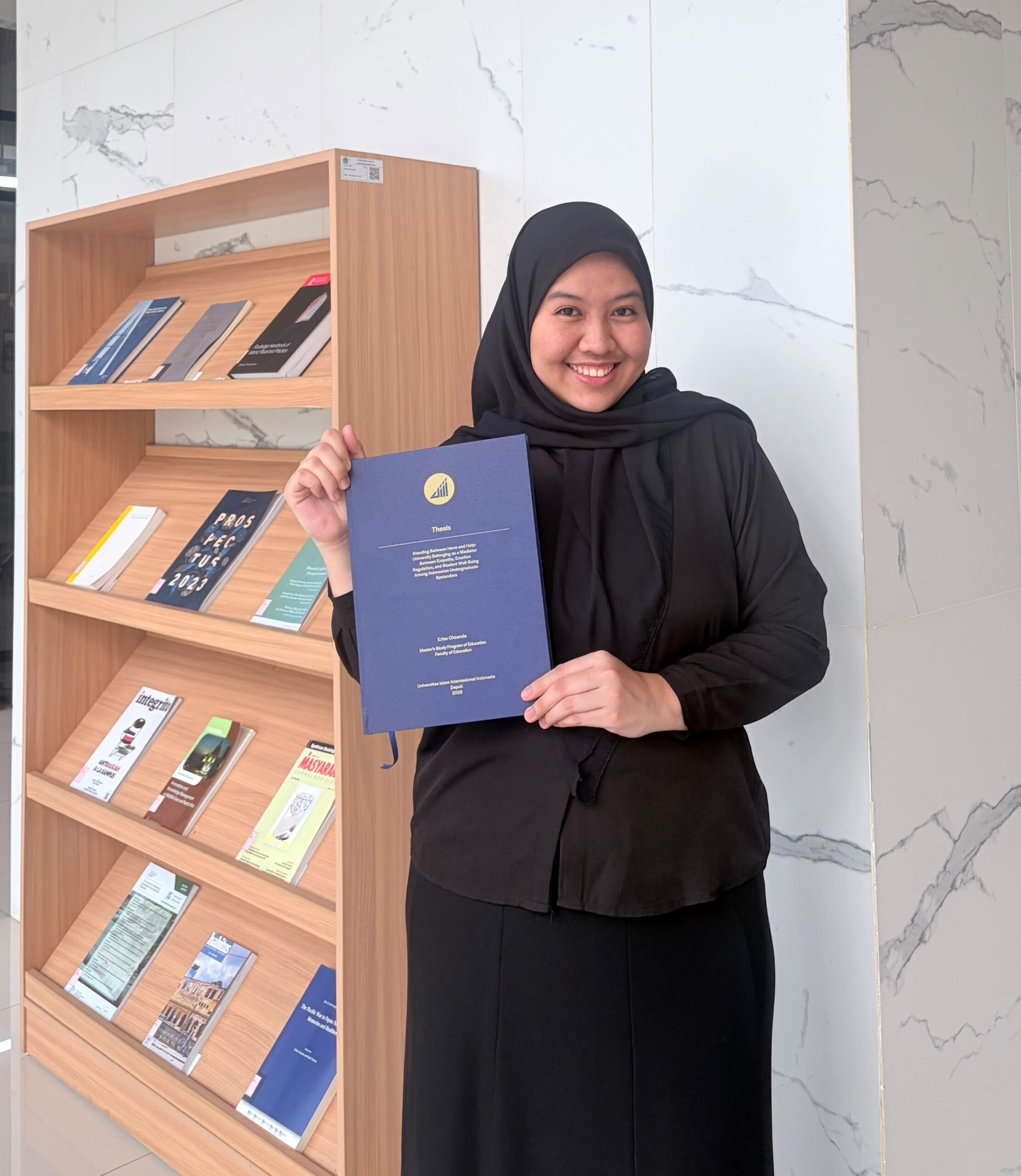
by Erisa Oksanda
The idea of my thesis research topic came from the discomfort about the issue of bullying in higher education in Indonesia. Bullying in educational settings was always concerning for me and as I read more, I noticed many discussions centered only on victim and perpetrator, while few research discusses bystanders in the dynamic of bullying. The concern about bullying slowly becomes curiosity and leads to research ideas.
Having an interesting idea was only the beginning of my thesis journey. “Bystander” turned out have a broader concept than I expected. I spent some time to define what I wanted to study and considering the time so I can realistically finish my thesis on time. Throughout the process, my conceptual framework also changed several times as I got more insight from the reading material that I found and started to question my understanding. In this journey, I am lucky to have Dr. Charyna as my supervisor who always patiently guided me to untangle my confusion. Beside constructing a suitable framework for my thesis, I also need to find the appropriate instrument to measure my variables within the framework. This phase felt like another roller coaster ride for me. I feel lucky to have had Dr. Bambang as my supervisor, who patiently guided me throughout the process, from finding instruments to reporting my findings.
The results were probably the part of the thesis that surprised me a lot. Some of my findings came out different from what I had expected based on previous literature, particularly previous literature conducted outside the Southeast Asian context. For instance, my finding showed that 80% of the bystanders in my study reported that they had helped a victim of bullying at least once during their time in the university. This was interesting because previous literature I found described bystanders as being reluctant to intervene. Instead of simply seeing my finding as contradictory, I started wondering whether it was telling me something about how we define bystanders and how bystander behavior may be shaped by the Indonesian educational and cultural context.
This was also where I felt my perspective as a researcher started to develop. My undergraduate background in Psychology has taught me to think about individuals, psychological constructs, theories, and measurement. That background was helpful when developing my thesis framework and working with psychological instruments. However, studying Education encouraged me to look beyond the individual. I began to ask how psychological processes occur within educational environments and relationships. In my thesis, empathy and emotion regulation were not simply individual psychological characteristics, they were connected to students’ experiences as members of a university community and to how they responded to bullying around them.
I feel that my thesis journey is not only a process to earn another degree but also a transition between the two fields. In Psychology, I was often interested in understanding why individuals think, feel, or behave in certain ways. Through education, I became increasingly interested in how those processes are shaped by context. The bystander became particularly meaningful to me because a bystander is not simply an individual who possesses certain psychological characteristics. A bystander is also a student, a peer, and a member of an educational community who has to make decisions within a particular social environment.
Looking back, I do not think I could have predicted how this thesis would develop when I first brainstormed the idea. There were many moments of confusion, methodological challenges, unexpected findings, and countless discussions with my supervisors. Yet, those challenges were also what made the process meaningful. My supervisors' guidance helped me move from a broad concern about bullying to a focused research question, from uncertainty about measurement to conducting pilot testing to collecting the primary data, and finally from simply reporting results to asking what those results might mean.
Most importantly, I learned that completing a thesis is not only about producing a final document. It is the process where I am starting to question definitions, reconsider assumptions, and recognize when a result opens a new question rather than providing a final answer. My thesis writing journey has made me realize that I do not want to look at human behavior only as an individual phenomenon. I want to understand people within the contexts in which they learn, interact, belong, and grow. In that sense, this thesis has been not only an academic project, but also an important part of discovering what kind of researcher I want to become.
Becoming a Researcher, One Revision at a Time
Becoming a Researcher, One Revision at a Time
By Lakhaula Sahrotul Aulia
My thesis journey began around July 2025, when I started brainstorming what I wanted to study. Since the Indonesian government launched its climate change education guidelines at the end of 2024, I have been interested in exploring climate change education. However, I quickly learned that having an interesting idea was not enough. I needed to understand what had been studied, where the gaps were, and, most importantly, what could actually be investigated and measured.
This was when the literature review became both exciting and overwhelming. As I read, my conceptual and theoretical frameworks developed alongside each other, but my ideas kept changing. I explored misconceptions, reconsidered my variables, questioned how they should be measured, and even considered a mixed-methods approach before deciding to remain with a quantitative design. Conversations with several lecturers helped me see my research from different perspectives, but ultimately, I had to keep questioning my own choices. It took me ten revisions before I finally arrived at my final conceptual framework, each revision was accompanied by extensive literature review.
Looking back, determining my variables and figuring out how to measure them was probably the most challenging part of my thesis journey. A research idea can sound convincing in theory, but quantitative research requires those ideas to become measurable constructs. I often felt alone in this process because everyone was busy developing their own research.
Once my framework was finalized, however, the literature review became much easier to write because I had already read and organized so much. Even before having an official thesis supervisor, I was grateful that UIII lecturers were always open to discussion. That culture of intellectual generosity became an important part of my learning experience.
While many people felt relieved after the proposal seminar, those of us conducting quantitative research were entering another demanding stage: instrument adaptation. Finding a validated instrument was only the beginning. We still needed to translate it, conduct expert judgment, and pilot test it to ensure validity and reliability. I completed my expert judgment during the last week of Ramadan and remain deeply grateful to the experts who generously gave their time and expertise.
My instrument required two rounds of pilot testing. While some of my friends could proceed to their main data collection after one pilot, I had to revise several items and conduct another round. I felt left behind and had to postpone my main data collection by approximately two weeks. But I did it anyway. Throughout this process, A/Prof. Bambang was incredibly responsive whenever I reported my Rasch analysis, helping me move quickly to the next stage.
Then came data collection, which became another unexpected challenge. My study required participants from twelve universities, while I had almost no connections within PGPAUD or PIAUD departments because my own background was in science education. I was genuinely worried that I would not reach my required sample size.
So, I tried everything I could: asking friends for contacts, messaging student associations on Instagram, searching university websites, contacting lecturers through email, and eventually recruiting research assistants. I never expected to have sixteen research assistants across twelve universities. Together, they helped collect data from 521 participants. Considering my limited positionality and connections within the field, this remains one of the achievements I am most proud of.
After data collection, the challenges continued. I had to repeat my analyses several times because of small but consequential mistakes: entering the wrong table code in Winsteps, changing a Likert scale incorrectly, or forgetting to reverse-code an item. Sometimes, I had to start the analysis again from the beginning. It was incredibly frustrating. When I told Dr. Destina how overwhelmed I was, she advised me to step away and return with a fresh mind. So I stopped working for a day to cry, spent a couple of days doing almost nothing, and, admittedly, bothering my friends.
Strangely enough, when I returned, the analysis went much more smoothly. I learned that data analysis requires not only technical competence but also a clear mind. During this stage, Dr. Bambang provided crucial technical support, while Dr. Destina provided the moral support that kept me going. Both were essential to completing my thesis.
The final challenge was writing the discussion. By then, I was honestly tired of my own research. I already knew my results, so returning to the literature felt exhausting. Yet this stage reminded me why all those months of reading had mattered. I had organized my papers by theme, renamed them so they were easier to find, highlighted them, and carefully stored them in Zotero. Suddenly, finding the literature I needed was much easier. My past overthinking self had, in a way, made my future self's work easier.
More broadly, I realized that every course I took at UIII eventually led me to this thesis. What I learned about paradigms, methodology, measurement, analysis, and interpretation became part of how I designed and conducted my own research. The high standards maintained by UIII lecturers challenged me to take research seriously and gradually gave me confidence in my own abilities.
This thesis also helped me secure a job before I even graduated from my master's degree, and for that, I am especially grateful to Dr. Destina for supporting my research idea from the very beginning.
I came to UIII with very limited research skills. I leave having conceptualized, designed, conducted, analyzed, and written my own research. Of course, I did not do it entirely alone. I was supported by lecturers, experts, friends, research assistants, and an academic environment that challenged me to do better. But the research itself became mine: an idea I developed, a study I carried out, and a thesis I wrote.
And perhaps that is what makes this journey meaningful to me. Somewhere between ten conceptual frameworks, two pilot tests, sixteen research assistants, 521 participants, repeated analyses, frustration, tears, and far too much overthinking, I realized that I had become a researcher. A junior one, still, but one nonetheless.
Two Years, One Journey: Reflection on Learning, Sacrifice, and Growth at UIII
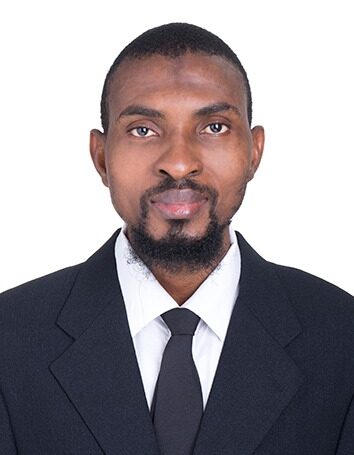 Two Years, One Journey: Reflection on Learning, Sacrifice, and Growth at UIII
by Sheu-Tijani Aminu Opeyemi
Batch 4 MA in Education @ Universitas Islam Internasional Indonesia
The completion of master’s program marks an important milestone in my academic career. From the beginning, when I received the news of my admission to Universitas Islam Internasional Indonesia (UIII) on a scholarship, I felt a mixture of nervousness, curiosity, and joy for the chance to continue my academic pursuit, after having taken a break from formal study for several years. This opportunity was particularly meaningful to me as it came after several earlier, unsuccessful efforts to secure a scholarship. My nervousness stemmed from uncertainty about what to expect, how to meet the expectations of my esteemed host university, how to navigate a new environment where I would learn alongside individuals from diverse contexts and backgrounds as well as the reality of leaving family behind for two years.
Upon arriving at UIII on 31 October 2024, I was eager to start my studies, interact with new colleagues and experience Indonesia’s culturally and religiously diverse environment. One of my first notable experiences was a sightseeing trip to Jakarta planned by my newly met course mates. This experience gradually eased my initial nervousness as I began to feel the geniality, hospitality and embracing nature of the host community particularly the Indonesian people.
Beyond this sightseeing experience, my encounters with amiable lecturers in my programme of study, the administrative staff of the faculty, and the wider university community created a profound and positive impression on me. Unlike my Bachelor experience, which was largely focused on coursework; my study at UIII introduced me to a more research-oriented approach to graduate education. The lecturers devotedly guided us towards becoming academic researchers by focusing our attention on academic writing, educational principles and theories and research methodologies. From the outset, courses in research writing, Wasatiyyah, qualitative and quantitative methods, psychology and philosophy of education broadened my understanding of education and strengthened my foundation for academic inquiry.
By the time I completed my first year, I had become increasingly appreciative of the rare opportunity to learn and grow academically in such an intellectually enriched setting. I was particularly inspired by the grace to learn from highly accomplished academicians many of whom had obtained their doctoral degrees from renowned universities abroad. Their diverse expertise, perspectives, and commitment to inclusive teaching significantly enriched my learning experience. The lectures were thoughtfully structured to accommodate our diverse backgrounds, allowing us to engage in discussions and exchange ideas through the lenses of different cultures and countries of origin. This experience taught me that diversity is not merely a feature of an international university; it is itself a valuable source of learning.
At this stage, even though I did not yet consider myself a scholarly contributor, I could evidently see and appreciate how my research knowledge and skills were developing in a gradual process. I became increasingly hopeful that, with continued learning, practice, and dedication, I would eventually be able to make meaningful contributions to knowledge production. I came to appreciate this development even more as I began considering an appropriate topic for my thesis. Initially the prospect of developing and completing a thesis seemed to be a considerable challenge and a source of pressure. However, the knowledge and skills I acquired through coursework in identifying research gaps, formulating research problems, systematically reviewing the literature, and applying the right research approaches positioned me to undertake the assignment with a greater sense of confidence. Together with the additional concentration courses I undertook alongside the core courses, this training enabled me to transform what initially seemed like a daunting task into a more manageable academic endeavour.
During this period, the university also provided me and some of my colleagues with the opportunity to apply our learning through an internship program in different academic institutions. I provided administrative and academic support to senior staff, which allowed me to connect some of the knowledge gained in the classroom with practical experiences within an educational institution. The experience further broadened my understanding of how academic and administrative responsibilities work together to support the effective functioning of educational institutions.
Beyond this academic experience, my time in Indonesia has also shaped my understanding of how hospitality, dedication, commitment, and institutional responsibility can contribute to organisational and national development. Observing how different units within the university worked together to ensure its smooth functioning gave me a deeper appreciation of cooperation and collective responsibility. The relationships and my daily interactions outside the academic setting offered a worthwhile experience. Personal observations and conversations with the people of Indonesia increased my appreciation of the country and its people. In many aspects I have felt welcomed and relaxed in Indonesia, and this has made it feel more like I have come here to build relationships and create memories in a real way, than just to study for a degree programme only. I am very thankful for the opportunity to experience this part of Indonesia life; I hope my relationship with Indonesia and the people will not stop after my graduation.
The two-year journey has not been easy, however. It was tough to be away from my family, my wife and four children for so long. These experiences have helped me to appreciate the wisdom that comes from the Qur'anic Guidance regarding family and dwellings, “Askinuhunna min haythu sakantum”— “Lodge them where you dwell” (Qur'an 65:6). The experience was a reminder to me how valuable family is and how much of a sacrifice it is to pursue knowledge.
In retrospect, I thank God for His grace and strength to get through to the end. I am equally grateful to UIII, my lecturers, colleagues, and host community for creating an environment where I felt safe, welcomed and supported. I found their kindness transforming what seemed a daunting journey to one of the most important of my academic and personal growth.
A journey of a thousand miles is said to begin with a single step. My experience at UIII was a journey of uncertainty that culminated in gratitude, growth, and a redefined purpose. I am leaving this programme not only with a master’s degree but also sound research skills, intellectual depths, and strong relationships. Most importantly, I take with me my renewed dedication to put what I learned into practice for the benefit of education and society.
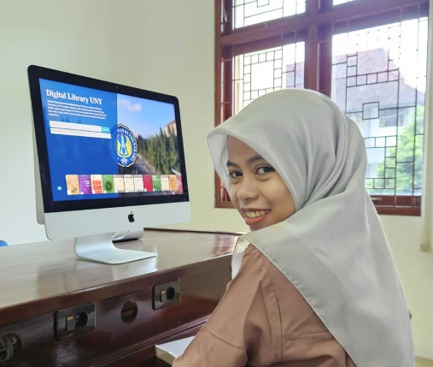
From a Course Assignment to Publication: My Experience with PISA 2022 Data
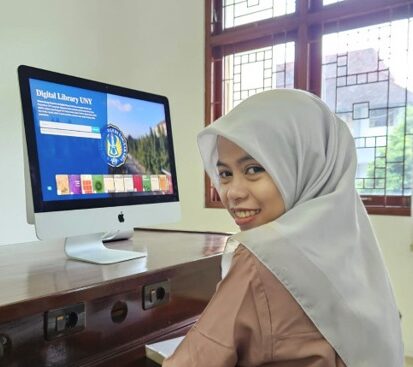 From a Course Assignment to Publication: My Experience with PISA 2022 Data
By Dwi Oktariani
When I entered the Graduate Seminar on Large-Scale Assessment course in the second semester of my doctoral study at the Faculty of Education, Universitas Islam Internasional Indonesia (UIII), I never imagined that the final assignment from the course would lead me to a publication in a reputable international journal. The course, taught by Bambang Sumintono, Ph.D., was a continuation of Advanced Educational Assessment, which had previously started to introduce me to the world of assessment and education measurement.
My academic background is in performing arts education, especially dance. Before starting my doctoral study, most of my research and practice were closely connected to arts and communities. I teach traditional dance at Universitas Tanjungpura, work as an arts practitioner, do choreography and performances, and conduct research on indigenous communities in West Kalimantan. The research world that I knew was very close to people, movement, tradition, and cultural practices. Data involving thousands of respondents, statistical analysis, SPSS, and especially large-scale assessment felt like a world very far from me.
My more serious encounter with quantitative approaches actually began at UIII. In the assessment course, I started learning about the Rasch Model and how to use Winsteps software. I began to understand how the quality of an item is examined and how assessment can produce accountable information. This experience slowly broadened the way I viewed educational research and showed me that there were still many areas outside the field I had been working in that I needed to learn.
A more challenging journey began when PISA was introduced in the Graduate Seminar on Large-Scale Assessment course. For the midterm assignment, I critically examined large-scale assessment practices and began questioning the relatively limited position of the arts in that discussion. I then carried this interest into my final assignment. I wanted to know whether a dataset as large as PISA could actually “speak” about the arts. From this simple question, I started developing a study on gender differences in affective engagement, creativity belief through the arts, and Indonesian students’ participation in school-based arts activities using PISA 2022 data.
The process was much more difficult than I expected. I had never used SPSS before, let alone worked with large-scale secondary data. From the thousands of data available through the OECD, I chose the Indonesian data because of my own curiosity: what does PISA actually look like when we focus on Indonesian students? I started looking for the questions given to students, understanding the code for each item, identifying relevant variables, and selecting data that could be used in the study. At that stage, the more I searched, the more I felt that I did not know enough. I even visited the libraries at UPI and UNY to look for previous studies that connected PISA with arts education. However, I did not find any study that was exactly the same as what I wanted to do. I also studied the work of senior students who had used PISA data to understand how such data could be developed into an article for a Scopus-indexed journal.
The more I read, the broader the problem became, and the more difficult it was for me to keep the study focused. At the same time, the final assignment deadline was getting closer. I was tired, but stopping was not an option. In the end, I returned to something I understood best: the arts. I went through the PISA 2022 questions again and finally selected seven items related to affective engagement, creativity belief, and participation in visual arts, music, and theatre.
I also did not go through this learning process alone. My classmates became an important part of the journey. Munaya helped me a lot in learning how to do data cleaning, something that was completely new to me at the time. Mbak Nofi and Pak Umam kept encouraging me when I felt overwhelmed by the secondary data. In class, the lecturer also continued to show us different examples of academic articles that we could study as references when developing our final assignments. From this experience, I realized that learning at the doctoral level also grows through asking questions, trying, making mistakes, discussing, and helping one another.
Eventually, the final assignment was completed. The results showed that female students had higher affective engagement with the arts, while male students reported a higher frequency of participation in several school-based arts activities. For me, these findings were not only statistical results. I started to see how large-scale data could offer another perspective on issues in arts education that I had previously understood mainly through practice, observation, and field experience.
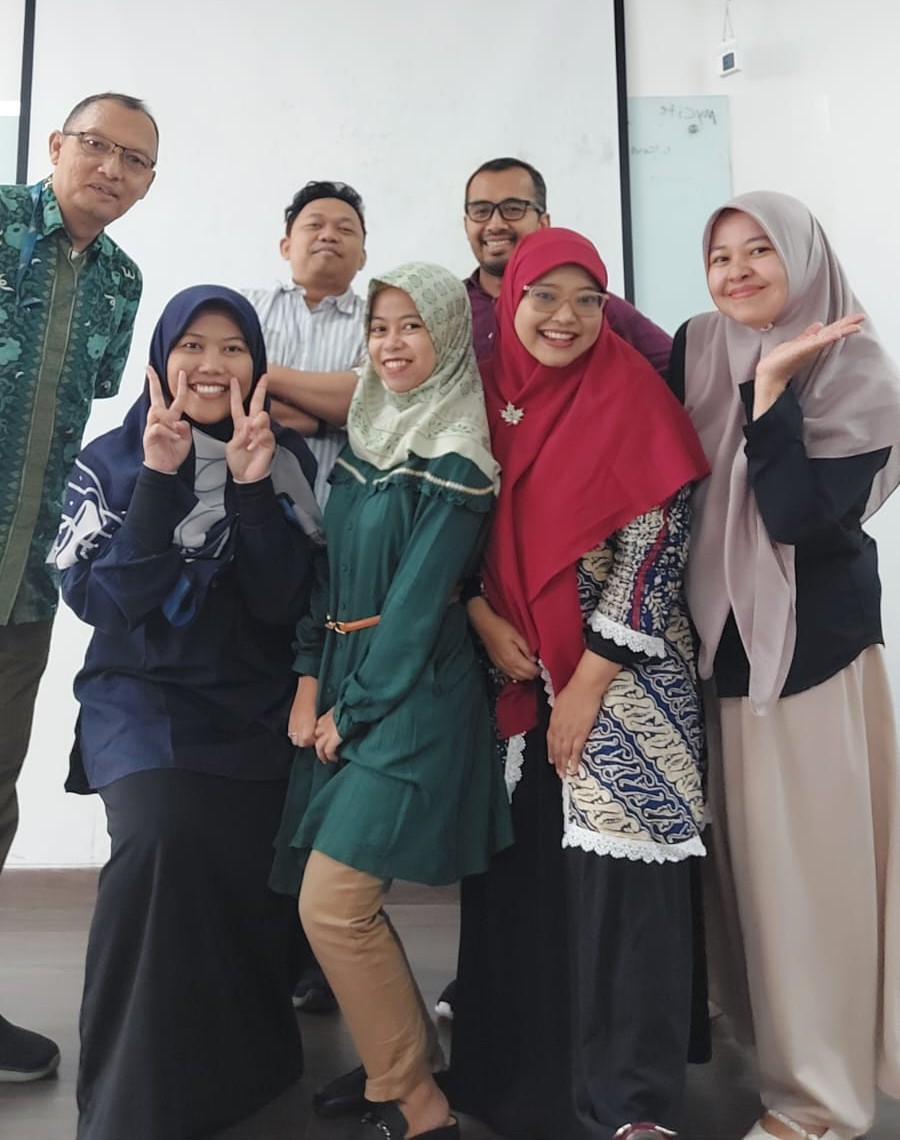
After the final grade was released, I did something that was actually quite spontaneous. I tried submitting the paper to Asian Education and Development Studies (AEDS), Emerald, a Scopus Q2 journal. I did not even make major changes. The manuscript I submitted was basically the final assignment from the course. It was also my first experience creating an Emerald account and trying the submission process to an international journal by myself.
When I received the news that the manuscript had passed the initial stage and entered the review process, I was actually confused about how I should react. I sent the review decision to the lecturer and asked what it meant because at that time I still did not fully understand how publication in a Scopus journal worked. He congratulated me and encouraged me to begin “navigating” the reviewer revisions. That phrase turned out to be quite an accurate description of what happened over almost the following year.
The review process became another learning space for me. At one stage, I was very happy when one reviewer gave a minor revision. However, in the next round, I was faced again with a major revision. The manuscript eventually went through several rounds of revision before it was accepted. Even near the end, issues related to consistency of terms, punctuation, number formatting, and proofreading still brought me back to another revision.
Part of this process took place during a very personal period in my life because I was going through childbirth. My concentration was certainly not always at its best. Strangely, however, I do not remember the revision process as an unpleasant experience. I actually enjoyed it. Every reviewer comment showed me a part of my own writing that I had not noticed before. A manuscript that I initially considered only a course assignment slowly became a much more mature piece of work.
The experience of being a single author also left its own impression on me. I handled the entire process myself, from submission, reading and responding to reviewer comments, reanalyzing the data when necessary, revising the manuscript, to communicating with the editorial team. There was freedom in it, but also full responsibility. That was exactly what made the experience enjoyable. I could directly see how my ability developed from one version of the manuscript to the next.
In the end, the article, “Gender Differences in Affective Engagement, Creativity Belief Through the Arts, and Participation in School-Based Arts Activities: Evidence from PISA 2022 Indonesia,” was accepted and published in Asian Education and Development Studies. I still love traditional dance, indigenous communities, and research that allows me to meet people directly and engage with their cultural practices. Learning about PISA and quantitative research simply gave me another way to look at arts education. I now understand that issues in the arts can be read through community stories and teachers’ experiences, but they can also be explored through thousands of student responses in an international dataset.
For this reason, I am very grateful to the lecturer, who, through the Graduate Seminar on Large-Scale Assessment course, opened a door to a research area that I had never imagined I would enter. Thank you for the publication examples, experiences, and encouragement that were always shared with us in class. I am also grateful to my classmates who became part of this learning process, especially Munaya, Mbak Nofi, and Pak Umam. This experience made me understand that a course assignment at the doctoral level does not have to end when a grade has been given. For me, perhaps this is the most valuable meaning of the journey: learning does not always make us feel more comfortable. Sometimes, learning takes us into unfamiliar territory, makes us feel many times that we do not know enough, and then slowly expands the boundaries of what we think we are capable of doing as researchers.
BIPA: Bridges of Language, Gardens of Heart
BIPA: Bridges of Language, Gardens of Heart
by Ramli
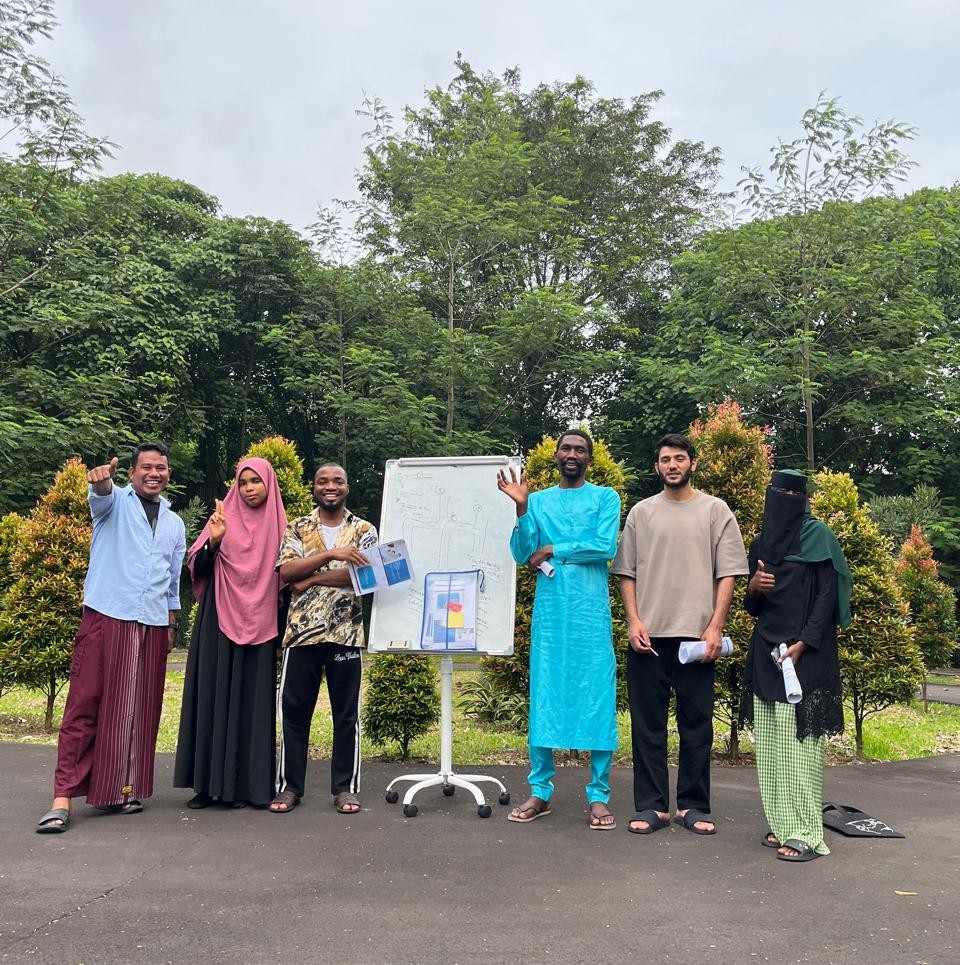
Learning foreign language always a challenge for everybody, not easy and full of surprise. In addition, teaching foreign language even more challenging. Usually, I began with a book of rules and a promise to teach sounds, tenses, and neat sentences. Soon the room refused to be a textbook. It folded itself into a shelter where voices found courage and small triumphs sprouted like green shoots after rain. Teaching Indonesian was supposed to be a craft; instead, it became a quiet liturgy of belonging. We learned through touch and taste. In roleplays, the clatter of imagined markets turned into music; bargaining for a mango felt like learning a heartbeat. The language slipped into palms and plates when we cooked together, each spice a new word, each recipe a story carried across oceans. Walking the neighborhood, directions became poems of streets and storefronts, and the city itself read lessons aloud. These practices made the language a living thing not an abstract code but a breath shared between people.
They brought their worlds with them: lullabies, proverbs, bows, handshakes, meals wrapped in leaves, and jokes that landed with a warmth I could feel. When a student taught us a greeting from his village, the syllables hung in the air like offerings; when another shared a proverb with no Indonesian twin, we leaned closer to listen. Those moments braided our differences into a single tapestry. Mistakes were no longer failures but invitations faint footsteps toward each other.
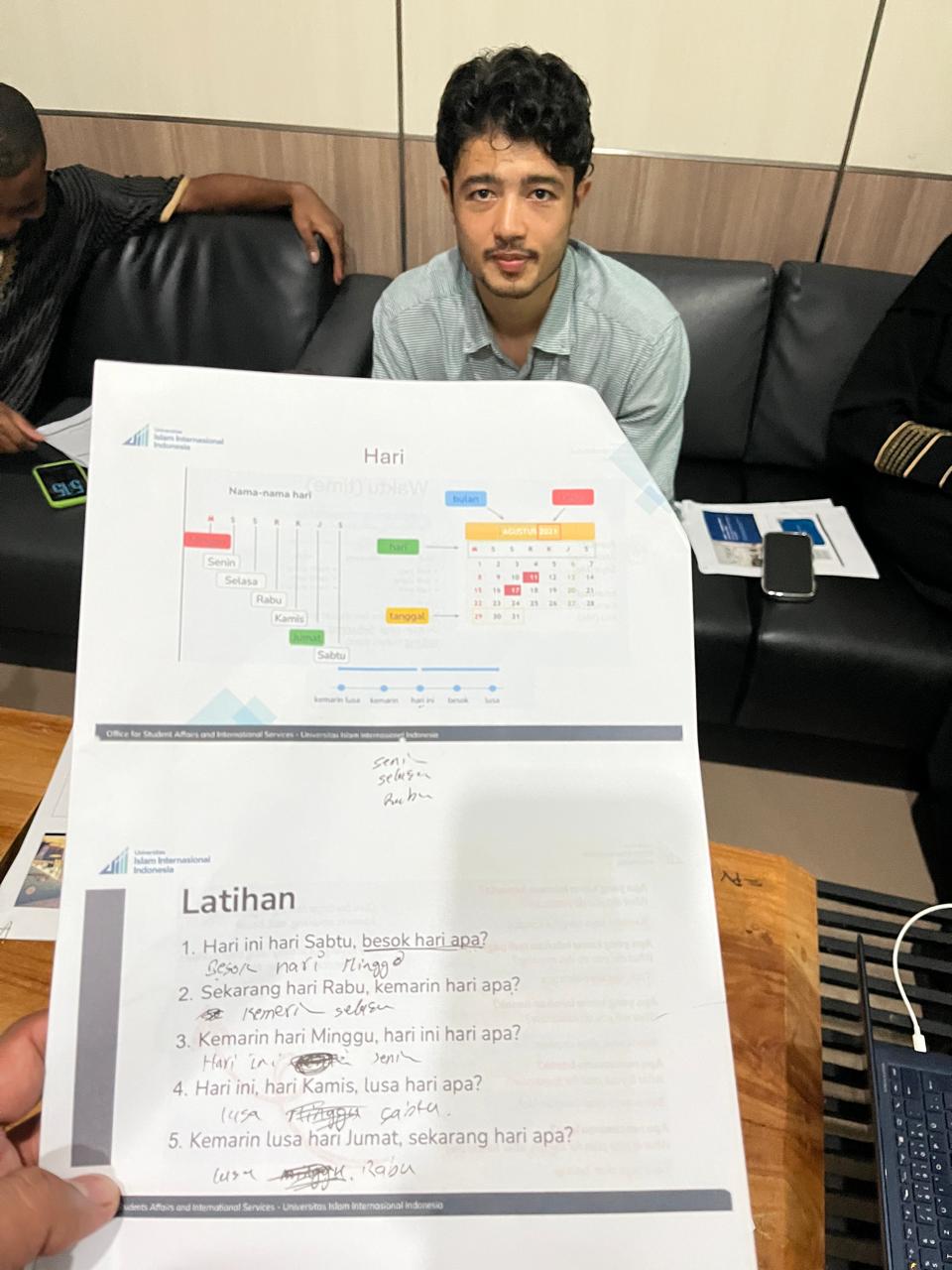
There were days when silence lived in our circle. Homesickness sat like a weight at the back of a chair; anxiety hovered in hesitant responses. We learned to name those shadows gently. A short check-in, a shared cup of tea, a hand on a shoulder small ritual that said, I see you, you are seen. The classroom’s warmth was not accidental; it was built of countless tiny mercies. Inclusion became a poem of actions: subtitles and storyboards, paired voices that balanced one another, tasks that let the quietest hands speak through images. Sometimes they taught me. They corrected my pronunciation with laughter that felt more like love than correction. They fed me food whose flavors mapped to childhoods, and they offered words from tongues I could not yet speak. Those gifts unstitched the old teacher-student seam and rewove it into companionship. I brought grammar and structure; they returned maps of resilience and new ways to look at the world. Their stories of leaving, of longing, of stubborn hope shaped the classroom’s true curriculum.
I discovered that teaching is not merely giving knowledge but tending tender things. It asks patience like sunlight asks the morning. It asks presence: staying after class to listen, asking a hesitant student to tell one more sentence, celebrating mispronunciations as proof of trying. These actions, simple and human, taught the students and taught me how to be a better keeper of those fragile beginnings. When they began to speak with ease, it felt less like perfunctory success and more like watching a chorus learn a new song. Their laughter, their corrected mistakes, their shared festivities these were the harvest. They left with vocabulary, yes, but also with new roots planted in a place that once felt foreign. I left with a heart fuller and softer, heavy with gratitude for being allowed in their journeys.
BIPA became a doorway and a hearth. Language built the threshold; compassion kept the light inside. In teaching Indonesian, I discovered that education is at its most human when it is a shared passage home.
Beyond the Conference: Finding My Academic Home at HERDSA 2026
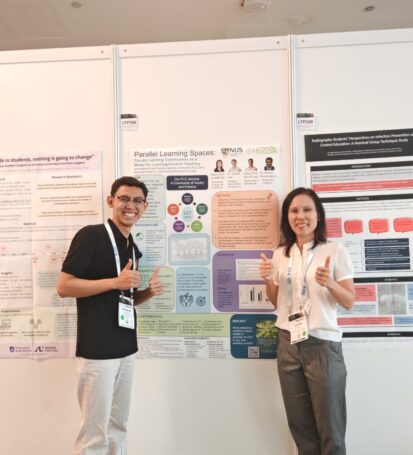 Beyond the Conference: Finding My Academic Home at HERDSA 2026
By Muhammad Maulana
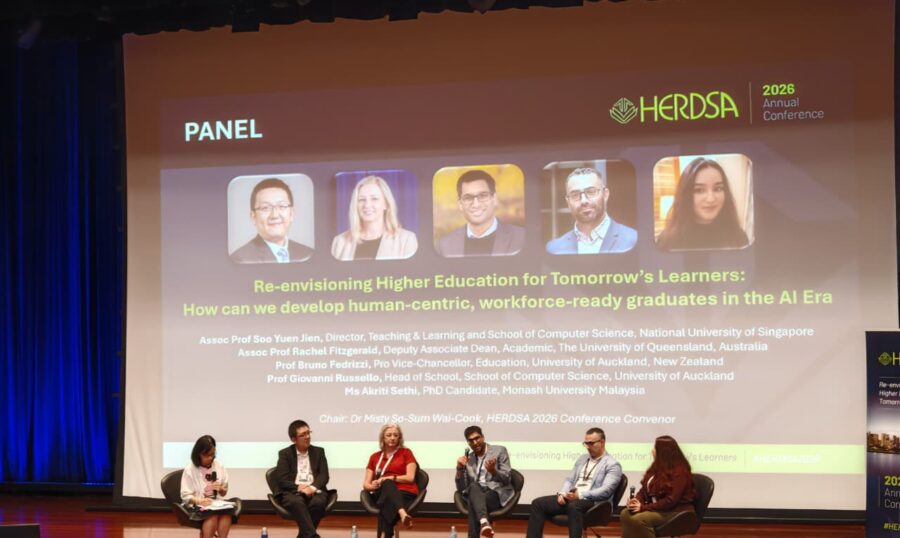
Attending the Higher Education Research and Development Society of Australasia (HERDSA) Annual Conference 2026 at the National University of Singapore (NUS), together with the TATAL (Talking About Teaching and Learning) Pre-Conference Workshop, has been one of the most transformative experiences of my academic journey.
With nearly 1,000 participants from across the world, it was the largest international conference I have ever attended. Yet, what made the experience unforgettable was not its scale, but the people. I found myself surrounded by educators, researchers, academic developers, and leaders who shared a genuine commitment to improving higher education. They were not competing for recognition; they were learning from one another. Conversations were filled with curiosity, generosity, and a shared belief that better universities are built through collaboration rather than competition.
As someone who had only recently completed a master's degree, I initially wondered whether I truly belonged in such a community. Surrounded by professors, experienced scholars, and educational leaders, I felt like the least experienced person in many rooms. However, those feelings quickly disappeared. What I encountered instead was extraordinary humility. People listened, encouraged, and generously shared their ideas regardless of academic titles or career stages. It reminded me that academic excellence is measured not only by what we know, but also by our willingness to help others grow.
One of the most meaningful parts of the conference was participating in the TATAL Pre-Conference Workshop. Throughout the workshop, we were invited to reflect on a simple but profound question: What is the fundamental purpose of teaching? That question stayed with me long after the workshop ended.
As I reflected, I realized that I see educators as mountain guides. A mountain guide cannot climb the mountain for others. Instead, they prepare, support, encourage, and guide people through difficult paths. The journey remains challenging because growth cannot be outsourced. Learning requires effort, perseverance, and resilience. Yet, when students finally reach their own summits, they discover something much more valuable than success itself. They gain perspective, humility, and a deeper understanding of themselves. Standing at the top of a mountain reminds us not of how great we are, but of how much there is still to learn. Perhaps that is what meaningful education should ultimately cultivate.
The conference also gave me the opportunity to present my master's thesis through a Roundtable Discussion, a presentation format that was entirely new to me. Unlike traditional conference presentations, the roundtable transformed research into a conversation. Instead of presenting answers, I found myself exploring questions together with participants who openly challenged my assumptions, shared their own experiences, and enriched my thinking.
My presentation, Why Higher Education Often Separates Spiritual Identity and 21st Century Skills? emerged from a concern that many universities are becoming increasingly successful at developing graduates' competencies while paying less attention to the people those graduates are becoming. We often ask what skills students need for the future. Yet perhaps an equally important question is: Who are our students becoming?
In my research, I argue that higher education should not only equip students with critical thinking, communication, collaboration, and creativity, but should also create spaces where they can develop their spiritual intelligence, the capacity to draw upon meaning, values, morality, and existential reflection in navigating life. While this idea remains a proposition requiring further empirical investigation, I believe it offers one possible response to Isaac Asimov's timeless observation:
"The saddest aspect of life right now is that science gathers knowledge faster than society gathers wisdom."
The discussions that followed my presentation reminded me that knowledge grows richer when it is shared. Every comment, question, and perspective helped me see my own research differently.
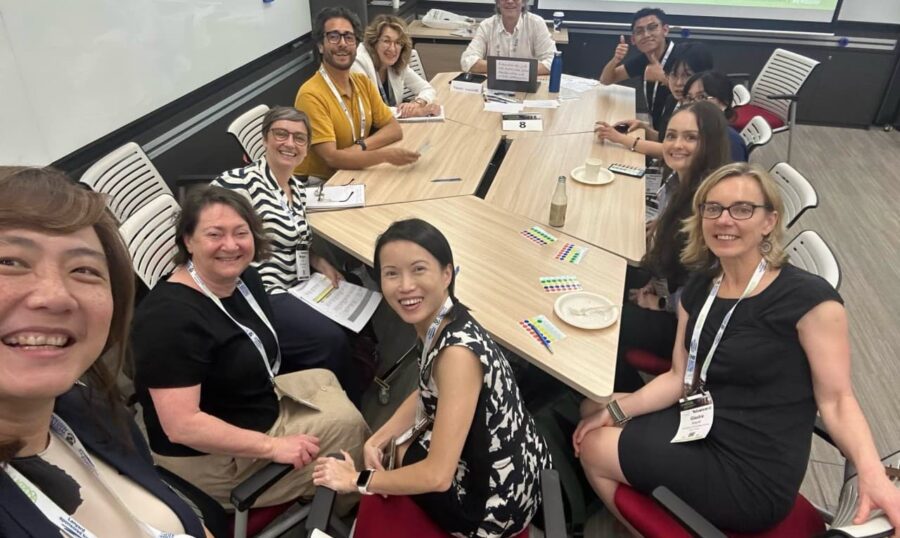
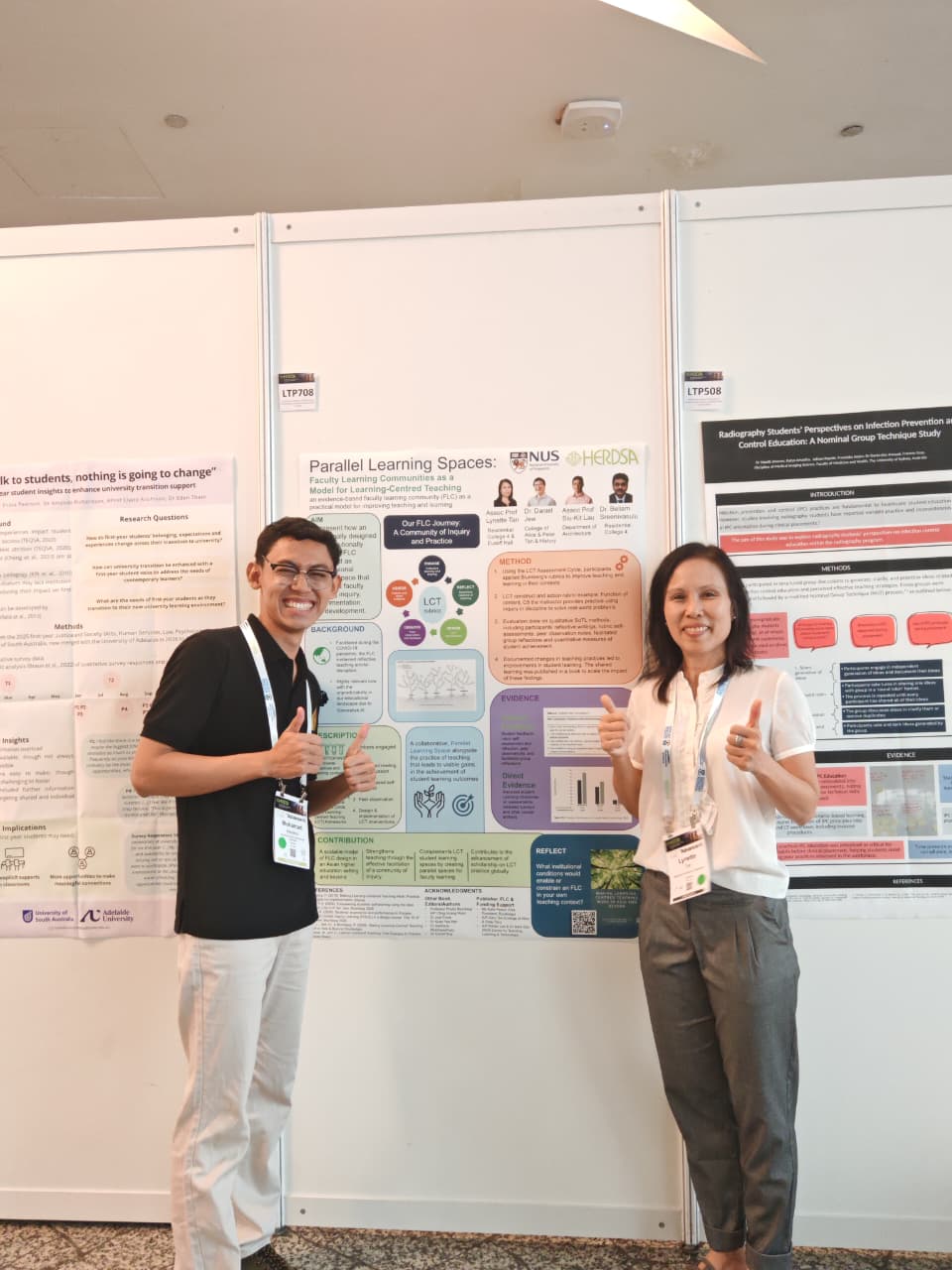
Beyond the formal sessions, many conversations left lasting impressions. One particularly memorable discussion was with a presenter from the National University of Singapore, who explained how lecturers are intentionally organized into cross-disciplinary learning communities where they regularly reflect on teaching, exchange practices, and continuously improve together. Even more inspiring was learning that these collective experiences have been developed into a forthcoming Routledge book, Making Learning-Centered Teaching Work in Asia and Beyond.
What touched me most, however, was not the book itself but the generosity behind their work. When I expressed my interest, they immediately offered to visit our institution, share their experiences, and even seek funding from their own university so that financial limitations would not become barriers to collaboration. That moment quietly changed the way I think about academic communities. Excellent universities do not simply produce excellent research. They cultivate generosity.
As I reflected on these experiences, I could not help comparing them with some of the realities I encounter in Indonesia through my work as an academic developer. Across conversations with colleagues from different universities, we often share similar concerns: sustaining genuine commitment to teaching enhancement remains challenging, and professional conversations about teaching are sometimes overshadowed by administrative responsibilities.
This experience strengthened my belief that Indonesia needs more academic communities like HERDSA, spaces where educators regularly learn from one another, exchange ideas across institutions, and collectively improve higher education. Such communities cannot eliminate every challenge, but they can nurture the culture necessary for meaningful and sustainable change.
Perhaps one of the most unexpected moments of this journey came even before the conference began. Receiving the HERDSA Student Conference Grant was something I never truly expected. Having recently graduated with a master's degree, I assumed the grant would naturally be awarded to outstanding PhD students with much stronger academic portfolios. I submitted my application with hope, but very little expectation. When I received the notification that I had been selected, my first feeling was not pride, it was gratitude.
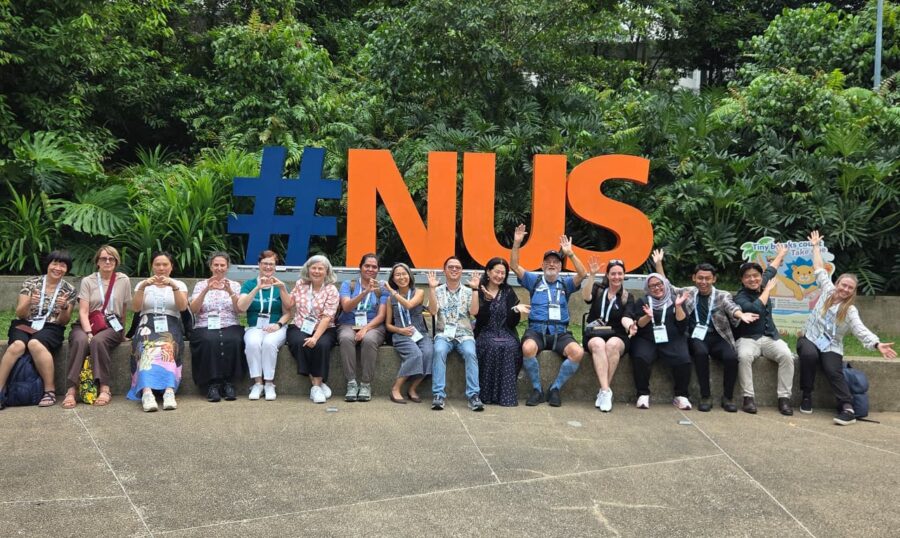
Looking back, I realize that if I had convinced myself that I was "not qualified enough" and never applied, I would have missed one of the most transformative experiences of my academic life. Sometimes, opportunities arrive not because we feel ready, but because we choose to take the first step despite our doubts.
None of this would have been possible without God's grace. I am deeply grateful for every opportunity He has opened for me. I am equally thankful to my mentors at UIII, especially Dr. Destina, my thesis supervisor, and Dr. Bambang, whose continuous encouragement, and countless last-minute recommendation letters, made this journey possible.
As I left Singapore, I realized that I was bringing home much more than conference memories. I was bringing home a renewed vision of what higher education can become. A place where teaching is deeply human. Where research is built through dialogue. Where generosity matters as much as expertise. And where communities grow stronger because people choose to help one another succeed. More than anything else, HERDSA gave me something I had not expected to find. It gave me a sense of belonging.
I sincerely hope that my journey with HERDSA does not end with this conference. Instead, I hope it marks the beginning of a lifelong commitment to this remarkable community, one where I can continue learning, contributing, and perhaps one day, following the inspiring footsteps of many senior colleagues, become a HERDSA Fellow myself.
As one keynote speaker reminded us through John C. Maxwell's words:
"The pessimist complains about the wind. The optimist expects it to change. The leader adjusts the sails."
After this week, I no longer want to wait for higher education to change. I simply want to become one of those who help adjust the sails.
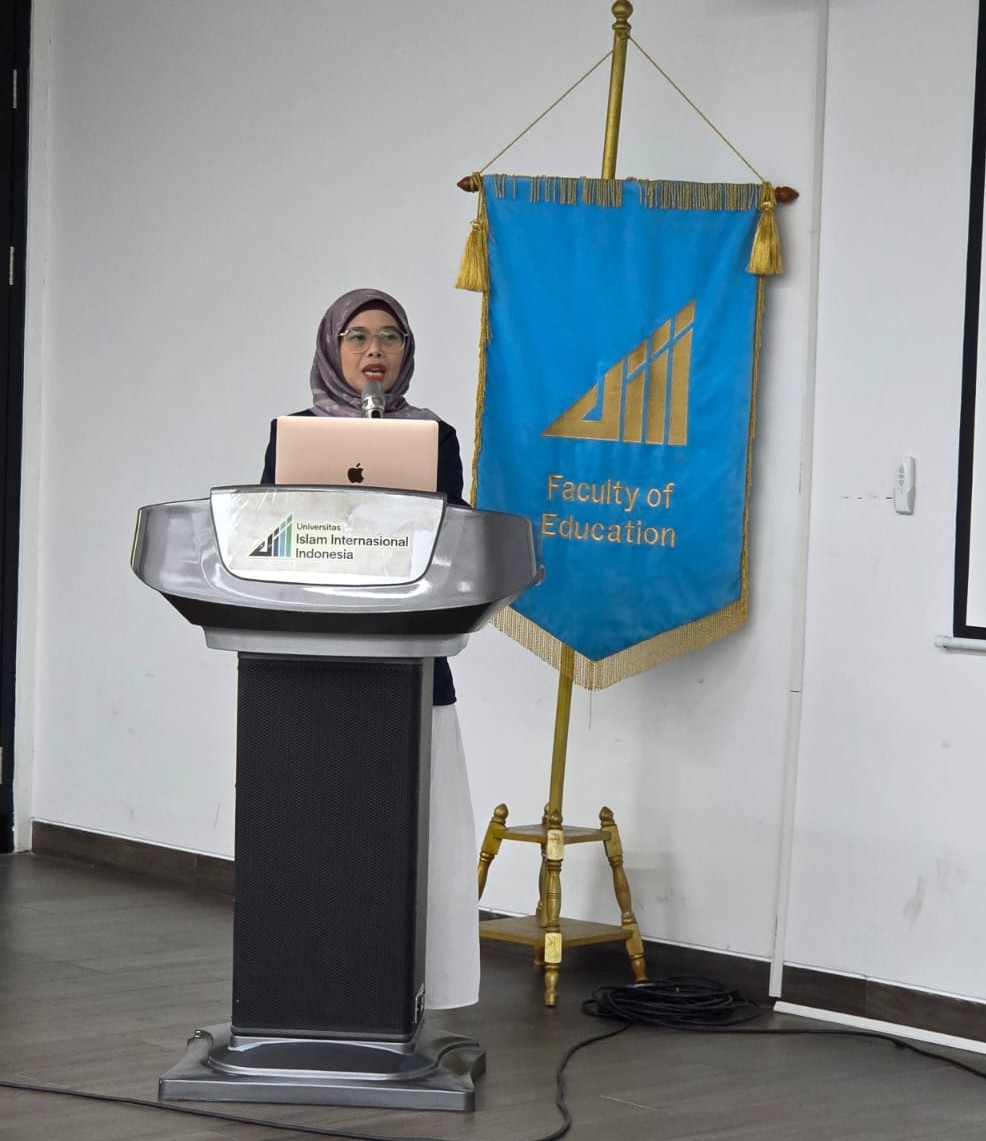
UIII Did More Than Educate Me: It Transformed Who I Am
 UIII Did More Than Educate Me: It Transformed Who I Am
By Ade Husna Aminudin
In the late 2014, after graduating from the University of Ez-Zitouna in Tunisia and returning to Indonesia, I came across some fascinating news in the Republika newspaper on the government's proposal to build the International Islamic University of Indonesia in Depok, West Java. Eight years later, the little whisper I made to myself at that time, that I would continue my degree at that university, became a reality.
Pursuing a doctoral degree has been one of the most meaningful chapters of my life. Looking back on the past several years, I realize that my PhD journey has never been only about earning the title of "Doctor." Rather, it has been a transformative process of becoming a better learner, researcher, educator, mother, and human being. Every challenge has shaped me, every setback has taught me resilience, and every achievement has reminded me that growth often happens outside our comfort zones.
When I first began my PhD at Universitas Islam Internasional Indonesia (UIII), I knew that I was not entering the program under ideal circumstances. Firstly, I was not a fresh graduate. There was a six-year gap between the completion of my master's degree and the beginning of my doctoral studies. During those years, life was filled with responsibilities, family commitments, teaching, and various professional experiences. Returning to academic life after such a long interval was both exciting and intimidating. The six-year gap did not diminish my passion for learning, but it certainly required me to readjust to academic life. I had to rebuild study habits that had long been dormant, familiarize myself with the latest research developments, and adapt to a rapidly changing academic environment. At times, I questioned whether I still possessed the ability to compete academically with younger students who had just completed their master's degrees. However, I gradually realized that academic maturity is not measured by how recently one graduated, but by one's willingness to continue learning. My previous experiences outside academia became valuable assets rather than disadvantages. They helped me appreciate knowledge from a broader perspective and allowed me to approach research with greater empathy and practical understanding.
Another challenge was language. English is the language of international academia and also the primary medium of instruction at UIII. Unfortunately, English has never been my strongest language. Throughout my educational and professional journey, Arabic has always been much more familiar to me than English. I studied in Arabic-speaking institutions and even taught Arabic both in schools and at the university level before beginning my doctoral studies. Reading Arabic texts, explaining Arabic grammar, and communicating in Arabic had become second nature to me.
In contrast, expressing complex academic ideas in English required tremendous effort. Reading journal articles often took me much longer than it did for my peers. Writing academic papers demanded countless revisions, dictionary consultations, and repeated proofreading. Presenting at seminars in English was initially intimidating, and there were moments when I doubted whether my language proficiency would ever be sufficient.
Nevertheless, I learned that effective communication is not about speaking flawless English but about conveying meaningful ideas with sincerity and clarity. Every presentation, every conference, every discussion with professors, and every academic paper became opportunities to improve. Rather than viewing my limited English proficiency as an obstacle, I came to regard it as a lifelong learning journey. In fact, towards the end of my PhD studies, I even got the opportunity to teach BIPA or Bahasa Indonesia untuk Penutur Asing and became one of the best BIPA instructors awarded by the UIII International Office, it was truly a valuable experience for me! Because at the beginning of my studies I was still stumbling with English, but in the end, I was able to teach foreign students in English. Today, I still believe there is much room for improvement, yet I am proud of how far I have progressed. More importantly, this experience has taught me humility, perseverance, and the courage to keep learning despite imperfections.
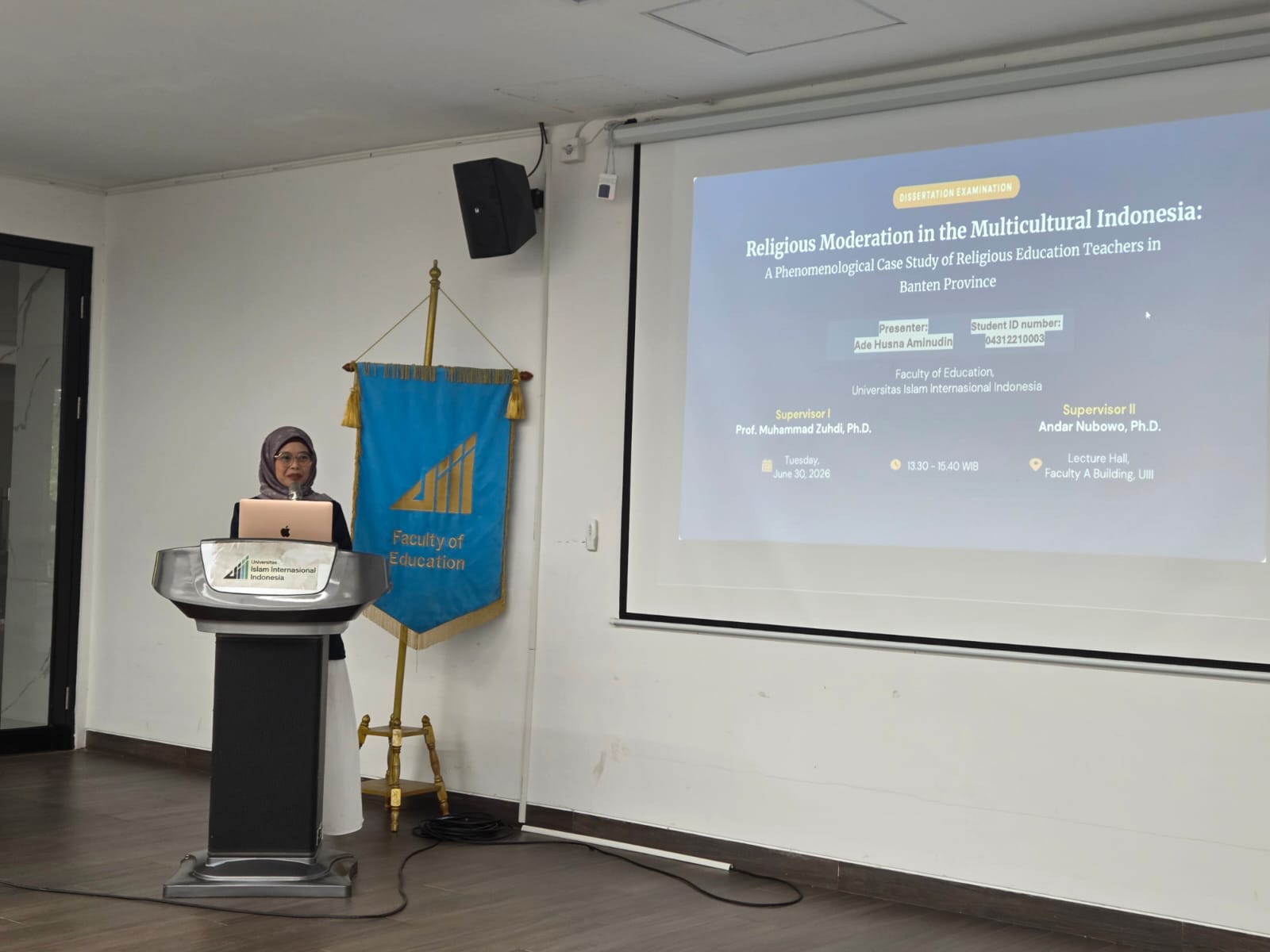
From Motherhood to Schoolarhood
Perhaps the greatest challenge throughout my PhD journey has been balancing academic responsibilities with family life. During my doctoral studies, I was not only a student. I was also a wife and, above all, a mother. Throughout these years, I raised five wonderful children. Remarkably, three of them were born while I was pursuing my PhD. Yes! I was accepted for my PhD while I was 7 months pregnant with my third child, and I was pregnant again, with twin baby as my fourth and fifth kids, in my third year of PhD studies.
Many people assume that motherhood and doctoral studies are incompatible. My experience has taught me otherwise. Certainly, balancing these responsibilities has never been easy. There were days filled with sleepless nights caring for newborn twin babies, followed by mornings attending seminars, preparing presentations, analyzing qualitative data, or revising dissertation chapters. There were moments when my children needed my attention while academic deadlines approached relentlessly. There were also times when exhaustion seemed overwhelming. Yet I have never considered my children to be obstacles to my education. Instead, they have been my greatest source of motivation. Every smile, every hug, and every small achievement they shared reminded me why perseverance matters. They inspired me to become someone who not only speaks about lifelong learning but also lives it.
Interestingly, doing a PhD in my point of view is like a source of happiness and emotional balance. Many people imagine that doctoral study only brings stress and fatigue. While those feelings certainly exist, my experience has been quite different. Going to campus, attending seminars, discussing ideas with friends and professors, conducting research, and writing my dissertation gave me a sense of intellectual fulfillment that positively influenced my personal life. Ironically, after spending long hours studying or conducting research, I often returned home with greater energy and appreciation for my family. Hugging my children after a productive academic day became one of the happiest moments of my life. Rather than making me emotionally distant from my family, my academic journey deepened my gratitude for them.
Sometimes I reflect that if I had simply stayed at home without pursuing my studies, I might have become more easily tired, emotionally overwhelmed, or mentally stagnant. Instead, my PhD journey challenged my mind while enriching my heart. It reminded me that personal growth and family life do not have to compete with each other. They can strengthen one another.
Of course, this journey has not been free from emotional struggles. Like many doctoral students, I have experienced burnout, frustration, self-doubt, overwhelming deadlines, and moments of feeling completely stuck. There were days when my research seemed to make no progress, when revisions felt endless, and when I questioned whether I was capable of finishing my dissertation. Those feelings reminded me of what Pak Bambang once said: “Learning is not fun, it should be hard. If it is fun, it means that it is not learning; it is playing." Furthermore, Prof. Emi Emilia said, "If you ever cry because of your PhD burdens, it means that you are a normal student.”
However, I eventually realized that such emotions are temporary. They are not signs of failure but natural parts of the doctoral experience. Every period of uncertainty was followed by renewed motivation. Every obstacle eventually became another lesson in patience. Every setback strengthened my resilience. Looking back, I am grateful not only for the successful moments but also for the difficult ones because they shaped my character far more profoundly.
Learning Beyond the Classroom
Another transformative aspect of my PhD journey was learning how to conduct rigorous academic research. Before entering UIII, I had very limited experience in qualitative field research. Concepts such as phenomenological inquiry, in-depth interviews, coding, and qualitative data analysis were entirely new to me. At first, I doubted whether I would ever be able to conduct a high-quality research project.
However, through rigorous coursework, continuous supervision, and abundant opportunities to practice, I gradually developed the knowledge and skills needed to conduct a sophisticated qualitative study. Looking back, I am amazed at how much I have grown, from someone with a very little research experience to a PhD holder capable of designing and conducting a complex field study. One of the proudest moments of my journey was being awarded a competitive research grant, which strengthened my confidence and motivated me to continue contributing to educational research.
Equally meaningful was the academic atmosphere at UIII. The learning environment consistently encouraged us to think critically, ask challenging questions, and engage in meaningful discussions rather than simply accepting existing ideas. Every class became a space where curiosity, reflection, and respectful dialogue were highly valued. This culture not only sharpened my critical thinking skills but also changed the way I approach knowledge and research.
The relationships I built with my lecturers and fellow doctoral students were another invaluable part of this journey. My lecturers were always supportive, approachable, and genuinely committed to helping students grow academically. Meanwhile, my classmates came from diverse academic and cultural backgrounds, making every discussion an opportunity to broaden my perspective. These interactions fostered a strong sense of learning, where we continuously inspired, challenged, and supported one another. For me, this academic community has been one of the greatest blessings of studying at UIII, and it will remain one of the most valuable experiences I carry into my future career.
Throughout this journey, I have been incredibly fortunate to study at Universitas Islam Internasional Indonesia. UIII has provided far more than academic courses. It has created an environment where curiosity is encouraged, diversity is celebrated, and academic excellence is continuously nurtured. One of the greatest blessings of studying at UIII has been the opportunity to participate in various national and international conferences. These experiences broadened my perspectives, introduced me to scholars from different countries, and allowed me to engage in meaningful academic conversations beyond the classroom. Every conference strengthened my confidence and demonstrated that knowledge grows through dialogue and collaboration across cultures.
UIII has also enabled me to build valuable academic networks with distinguished scholars, researchers, policymakers, and practitioners. These connections have enriched both my academic and personal development. They reminded me that research is not an isolated activity but a collective effort to contribute positively to society.
Above all, I am deeply grateful for the guidance of my honorable supervisors, Prof. Muhammad Zuhdi, Ph.D., and Dr. Andar Nubowo. Their patience, constructive criticism, encouragement, and unwavering commitment have been invaluable throughout my doctoral journey. They challenged me to think more critically, write more rigorously, and conduct research with integrity. Their mentorship has shaped not only my dissertation but also my identity as a researcher and educator. I sincerely believe that their guidance will continue to influence my academic career long after I complete this degree.
As I approach the completion of this chapter, I realize that the PhD has transformed me in ways I never anticipated. I entered the program hoping to gain knowledge. I leave with much more than knowledge. I have developed resilience, discipline, humility, intellectual curiosity, and a deeper appreciation for lifelong learning. Most importantly, I have learned that challenges should never be viewed as barriers but as opportunities to grow wiser. Every difficulty carried within it an invitation to become stronger. Every uncertainty encouraged deeper reflection. Every success became more meaningful because it was achieved through perseverance.
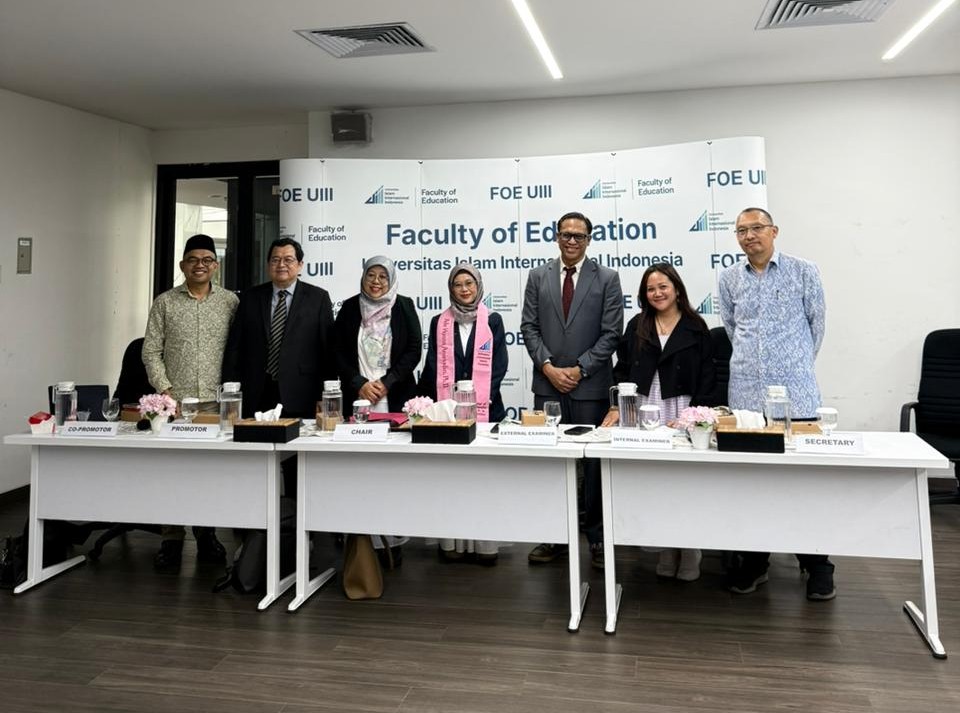
Although this PhD journey may soon come to an end, I sincerely hope that my learning journey will not. I aspire to continue contributing to society through education, research, community engagement, and intercultural dialogue. I hope to share not only my academic knowledge but also the values of resilience, compassion, and lifelong learning that this journey has instilled in me.
In fact, if I were ever given another opportunity to pursue a PhD in a different faculty at UIII, I would gladly embrace it without hesitation. Such is the depth of my appreciation for this university and the transformative environment it has provided. UIII has become more than an institution where I studied; it has become a place where I discovered new dimensions of myself, expanded my intellectual horizons, and built lifelong friendships and professional relationships.
Finally, my heart is filled with gratitude. I thank Allah, the Almighty, for every blessing, every challenge, every lesson, and every person He placed along my journey. I pray that Universitas Islam Internasional Indonesia will continue to flourish as a center of excellence, producing scholars who contribute meaningfully to humanity. May my respected lecturers, supervisors, classmates, staff members, friends, and everyone I have had the privilege to know during this journey always be blessed with good health, happiness, wisdom, and abundant rewards from Allah.
My PhD journey has taught me that education is not only about obtaining degrees. It is about continuously transforming ourselves so that we may contribute more meaningfully to others. And for that invaluable lesson, I will remain forever grateful.
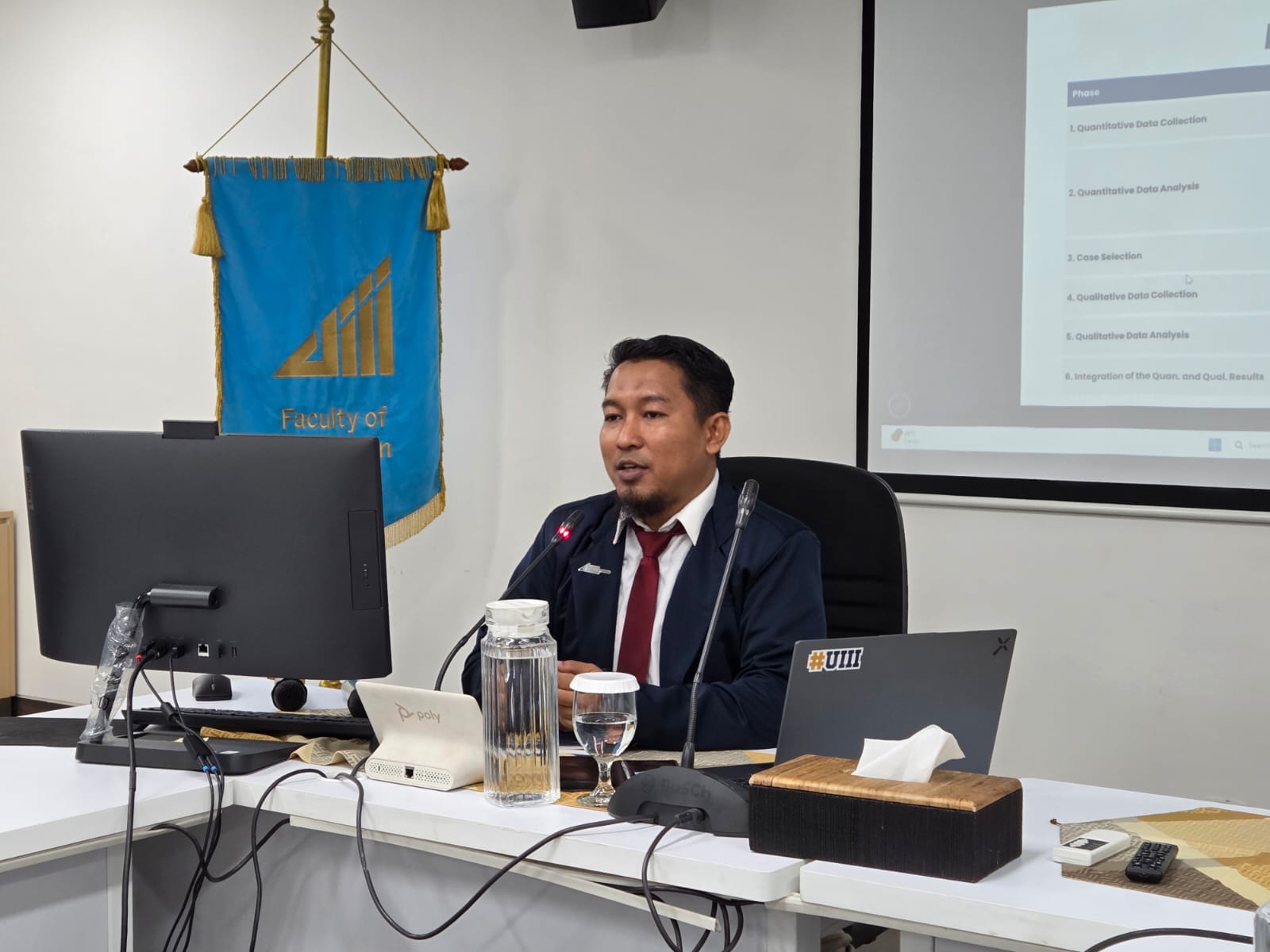
How I learned to measure: My doctoral journey at UIII
 How I learned to measure: My doctoral journey at UIII
Muhammad Affan Ramadhana
I think most people begin their doctoral journey with a clear research agenda and strong methodological background. I was not one of them. When I began my doctoral study at the Faculty of Education UIII, I was not a-hundred-percent sure of my research plan. Before I begin my PhD journey, I had spent several years as a lecturer in a small city in South Sulawesi, Indonesia, after completing my master’s degree in 2014. Like many young academics in Indonesia, I had teaching responsibilities, as well as many administrative duties, but I also gradually developed aspiration to pursue doctoral level study. For that purpose, I explored different research interests, from educational policy to linguistics and genre studies, yet none of them truly felt like the area where I wanted to spend the next years of my life.
During that period, opportunities appeared and disappeared quickly. Scholarship regulations, particularly intended for young Indonesian university lecturers, changed almost every year. Most frustratingly, timing of government scholarship and university admission schedules did not match most of the time. From those situations, I learned one important lesson. When opportunity arrives, it must be taken. Waiting for the perfect moment often means missing the opportunity altogether.
That principle led me to submit my application to UIII after unexpectedly seeing its admission announcement on Instagram post. At that time, I had already been preparing for PhD applications for another university. In fact, I initially intended to continue my study in linguistics rather than education. Nevertheless, after learning about its vision, I strongly felt that the opportunity offered by UIII was too valuable to ignore. I prepared a research proposal in education despite having no planning in the area. I rewrote my application documents, asked my respected mentors to provide another recommendation, and submitted everything with prayers.
When I receive the acceptance letter in August 2022, I had no idea that I was about to enter an institution that would fundamentally reshape how I viewed research, learning, and even myself as an academic.
New experience in a new community
In 2022, UIII welcomed its first cohort of doctoral students. Even though it already has master’s students since 2021, but the university itself was still new. The doctoral program was new, the buildings, the classrooms, and the students’ dormitories were all new. Even the academic community and its traditions were all newly established alongside us, which meant there was no precedent to follow. There was no senior cohort to describe what to expect, no shared record of how earlier students had organized their coursework or their dissertations. Rather than entering an institution with decades of established culture, we became part of generation that helped define it.
This shared beginning created an atmosphere unlike any learning environment I had previously experienced. Students and faculty members were building something together. We were taking part in the growth of a new academic community.
The classroom experiences were challenging. Indeed, as an international university, the language of instruction is English. But that was not my concern since my background is in English language education. Instead, the challenge was intellectual demands. Weekly reading reflections, critical discussions, and demanding assignments required us to think beyond summarizing literature. Every course expected independent reasoning supported by evidence and strong argumentation.
Among all the courses, Educational Assessment by Dr. Bambang Sumintono became the turning point. This course introduced Rasch measurement theory, which was completely unfamiliar to me. During one presentation, I was assigned the topic of multi rater assessment. At first, I treated it as another classroom assignment. However, the more I read about it, the more fascinated I became. I discovered that assessment was far more than assigning scores. It involved understanding human judgment, fairness, consistency, and measurement through sophisticated analytical models.
At that moment, I still had no intention of making this my dissertation topic. I simply enjoy learning something new. Another major turning point arrived in the Quantitative Analysis and Advanced Statistics course by Dr. Destina. Before pursuing PhD at UIII, my experience with quantitative research was almost nonexistent. Previously, my master’s degree thesis employed qualitative research with in-depth interviews. Statistical concepts such as regression, structural equation modeling, and hierarchical linear modeling were completely outside my mind.
I believe I did not merely begin from zero. Arguably, I began from ‘minus’ because I lacked knowledge and conceptual foundation that some of my classmates already mastered. However, I consider the biggest transformation during my PhD journey was not learning statistics and quantitative research.
In search for dissertation ideas
While searching for a dissertation topic, I found a comprehensive 800-pages book on research questions in language education. Among its many chapters, I found one focuses on rater behavior in language assessment. It contains several research questions that can be explored to study the area. I pitched this idea to Dr. Bambang, and after several consultations, I realized that this field contained meaningful research opportunities that had not yet been sufficiently explored in Indonesian contexts.
Choosing the topic, however, was only the beginning. During the Independent Study course, we were required to produce an extensive literature review of approximately 25,000 words. To prove my strong interest in the research area, I immersed myself in hundreds of research papers on rater behavior and Rasch measurement. However, the articles I found were extraordinarily complex for me to understand. I often found myself reading each sentence several times without what the researchers were actually doing. Their research designs, statistical analyses, and interpretations felt completely beyond my ability to comprehend. Those months were among the most difficult periods of my academic experiences.
There was once a time when I questioned myself whether I had chosen the wrong area of research. However, instead of giving up, I decided to apply learning by doing. Using the knowledge I gain from my first semester experience, I began experimenting with Facets, a software to do Rasch analysis for multi rater assessment data. Running the software was manageable, because there are tutorials plus data training that can be followed, plus I had some working knowledge of editing simple computer command lines. Interpreting the output, however, was an entirely different challenge. Numbers appeared on the screen, but I did not yet understand the meaning they represented.
Realizing this weakness of interpreting any statistical analysis outputs, I sought after every learning opportunity available. I enrolled in several quantitative analysis modules offered at the Faculty of Social Sciences UIII’s summer training program, even though many modules were beyond my current level. I attended courses on categorical data analysis, causal inference, survey and sampling, and multilevel analysis. Much of the course content remained difficult for me to comprehend, yet each session expanded my understanding of how quantitative researchers think. Outside formal courses, YouTube has become my other learning source. I spent countless hours watching introductory lectures on regression, statistics, and including Rasch measurement. Many of the videos helped me build the foundation I had never previously received.
Slowly, ideas that once seemed impossible became more understandable. Months later, when I revisited the same journal articles that had once overwhelmed me, it becomes more understandable, although still relatively complex for me to comprehend.
Walking the path one step at a time
One lesson confirmed throughout my PhD journey was that meaningful progress did not come from dramatic breakthroughs. Instead, it emerges from consistent small, repeated efforts. The learning environment at UIII played an important role in sustaining that effort. The doctoral student room and workspace became my second home. Comfortable rooms, ergonomic chairs, beautiful views, and the peaceful atmosphere allowed me to spend entire days reading, analyzing data, writing, and including taking some naps. Whenever I became bored, I could always move to Jusuf Kalla Library, whose excellent facilities provided another inspiring place to continue working. Those spaces helped maintain motivation and productivity.
As my dissertation developed, I benefited tremendously from the guidance of my supervisors, Dr. Bambang Sumintono and Dr. Zulfa Sakhiyya from UNNES. Their encouragement extended beyond technical feedback. They challenged my assumptions, strengthened my research design, and introduced the sequential explanatory approach that became the method I used in my dissertation.
Outside the university, participation in a real conference further expanded my academic horizon. In 2024, I presented my preliminary study at the Pacific Rim Objective Measurement Symposium (PROMS) in Kuala Lumpur. PROMS is the community of researchers and practitioners that actively develop and promote Rasch measurement theory in many fields. There, I met many big names in Rasch measurement whose name I only read in their books, journal articles, and book chapters. I met big names such as George Engelhard, Trevor Bond, Yan Zi, and many others. There, I discovered an academic community whose members generously shared ideas and constructive feedback. One suggestion regarding my study was the importance of rater training before doing rater-mediated assessments.
The following year, in 2025, was another unforgettable experience for me. I intended to present my research findings in PROMS again, this time held in Singapore. What was different this time was the opportunity to receive grant award for PhD students in Southeast Asia to present their research in PROMS 2025. I applied for that grant and submitted my extended abstract alongside my supervisor’s recommendation letter. All praises to Allah, I received the Distinguished Student Scholarship to attend PROMS 2025 in Singapore. I have another opportunity to stand among internationally recognized scholars. This time I met David Andrich, Jue Wang, Quan Zhang, and many others including Vahid Aryadoust. Whether ready or not, even from the periphery, I was becoming part of the scholarly conversation itself.
The dissertation writing process, however, remained emotionally demanding. Although I can manage to overcome practical and technical problems during data collection process, the writing process was a different game. There were weeks when I could not write a single word, even when I faced my laptop intensely. Despite having completed the analyses, I felt mentally exhausted. Surprisingly, those periods of apparent inactivity were not unproductive. During those moments, I was wondering about how to reorganize the structure of my dissertation. I realized that a dissertation needs a coherent narrative that guides readers through the entire research journey. Once that organizational structure became clear, plus the deadline came closer, writing progressed much more smoothly. This experience taught me that intellectual work often still continues even when still no words appear on the page.
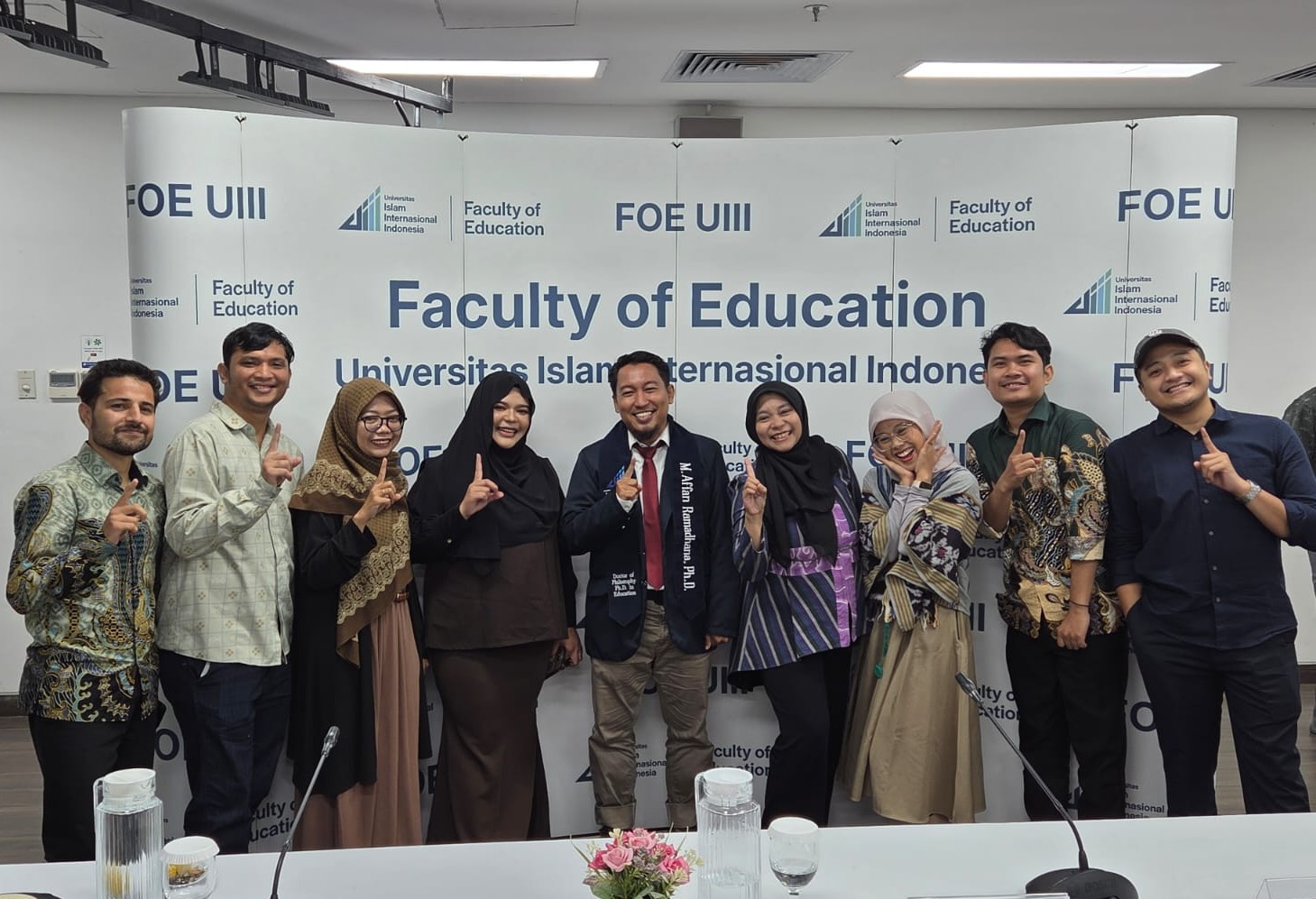
Beyond the viva exam
As the dissertation examination approached, I found myself reflecting less on finishing the dissertation and more on what would come afterward. For almost four years, I have enjoyed the privilege of being a full-time student. My daily responsibility was learning. I could spend entire days reading, thinking, discussing ideas, and improving my research understanding. Returning to professional life meant returning to administrative responsibilities, institutional obligations, and the realities of academic work beyond PhD level study. I worried that I would lose the precious environment that had allowed me to grow. Eventually, I realized that the purpose of doctoral level education is not to remain a student within the university forever. Its purpose is to prepare us to bring what we have learned back into society.
Finally, perhaps the most emotional moment of my journey came at my dissertation defense. When I learned that Prof. George Engelhard, one of the leading scholars in Rasch measurement theory, would serve as one of my examiners, I felt overwhelming anxiety. Alongside Dr. Bahrul Hayat, both examiners were students of Ben Wright, the person who advocates the Rasch measurement theory in the US and to the world. In other words, two of my examiners had direct intellectual connections to the early development of Rasch measurement theory. It was a big burden for me. The thought of defending my work before a giant scholar whose publications had shaped my entire dissertation was intimidating.
When the examination began, the fear gradually disappeared. I realized that over the previous years, I had genuinely learned the field. I could explain my methodology, justify my decisions, interpret my analyses, and respond confidently to challenging questions. It all paid off. I was declared pass with distinction.
Receiving the distinction for my dissertation defense was not my greatest achievement. The greatest achievement was recognizing how far I had traveled through this PhD journey. I entered UIII without knowing anything about Rasch measurement. Yet, I ended with conducting original research using many facet Rasch measurement model and defended it before internationally respected scholars in the field. This transformation still amazes me.
Looking back, every stage of this journey appears connected by countless moments of grace. From discovering the admission announcement by chance, to receiving support from mentors, to finding supervisors who believed in my potential, to learning from remarkable lecturers and fellow students. Every experience contributed to who I have become today. More importantly, this journey has given me a renewed understanding of education itself. Education is not simply the transfer of knowledge and values. It also includes the gradual transformation of how people see themselves and what they believe they are capable of achieving.
Above all, I remain grateful to Allah for every opportunity, every challenge, every mentor, every friendship, and every lesson that shaped this extraordinary journey. My years at UIII have taught me that remarkable destinations are often reached by people who simply continue taking the next step, even when they cannot yet see the entire path ahead.
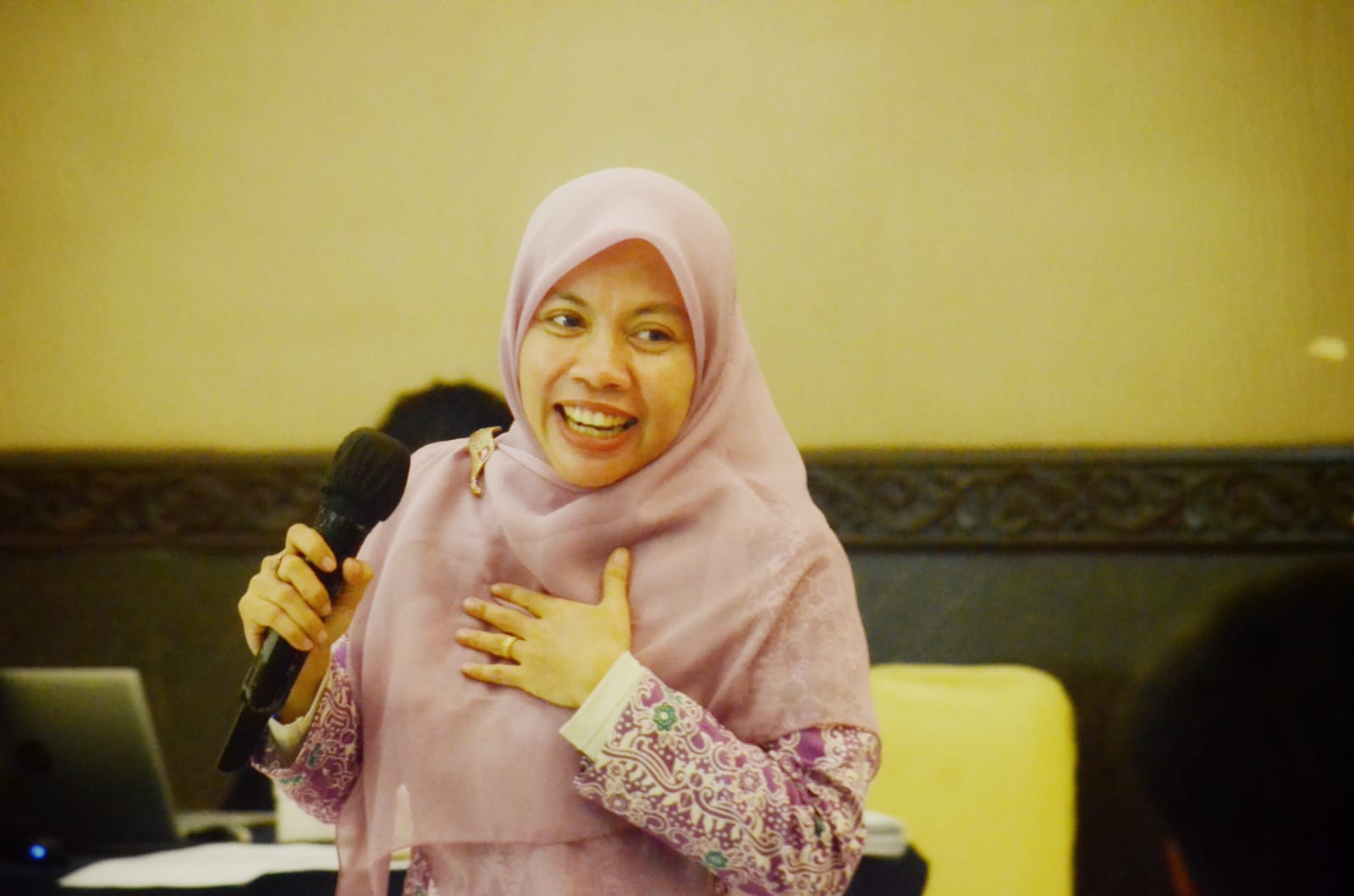
I Once Admired the Facilitators — Now I Am One
I Once Admired the Facilitators — Now I Am One
By Uswatun Hasanah
Some people inspire you without knowing it. I still remember sitting in a room in 2017 as a participant in Camp SOAR 1, a program by RELO (Regional English Language Office of the U.S. Embassy) for 20 selected English teachers across Indonesia — watching the facilitators, and thinking “ how did they get there?” And from that moment, I knew I wanted to be one of them. In May 2026, I was no longer the one watching. I was the one standing in front of the room, hoping to be someone’s reason to dream.
That room was the ACCESS English Camp 2026 — a part of the ACCESS Program, a two-year English learning program organized by RELO (Regional English Language Office of the U.S. Embassy) and IIEF in collaboration with selected host institutions across several cities in Indonesia, including Jakarta, Ambon, Balikpapan, Malang, Padang, and Surabaya. Students are selected from different schools and study English twice a week at their respective host institutions. In Jakarta, that host institution is UKRIDA (Universitas Kristen Krida Wacana), guided by ACCESS teachers selected by RELO and IIEF.
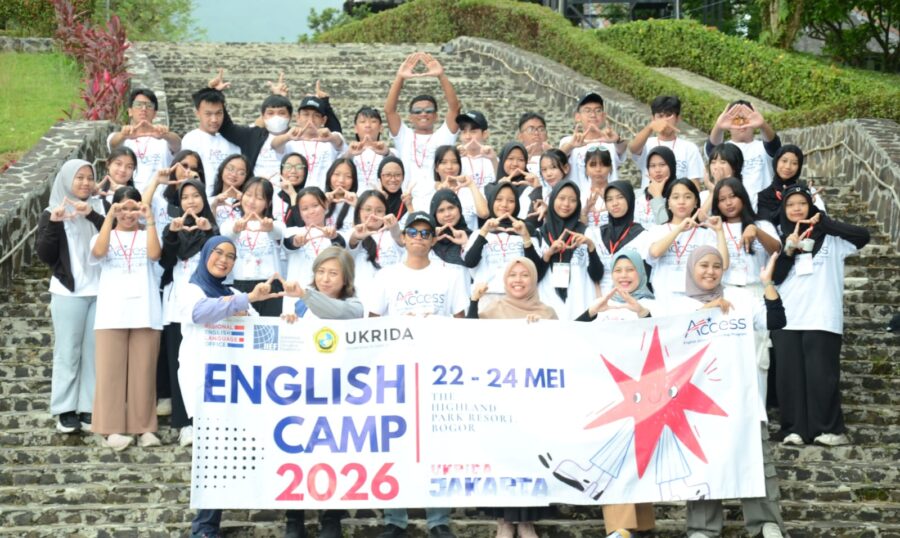
The camp was held from 22–24 May 2026 at Highland Park Bogor, as one of the final programs before students graduate from ACCESS. Over three days, students joined activities designed not only to strengthen their English skills, but also to develop critical thinking, leadership, teamwork, problem-solving, and global awareness. The camp also introduced students to American values and culture as preparation for future opportunities, including studying in the United States.
When I saw the ACCESS Camp facilitator opening, it felt personal immediately. The program was organized by RELO and IIEF — two institutions that had already been part of my story long before this moment. In 2011, I received a U.S. government scholarship under the Indonesian English Language Study Program (IELSP), managed by IIEF, which brought me to Virginia Tech in the United States. Later, I was also a Fulbright FLTA awardee at Ohio University. These experiences made me familiar with the values that U.S. government programs consistently carry — leadership, collaboration, critical thinking, and cultural exchange. So when I saw the facilitator opening, it did not feel like a new opportunity. It felt like coming back to something I already knew and loved.
That was also why I felt confident applying even though I did not fully meet the residency requirement. I am from Serang, Banten , not Jakarta. But I believed I understood the spirit of this program deeply enough to contribute. So I applied anyway.
I still clearly remember the interview. At the end, the interviewers did not ask for a closing statement. But I asked if I could give one anyway. Looking back, it was probably the best decision I made that day.
I told them about Camp SOAR 1, about Virginia Tech, about my Fulbright at Ohio University. I told them I was a public speaker who had stood on local, national, and international stages. And then I said something I genuinely believed: that based on everything I had experienced, I was the best fit for this role.
I was not trying to show off. I just wanted them to understand how much this meant to me, and how ready I was. Sometimes the interview questions alone cannot carry all of that. So, you ask for one more minute, and you say it yourself.
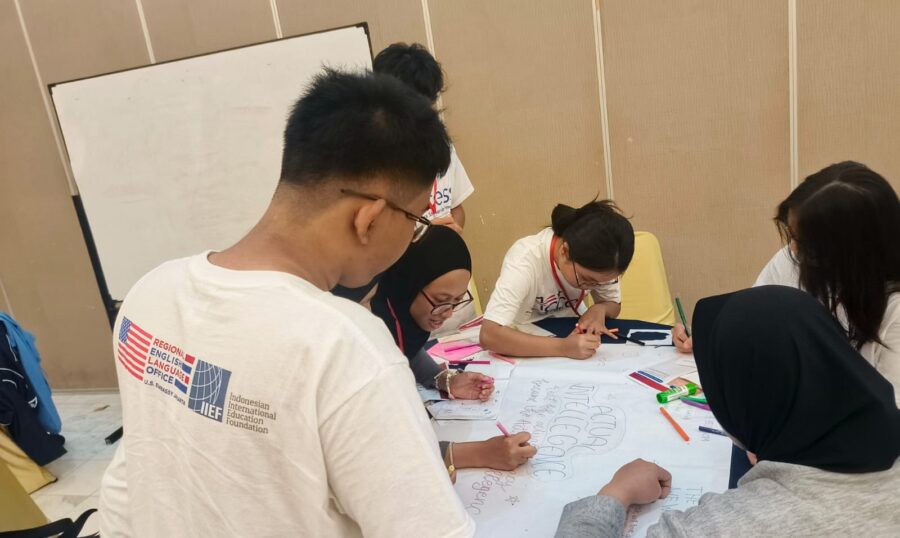
As the facilitator, I was responsible for designing the overall activities. Such as the key sessions, ice breakers, and outdoor games. But honestly, the role taught me something I did not fully expect. Facilitation is not just about having a plan. It is about reading the room, noticing when the energy drops, knowing when to push and when to just let the students talk. There were moments during the camp where the best thing I could do was step back and watch them figure things out themselves. Those were actually my favourite moments.
One of the most memorable parts of the camp was a moment I did not see coming. During the root cause analysis and project pitching activities, students were asked to identify social problems around them. I expected the usual topics — bullying, environmental issues, and sure enough, those came up, including a very passionate discussion about the trash situation in Bantar Gebang. But then several students raised something that made me stop and think. They identified the irresponsible use of artificial intelligence as one of the biggest social problems among young people today.
I was not expecting that. These are teenagers. And they were already thinking critically about AI, not just as a cool technology but as something that could cause real harm if used without responsibility. It was a small moment in the middle of a busy camp, but it stayed with me. It reminded me that sometimes, as educators, we walk into a room thinking we are there to teach. And then the students quietly teach us something instead.
Looking back, becoming an ACCESS English Camp facilitator felt like completing a long circle in my educational journey. Years ago, I sat in a room admiring facilitators who created meaningful experiences for others. In May 2026, I had the chance to be that person for someone else. This experience reminded me that dreams sometimes take years to come true — but they are never meaningless. They quietly shape the choices we make, the skills we build, and the person we become. Until one day, we find ourselves standing in the place we once only imagined from afar.
