
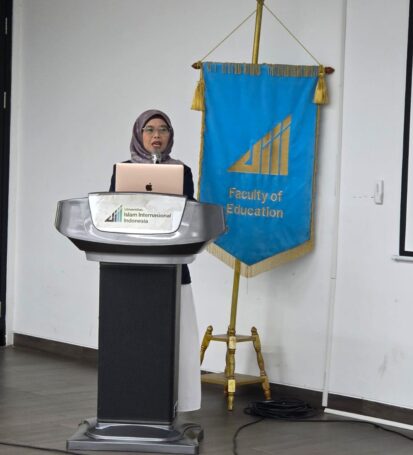
 UIII Did More Than Educate Me: It Transformed Who I Am
By Ade Husna Aminudin
In the late 2014, after graduating from the University of Ez-Zitouna in Tunisia and returning to Indonesia, I came across some fascinating news in the Republika newspaper on the government’s proposal to build the International Islamic University of Indonesia in Depok, West Java. Eight years later, the little whisper I made to myself at that time, that I would continue my degree at that university, became a reality.
Pursuing a doctoral degree has been one of the most meaningful chapters of my life. Looking back on the past several years, I realize that my PhD journey has never been only about earning the title of “Doctor.” Rather, it has been a transformative process of becoming a better learner, researcher, educator, mother, and human being. Every challenge has shaped me, every setback has taught me resilience, and every achievement has reminded me that growth often happens outside our comfort zones.
When I first began my PhD at Universitas Islam Internasional Indonesia (UIII), I knew that I was not entering the program under ideal circumstances. Firstly, I was not a fresh graduate. There was a six-year gap between the completion of my master’s degree and the beginning of my doctoral studies. During those years, life was filled with responsibilities, family commitments, teaching, and various professional experiences. Returning to academic life after such a long interval was both exciting and intimidating. The six-year gap did not diminish my passion for learning, but it certainly required me to readjust to academic life. I had to rebuild study habits that had long been dormant, familiarize myself with the latest research developments, and adapt to a rapidly changing academic environment. At times, I questioned whether I still possessed the ability to compete academically with younger students who had just completed their master’s degrees. However, I gradually realized that academic maturity is not measured by how recently one graduated, but by one’s willingness to continue learning. My previous experiences outside academia became valuable assets rather than disadvantages. They helped me appreciate knowledge from a broader perspective and allowed me to approach research with greater empathy and practical understanding.
Another challenge was language. English is the language of international academia and also the primary medium of instruction at UIII. Unfortunately, English has never been my strongest language. Throughout my educational and professional journey, Arabic has always been much more familiar to me than English. I studied in Arabic-speaking institutions and even taught Arabic both in schools and at the university level before beginning my doctoral studies. Reading Arabic texts, explaining Arabic grammar, and communicating in Arabic had become second nature to me.
In contrast, expressing complex academic ideas in English required tremendous effort. Reading journal articles often took me much longer than it did for my peers. Writing academic papers demanded countless revisions, dictionary consultations, and repeated proofreading. Presenting at seminars in English was initially intimidating, and there were moments when I doubted whether my language proficiency would ever be sufficient.
Nevertheless, I learned that effective communication is not about speaking flawless English but about conveying meaningful ideas with sincerity and clarity. Every presentation, every conference, every discussion with professors, and every academic paper became opportunities to improve. Rather than viewing my limited English proficiency as an obstacle, I came to regard it as a lifelong learning journey. In fact, towards the end of my PhD studies, I even got the opportunity to teach BIPA or Bahasa Indonesia untuk Penutur Asing and became one of the best BIPA instructors awarded by the UIII International Office, it was truly a valuable experience for me! Because at the beginning of my studies I was still stumbling with English, but in the end, I was able to teach foreign students in English. Today, I still believe there is much room for improvement, yet I am proud of how far I have progressed. More importantly, this experience has taught me humility, perseverance, and the courage to keep learning despite imperfections.
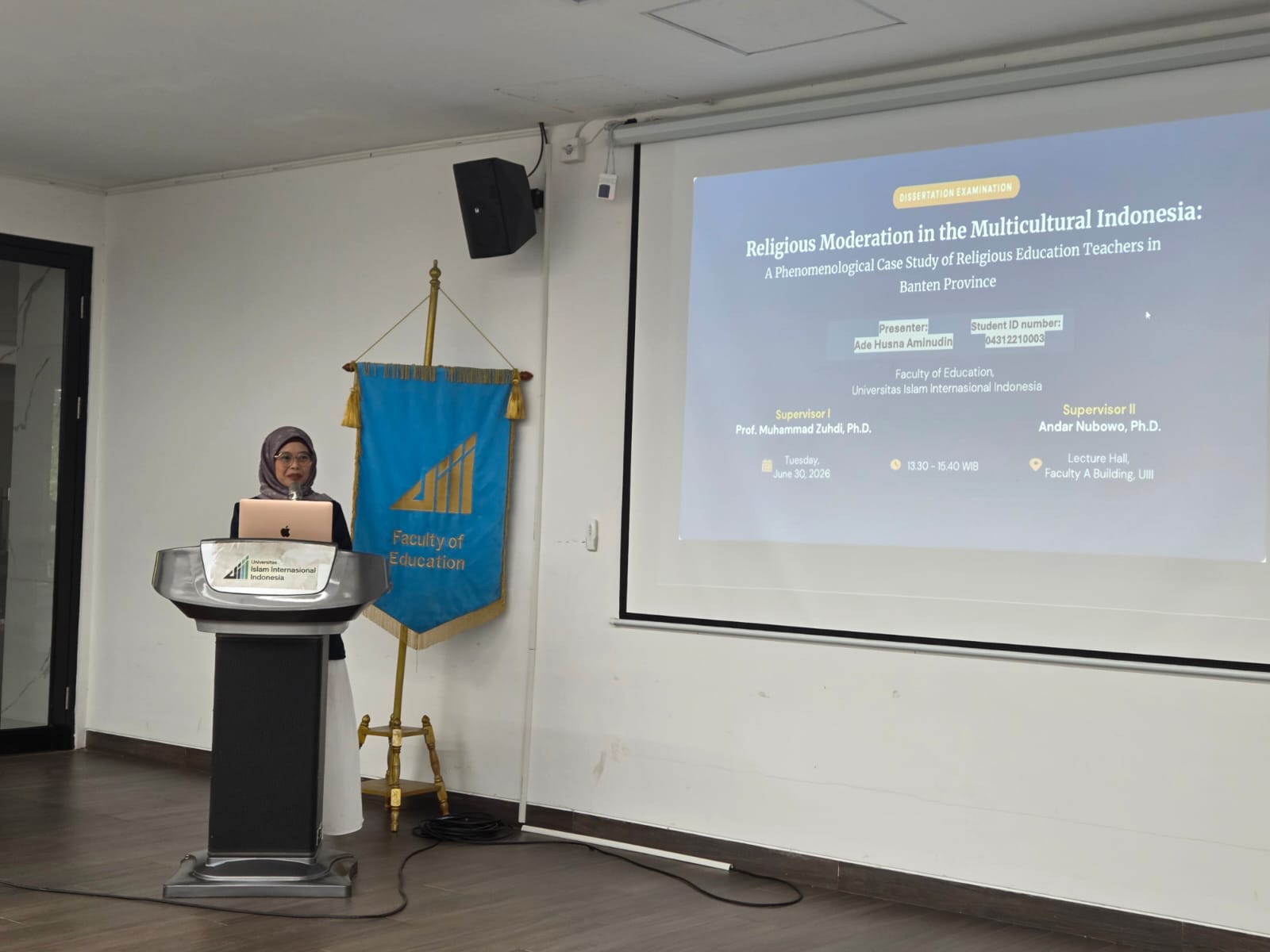
From Motherhood to Schoolarhood
Perhaps the greatest challenge throughout my PhD journey has been balancing academic responsibilities with family life. During my doctoral studies, I was not only a student. I was also a wife and, above all, a mother. Throughout these years, I raised five wonderful children. Remarkably, three of them were born while I was pursuing my PhD. Yes! I was accepted for my PhD while I was 7 months pregnant with my third child, and I was pregnant again, with twin baby as my fourth and fifth kids, in my third year of PhD studies.
Many people assume that motherhood and doctoral studies are incompatible. My experience has taught me otherwise. Certainly, balancing these responsibilities has never been easy. There were days filled with sleepless nights caring for newborn twin babies, followed by mornings attending seminars, preparing presentations, analyzing qualitative data, or revising dissertation chapters. There were moments when my children needed my attention while academic deadlines approached relentlessly. There were also times when exhaustion seemed overwhelming. Yet I have never considered my children to be obstacles to my education. Instead, they have been my greatest source of motivation. Every smile, every hug, and every small achievement they shared reminded me why perseverance matters. They inspired me to become someone who not only speaks about lifelong learning but also lives it.
Interestingly, doing a PhD in my point of view is like a source of happiness and emotional balance. Many people imagine that doctoral study only brings stress and fatigue. While those feelings certainly exist, my experience has been quite different. Going to campus, attending seminars, discussing ideas with friends and professors, conducting research, and writing my dissertation gave me a sense of intellectual fulfillment that positively influenced my personal life. Ironically, after spending long hours studying or conducting research, I often returned home with greater energy and appreciation for my family. Hugging my children after a productive academic day became one of the happiest moments of my life. Rather than making me emotionally distant from my family, my academic journey deepened my gratitude for them.
Sometimes I reflect that if I had simply stayed at home without pursuing my studies, I might have become more easily tired, emotionally overwhelmed, or mentally stagnant. Instead, my PhD journey challenged my mind while enriching my heart. It reminded me that personal growth and family life do not have to compete with each other. They can strengthen one another.
Of course, this journey has not been free from emotional struggles. Like many doctoral students, I have experienced burnout, frustration, self-doubt, overwhelming deadlines, and moments of feeling completely stuck. There were days when my research seemed to make no progress, when revisions felt endless, and when I questioned whether I was capable of finishing my dissertation. Those feelings reminded me of what Pak Bambang once said: “Learning is not fun, it should be hard. If it is fun, it means that it is not learning; it is playing.” Furthermore, Prof. Emi Emilia said, “If you ever cry because of your PhD burdens, it means that you are a normal student.”
However, I eventually realized that such emotions are temporary. They are not signs of failure but natural parts of the doctoral experience. Every period of uncertainty was followed by renewed motivation. Every obstacle eventually became another lesson in patience. Every setback strengthened my resilience. Looking back, I am grateful not only for the successful moments but also for the difficult ones because they shaped my character far more profoundly.
Learning Beyond the Classroom
Another transformative aspect of my PhD journey was learning how to conduct rigorous academic research. Before entering UIII, I had very limited experience in qualitative field research. Concepts such as phenomenological inquiry, in-depth interviews, coding, and qualitative data analysis were entirely new to me. At first, I doubted whether I would ever be able to conduct a high-quality research project.
However, through rigorous coursework, continuous supervision, and abundant opportunities to practice, I gradually developed the knowledge and skills needed to conduct a sophisticated qualitative study. Looking back, I am amazed at how much I have grown, from someone with a very little research experience to a PhD holder capable of designing and conducting a complex field study. One of the proudest moments of my journey was being awarded a competitive research grant, which strengthened my confidence and motivated me to continue contributing to educational research.
Equally meaningful was the academic atmosphere at UIII. The learning environment consistently encouraged us to think critically, ask challenging questions, and engage in meaningful discussions rather than simply accepting existing ideas. Every class became a space where curiosity, reflection, and respectful dialogue were highly valued. This culture not only sharpened my critical thinking skills but also changed the way I approach knowledge and research.
The relationships I built with my lecturers and fellow doctoral students were another invaluable part of this journey. My lecturers were always supportive, approachable, and genuinely committed to helping students grow academically. Meanwhile, my classmates came from diverse academic and cultural backgrounds, making every discussion an opportunity to broaden my perspective. These interactions fostered a strong sense of learning, where we continuously inspired, challenged, and supported one another. For me, this academic community has been one of the greatest blessings of studying at UIII, and it will remain one of the most valuable experiences I carry into my future career.
Throughout this journey, I have been incredibly fortunate to study at Universitas Islam Internasional Indonesia. UIII has provided far more than academic courses. It has created an environment where curiosity is encouraged, diversity is celebrated, and academic excellence is continuously nurtured. One of the greatest blessings of studying at UIII has been the opportunity to participate in various national and international conferences. These experiences broadened my perspectives, introduced me to scholars from different countries, and allowed me to engage in meaningful academic conversations beyond the classroom. Every conference strengthened my confidence and demonstrated that knowledge grows through dialogue and collaboration across cultures.
UIII has also enabled me to build valuable academic networks with distinguished scholars, researchers, policymakers, and practitioners. These connections have enriched both my academic and personal development. They reminded me that research is not an isolated activity but a collective effort to contribute positively to society.
Above all, I am deeply grateful for the guidance of my honorable supervisors, Prof. Muhammad Zuhdi, Ph.D., and Dr. Andar Nubowo. Their patience, constructive criticism, encouragement, and unwavering commitment have been invaluable throughout my doctoral journey. They challenged me to think more critically, write more rigorously, and conduct research with integrity. Their mentorship has shaped not only my dissertation but also my identity as a researcher and educator. I sincerely believe that their guidance will continue to influence my academic career long after I complete this degree.
As I approach the completion of this chapter, I realize that the PhD has transformed me in ways I never anticipated. I entered the program hoping to gain knowledge. I leave with much more than knowledge. I have developed resilience, discipline, humility, intellectual curiosity, and a deeper appreciation for lifelong learning. Most importantly, I have learned that challenges should never be viewed as barriers but as opportunities to grow wiser. Every difficulty carried within it an invitation to become stronger. Every uncertainty encouraged deeper reflection. Every success became more meaningful because it was achieved through perseverance.
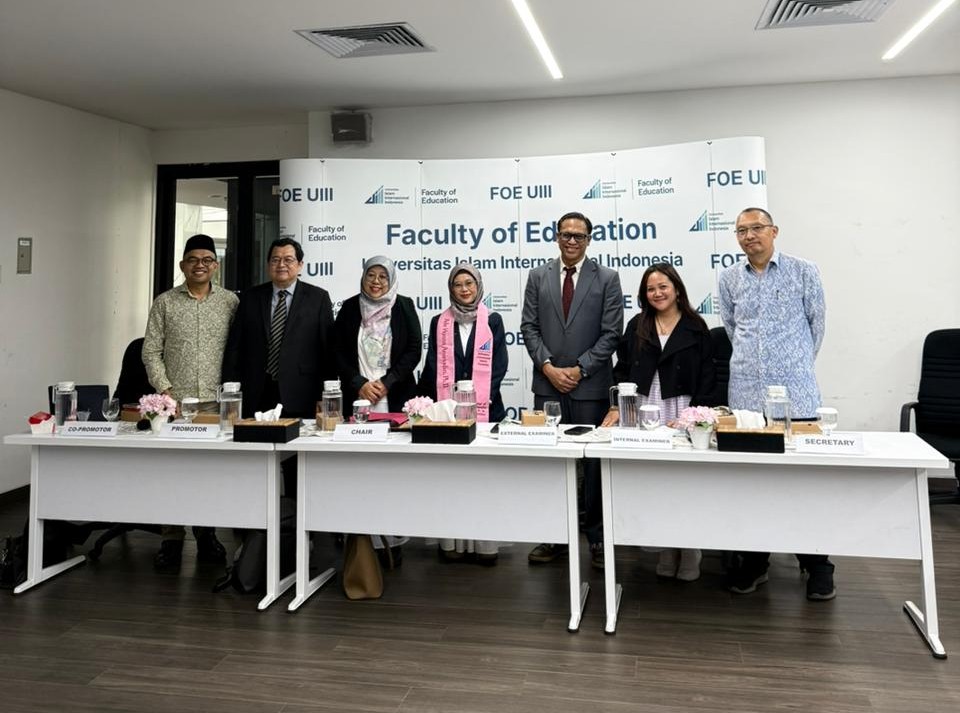
Although this PhD journey may soon come to an end, I sincerely hope that my learning journey will not. I aspire to continue contributing to society through education, research, community engagement, and intercultural dialogue. I hope to share not only my academic knowledge but also the values of resilience, compassion, and lifelong learning that this journey has instilled in me.
In fact, if I were ever given another opportunity to pursue a PhD in a different faculty at UIII, I would gladly embrace it without hesitation. Such is the depth of my appreciation for this university and the transformative environment it has provided. UIII has become more than an institution where I studied; it has become a place where I discovered new dimensions of myself, expanded my intellectual horizons, and built lifelong friendships and professional relationships.
Finally, my heart is filled with gratitude. I thank Allah, the Almighty, for every blessing, every challenge, every lesson, and every person He placed along my journey. I pray that Universitas Islam Internasional Indonesia will continue to flourish as a center of excellence, producing scholars who contribute meaningfully to humanity. May my respected lecturers, supervisors, classmates, staff members, friends, and everyone I have had the privilege to know during this journey always be blessed with good health, happiness, wisdom, and abundant rewards from Allah.
My PhD journey has taught me that education is not only about obtaining degrees. It is about continuously transforming ourselves so that we may contribute more meaningfully to others. And for that invaluable lesson, I will remain forever grateful.