I Once Admired the Facilitators — Now I Am One
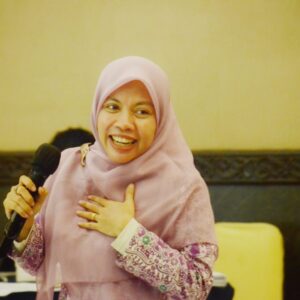
By Uswatun Hasanah
Some people inspire you without knowing it. I still remember sitting in a room in 2017 as a participant in Camp SOAR 1, a program by RELO (Regional English Language Office of the U.S. Embassy) for 20 selected English teachers across Indonesia — watching the facilitators, and thinking “ how did they get there?” And from that moment, I knew I wanted to be one of them. In May 2026, I was no longer the one watching. I was the one standing in front of the room, hoping to be someone’s reason to dream.
That room was the ACCESS English Camp 2026 — a part of the ACCESS Program, a two-year English learning program organized by RELO (Regional English Language Office of the U.S. Embassy) and IIEF in collaboration with selected host institutions across several cities in Indonesia, including Jakarta, Ambon, Balikpapan, Malang, Padang, and Surabaya. Students are selected from different schools and study English twice a week at their respective host institutions. In Jakarta, that host institution is UKRIDA (Universitas Kristen Krida Wacana), guided by ACCESS teachers selected by RELO and IIEF.
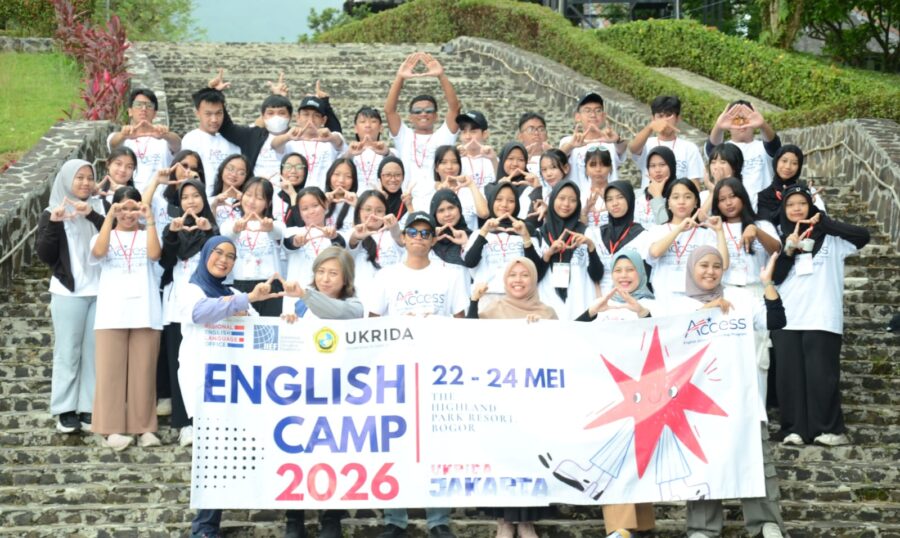
The camp was held from 22–24 May 2026 at Highland Park Bogor, as one of the final programs before students graduate from ACCESS. Over three days, students joined activities designed not only to strengthen their English skills, but also to develop critical thinking, leadership, teamwork, problem-solving, and global awareness. The camp also introduced students to American values and culture as preparation for future opportunities, including studying in the United States.
When I saw the ACCESS Camp facilitator opening, it felt personal immediately. The program was organized by RELO and IIEF — two institutions that had already been part of my story long before this moment. In 2011, I received a U.S. government scholarship under the Indonesian English Language Study Program (IELSP), managed by IIEF, which brought me to Virginia Tech in the United States. Later, I was also a Fulbright FLTA awardee at Ohio University. These experiences made me familiar with the values that U.S. government programs consistently carry — leadership, collaboration, critical thinking, and cultural exchange. So when I saw the facilitator opening, it did not feel like a new opportunity. It felt like coming back to something I already knew and loved.
That was also why I felt confident applying even though I did not fully meet the residency requirement. I am from Serang, Banten , not Jakarta. But I believed I understood the spirit of this program deeply enough to contribute. So I applied anyway.
I still clearly remember the interview. At the end, the interviewers did not ask for a closing statement. But I asked if I could give one anyway. Looking back, it was probably the best decision I made that day.
I told them about Camp SOAR 1, about Virginia Tech, about my Fulbright at Ohio University. I told them I was a public speaker who had stood on local, national, and international stages. And then I said something I genuinely believed: that based on everything I had experienced, I was the best fit for this role.
I was not trying to show off. I just wanted them to understand how much this meant to me, and how ready I was. Sometimes the interview questions alone cannot carry all of that. So, you ask for one more minute, and you say it yourself.
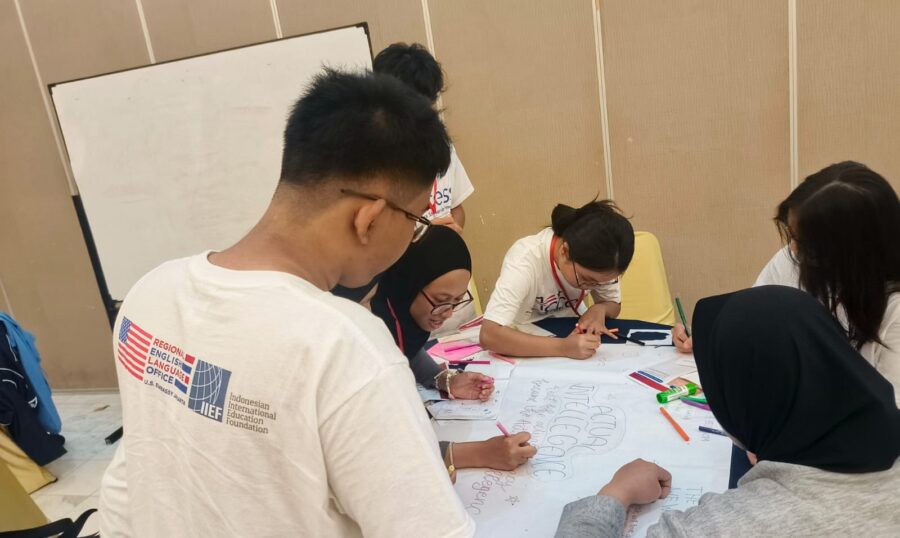
As the facilitator, I was responsible for designing the overall activities. Such as the key sessions, ice breakers, and outdoor games. But honestly, the role taught me something I did not fully expect. Facilitation is not just about having a plan. It is about reading the room, noticing when the energy drops, knowing when to push and when to just let the students talk. There were moments during the camp where the best thing I could do was step back and watch them figure things out themselves. Those were actually my favourite moments.
One of the most memorable parts of the camp was a moment I did not see coming. During the root cause analysis and project pitching activities, students were asked to identify social problems around them. I expected the usual topics — bullying, environmental issues, and sure enough, those came up, including a very passionate discussion about the trash situation in Bantar Gebang. But then several students raised something that made me stop and think. They identified the irresponsible use of artificial intelligence as one of the biggest social problems among young people today.
I was not expecting that. These are teenagers. And they were already thinking critically about AI, not just as a cool technology but as something that could cause real harm if used without responsibility. It was a small moment in the middle of a busy camp, but it stayed with me. It reminded me that sometimes, as educators, we walk into a room thinking we are there to teach. And then the students quietly teach us something instead.
Looking back, becoming an ACCESS English Camp facilitator felt like completing a long circle in my educational journey. Years ago, I sat in a room admiring facilitators who created meaningful experiences for others. In May 2026, I had the chance to be that person for someone else. This experience reminded me that dreams sometimes take years to come true — but they are never meaningless. They quietly shape the choices we make, the skills we build, and the person we become. Until one day, we find ourselves standing in the place we once only imagined from afar.