Dr. Lia M. Boediman’s Lecture at FoE UIII: Enriching the Discourse on Child Mental Health

Dr. Lia M. Boediman’s Lecture at FoE UIII: Enriching the Discourse on Child Mental Health
February 15, 2024
Contributor: Irkham Zamzuri | Editor: Supriyono
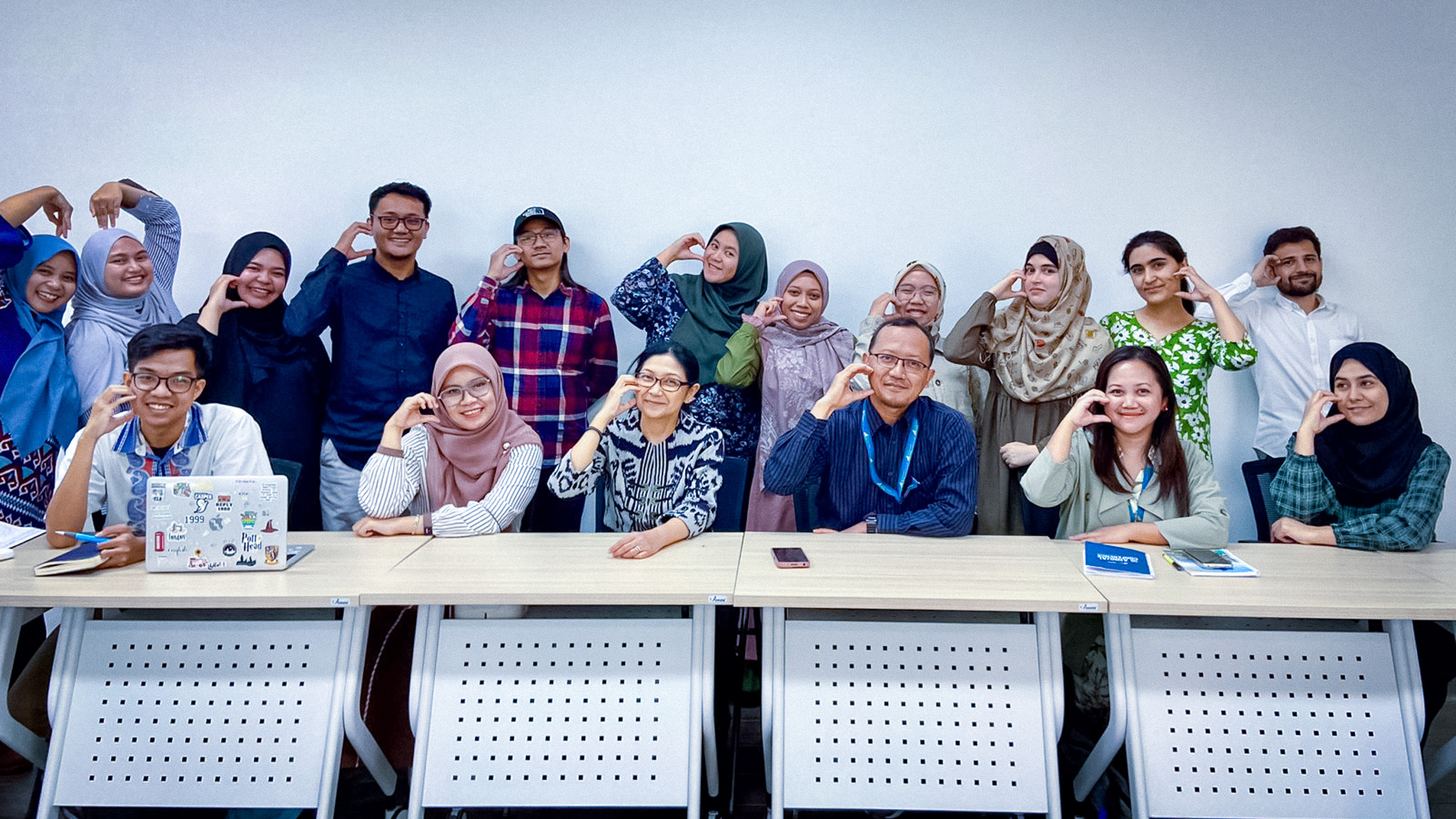
UIII, Depok - The UIII Faculty of Education had the privilege of hosting Dr. Lia M. Boediman, a distinguished lecturer from the Faculty of Psychology at Universitas Indonesia, for a guest lecture on Child Mental Health. This lecture was an integral part of the Child and Student Well-being course, led by esteemed Charyna Ayu Rizkyanti PhD, and Dr. Lukman Nul Hakim, and was attended by students of MA and PhD levels.
Dr. Boediman, a graduate of the doctoral program in Clinical Psychology from Argosy University Hawaii, brought a wealth of knowledge and experience to the lecture. Her presentation, titled "Children's Mental Health in School," delved into three core challenges faced by children in school environments: Social Pressures, Academic Stress, and Familial Issues. These areas are critical to understanding and supporting the mental well-being of students in educational settings.
The lecture emphasized the importance of addressing mental health in school settings, focusing on the need for early intervention, fostering academic excellence, and ensuring long-term health. “Mental health is not merely the absence of mental illness but also involves promoting wellness, social, emotional, and behavioral health, and the ability to cope with life's challenges. Good mental health is critical to children’s success in school and life,” Dr. Boediman explained.
A key highlight of the lecture was the reference to the World Health Organization's (WHO) 2007 recommendation, advocating for schools to function as primary mental health support systems. This involves implementing comprehensive services focused on promotion, prevention, intervention, and rehabilitation to support student mental health.
Dr. Boediman poignantly stated, "Every child has the right to go to school and learn, free from fear," a sentiment that resonates deeply with the values of UIII. The lecture provided valuable insights into the significance of nurturing mental health in educational settings, equipping educators and future researchers with the understanding necessary to support the mental well-being of students.

Equity and Education Course at FoE UIII Highlights Inclusive Practices

Equity and Education Course at UIII Highlights Inclusive Practices
February 16, 2024
Contributor: Irkham Zamzuri | Editor: Supriyono
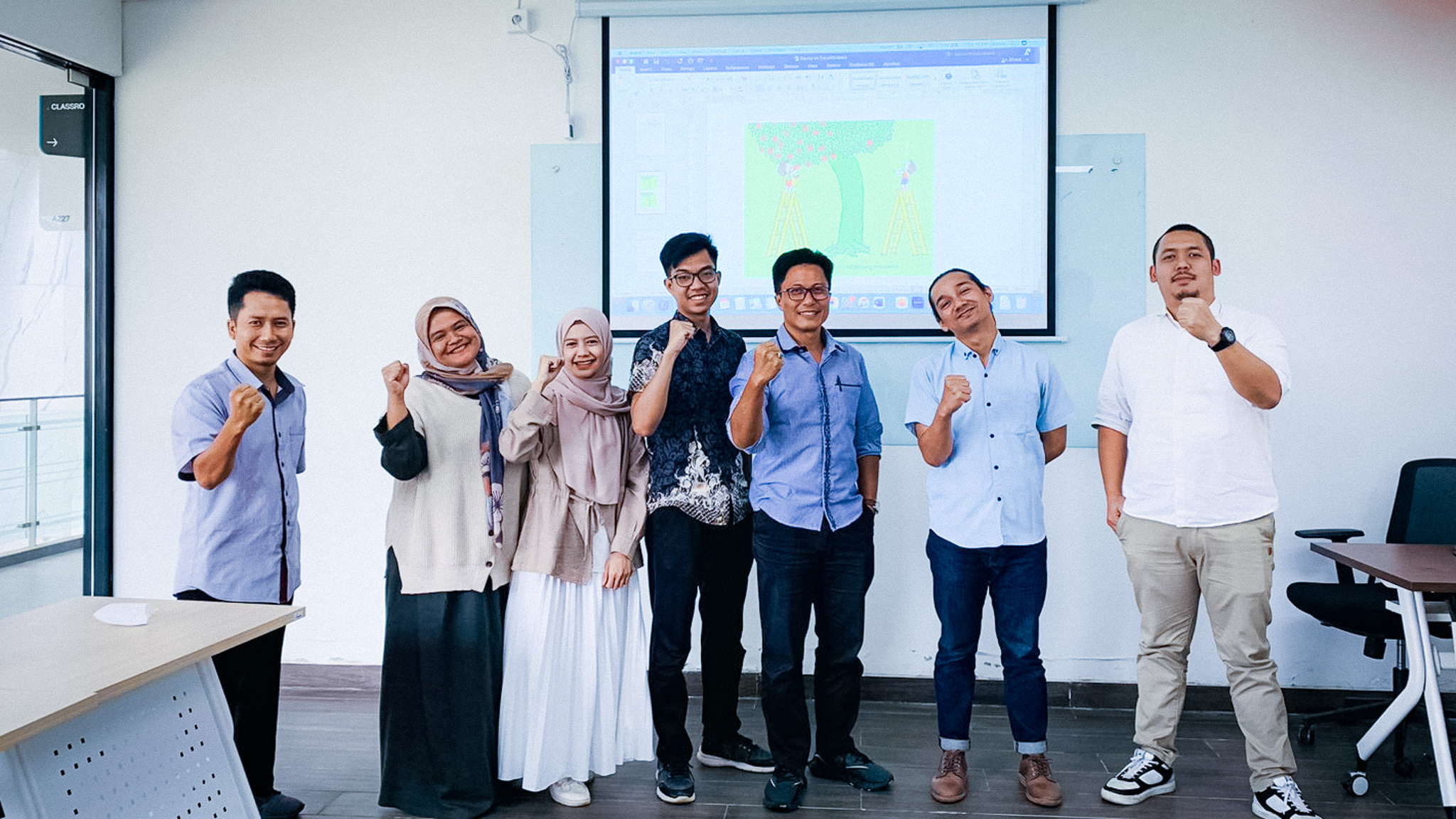
UIII, Depok – The UIII Faculty of Education’s Equity and Education course, convened by R. Alpha Amirrachman, M.Phil., PhD, concluded its last session on January 11, 2024, attended by the dedicated students from the second batch of the faculty, focusing on exploring the depths of educational equity through diverse perspectives.
One of the central discussions in the final class centered around a chapter from the book "Education for Democratic Intercultural Citizenship," edited by Wiel Veugelers and published by Brill in 2019. The chapter entitled "Social and Educational Inclusion in Schools and Their Communities" by Ghazala Bhatti delves into the nuances of social and educational inclusion with a specific focus on the EDIC+ project in the UK context.
The chapter covers a range of topics, including the theoretical background of inclusion, challenges about democracy and human rights, inclusion and disability studies, intersectionality, and fundamental British values. It also discusses a module on social and educational inclusion at Bath Spa University designed to help postgraduate students critically engage with concepts of inclusion in their professional and personal experiences.
In an engaging turn, one of the students in the course connected the academic discussion to real-world applications by sharing his experiences working at Titian Foundation, an NGO in Klaten Regency, Central Java. This organization dedicates itself to providing full scholarships to underprivileged senior and vocational high school students, supporting them not only financially but also through nurturing essential soft skills.
The foundation's comprehensive approach includes covering school fees, textbooks, and uniforms for three years, along with a mentorship program. Mentors play a crucial role in tracking students' progress, liaising with teachers, engaging with parents, and fostering a supportive community among the scholarship recipients.
This student's reflection on the foundation's work highlighted how education opportunities extend beyond academic achievements. The foundation emphasizes creating equal opportunities for students who wish to continue their education but face financial barriers. Their approach aligns with the concept of social justice in education, focusing on equality of opportunities and capabilities as well as outcomes.
After listening to the discussion, Eka Hermansyah, one of the students, responded by emphasizing the follow-up program that must be designed by schools. “For now, every student in each level of schooling years has received financial aid from the government through several schemes, but it seems that those funds are not allocated well. Schools need to prepare affirmative programs to provide additional assistance or personalize mentoring toward students’ different needs,” he highlighted.
Another student, Mayola Andika, was impressed with the equity and education class. It broadened her understanding of inclusiveness. Inclusive education is not only related to students with disabilities but also involves students who come from poor families.
“Inclusiveness is interpreted as "education for all", anyone has the right to get access to education regardless of their background, whether they are from different races and ethnicities, gender, religion, social status, and others. This includes children from low-income families,” she highlighted.
Mayola concluded that financial support alone is not enough to form children's motivation to achieve their dreams. This must be balanced with motivation from teachers and mentors so that this child can design his future map for life and have a great desire to achieve it.
The Equity and Education course at UIII, through its diverse curriculum and insightful student contributions, underscores the importance of exploring and understanding different facets of educational equity. This course not only provides a theoretical foundation but also encourages students to reflect on practical applications in real-world settings. The Faculty of Education at UIII remains committed to addressing educational challenges and promoting inclusive practices. The insights and experiences shared in this course are invaluable contributions to the broader conversation on equity in education.
source: https://www.uiii.ac.id/news/57499/equity-and-education-course-at-uiii-highlights-inclusive-practices
FoE’s Lunch Talk #25 on Spatial Reasoning in Numeracy Learning

FoE’s Lunch Talk #25 on Spatial Reasoning in Numeracy Learning
February 15, 2024
Contributor: Irkham Zamzuri | Editor: Supriyono
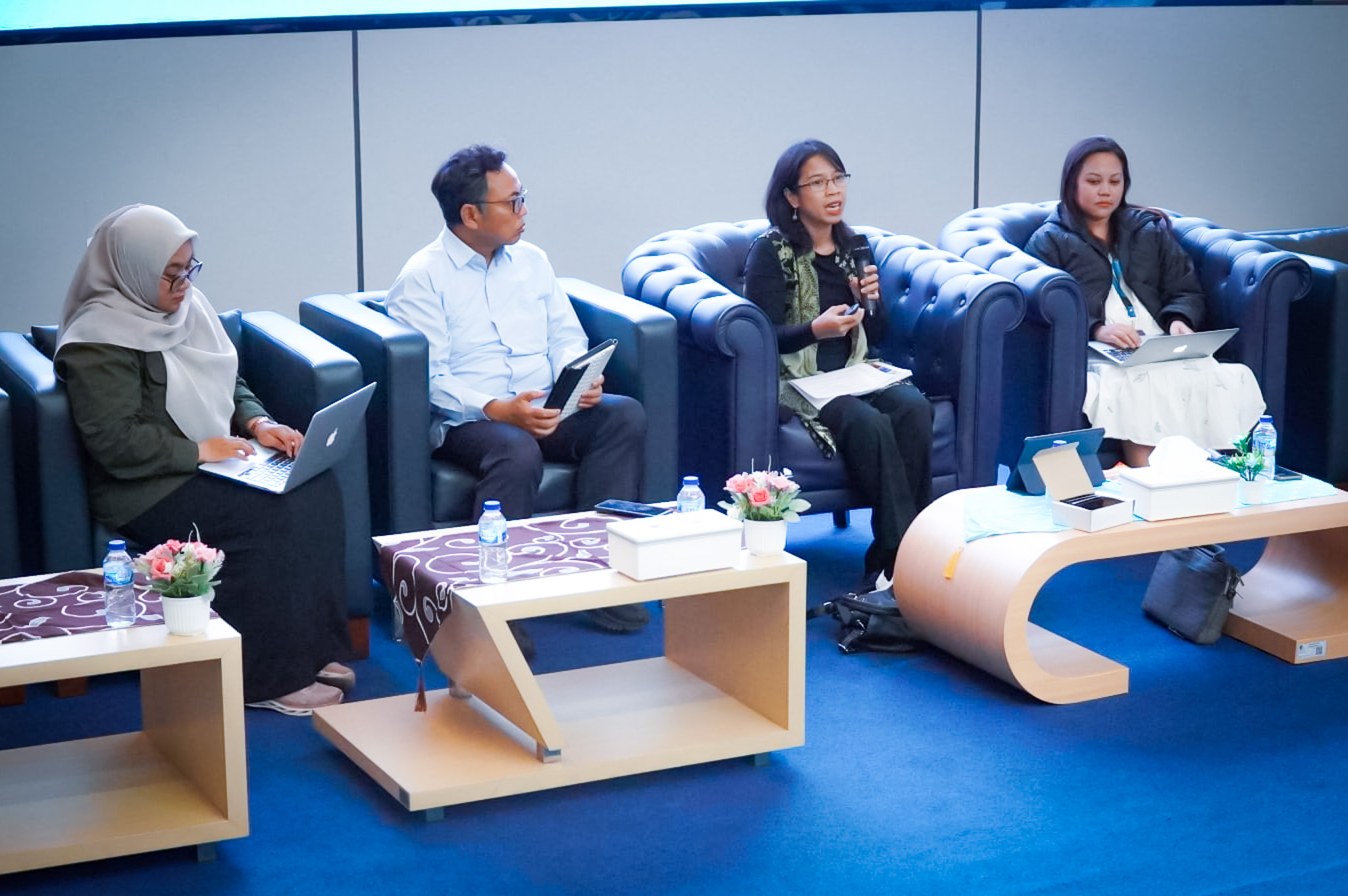
UIII, Depok – The UIII Faculty of Education (FoE), in a synergistic collaboration with SEAMEO CECCEP (Southeast Asian Ministers of Education Organization Regional Centre for Early Childhood Care Education and Parenting), hosted an enlightening Lunch Talk #25 on addressing spatial reasoning in numeracy learning.
The event shone a spotlight on the pioneering research conducted by Dr. Destina Wahyu Winarti of UIII and Assoc. Prof. Wanty Widjaja from Deakin University, Australia, focused on an innovative approach to enhancing early childhood education with the topic "Promoting Spatial Reasoning of Early Childhood Educators to Support Numeracy Learning."
This talk comes at a crucial time when the Indonesian Early Childhood Education Directorate General is emphasizing a holistic and integrative approach to early childhood education, with a particular focus on strengthening numeracy skills from an early age. Research has consistently highlighted spatial reasoning as a key predictor of numeracy success in later years, and this session shed light on how this can be effectively integrated into early childhood education.
Dr. Winarti and Assoc. Prof. Widjaja shared insights from their study, which proposes to integrate spatial reasoning within play-based activities, a method proven to be highly effective in early learning environments. The aim is to build the capacity of early childhood educators, enabling them to co-design spatially rich, play-based classroom activities. These activities, when implemented in their workplaces, are expected to offer valuable insights and experiences.
The session underscored the importance of engaging educators in the development of these activities, ensuring that they are not only practical but also resonate with the children's learning needs. By reflecting on their experiences, educators can further refine these practices, making them more impactful.
Dr. Winarti explained the result of the research, saying that the professional learning program supports Early Childhood Education (ECE) educators in designing play based-learning activities that support children's spatial reasoning.
"The research finding offers ECE a good understanding of spatial ability and spatial thinking, deepening ECE's understanding of some key numeracy concepts, including one-to-one correspondence and cardinality. Exposure to spatially rich play-based activities allowed ECE to design and adapt the activities for their ECE centers," Dr. Winarti elaborated.
The event was well-received by attendees, comprising students, faculty members, and professionals in the field of education, who gained valuable insights into the role of spatial reasoning in early numeracy development. The session also provided a platform for discussion and collaboration among educators and researchers, fostering a community dedicated to advancing early childhood education in Indonesia.
source: https://www.uiii.ac.id/news/57498/foes-lunch-talk-25-on-spatial-reasoning-in-numeracy-learning
Students Meeting Their Academic Advisers Seen as Opportunity for Guidance

Students Meeting Their Academic Advisers Seen as Opportunity for Guidance
February 12, 2024
Contributor: Erickson Samson | Editor: Supriyono
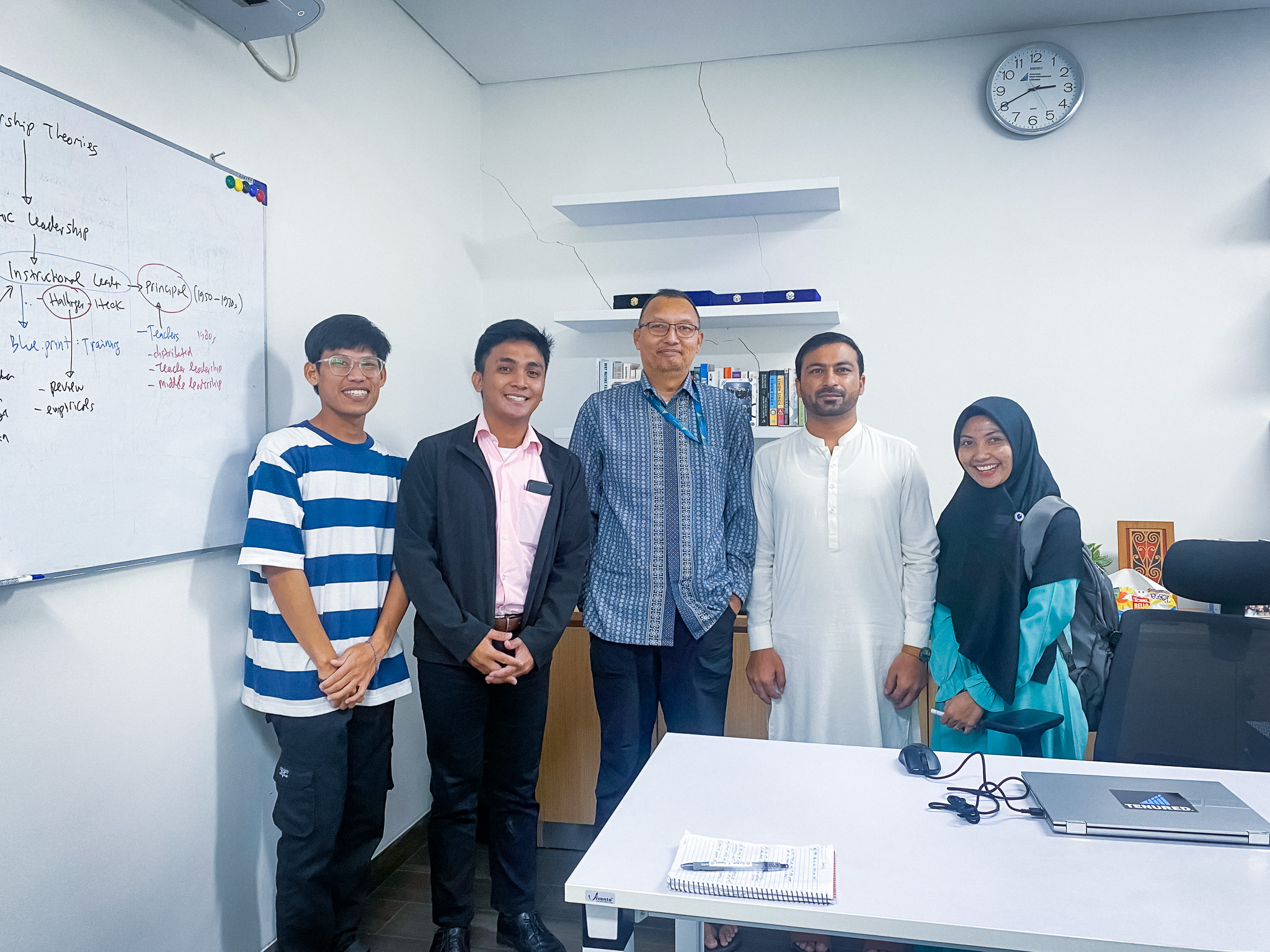
UIII, DEPOK - On January 22, 2024, we took the opportunity to pay a second visit to our esteemed academic adviser, Dr. Bambang Sumintono. I went with Khizer Hayat, Nana Suliyana and Nasrullah. One of the best things that I learned as a student is lifelong learning and the quality of being teachable. As we pursue graduate studies in Education at UIII, I told myself that I would never miss the chance and opportunity to become teachable as I considered myself insatiable in learning and open to ideas and discussions with whom I met every day.
Being teachable means believing we are open to every constructive idea and lesson, not only from our classmates and friends but also from our academic advisors and mentors who are there to guide us in our academic journey. We acknowledge that academia is an environment or community where there is the pursuit of knowledge, education, and research. Hence, we expect that this community consists of thinkers who are experts in their fields, and our role as students or researchers is to learn from the people around us as it is part of scaffolding learning that stresses our ability to learn through the guidance of those people.
“Meeting an academic adviser is important for personalized guidance, concentration selection, and career planning, ensuring students stay on track to meet their academic and professional goals,” Khizer Hayat, an MA in Education student, said, emphasizing the need for advice that every student should maximize.
Dr. Bambang Sumintono then emphasized the importance of meeting our academic advisers. When we met him, he stressed the importance of choosing the right concentrations with which our hearts say. “Some students sometimes need guidance for academic matters.” The guidance is needed to navigate the students’ academic journey.
Students have both acknowledged the importance of seeking guidance as part of the learning process. Dr. Sumintono has encouraged the students to visit their academic advisers as frequently as possible and guide the students on their academic journey to know if they are choosing a good concentration according to what their hearts call. Also, let them know at the very beginning the importance of choosing a concentration that might be of interest to them so they can easily explore more about the subjects they choose.
Dr. Ahmed Mohamed Talks About Islamic Leadership Philosophies at FoE UIII

Dr. Ahmed Mohamed Talks About Islamic Leadership Philosophies at FoE UIII
January 17, 2024
Contributor: Maroof Ahmed | Editor: Supriyono
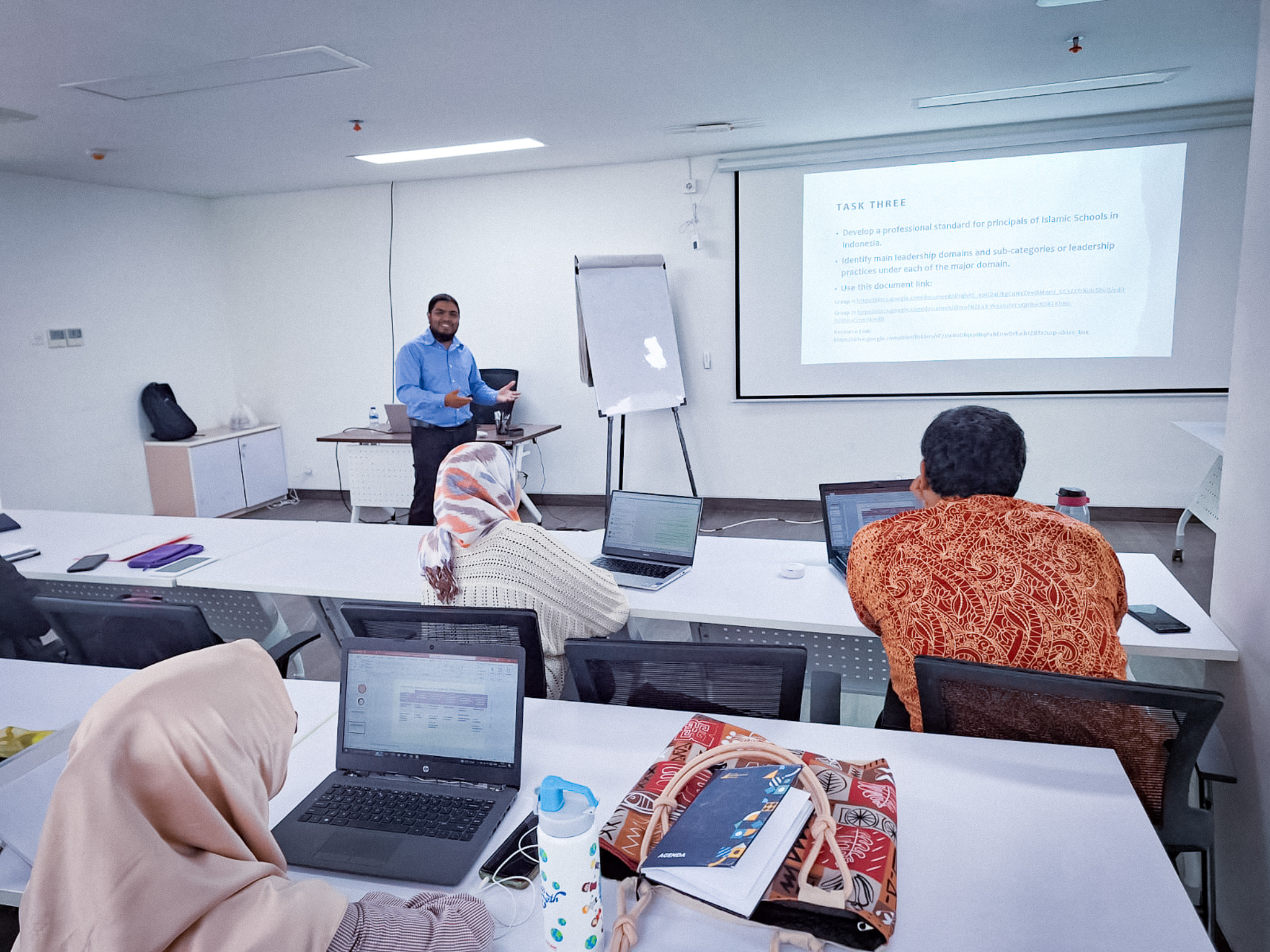
UIII.AC.ID, DEPOK - The Faculty of Education (FoE) at Universitas Islam Internasional Indonesia (UIII) recently welcomed Dr. Ahmed Mohamed, Assistant Professor at The Maldives National University, where he delivered a guest lecture on educational leadership from an Islamic perspective, exploring the core principles and philosophies of leadership in the context of Islamic teachings.
Dr. Mohamed began by elucidating the various Arabic terms for a leader, including imam, amir, malik, khalifah, and sulthan, indicating the multifaceted nature of leadership in Islam. He emphasized that the concept of leadership in Islamic texts is often conceptualized as ra‘in (leader), khalifah (steward), and amir (ruler). Referencing a hadith from al Bukhari and Sahih Muslim, Dr. Mohamed highlighted that "all of you are leaders and are accountable for your flock," indicating the universal and responsible nature of leadership in Islam .
Delving deeper, Dr. Mohamed described the underlying philosophies of educational leadership in Islam, anchored in the concepts of Tawhid (oneness) and ‘ilm (knowledge). "Tawhid holds that God is the ultimate authority above every leader," he explained, underscoring the importance of monotheism in Islamic leadership. Additionally, he mentioned the significance of knowledge, derived from both the Qur’an and the practices of the Prophet Muhammad and his companions .
Moreover, Dr. Mohamed emphasized the responsibility of leaders to strive for the common good, a concept repeatedly mentioned in the Qur'an. "It is the leader's responsibility to command the right and forbid the wrong," he cited, pointing out the crucial role of leaders in establishing and maintaining social justice. This directive is central to Islamic leadership, guiding leaders to prioritize ethical and just actions in their roles .
Dr. Mohamed also discussed the development of Islamic school leadership models, their competencies, and the challenges faced by leaders in Islamic contexts. This included exploring leadership models in Thailand and examining how Islamic values influence educational leadership in the Maldives. The discussion highlighted issues such as the lack of autonomy for school leaders, the challenges of being 'sandwiched' between the Ministry of Education and community expectations, and the impact of these factors on leadership practices .
Dr. Ahmed Mohamed's lecture at UIII was a significant contribution to the discourse on educational leadership, offering a unique perspective. His expertise and insights are invaluable for educators and leaders who seek to integrate ethical and spiritual dimensions into their leadership practices. His guidance serves as a beacon for those aspiring to lead with integrity and wisdom in the diverse and complex field of education.
Prof. Yan Zi Delves into Rasch Measurement in an Online Lecture at FoE UIII

Prof. Yan Zi Delves into Rasch Measurement in an Online Lecture at FoE UIII
January 17, 2024
Contributor: Maroof Ahmed | Editor: Supriyono
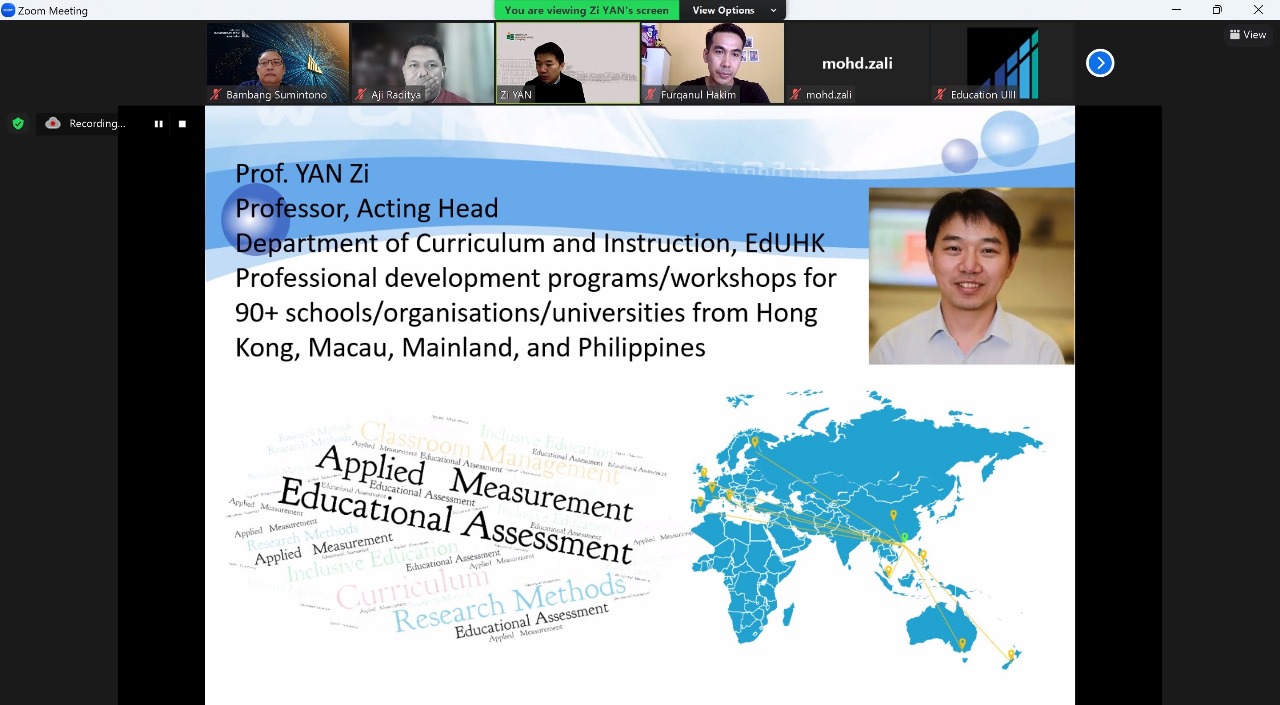
UIII.AC.ID, DEPOK - The Faculty of Education (FoE) at Universitas Islam Internasional Indonesia (UIII) was recently graced by an illuminating online lecture presented by Prof. Yan Zi from The Education University of Hong Kong (EdUHK), who presented an in-depth exploration of Rasch Measurement in educational research, offering a rich discourse on its applications and impact, enhancing the understanding of this crucial assessment tool in educational settings.
Prof. Zi, an esteemed figure in the field of education, commenced his lecture by providing a foundational understanding of Rasch Measurement. "What's Rasch Measurement?" he posed, leading into an extensive discussion about its significance in educational research.
The lecture then transitioned into the practical applications of Rasch Measurement. Prof. Zi highlighted its role in "developing new instruments, vertical scales, path analysis, and classroom testing." He delved into the development of instruments like the Self-assessment Practices Scale (SaPS), which is theory-driven and based on a self-assessment process model. This model, as Prof. Zi explained, follows a cyclical approach to self-assessment, indicating its comprehensive nature.
Providing a more philosophical and technical perspective, Prof. Zi contrasted the Rasch model with the 2P and 3P IRT models. He explained, "In the Rasch model, the data fit the model, whereas in the 2P and 3P IRT models, the model fits the data." This distinction underscores the unique approach of the Rasch model in educational research, emphasizing a more tailored and precise measurement system.
Moreover, Prof. Zi discussed Rasch Measurement's transformative capability, turning ordinal raw scores into interval measures, thereby enabling more precise and meaningful analysis of test results. This transformation is particularly beneficial for generalizing test results, comparing students across different tests, and conducting thorough statistical analyses of educational data.
Prof. Yan Zi's lecture at UIII was a remarkable blend of theoretical knowledge and practical application, offering a comprehensive overview of Rasch Measurement in educational research. His contributions extend beyond the lecture, resonating with the core values of academic rigor and innovation. His guidance and expertise are a significant addition to the field of educational research and measurement, inspiring educators and researchers alike.
Dr. Siti Nadya Zynuddin's Lecture on Academic Writing and Publication at FoE UIII

Dr. Siti Nadya Zynuddin's Lecture on Academic Writing and Publication at UIII
January 16, 2024
Contributor: Maroof Ahmed | Editor: Supriyono
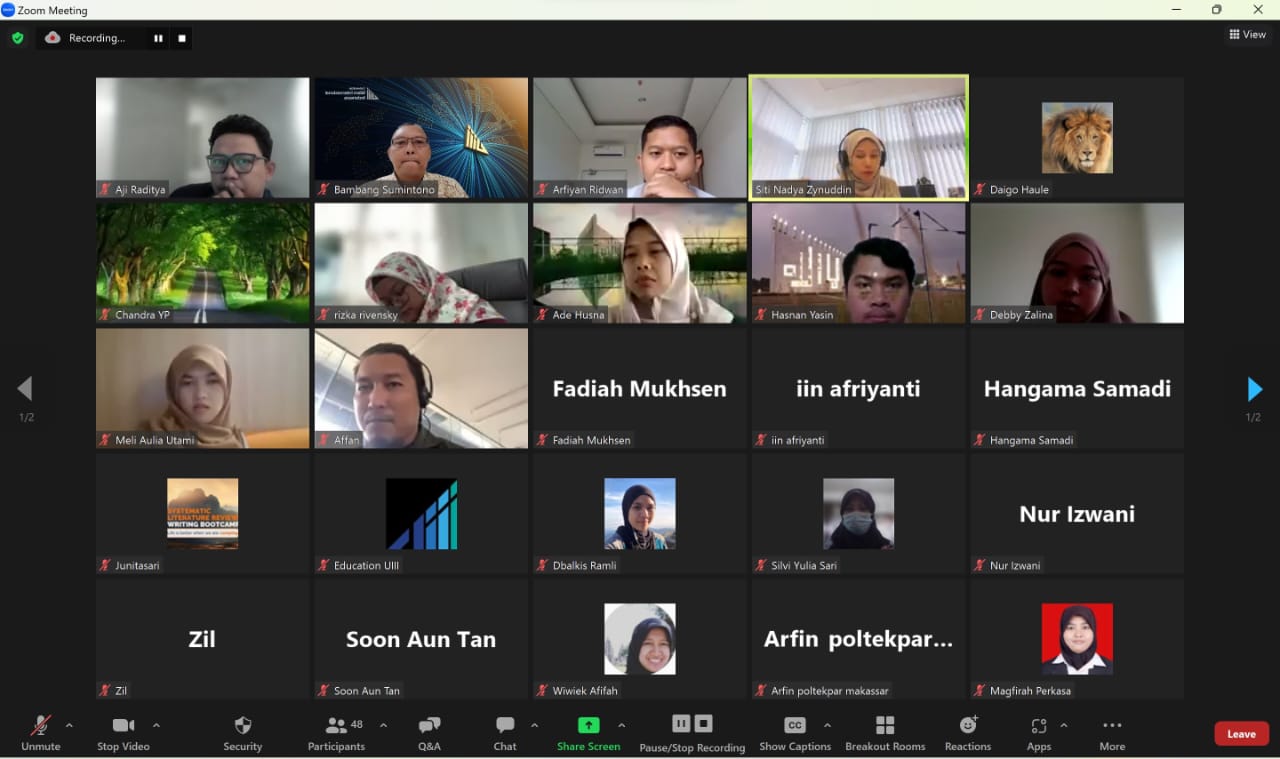
UIII.AC.ID, DEPOK - The Faculty of Education (FoE) at Universitas Islam Internasional Indonesia (UIII) recently hosted an enlightening LunchTalk featuring Dr. Siti Nadya Zynuddin, a renowned academic from Universiti Malaya, where she captivated attendees with her comprehensive insights into the journey from systematic literature reviews (SLR) to successful journal article publication.
Dr. Zynuddin opened her lecture by emphasizing the critical role of identifying gaps in existing research, highlighting the scarcity of SLR articles in research areas aimed to be published in good journals. She reflected on her work ‘The relationship between school climate and students’ non-cognitive skills: A systematic literature review’ published in Heliyon, as an example of filling such a gap.
Transitioning to the writing process, Dr. Zynuddin shared her methodical approach. "Read other SLR articles from good journals in my field, learn about SLR techniques, and search for articles guided by the PRISMA method," she advised. She underscored the importance of critical analysis and writing, "Analyzing the findings and asking 'so what?' about them helped me articulate the uniqueness of my study".
In academia, challenges are inevitable. Dr. Zynuddin candidly spoke about facing time constraints and rejections, common hurdles in the publication process. She stressed the importance of resilience, "Rejections and major revisions are part of the peer review process," reflecting the reality of academic publishing.
Dr. Zynuddin also shared strategies for overcoming setbacks. "Upgrade your article content, find other similar SLR articles, and attend related PhD classes to learn new knowledge," she recommended. Her mantra, "Never give up, you’ll be there," served as a motivational beacon for aspiring researchers.
Concluding the lecture, Dr. Zynuddin reflected on her journey, emphasizing continuous learning, seeking help from mentors, and never giving up in the face of rejection. Her insights provided a roadmap for emerging academics in their pursuit of successful publication.
Dr. Siti Nadya Zynuddin's lecture aligns with UIII's commitment to academic excellence. It was a testament to the resilience and dedication required in scholarly pursuits. Her experience and guidance are invaluable for students and faculty at UIII, who are navigating the complexities of academic research and publication. Her journey from identifying a research gap to successful publication serves as an inspiring template for academic perseverance and success. Her contribution to guiding future researchers is a significant addition to the field of academic research and education.
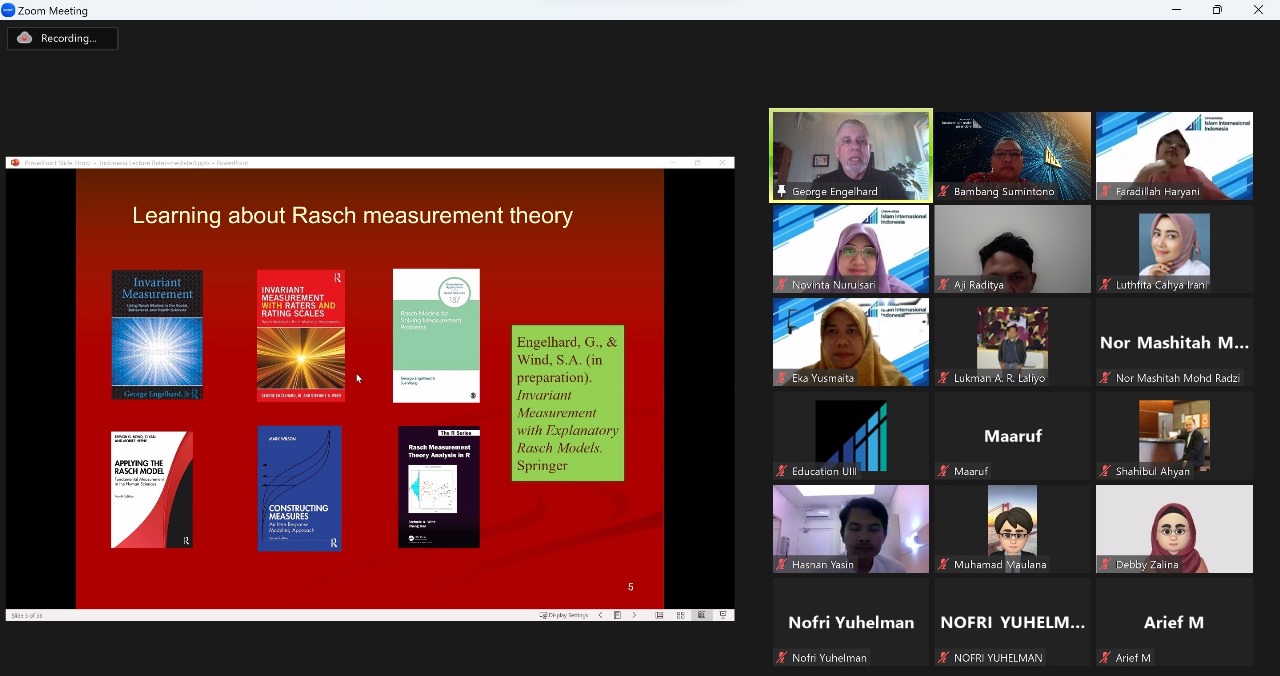
Prof. George Engelhard Delivers a Lecture on Invariant Measurement at FoE UIII

Prof. George Engelhard Delivers a Lecture on Invariant Measurement at FoE UIII
January 13, 2024
Contributor: Maroof Ahmed | Editor: Supriyono
UIII.AC.ID, DEPOK - In a notable academic exchange bridging the United States and Indonesia, the Faculty of Education (FoE) at Universitas Islam Internasional Indonesia (UIII) recently hosted an online guest lecture featuring Prof. George Engelhard from the University of Georgia, who delivered a detailed lecture on Invariant Rater-Mediated Measurement, highlighting the critical importance of unbiased and objective assessment methods in educational settings.
During the lecture, Prof. Engelhard stressed the necessity of maintaining objectivity in educational assessments. He referenced the work of Prof. Ben Wright, asserting, "The calibration of measuring instruments must be independent of those objects that happen to be used for the calibration. The measurement of objects must be independent of the instrument that happens to be used for measuring."
This principle underpins the need for unbiased measurement approaches in educational assessments, ensuring that the results are not skewed by the instruments or the objects used in the calibration process.
Further exploring the concept of invariant measurement, Prof. Engelhard detailed the three key facets necessary for achieving unbiased assessments: sample-invariant calibration of items, item-invariant measurement of persons, and rater-invariant measurement.
"The measurement of persons must be independent of the particular raters that happen to be used for measuring," he emphasized, highlighting the need for assessments that remain consistent and fair regardless of the raters involved.
A significant portion of the lecture was dedicated to the methods of achieving high model-data fit, which is crucial for obtaining invariant estimates of person competence across different subsets of raters. Prof. Engelhard explained, "If the degree of model-data fit is high, then invariant estimates of person competence can be obtained across different subsets of raters. Statistical adjustments for rater severity can only be justified when model-data fit is good." He elaborated that these invariant estimates are instrumental in improving the objectivity and fairness of the overall assessment system.
In concluding his lecture, Prof. Engelhard discussed the importance of achieving good model-data fit for invariant calibration of rater-mediated assessment and rater-invariant measurement. He pointed out that various statistical indices and graphical displays, based on the Facets model, are crucial tools for exploring sources of misfits and identifying potential problems in educational assessments.
The session facilitated by UIII provided a platform for meaningful academic dialogue and exchange in the field of educational measurement, significantly contributing to the global conversation on creating fair and objective assessment methods. Prof. Engelhard's expertise and in-depth analysis of invariant measurement offered valuable insights to educators and researchers at UIII, underscoring the importance of unbiased and equitable assessment practices in education .
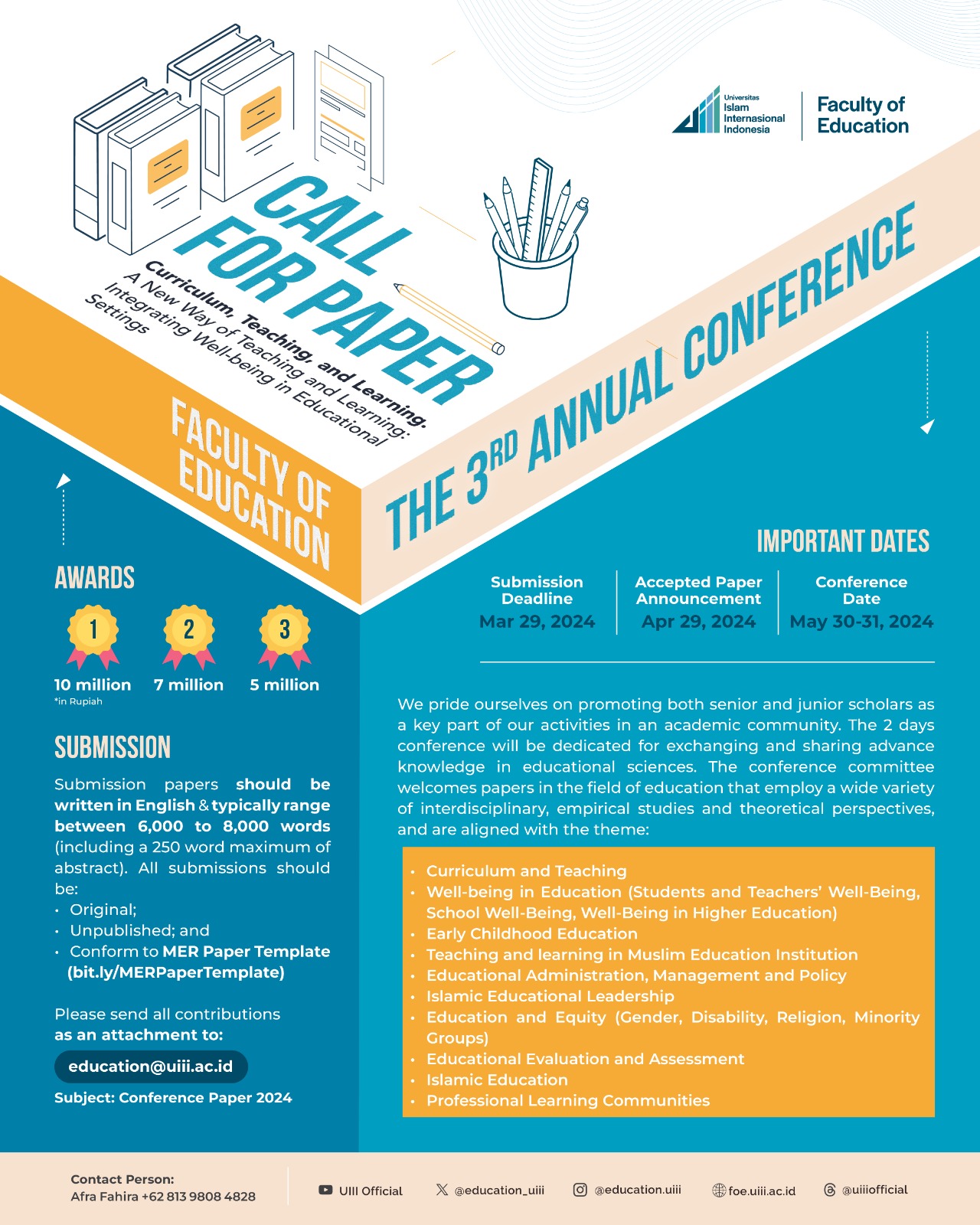
Call for Paper: The 3rd Faculty of Education Annual Conference
The Faculty of Education, Universitas Islam Internasional Indonesia (UIII), proudly present the 3rd Annual Conference, with the theme Curriculum, Teaching and Learning and the topic of A New Way of Teaching and Learning: Integrating Well-Being in Educational Settings
In this conference, we pride ourselves on promoting both senior and junior scholars to be part of this excellent opportunity. The two days conference will be dedicated for exchanging and sharing advance knowledge in educational sciences.
The conference committee welcomes papers in the field of education that employ a wide variety of interdisciplinary, empirical studies and theoretical perspectives, and are aligned with the theme. The sub-themes of the conference are:
· Curriculum and Teaching
· Well-being in Education (Students and Teachers’ Well-Being, School Well-Being, Well-Being in Higher Education)
· Early Childhood Education
· Teaching and learning in Muslim Education Institution
· Educational Administration, Management and Policy
· Islamic Educational Leadership
· Education and Equity (Gender, Disability, Religion, Minority Groups)
· Educational Evaluation and Assessment
· Islamic Education
· Professional Learning Communities
The three best papers submitted for this conference will be awarded: (1) IDR 10.000.000, (2) IDR 7.000.000, and (3) IDR 5.000.000. The best paper recipients should commit to publishing their article in our flagship journal, Muslim Education Review (MER).
Important Dates:
Submission deadline: March 29, 2024
Announcement Date: April 29, 2024
Venue: UIII Campus, Depok, West Java.
MER full paper template: https://bit.ly/MERPaperTemplate
Please send all contribution as an attachment to: education@uiii.ac.id with subject Conference Paper 2024


Prof. Nina Nurmila of FoE Redefines Islamic Law for Gender Equity

Prof. Nina Nurmila of FoE Redefines Islamic Law for Gender Equity
January 10, 2024
Contributor: Maroof Ahmed | Editor: Supriyono
UIII.AC.ID, DEPOK - In a profound lecture hosted by the Indonesian Student Association (ANUISA) of Australian National University (ANU), Prof. Nina Nurmila, Dean of the Faculty of Education (FoE) at Universitas Islam Internasional Indonesia (UIII), delved into the intricate relationship between Islamic law and gender roles, offering a fresh perspective on addressing the escalating divorce rates in Bandung, West Java, through a re-interpretation of Fiqh with an emphasis on gender equality and marital partnership.
Prof. Nurmila began by providing context to her research, which is a continuation of a project started in 2017 with Dr. Rachel Rinaldo and Dr. Eva Nisa. She expressed her gratitude for the support received from various individuals and institutions, including Prof. Greg Fealy and Dr. Sally White, among others, which facilitated her fellowship at ANU. This background set the stage for her insightful analysis of Islamic jurisprudence and its impact on modern societal issues.
Central to her argument was the critique of the traditional gender constructions idealized in Fiqh and Islamic Laws. "Muslims have a large collection of fiqh on marriage, which was adopted in the 1974 Marriage Law and the 1991 Compilation of Islamic Law (Kompilasi Hukum Islam/KHI)," said Prof. Nurmila. She elaborated on how these laws traditionally portray the husband as the family leader and provider, responsible for mahar (dower), nafkah (maintenance), maskan (shelter), and kiswah (clothing), while the wife's role is predominantly domestic.
Prof. Nurmila argued that this traditional framework is increasingly incompatible with contemporary realities. She noted that economic issues are a predominant cause of divorces, with most cases initiated by women due to husbands' inability to fulfill their financial responsibilities.
"Therefore, we need new fiqh and laws that support equal partnership and gender justice," Prof. Nurmila emphasized. She proposed significant revisions to both the Marriage Law and the Compilation of Islamic Law, suggesting the elimination of the notion that the husband is the head of the family and the wife is a housewife, thereby encouraging an egalitarian relationship between spouses.
Prof. Nurmila's argument was further strengthened by real-life examples. She shared interviews with Religious Court Judges and two divorcees, Eli and Ratu (pseudonyms), highlighting the economic strains and unrealistic expectations embedded in traditional marital roles. For instance, Ratu's case illustrated the challenges faced in a marriage where traditional gender roles were rigidly enforced, leading to marital discord and eventual divorce.
In advocating for these changes, Prof. Nurmila also drew upon religious justifications, referencing scholars like Nasaruddin Umar, who distinguish between sex (biology) and gender in the Qur'an. She pointed out that the Qur'an uses different terms for biological sex and gender roles, suggesting that the leader of the family can be either male or female, provided they fulfill certain criteria as stated in the Qur'an. This interpretation opens the door for a more flexible and equitable understanding of family leadership roles, moving away from strictly gendered expectations.
Prof. Nurmila's lecture was not just an academic discourse but a call for a paradigm shift in understanding and practicing Islamic law in the context of contemporary societal challenges. Her emphasis on equal partnership and flexible roles resonates with the broader global discourse on gender equality and justice. Her work is a testament to the dynamic and evolving nature of Islamic jurisprudence and its potential to positively contribute to societal change.
Through her insights, Prof. Nurmila offers a compelling case for rethinking traditional gender roles in Islamic societies, particularly in the context of marital relations and family law, highlighting the need for a re-interpretation of religious texts and laws in response to current social realities.
source: https://www.uiii.ac.id/news/57470/prof-nina-nurmila-redefines-islamic-law-for-gender-equity