Planning, Executing, Evaluating—Repeat: FoE Makes End-Semester Gathering a Tradition

Planning, Executing, Evaluating—Repeat: FoE Makes End-Semester Gathering a Tradition
February 04, 2025
Contributors: Supriyono & Virda Lalitya Umam | Editor: Dadi Darmadi | Photos: Virda Lalitya Umam
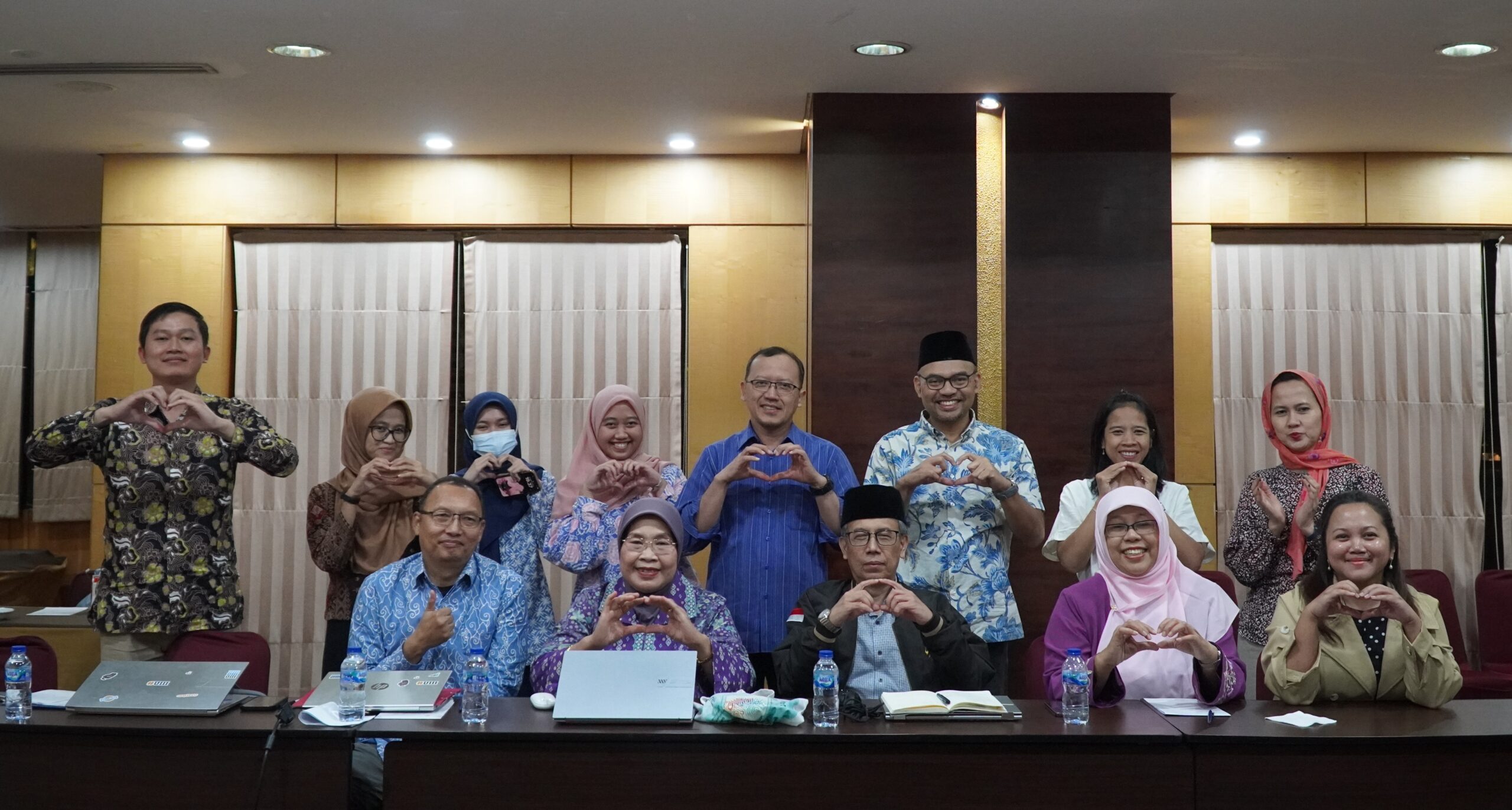
As part of its ongoing commitment to academic excellence, the UIII Faculty of Education (FoE) held a full-board meeting with all of its civitates on January 23, 2025, aimed at evaluating past semester activities while strategizing for the upcoming term. This routine gathering serves as a crucial platform for reflecting and evaluating its educational management activities to ensure it remains at the forefront of educational advancement.
The meeting provided an opportunity for the faculty members to assess the effectiveness of previous programs, address challenges, and refine strategies for the future. Discussions revolved around enhancing academic curricula, fostering research collaborations, and strengthening community engagement—three core pillars of Indonesia’s higher education, also known as ‘Tri Dharma Perguruan Tinggi’. Lecturers and academic staff actively participated, sharing insights on improving student learning experiences and adapting to the rapidly changing educational landscape.
A highlight of the meeting was the presentation delivered by Dr. Berry Juliandi, M.Si., Dean of the Faculty of Mathematics and Natural Sciences at IPB University and Acting Director of Learning and Student Affairs at the Ministry of Higher Education, Science, and Technology. His session, titled "Impactful Education: Future Direction of Education Policy in Indonesia," provided valuable perspectives on higher education challenges and innovations crucial for the faculty to navigate its future orientation.
Following his presentation, an engaging discussion took place among faculty members, allowing them to engage with pressing educational concerns, including curriculum relevance, graduate employability, and the role of AI in education. These discussions reinforced the faculty’s dedication to equipping students with 21st-century skills and preparing them for cross-sectoral disruptions.
Through this meeting, the UIII Faculty of Education reaffirmed its commitment to continuous improvement and impactful education. By fostering dialogue for its educational management strategies, the faculty aims to drive meaningful changes that benefit students, academia, and society at large.
 source:
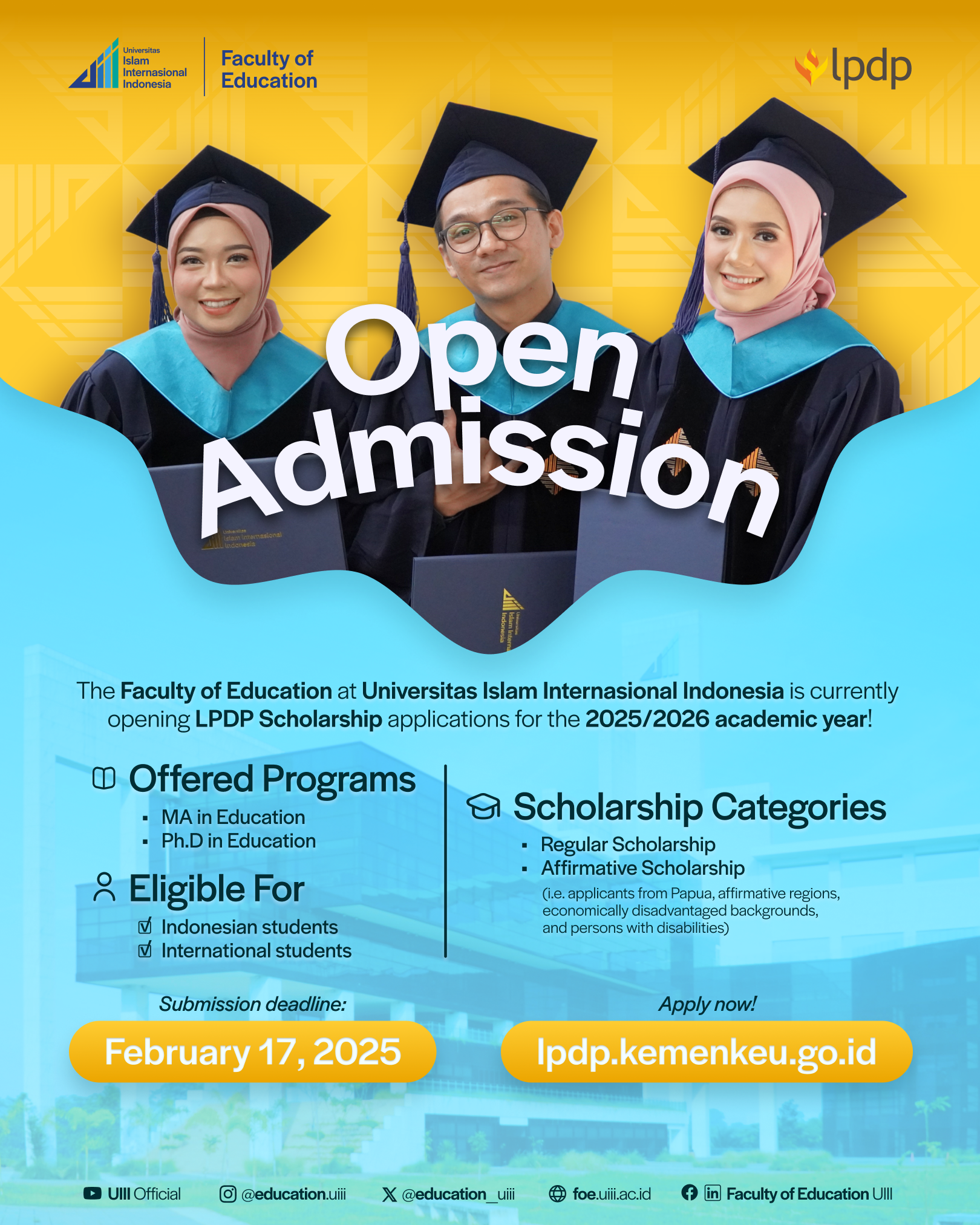
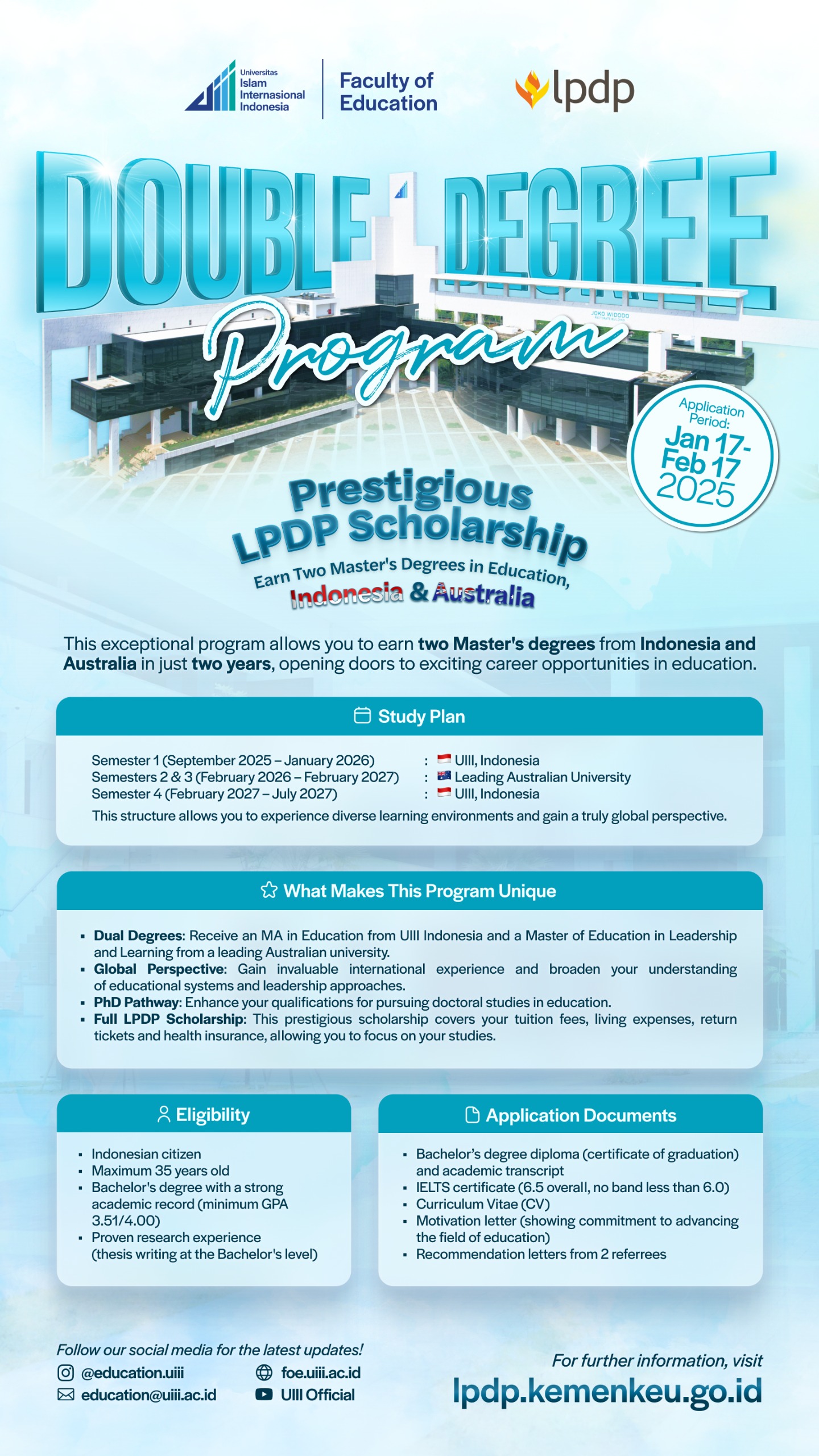
LPDP Scholarship to study MA and PhD in Education program at Faculty of Education UIII

We are delighted to announce that the Faculty of Education at UIII is opening applications for LPDP Scholarship!
Bridging Education and Impact: Transforming Indonesia's Academic Landscape
 Bridging Education and Impact: Transforming Indonesia's Academic Landscape
Contributor: Virda Lalitya Umam
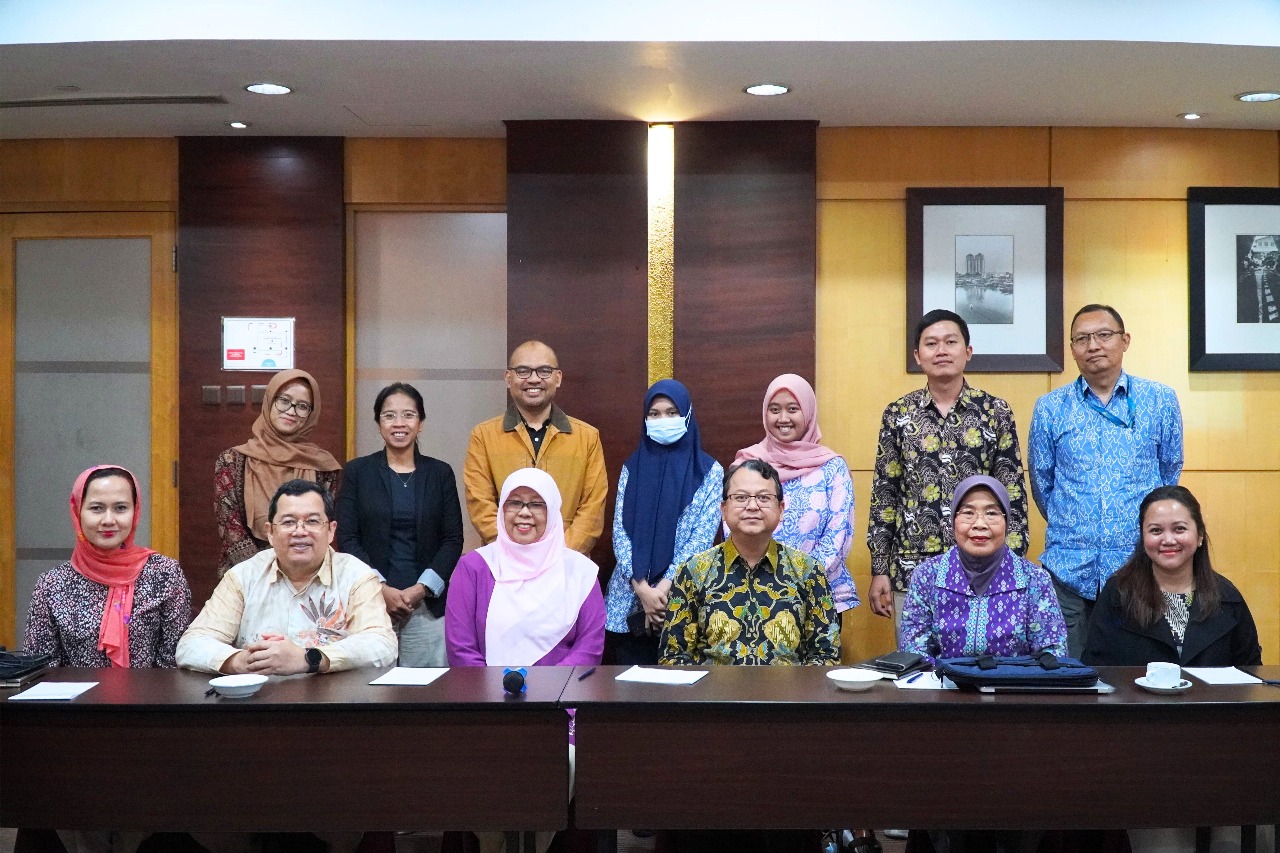
As an effort to evaluate past academic activities and prepare for the upcoming term, the UIII Faculty of Education routinely organizes a full-board meeting with its civitates, most recently held this Thursday (01/23/2025). In this opportunity, Dr. Berry Juliandi, M.Si., Dean of the Faculty of Mathematics and Natural Sciences at IPB University and Acting Director of Learning and Student Affairs at the Ministry of Higher Education, Science, and Technology, was also invited as a guest speaker. His presentation and workshop, titled "Impactful Education: Future Direction of Education Policy in Indonesia," touches on the challenges, potential, and plans for Indonesia's higher education from a policymaker's perspective.
Opening his presentation, Dr. Juliandi began by addressing the challenges that Indonesia's strategic sectors face. These include, but are not limited to, climate change, global economic decline, technological disruption, and societal polarization. As the fourth most populated country, Indonesia naturally has one of the world's largest education systems, being the third largest in Asia and fourth globally, with more than 4.000 higher education institutions spanning 5.245 kilometers and over 17.000 islands. It is no wonder that these factors above make equitable access to quality education in Indonesia a critical concern. It also raises other questions in the realm of higher education, such as the employability of graduates, effectiveness and quality of research funds, disconnection from community needs, lack of talent development in science and technology, as well as regulation or policy.
Dr. Juliandi then mentioned Tri Dharma, the three foundations of higher education: education and teaching, research, and community service. He noted that this conventional paradigm no longer accommodates present-day circumstances and that Indonesia's higher education institutions are undergoing a shift to a fourth-generation paradigm. Universities are expanding the traditional focus on teaching and research to become powerhouses for regional innovation and national impact. This transformative approach not only applies to the teaching and learning process within classrooms but also considers the future contributions of institutions and their alumni, with the goal of bringing forth future socio-economic impacts on a nationwide scale, in line with the Sustainable Development Goals (SDGs).
Regarding this paradigm shift, Dr. Juliandi emphasized that higher education institutions in this era must concretely contribute to national economic development and not merely produce graduates. He shared priority concerns the Ministry of Higher Education, Science, and Technology laid out, including increasing access to impactful, quality education, talent development in science and technology, cultivating a scientific culture, and addressing national socio-economic challenges. He stresses that educational institutions must equip students with 21st-century skills to survive cross-sectoral disruptions, cultivating adaptive ways to think, work, live, and utilize tools.
Dr. Juliandi proceeded to explain the risks of artificial intelligence (AI) in the education field, ranging from data security to environmental damage, and the importance of AI literacy to mitigate these risks. Dr. Juliandi states that in this era, it is impossible to detach AI from human activity wholly—he notes how a potential "AI war" will not be one between humans and AI as fiction commonly portrays, but instead between people who make use of AI and those who cannot or do not. He expresses that it is very much possible for educators and students alike to optimally utilize AI while also valuing academic integrity.

In his closing statement, Dr. Juliandi emphasized the importance of character above all else. No matter how advanced the system is or how brilliant educators and students are, it is imperative that character building must always be a core part of Indonesia's education. As Dr. Juliandi concluded his presentation, an engaging discussion session soon followed, with the Faculty of Education lecturers chiming one after another to share their concerns and inquiries.
This workshop provided the UIII Faculty of Education with an invaluable platform for reflection, dialogue, and strategies to address Indonesia's higher education challenges. Dr. Berry Juliandi’s insightful presentation shed light on the urgency to transform the traditional educational paradigm, preparing students to face a rapidly evolving world. Through this event, the UIII Faculty of Education's civitates reaffirmed their aspiration to drive students and alumni to broaden the horizons of education for Indonesia and the world.

Building Collaborative Pathways: Reflection on the SEAMEO CECCEP Policy Brief Experience
 Building Collaborative Pathways: Reflection on the SEAMEO CECCEP Policy Brief Experience
By Farhatul Kamilah
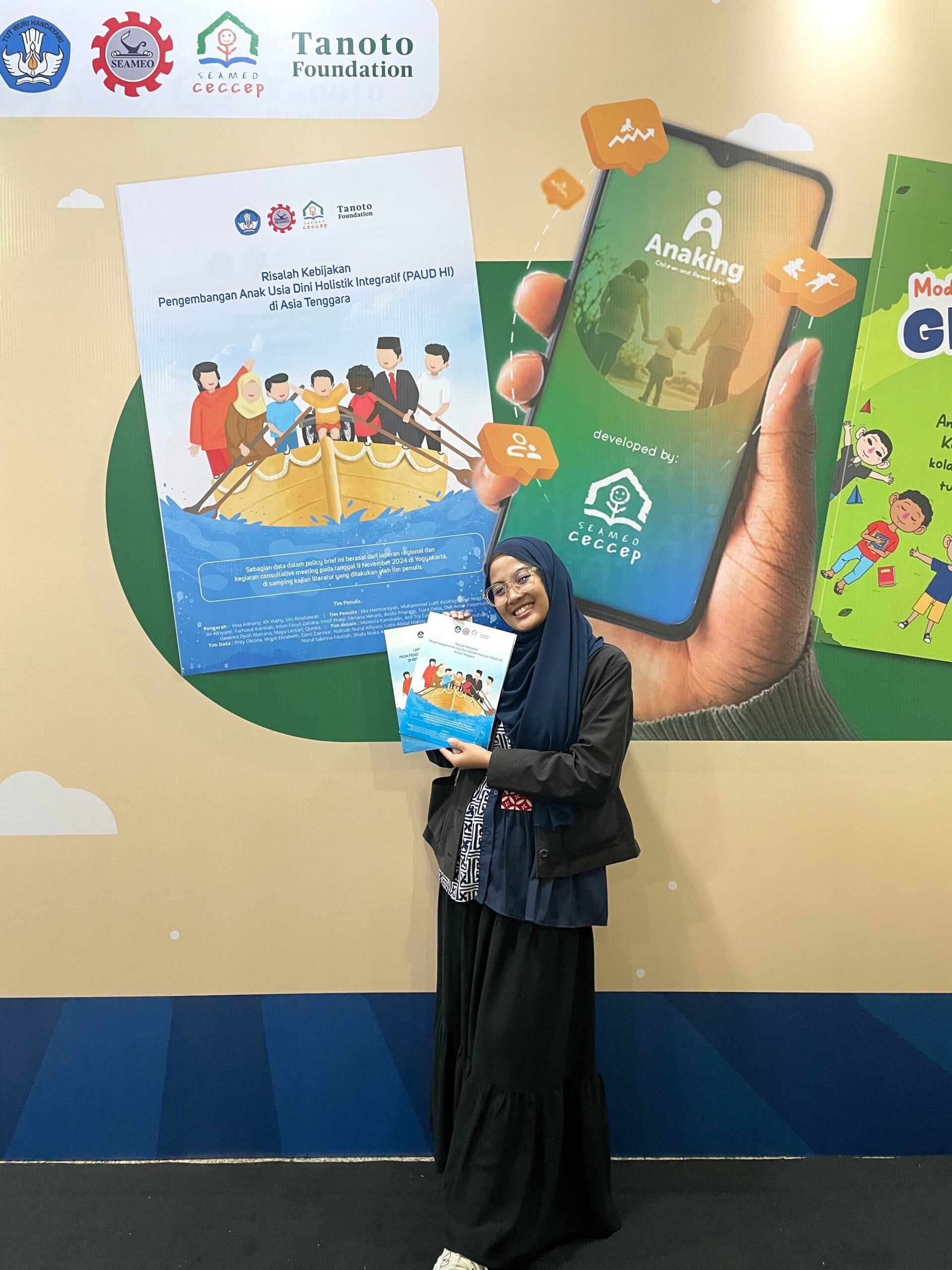
Attending the Peluncuran Risalah Kebijakan Pengembangan Anak Usia Dini Holistik Integratif (PAUD HI), Modul Pengasuhan Gembira dan Aplikasi Anaking [the Launch of the Policy Brief for Integrative Holistic Early Childhood Development (IH ECD), Happy Parenting Module and Anaking Application] was a very valuable experience for our team. This event was organized by the Southeast Asian Ministers of Education Regional Centre for Early Childhood Care and Education and Parenting (SEAMEO CECCEP) on December 19, 2024, at the Ministry of Education and Culture, Jakarta. The event, which was officially opened by Prof. Abdul Mu'ti as the Minister of Primary and Secondary Education (Mendikdasmen), aims to increase awareness of the importance of early childhood education and parenting. As part of the event, there was also a talk show with policy makers and stakeholders who discussed some critical issues and efforts to strengthen IH ECD through policies, parental involvement, and digital innovation.
In this event, my team and I wrote the Policy Brief for Integrative Holistic Early Childhood Development in Southeast Asia. Our policy brief aims to enhance collaboration in early childhood development across Southeast Asia. As I try to reflect on the process of drafting and writing the policy brief, I realized how challenging our journey was. Starting from the initial stages of crafting the draft, collecting data from various Ministries of Education across Southeast Asia and the literature review, finalizing the document, and conducting readability tests. These steps were not easy. There were many different perspectives when drafting this draft. However, because we have the same goal, we can go through all this together, returning to our common goal. This reminds me of our discussions with Prof. Vina Adriany, PhD (the Director of SEAMEO CECCEP) during the drafting process. We analogized our ECD policy brief like a ship in which policymakers, stakeholders, teachers, parents, and children all have one goal and shared vision, which is improving holistic and integrative early childhood development. This ship represents unity and collaboration, where everyone works together to overcome challenges and achieve the same goal. Therefore, the success of this holistic and integrative early childhood development will depend on the collective efforts of all parties, driven by the same goal for a brighter future for children.
Apart from the challenges, our experience in the process of preparing this policy brief was a very valuable learning experience that enriched my personal and academic development. The process taught me teamwork, collaboration, resilience, and real-world policy development. My team and I are very grateful to SEAMEO CECCEP and the Faculty of Education UIII for this opportunity to engage in meaningful work that bridges our academic knowledge with practical implementation. This opportunity allowed us to apply the theory and skills that we had learned in our course, particularly in Educational Policy Analysis and Educational Research Methodology course. These courses equipped us with the knowledge and skills needed in this project, making it a meaningful learning experience.
More than providing academic and professional development, for me, this experience has also strengthened my commitment to contribute to the field of education, especially in early childhood development. By this experience, I am inspired to continue working and developing knowledge in order to provide transformative solutions that can support the growth of children, especially in Indonesia.

‘The People Here are So Welcoming’: Impressions of Dr. Leon Moosavi to UIII

‘The People Here are So Welcoming’: Impressions of Dr. Leon Moosavi to UIII
January 15, 2025
Contributor: Supriyono | Editor: Dadi Darmadi | Photos: Achmad Jatnika & Virda Lalitya Umam
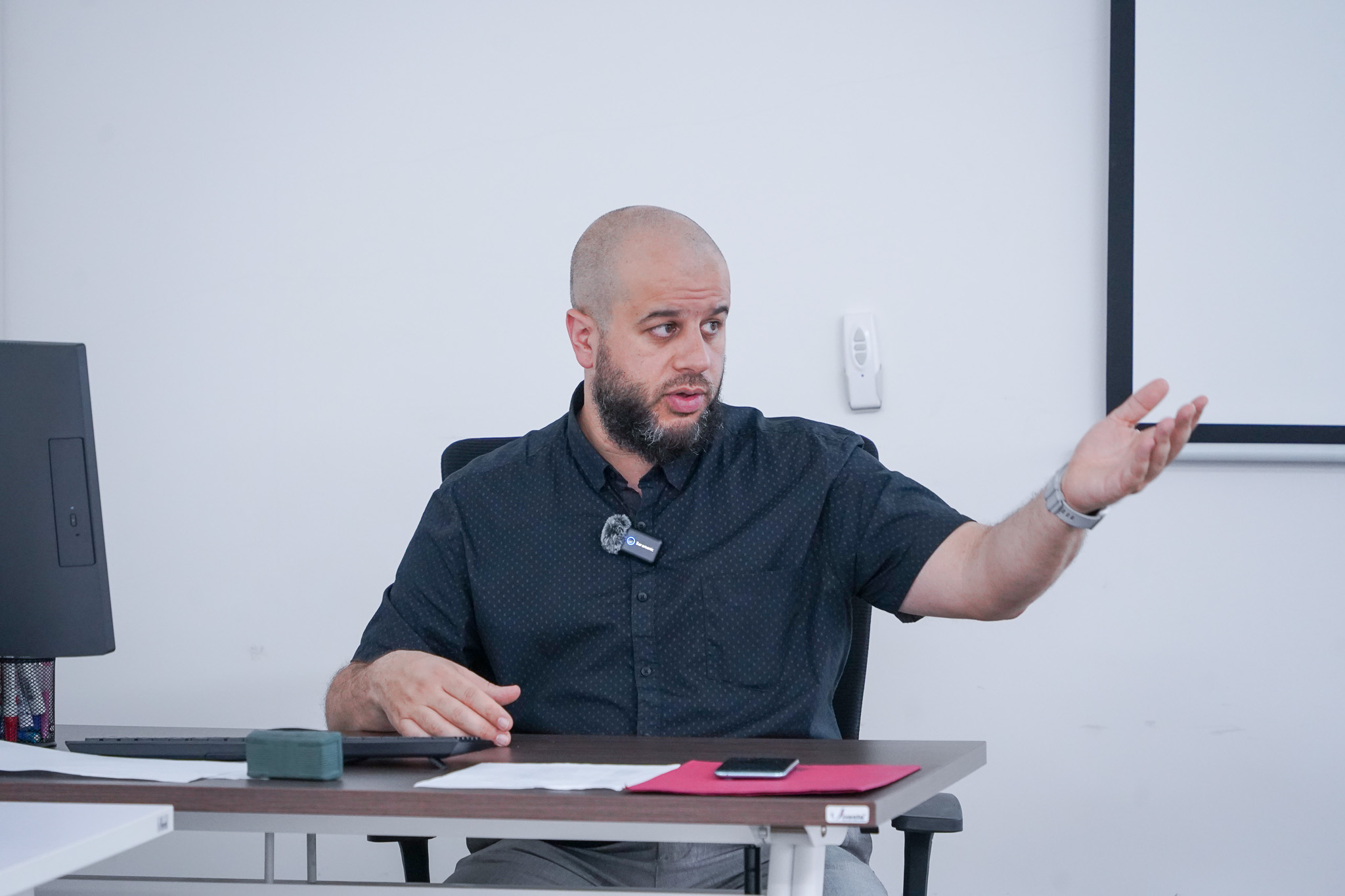
Dr. Leon Moosavi, a distinguished British expert in decolonial methodologies from the University of Liverpool, UK, recently visited Universitas Islam Internasional Indonesia (UIII) as part of a decolonial writing workshop funded by the British Academy. His visit was much anticipated, and he shared his first impressions of the campus, the environment, the people, and the university’s future potential.
"It's my first time to come here to UIII," Dr. Moosavi said. He expressed genuine admiration for UIII’s campus, noting its beauty and design. “I was really impressed with the campus. It's a beautiful campus. It’s nice to see all of the space that you have. The buildings are really nicely designed and well-constructed."
For Dr. Moosavi, the significance of a well-designed campus goes beyond aesthetics. "The built environment that you work in and study in has an impact on how you feel about the scholarship that you're producing," he explained. Both students and staff, he emphasized, would benefit from such a setting, fostering not only intellectual growth but also a sense of belonging and inspiration.
In addition to the stunning campus, Dr. Moosavi was particularly impressed by the welcoming atmosphere at UIII. He shared his appreciation for the warm reception he received from the faculty, particularly the Faculty of Education. “Everybody was really welcoming and very enthusiastic to help us and to share with us what they’re working on,” he said.
In particular, Dr. Moosavi extended his gratitude to Professor Nina Nurmila, Dean of UIII Faculty of Education, who played a central role in facilitating his visit. “It’s an honor to be here,” he remarked, acknowledging the efforts of those who took the time to show him around, answer his questions, and provide him with a thorough understanding of the university's offerings.
As for UIII’s future, Dr. Moosavi sees great potential for growth and expansion. "I can see a lot of potential here at UIII," he noted. He expressed excitement for what lies ahead, envisioning the number of students growing and the campus evolving. "When I come back next time, I'm expecting the number of students to have grown. The campus might grow, and I think we might even see more cats than what we already saw," he joked. "I think there should be more animals on campuses," he said with a laugh.
Dr. Moosavi’s visit was part of a decolonial writing workshop, funded by British Academy, in equipping early-career scholars with the skills to navigate and challenge academic structures that often marginalize voices from the Global South. His positive impression is a testament to UIII’s growing international reputation and its commitment to fostering academic excellence in a dynamic and inclusive environment.

‘UIII Has Potential to Further Development & Growth’: Prof. Camila Prando of Brazil

‘UIII Has Potential to Further Development & Growth’: Prof. Camila Prando of Brazil
January 15, 2025
Contributor: Supriyono | Editor: Dadi Darmadi | Photos: Achmad Jatnika & Virda Lalitya Umam
During her recent visit to Universitas Islam Internasional Indonesia (UIII), Prof. Camila Prando, a distinguished scholar from the University of Brasilia, shared her thoughts on the university's vibrant academic environment and potential for growth. Specializing in epistemological reform, Prof. Prando’s expertise lies in how knowledge systems evolve, and her impressions of UIII reflect her keen interest in the university’s efforts toward educational transformation.
"Before coming to UIII, I had the chance to speak with Prof. Nina about her experiences here," Prof. Prando remarked, referring to Prof. Nina Nurmila, the Dean of UIII Faculty of Education. "I am deeply impressed by the wide-ranging fields of research that are actively pursued at this institution. The diversity of perspectives brought by professors with different academic backgrounds is truly remarkable."
For Prof. Prando, one of the most notable aspects of UIII was its commitment to fostering effective education through a mix of disciplines and perspectives. "The different faculties and research areas contribute to a unique educational experience," she explained. "What stands out to me is the potential this university has for further development and growth. UIII offers a lot in terms of possibilities, and I hope it continues to nurture these strengths."
Prof. Prando’s interest in the university’s research was evident as she expressed her desire to observe the ongoing academic activities. "I would love to attend some classes to better understand the research projects happening here. There’s so much to learn from the work being done, and I’m eager to return and explore more in the future."
Prof. Prando’s visit was part of a decolonial writing workshop held at UIII in equipping early-career scholars with the skills to navigate and challenge academic structures that often marginalize voices from the Global South. Her positive remarks underscores UIII’s commitment to academic excellence. UIII is proud to have hosted such a distinguished guest, whose insights and perspectives will surely contribute to the university’s continued growth and success in advancing education and research on a global scale.
Who Shapes What We Know? UIII Workshop Challenges Global North’s Domination in Knowledge Production

Who Shapes What We Know? UIII Workshop Challenges Global North’s Domination in Knowledge Production
January 14, 2025
Contributor: Supriyono | Editor: Dadi Darmadi | Photos: Achmad Jatnika & Virda Lalitya Umam
It is argued that the knowledge production is conceivably dominated by the scholars from the Global North, and a decolonial writing workshop held at Universitas Islam Internasional Indonesia (UIII) seeks to challenge the status quo.
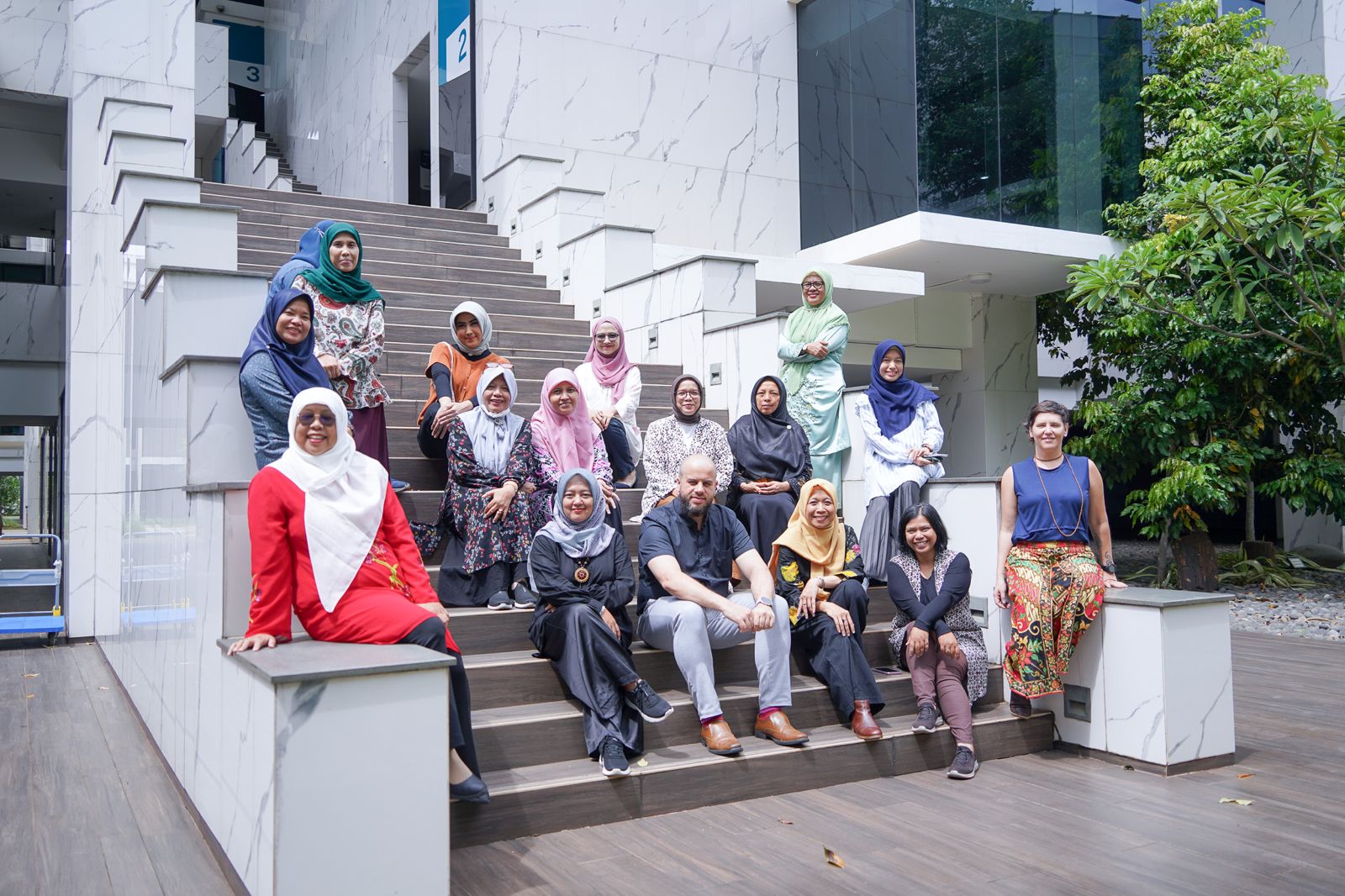
The workshop, part of a global initiative funded by the British Academy, brought together scholars and participants to examine the deeply rooted inequalities in knowledge production. Held on January 14–15, 2025, at UIII’s Faculty A Building, it aimed to equip early-career scholars with the skills to navigate and challenge academic structures that often marginalize voices from the Global South.
Led by Dr. Leon Moosavi, a British expert in decolonial methodologies from the University of Liverpool; Prof. Camila Prando, a scholar specializing in epistemological reform from the University of Brasilia; and Prof. Nina Nurmila, a gender expert and Dean of UIII's Faculty of Education, the event followed the same workshop held in Brazil last December. According to Dr. Moosavi, the workshop received an overwhelming number of applications, but his team could only accommodate 24 participants—12 from Brazil and 12 from Indonesia.
“We're working to unsettle the colonial injustices and historical inequalities by first acknowledging their continued presence. Additionally, we are deliberately focusing on scholars from the Global South, who often lack the same opportunities available to their counterparts in the Global North. The project also incorporates a gender dimension, as all the participants are women," Dr. Moosavi said.
He explained that their goal was to share experiences and insights to equip early-career scholars with the tools needed to navigate academic writing and publishing successfully. “We'll encourage them to share the knowledge and insights with other people. Maybe they will organize their own workshops. We hope it will have a knock-on effect in other parts of Indonesia and the broader Indonesian academic community,” said Dr. Moosavi.
Supporting the argument, Prof. Camila Prando of Brazil highlighted the struggles often faced by scholars in the Global South in navigating the academic "rituals" and career systems, particularly regarding access to resources. “As a Brazilian woman, I feel a responsibility to share information and mentor younger students who face challenges with language barriers and limited access to academic journals," she explained.
Prof. Nurmila expressed her pride in hosting the workshop at UIII, noting its alignment with the university’s mission to foster globally impactful scholarship rooted in local contexts. “By empowering women scholars and addressing systemic inequalities, we are contributing to a more just and inclusive academic landscape,” she said.
The workshop features intensive sessions designed to enhance academic writing and publishing skills while encouraging participants to critique and reshape the structures of knowledge production. This groundbreaking program underscores UIII’s role as a hub for academic innovation and inclusivity, paving the way for a new generation of scholars who are equipped to challenge and redefine the boundaries of knowledge.

UIII to Host Decolonial Writing Workshop: A Global Collaboration on Academic Reform

UIII to Host Decolonial Writing Workshop: A Global Collaboration on Academic Reform
January 13, 2025
Contributor: Dadi Darmadi | Photos: Achmad Jatnika
Depok, Indonesia, January 13, 2025 – Tomorrow, Universitas Islam Internasional Indonesia (UIII) will open its doors to scholars and writers from across the globe for the Decolonial Writing Workshop, a bold initiative to dismantle entrenched academic hierarchies and foster inclusive scholarship. This two-day event, taking place on January 14–15, 2025, exemplifies the power of international collaboration, bringing together thought leaders from Indonesia, Brazil, and the United Kingdom.
Organized in partnership with academics from diverse cultural and intellectual traditions, the workshop underscores the interconnected nature of today’s academic landscape. Facilitators include Dr. Camila Prando, a Brazilian scholar specializing in epistemological reform, Dr. Leon Moosavi, a British expert on decolonial methodologies, and Prof. Nina Nurmila, a leading Indonesian academic and Chair of the Faculty of Education at UIII.
A Growing Collaboration
Participants, hailing from various academic disciplines, will engage in sessions that blend theory with practical application. The opening day sets the stage with discussions on Epistemological Writing and Decolonial Writing, followed by an in-depth session led by Prof. Nina on crafting articles and book proposals.
Day two shifts focus to the publishing process, offering participants personalized feedback during review sessions. In a testament to the workshop’s global vision, video messages from editors and publishers will provide insights into navigating the challenges of academic publishing across cultural and geopolitical boundaries.
A Collaboration Beyond Borders
The workshop reflects a growing recognition of the need for collaborative efforts to address systemic inequities in academia. Indonesia, as the host, positions itself as a bridge between Global South and Global North perspectives. Brazil contributes its critical lens on epistemological reform, while the UK brings expertise in decolonial methodologies.
Prof. Nina Nurmila’s leadership highlights UIII’s commitment to fostering intellectual innovation. Her contributions, particularly in gender studies and decolonial thought, serve as a cornerstone for the university’s growing reputation as a hub for critical scholarship.
A Platform for Change?
Held at UIII’s vibrant Depok campus, the workshop represents more than an academic gathering—it is a call to action. By challenging Eurocentric narratives and amplifying marginalized voices, the event aims to inspire participants to drive systemic change within their own institutions and communities.
As the workshop approaches, scholars and writers will convene not only to exchange ideas but to envision a future where academic structures are more equitable and inclusive.
The Decolonial Writing Workshop is poised to become a landmark event, reaffirming the potential of international collaboration to reshape the contours of global scholarship.
Stay tuned for updates as the Decolonial Writing Workshop unfolds at UIII, paving the way for a new era of critical, decolonial discourse in academia.
LunchTalk #37 Explores Algorithmic Cultures in Education, Work, and Migration

LunchTalk #37 Explores Algorithmic Cultures in Education, Work, and Migration
January 09, 2025
Contributor: Supriyono | Editor: Dadi Darmadi | Photos: Virda Lalitya Umam
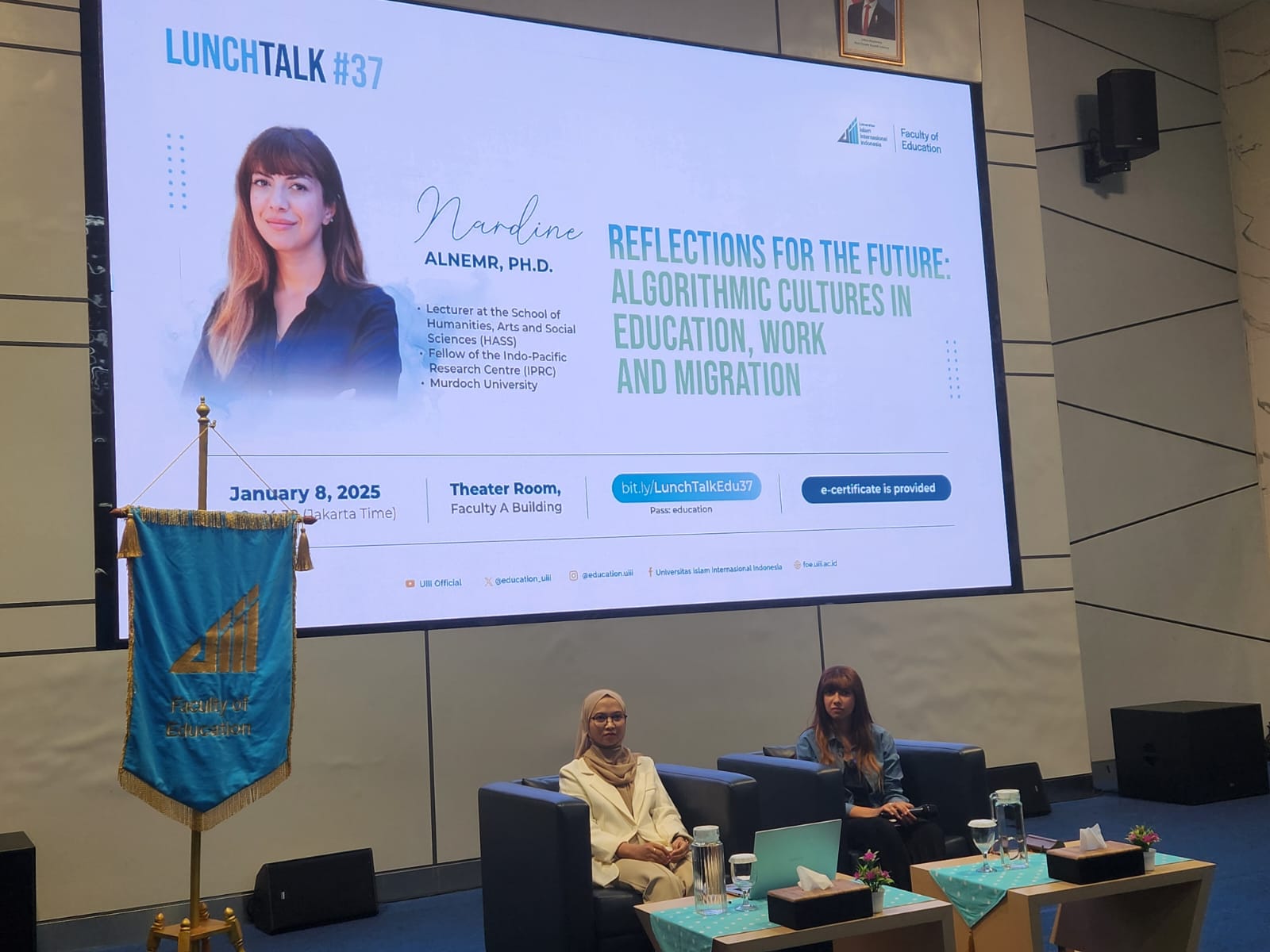
Depok, January 8, 2025 — UIII Faculty of Education hosted its 37th LunchTalk session, featuring Dr. Nardine Alnemr, Lecturer in Politics and Policy at the School of Humanities, Arts and Social Sciences (HASS) and Fellow at the Indo-Pacific Research Centre (IPRC), Murdoch University, Australia. The session explored the theme “Reflections on the Future: Algorithmic Cultures in Education, Work, and Migration.”
Dr. Alnemr's presentation examined the transformative role of algorithms in shaping societal structures and individual experiences, emphasizing their implications across critical domains such as education, workforce dynamics, and global migration patterns.
Drawing from recent scholarship, Dr. Alnemr explained how algorithms increasingly influence work dynamics, public policy, interpersonal relationships, and even electoral processes. This pervasive integration, she argued, fosters a co-evolutionary relationship between human agency and algorithmic political frameworks.
She built upon the concept of "algorithmic cultures," referencing Ted Striphas (2015, 2023), who highlighted the pre-internet presence of computational logics in shaping societal behaviors. She explored the intersections between governance systems and algorithmic decision-making, or "algocracy”.
In education, Dr. Alnemr discussed how algorithmic logic underpins educational technologies, shaping notions of "better" or "worse" outcomes. These technologies, she noted, strive to resolve uncertainties about the causal links between "inputs" and "outputs" in learning processes.
Highlighting key areas in education, Dr. Alnemr noted the growing reliance on digital tools has placed pressure on educators to keep pace with technological advancements. Yet, these tools may compromise deeper pedagogical and philosophical goals.
Dr. Alnemr shared findings from Ireland's National Youth Assembly on AI, which she conducted in 2022 where young participants deliberated on the ethical and practical implications of AI across society, governance, and education. Their concerns included disparities in AI access, insufficient teacher training, and a potential lack of engagement for students in AI-driven learning environments.
In her concluding remarks, Dr. Alnemr invited attendees to reflect on how algorithmic cultures might shape education, work, and migration in the decades ahead. She posed thought-provoking questions about inclusivity, ethical responsibilities, and epistemic diversity, encouraging the audience to consider the long-term impacts of today’s decisions on future generations.
LunchTalk #37 exemplified UIII's commitment to fostering critical discussions on contemporary global challenges. As algorithmic technologies continue to reshape societal norms, events like this provide a platform for thought leaders and audiences to collaboratively envision a more equitable and ethical future.