School Leadership Resilience During the COVID-19 Pandemic: Indonesian Experience

Mutohar, A., Sumintono, B., Julianto, V. (2025). School Leadership Resilience During the COVID-19 Pandemic: Indonesian Experience. In: Zainuddin, Z., Sumintono, B., Perera, C.J. (eds) Resilient and Sustainable Education Futures. Sustainable Development Goals Series. Springer, Singapore. https://doi.org/10.1007/978-981-96-4971-6_12

Islamic Leadership and School Resilience in Times of Crisis: Lessons from Indonesian Primary Schools Post-COVID-19 Pandemic

Hariri, H., Mukhlis, H., Sumintono, B., Supriyono (2025). Islamic Leadership and School Resilience in Times of Crisis: Lessons from Indonesian Primary Schools Post-COVID-19 Pandemic. In: Zainuddin, Z., Sumintono, B., Perera, C.J. (eds) Resilient and Sustainable Education Futures. Sustainable Development Goals Series. Springer, Singapore. https://doi.org/10.1007/978-981-96-4971-6_13
Navigating Teacher Agency: Implementing an Innovative Literacy Teaching Model in Indonesian Classrooms
 Durriyah, T.L., Dewayani, S., Parlindungan, F. (2025). Navigating Teacher Agency: Implementing an Innovative Literacy Teaching Model in Indonesian Classrooms. In: Zainuddin, Z., Sumintono, B., Perera, C.J. (eds) Resilient and Sustainable Education Futures. Sustainable Development Goals Series. Springer, Singapore. https://doi.org/10.1007/978-981-96-4971-6_17
School Digitalization Strategies in Non-strategic Setting: Insights from Islamic Boarding Schools in Rural Indonesia
 Supriyono, Numan, M., Mumtaz, M.F. (2025). School Digitalization Strategies in Non-strategic Setting: Insights from Islamic Boarding Schools in Rural Indonesia. In: Zainuddin, Z., Sumintono, B., Perera, C.J. (eds) Resilient and Sustainable Education Futures. Sustainable Development Goals Series. Springer, Singapore. https://doi.org/10.1007/978-981-96-4971-6_11
Conclusion: Global Implications and Future Directions of Resilient Education Systems in the Post-pandemic Era

Zainuddin, Z., Sumintono, B., Perera, C.J. (2025). Conclusion: Global Implications and Future Directions of Resilient Education Systems in the Post-pandemic Era. In: Zainuddin, Z., Sumintono, B., Perera, C.J. (eds) Resilient and Sustainable Education Futures. Sustainable Development Goals Series. Springer, Singapore. https://doi.org/10.1007/978-981-96-4971-6_20
Reinventing Sustainable Learning in Malaysia and Indonesia: Lessons Learned from COVID-19

Zainuddin, Z., Perera, C.J., Sumintono, B. (2025). Reinventing Sustainable Learning in Malaysia and Indonesia: Lessons Learned from COVID-19. In: Zainuddin, Z., Sumintono, B., Perera, C.J. (eds) Resilient and Sustainable Education Futures. Sustainable Development Goals Series. Springer, Singapore. https://doi.org/10.1007/978-981-96-4971-6_2
Background: Resilient and Sustainable Education Futures

Perera, C.J., Zainuddin, Z., Sumintono, B. (2025). Background. In: Zainuddin, Z., Sumintono, B., Perera, C.J. (eds) Resilient and Sustainable Education Futures. Sustainable Development Goals Series. Springer, Singapore. https://doi.org/10.1007/978-981-96-4971-6_1
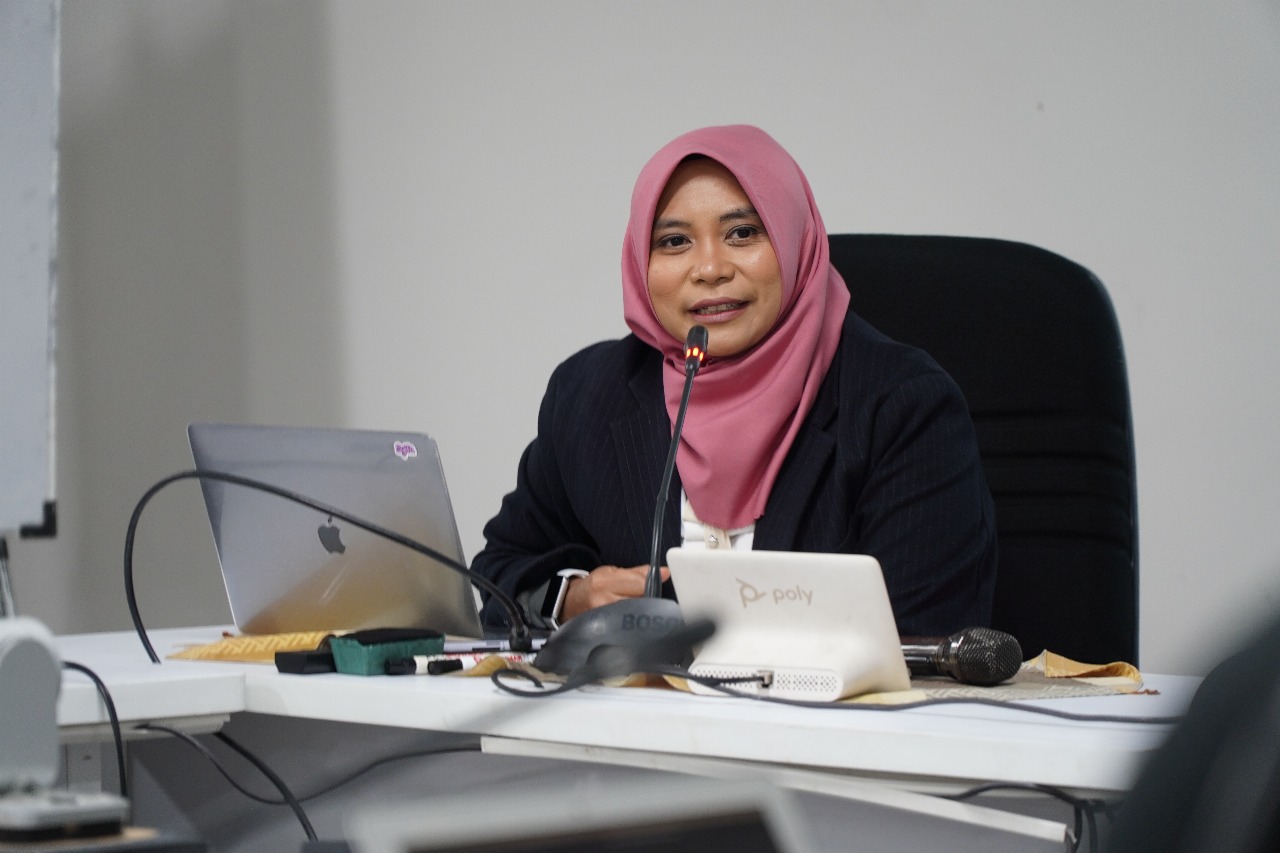
Empathy and Well-being: Values That Inspired Me as a Student Mom
 Empathy and Well-being: Values That Inspired Me as a Student Mom
By Syifa Mufiedatussalam
Pursuing my Ph.D. at the Faculty of Education, I began my journey as a “healing” of my daily routine as an 8 to 5 worker. At that time, I thought this was my opportunity to gather with new friends from various countries, expand my knowledge, and of course, earn another degree.
This journey, however, was not without its challenges.
I never thought that the journey would be like a rollercoaster. My life, which was far from academic activities, turned into a life full of papers, reading, and writing. Moreover, I experienced my first semester during the pregnancy, together with overwhelming academic activities. Then I gave birth and raised a baby, who is now entering toddlerhood. I experienced all of this alongside my commitments as a PhD student and a working mom.
Through the initiation of the Faculty of Education, under the Dean Prof. Nina Nurmila, Ph.D, the university established a daycare. At that time, it was exactly 3 weeks after I delivered my baby. I felt how the faculty, in their very empathetic way, tried to fully support us. The faculty gently encouraged me to focus on my study, reassuring me that my child was in good hands. However, it doesn't mean that my journey then became smooth without obstacles. I experienced baby blues syndrome because my child was hospitalized almost every two months at that time. Meanwhile, at the same time, I had to submit my course papers and presentations. Moreover, I am aware of the limitations of my academic writing skills where I have to learn from scratch to catch up with my Ph.D. fellows. Nevertheless, I am very fortunate that until now, daycare has become a very important support system for me.
Beyond facilities, what truly makes me survives was the community. Alhamdulillah, I was blessed with a new family here. The faculty members were always ready to share their knowledge generously. When I knocked on their doors with questions, I was welcomed with patience and thoughtful responses. Their sincerity made learning feel like a shared journey. At the beginning of my Ph.D., I was particularly concerned about how the dissertation phase would unfold. I was worried that, as we each progressed into our individual research projects, we would become isolated—detached from our peers and overwhelmed by the demands of our dissertations. However, as the journey progressed, I realized that I was not alone. My supervisors accompanied me patiently through every stage of the research process, providing not only academic guidance but also emotional encouragement. I was also surrounded by fellow Ph.D. students from Batch I—people who became more than peers. We shared struggles, victories, and quiet encouragements. We lifted each other up, laughed through stress, and held on to hope together. That sense of brotherhood and sisterhood was priceless.
More importantly, the faculty demonstrated a deep awareness of this concern by establishing a structured system of bi-monthly Dissertation Progress Meetings. These meetings served as a vital space to monitor progress, however small, and to maintain a sense of momentum. They were not merely administrative check-ins; they became opportunities to receive constructive feedback, strategic recommendations, and positive reinforcement to help us overcome research challenges. These meetings gradually turned into our “Ph.D. Batch I family gatherings”—a moment of truth where we shared stories, laughter, struggles, and strengthened the bonds of friendship. In those spaces, we reminded one another that we were never alone on this journey. What changed the most was me.
In the course on education and pluralistic society, A/Prof. Charyna Ayu Rizkyanti, Ph.D introduced us to empathy. I never expected that we would learn about empathy in the Faculty of Education. However, since that moment, I started to fall in love with empathy. I reflected that, it turns out, the value of empathy aligns with the religious moderation promoted by the university. Since then, the direction of my dissertation research shifted to empathy and well-being, which of course is supervised by her. Empathy and well-being—concepts taught not only as theories but modeled in practice—became values I deeply internalized. Not just as my research topics, but as ways of living. I witnessed how empathy creates space for understanding, healing, and personal transformation. I saw how these values allowed us to grow together—as individuals, as scholars, and as a community.
UIII taught me to see knowledge as a form of worship. Research became not just a task, but an amanah. I learned to align my intention with service—to my community, my faith, and the broader world. That shift turned every paper, every reading, every sleepless night into something meaningful. When I first joined UIII, I felt like an empty glass. Having been away from formal academic settings for several years, I entered the program with humility and awareness of my limitations. But through rich discussions, rigorous coursework, and the guidance of dedicated lecturers, I began to grow. And while I continue to discover how much I do not yet know; I now feel that my 'glass' has grown—perhaps into a bucket—ready to be filled even more. I am being filled not only with knowledge, but also with deeper questions, broader insights, and the confidence to contribute with purpose.
With this perspective, I have begun to give back. I provided private consultancy to a friend who was developing an Islamic elementary school (SDIT). I have also had the opportunity to support teachers in pesantren communities—sharing what I have learned while continuing to learn from them. These contributions are not mine alone; they are the fruit of the relationships, inspiration, and knowledge I gained during my time at UIII.
As I near the end of this journey, I carry a prayer in my heart: that all of us in this first cohort will graduate together, on time, with hearts full of gratitude and knowledge that blesses others. I hope we will continue to support each other, to share, and to grow beyond this academic journey.
To my fellow students and those who will come after us: come with humility. Empty your glass. Make room for what this place offers. You will be amazed at how much you grow—together with this institution, hand in hand with its vision.
And to UIII: may you always be a home for those seeking not only knowledge but also purpose. Thank you for supporting me in becoming who I am today. This journey shaped my mind and touched my soul. I will always carry it in my heart with gratitude and humility.

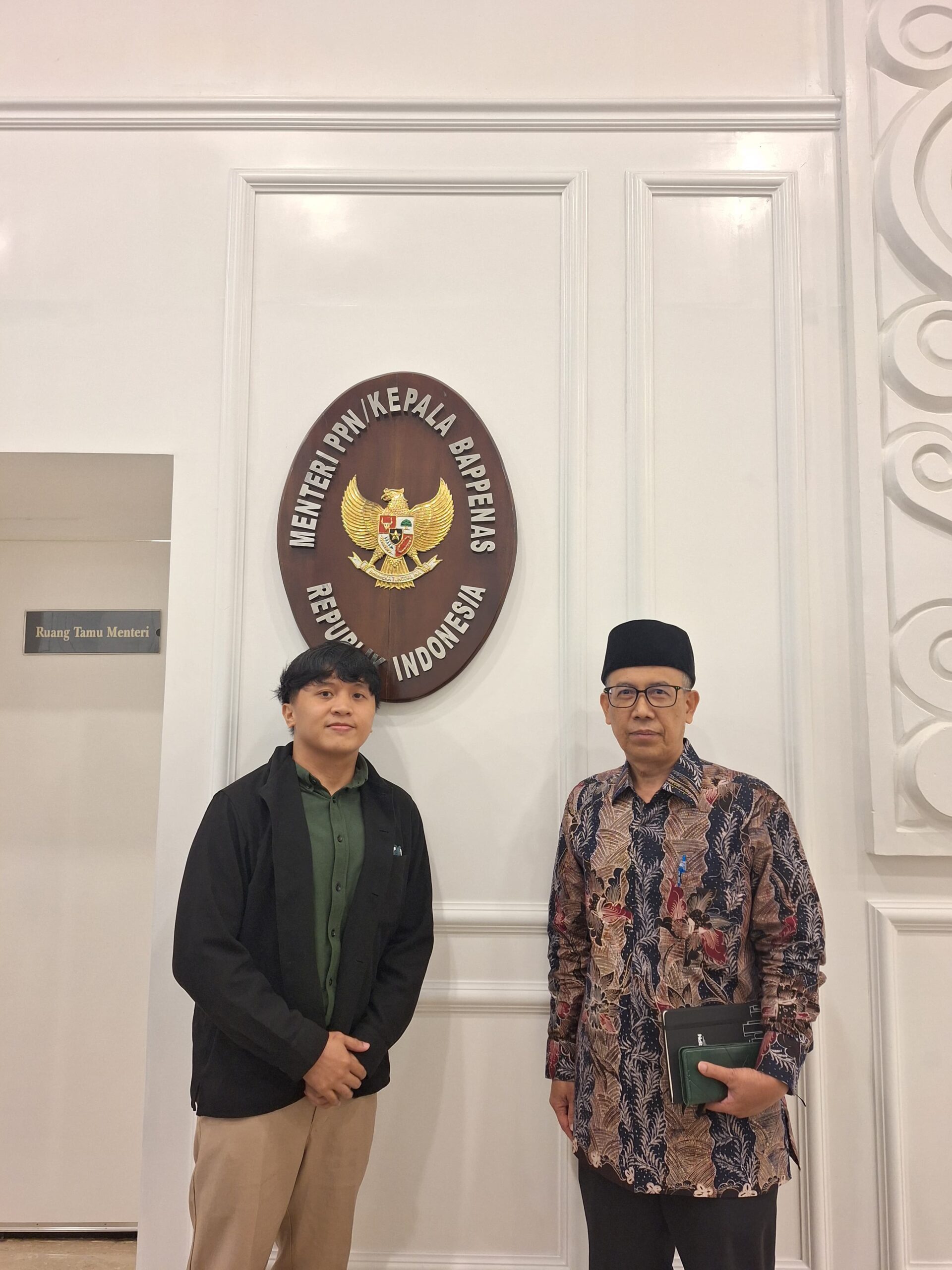
Education and Society - Study Visit to Bappenas
 Education and Society - Study Visit to Bappenas
by Ihsan-Isah Imam Zaman
On Tuesday June 17, 2025, the Batch 4 MA students of the Faculty of Education at Universitas Islam Internasional Indonesia (UIII) have successfully conducted their study visit to the Ministry of National Development Planning, also known as Badan Perencanaan Pembangunan Nasional (BAPPENAS). This wonderful opportunity is largely thanks to the strong collaboration between BAPPENAS and UIII in their efforts to improve the quality of higher education and research in Indonesia. This study visit is part of the learning experience of the students that will help them gain an improved understanding of the course Education and Society.
As a Muslim-Filipino who has been fortunate enough to be part of the Faculty of Education in UIII, I am very grateful to have been part of this learning experience. Personally, I have not even been to the equivalent government agency of BAPPENAS in the Philippines. That is why I could not help but try to maximize the experience as much as possible. As an aspiring researcher interested in policymaking, education and research in national level, this study visit has been quite rewarding and beneficial.
The study visit has reminded me of when I was applying to UIII as a postgraduate student. When I was writing my motivation letter, I was trying to bare my passion and dedication to the common good through my writing. Somehow, I find myself consistent in my belief that education has really powerful impact in turning the life of an individual or community for good. Without a single doubt in my mind, I strongly believe in the power, importance and value of teachers and educators in improving the condition of society and empowering individuals.
From my personal encounters in my country, I have seen firsthand how expensive it is to be poor, especially in education. I have observed how some marginalized people seem to have been forgotten by the vast majority. Despite the existing government policies, there seems to be no improvement at all. I used to wonder if it is simply a phenomenon of social apathy or some communities are just bound to experience social exclusion. These reflections may not fully represent what truly drives me to pursue higher studies, but one thing I have realized is that I need to learn more— because passion and intention alone cannot bring about tangible change.
In the faculty of education, it is mandatory for the MA students to take the course Education and Society. In this course, we are learning about the relationship between education and other disciplines that contribute to social development and shape social progress. We learn how politics, culture, society and religion influence education and also how education affects them in return. To be honest, this course has truly helped me develop a more structured way of thinking about the factors that affect education. Prior to starting my postgraduate study, the way I think was often either too one-dimensional or too scattered. Somehow, I knew that there were various factors at play but my grasp of them was still immature.
 Talking more about the study visit, we first went to the gallery of BAPPENAS. Inside the gallery, we have been captivated by the simple but meaningful displays that help us visualize the past, present and future endeavors of BAPPENAS. During that brief tour, we have been introduced to the key events and figures of the ministry. The artistic representation of their works is all interesting but what caught my attention the most was the section about Blue Economy. This concept is relatively new for me and even in the Philippines this is still in emerging stage.
Why did I get hooked on the Blue Economy when I should be focusing on issues and trends in Education? I guess it is because, in some way, this concept speaks to my identity. First of all, I am from a tribe whose name is derived from a term that means ‘The people of the lake’. Then growing up, I keep hearing the stories about my grandparents being fishers. My father used to help my grandfather fish for a living, which helped support his and his siblings’ education. People do not choose the circumstances or reality that they will be born into, but the social contract demands that those who take on political power have a responsibility to craft and implement policies that support people from all walks and conditions of life. In this regard, education plays a crucial and irreplaceable role.
Afterwards, we also had a brief but comprehensive lecture from BAPPENAS about the process of education policymaking, which involved not only rich theoretical discussions but also practical insights. There were a lot of topics covered and my batchmates raised interesting questions that were appreciated by the experts for their critical relevance. I would like to highlight the topic about out of school children because it is quite an important issue in education especially when we talk about the idea of no child left behind or better yet, no one left behind. In our first semester, I used to talk about juvenile delinquency and out of school youth which I previously struggle to find similar topic about in Indonesian context. Thanks to this session, I found out that similar topics are being studied by some of my batchmates and it also align with the current efforts of BAPPENAS. From my perspective, the impact of social exclusion can be felt from as early as childhood. This is why there are more researchers highlighting the importance of early childhood education.

Our batch is truly grateful for the iniative of the Faculty of Education and our lecturer in this course, Dr. Amich Alhumami, Ph.D, who also serves as the Deputy Minister for Human Development and Cultural affairs. Placing this session near the end of the course and semester has helped us connect theoretical insights with practical experience. I have come to understand more clearly that the broader the scope of the research, the more it needs not only a high level of expertise, but also empathy and a strong sense of humanity. The greater the scope, the more people are involved, and the more lives affected by its outcomes.