Call for Papers: Writing Competition 2026
 Call for Papers: Writing Competition 2026
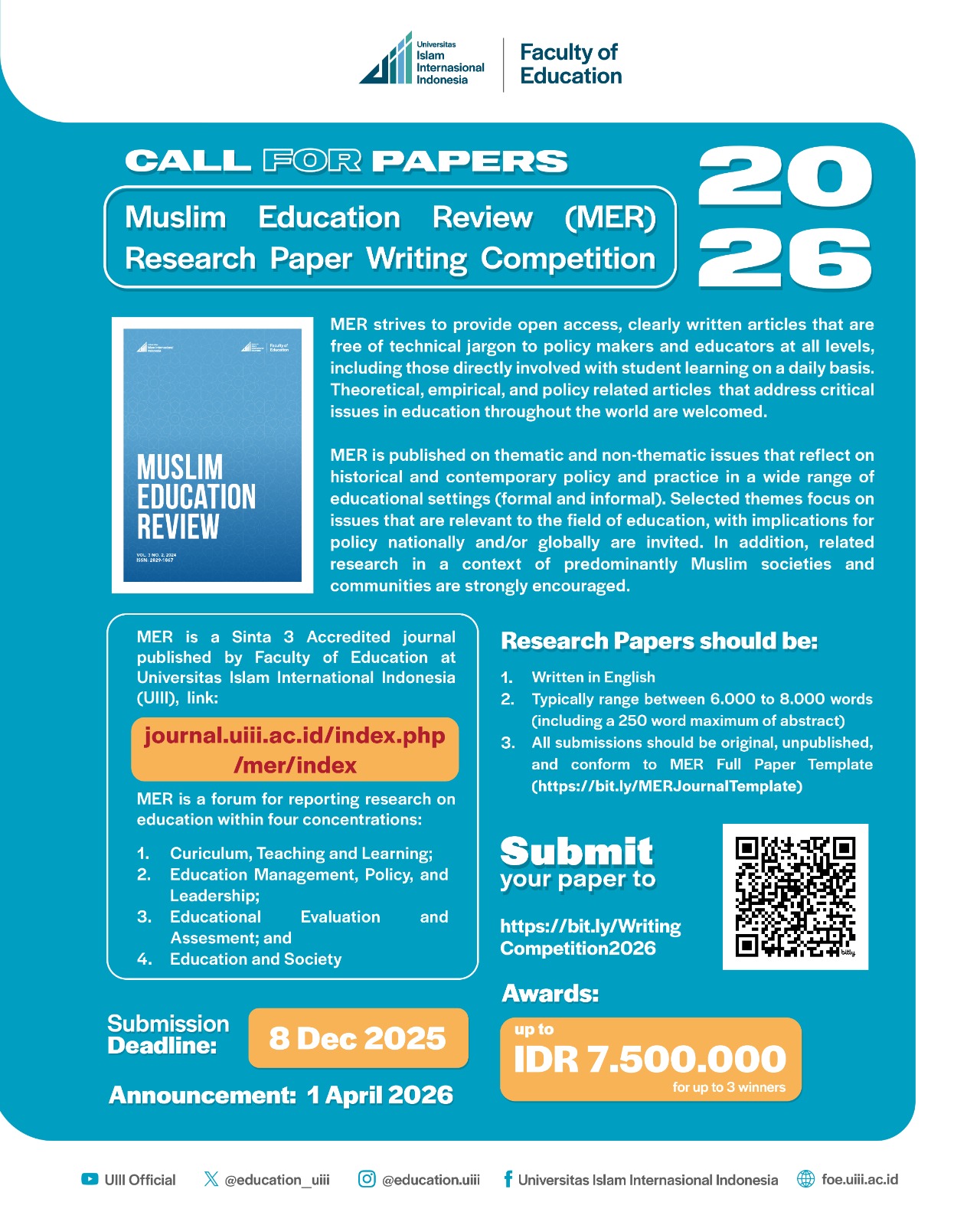
MER is a Sinta 3 Accredited journal published by the Faculty of Education at Universitas Islam Internasional Indonesia. We invite a wide range of topics in education especially those that are within the journal scopes.
MER is a forum for reporting research on education within four concentrations:
* Curriculum, Teaching and Learning;
* Educational Management, Policy and Leadership;
* Educational Evaluation and Assessment;
* Education and Society.
Submission papers should be written in English and typically range between 6,000 to 8,000 words (including a 250 word maximum of abstract).
All submissions should be
* Original;
* Unpublished;
* and Conform to MER Full Paper Template: https://bit.ly/MERJournalTemplate
Submission link: https://bit.ly/WritingCompetition2026
Awards
The awards include cash payment of up to IDR 7.500.000 for up to 3 winners.
Important Dates
Full Paper Submission: December 8, 2025
Awards Announcement: April 1, 2026
To see previous MER publication, please click this link: bit.ly/MERJournal

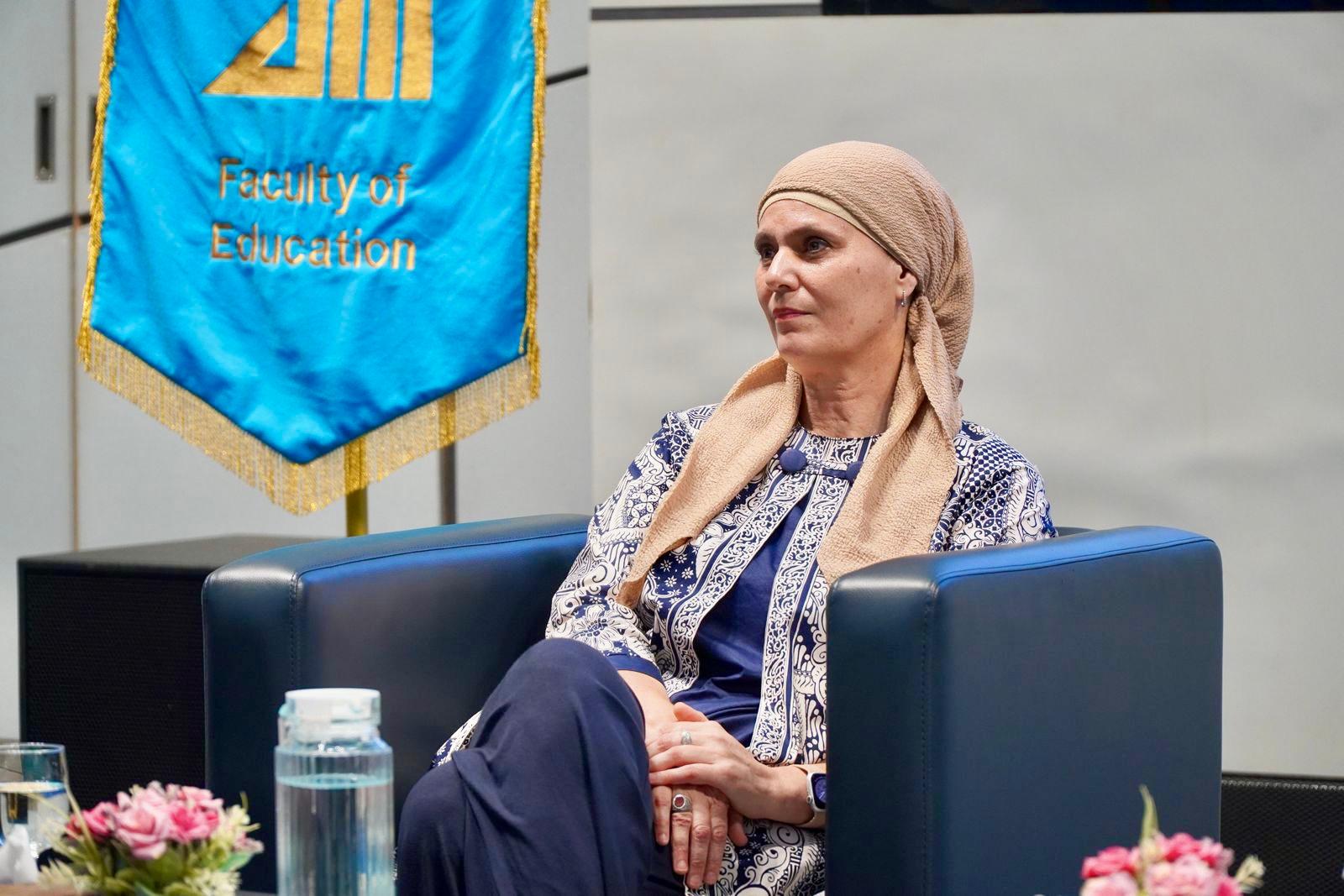

The Global Ikhwan Women’s Experiences in Polygamous Marriages in Malaysia: Polygamy as Means to Be Closer to God
 Nurmila, N. (2025). The Global Ikhwan Women’s Experiences in Polygamous Marriages in Malaysia: Polygamy as Means to Be Closer to God. In: Othman, N., Nadarajah, Y., Mohd Isa, R. (eds) Polygamous Marriages in Peninsular Malaysia. Springer, Singapore. https://doi.org/10.1007/978-981-97-9104-0_12
Abstract
As one of the ways to recruit more membership for Global Ikhwan and to counterbalance the negative image of polygamy, Global Ikhwan launched the Polygamy Club on 15 August 2009. This chapter will elaborate the Global Ikhwan women’s experiences of living in polygamous marriages. Based on my interview with 14 Global Ikhwan members consisting of 3 polygamous husbands, seven first wives and four second wives, this chapter shows that all polygamous marriages among Global Ikhwan members were arranged by their leader, Buya Ashaari. All of the research participants have communal life arrangements, in which each member contribute economically to the jama`ah (the community of the Global Ikhwan) and in return, their basic needs are fulfilled by the Global Ikhwan.None of the wives receive maintenance from their husband, reducing economic conflict among the wives. However,this does not mean that the wives have no problem in their polygamous marriages. They must suppress their feeling of jealousy and in doing so, they were trained by their leaders to overcome this feeling by trying to be closer to God, “cleaning” their “selfishness” to have their husband for only herself.
Asia Leadership Roundtable: Expanding Networks and Advancing Knowledge

Asia Leadership Roundtable: Expanding Networks and Advancing Knowledge
by Bambang Sumintono
During my tenure as a lecturer at the Institute of Educational Leadership, Universiti Malaya, Malaysia, I was invited to attend the Asia Leadership Roundtable (ALR) for the first time in 2015, held in Bangkok, Thailand (https://www.eduhk.hk/apclc/roundtable2015/participant.html). This prestigious conference on educational leadership is by invitation only and primarily gathers academics and scholars based in Asia who have published internationally on topics related to educational leadership. Each year, the conference typically hosts around 60 plus participants, predominantly from Asia, alongside attendees from Australia, Europe, Africa, and North and South America. I was recommended to attend by my boss, Professor Alma Harris, as I was also involved in the 7 System Leadership Study project at the time.
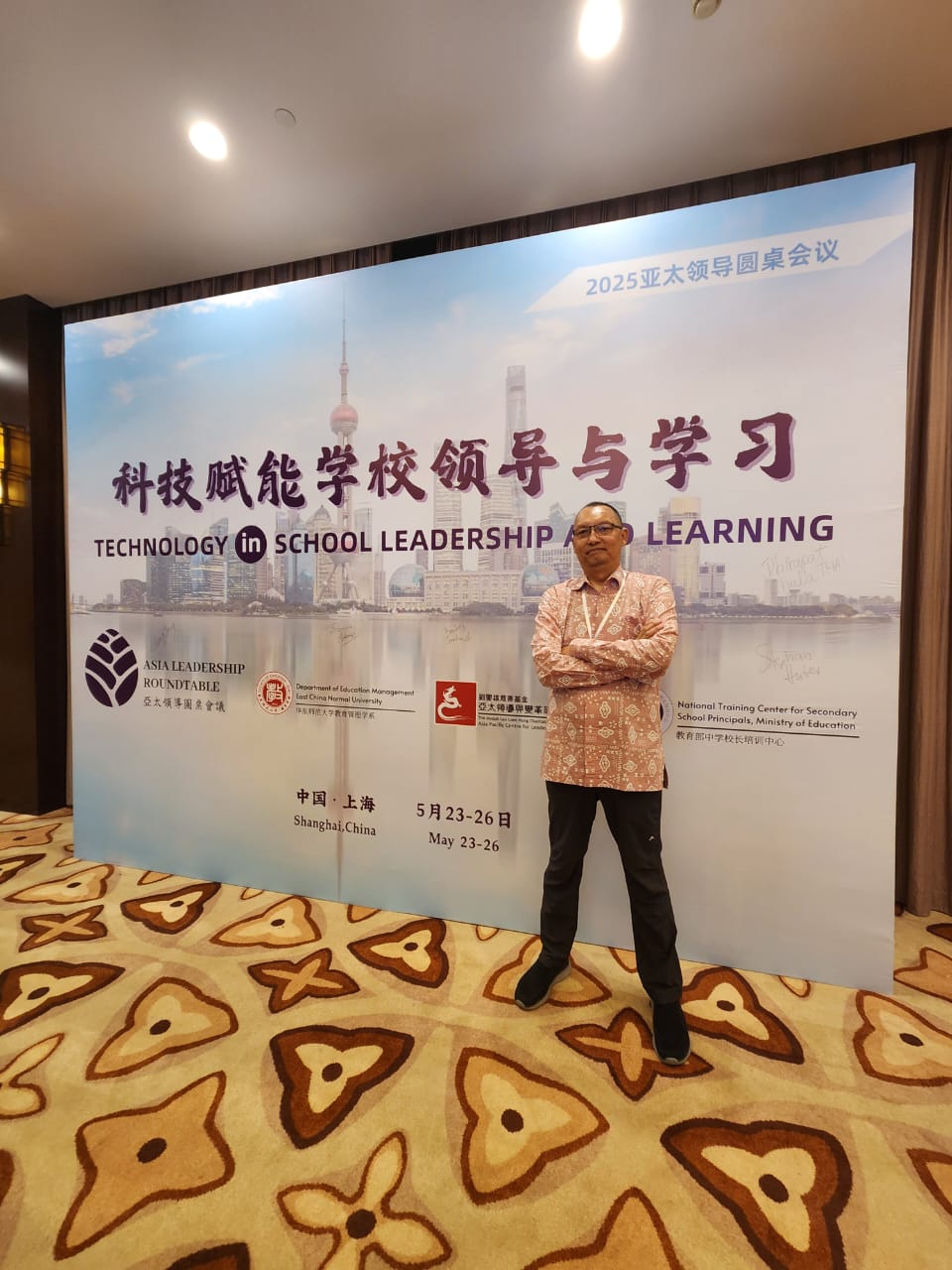
As of 2025, I have participated in seven ALR conferences held in various cities, including Singapore, Taipei (Taiwan), Hangzhou (China), Guilin (China), Bangkok (Thailand), and Shanghai (China). In the most recent two conferences—in Bangkok (2024) and Shanghai (2025)—I was the sole representative from Indonesia, attending on behalf of the Faculty of Education, Universitas Islam Internasional Indonesia. The conference themes evolve annually to reflect the shifting trends and dynamic nature of research in educational leadership. For instance, in 2018, the theme was "The West Wind vs. the East Wind: Understanding Leadership for Teacher Learning" (https://www.eduhk.hk/apclc/roundtable2018/welcome.html), highlighting the contrasting perspectives of Western and Eastern leadership theories. In 2025, reflecting the growing impact of artificial intelligence, the theme was "Technology in School Leadership and Learning" (https://www.eduhk.hk/apclc/roundtable2025/welcome.html).
The Asia Leadership Roundtable is organized annually by the Asia Pacific Centre for Leadership and Change (APCLC), based at The Education University of Hong Kong. Each year, a host country and university take responsibility for organizing the event. In 2025, the Department of Education Management at East China Normal University (ECNU), in collaboration with the National Training Center for Secondary School Principals under China’s Ministry of Education, managed all aspects of the conference—from venue arrangements to program activities.

My involvement in ALR has allowed me to connect with leading scholars in the field of educational leadership, such as Professors Alma Harris, Philip Hallinger, Christopher Chapman, and Clive Dimmock—academics whose work I had previously cited extensively. Initially, it was almost surreal to meet these scholars in person, but our interactions led to fruitful academic exchanges and significantly broadened my international academic network. These connections have resulted in several professional opportunities, including invitations to contribute to journal special issues, co-author book chapters, serve as a peer reviewer, examine PhD proposals and theses, and participate as an editorial board member for leading journals in education (https://link.springer.com/journal/11092/editorial-board). Moreover, my academic expertise has expanded beyond educational leadership and policy to include the Rasch model and educational assessment, as well as topics related to sustainability simulation.
The most recent ALR, held in Shanghai from 23–24 May 2025, focused on the integration of artificial intelligence across various sectors of education. It was evident that the Chinese government has developed a clear and strategic vision for leveraging technology in schools and education systems. I was particularly impressed by the detailed presentations about the National Training Center for Secondary School Principals, based at ECNU in Shanghai. China also maintains a comparable center for primary school principals located at Beijing Normal University, both of which have operated for over three decades. These institutions function similarly to universities, with most of their trainers holding PhDs and regularly publishing in international journals. This stands in stark contrast to the situation in Indonesia, where a comparable institution has been disbanded.

In addition to the ALR, I also had the opportunity to attend a national conference for school principals in Hangzhou on 26 May 2025. This event featured many international scholars who had also participated in ALR—some as keynote speakers, others as panelists offering critique and analysis on the presentations and broader issues in China’s educational landscape.
From Fear to Courage: Reflections on International Conference on Teaching and Learning (ICLT) 2025 Hong Kong and the Aspirations of Indonesian Education in an Era of Disparity
 From Fear to Courage: Reflections on International Conference on Teaching and Learning (ICLT) 2025 Hong Kong and the Aspirations of Indonesian Education in an Era of Disparity
By: Muhamad Maulana
“The flight ticket was non-refundable, and my wallet was nearly empty. I was sitting by myself and wondering, “Perhaps this journey isn’t meant to happen.' But then, came an unexpected kindness, my friends—without hesitation—extended their support, lending me what little they had to keep my dream alive. This is more than just an account of attending the international conference, It is a story that changed the way I think about education, and how I see myself—as Indonesian scholar who strongly believes the power of education.”
As my first international trip beyond Indonesia, and naturally I felt nervous. I arrived with do not have any idea how to navigate foreign systems, and the idea of being alone in an unfamiliar place was challenging. But with each step, I learned to stand by myself, from mastering public transportation to adjusting a new culture, I slowly developed confidence. I realized that independence isn’t about having all the answers—it's about being strong enough to keep moving forward despite uncertainty.
The Conference theme, “Learning and Teaching for Future Readiness,” gave me a significant experience as a master candidate in Education. The International Conference on Teaching and Learning (ICLT) 2025 was vibrant filled with keynote speakers from well-known universities and presenters with diverse, cutting-edge research. One of the keynotes I looked forward to being study by Professor Deng Zongyi from University College London. His lecture titled, “Rethinking 21st-Century Competencies and Curriculum Translation: Insights from Bildung-Centred and Subject-Matter Didaktik,” resonated deeply with me. He reminded us that these competencies cannot be reduced to mere technical proficiencies, but position them as cultural artifact, shaped by historical, philosophical and pedagogical context. As someone currently working on completing a thesis talking about 21st-century competencies, I found his insights was transformative and I should reevaluate my own work.

Another keynote that impressed me most was Professor Hong Ji from the University of Arizona, discussing his material titled “Reconceptualizing Teacher Identity in Changing and Challenging Contexts,” enlightened me to the multifaceted identity of teachers. She spoke about how teacher identity is constantly negotiated, shaped by social expectations, policy demands, and personal values. This talk particularly hit home because I’m currently working on a collaborative research project with peers about professional teacher identity in private Islamic schools (madrasah) in Indonesia, deeply rooted in the religious values and viewing it as a good deed, which we’ll present at the upcoming AIFIS-MSU Conference on Indonesian Studies 2025.

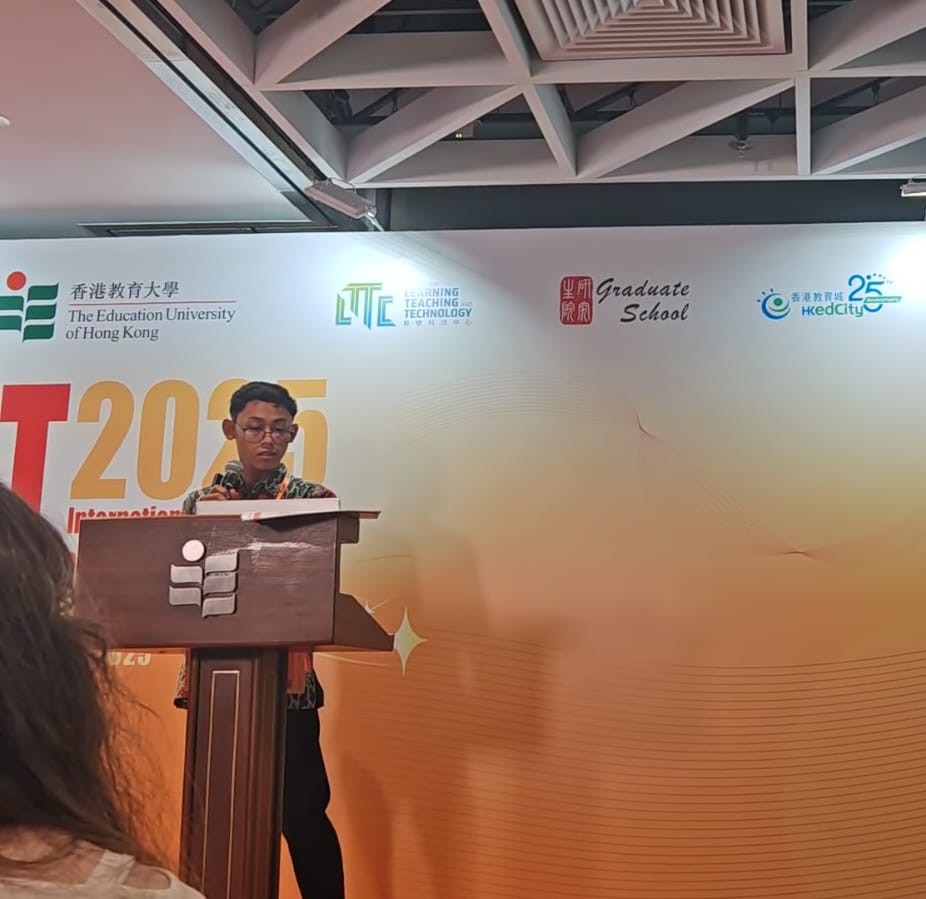
Walking onto the campus of The Education University of Hong Kong for the first time was itself an inspiring moment. The campus felt futuristic—both in design and spirit. What amazed me was the sheer number of student researchers presenting on topics such as artificial intelligence in education, a field that is increasingly shaping global educational conversations. Their work was fresh, forward-thinking, and well-supported by robust facilities. Compared to these presentations, my own research felt incredibly local: a study I had conducted for my Educational Management and Leadership class, with the titled “Empowered or Excluded: Exploring Student-Workers’ Perceptions of Power Dynamics in Educational Leadership.”
 At
At
First, I was worried that my topic might be irrelevant to international audience. My research focused on a very specific and local problem of education in Indonesia: the shortage of qualified teachers in low-middle class society, and how this is often resolved by hiring locals’ members who do not have teaching degrees yet to fill the gap temporarily. In contrast, countries like the U.S. Hong Kong or those in Europe are already addressing more advanced educational concerns—AI policies, curricular sustainability, and or digital equity. But during the discussion, I realized that sharing our local realities is equally important, because global conversations on education must involve voices from all contexts, especially those still grappling with basic structural concerns.
Listening to scholars work from different part of the world, I became even more aware of how far Indonesia need to improve the quality of its education system. But rather than becoming discouraged, though, I felt a growing sense of purpose. Being Indonesian academician, I left Hong Kong not only with new perspectives but with a deeper conviction: education is not only national responsibility, but a personal commitment as well. Indonesian education’s future depends on its young scholars, teachers, and researchers who dare to dream—and act boldly—beyond national borders.
Looking back with profound gratitude, having generous friends gave me courage to go and did not cancel the trip despite fear. What I gained extends far beyond the conference sessions themselves, the lessons I brought home all became part of a story I’ll carry with me as I continue the journey in education. The ICLT 2025 conference did not simply teach me about future readiness in education—it helped me become ready for my own future.
From PhD Research to International Audience: My Learning Journey on Educational Assessment and Rasch Measurement Theory

From PhD Research to International Audience: My Learning Journey on Educational Assessment and Rasch Measurement Theory
By Muhammad Affan Ramadhana
I was driving when the email notification from PROMS 2025 committee arrived. I peeked through my smartwatch but could only see the subject headline: Congratulations – Distinguished Student Scholarship PROMS2025.
Having arrived home, I tried to read the email word-by-word, in case I misread it. Alhamdulillah. My plan to present my research at the conference is saved. I was awarded travel grant to attend and present at the conference. This award is given by Pacific Rim Objective Measurement Society (PROMS) and Singapore University of Social Sciences (SUSS) as the committee of PROMS conference this year. I did not expect much when I submitted the application. I just thought that it is better to fail while trying than to regret never trying.
“The award recognizes outstanding students across Southeast Asia who have demonstrated academic excellence, research potential, and a commitment to advancing the field of measurement and assessment.” (PROMS 2025 website).
My Research Background
I was trained academically in English language education field. I obtained my Bachelor of Education degree in 2011 and my Master of Education in 2014, both from Universitas Negeri Makassar (UNM), South Sulawesi province, Indonesia. Since 2022, I was admitted to the PhD Program at the Faculty of Education, Universitas Islam Internasional Indonesia (UIII). I did my undergraduate thesis on English test analysis using classical test theory. Now, my doctoral research focuses on educational assessment and evaluation, with specific interest in language testing and assessment, rater-mediated assessment, and Rasch measurement theory.
It was in the Educational Assessment class, when I was first introduced to Rasch measurement model by Dr. Bambang Sumintono. As one of prominent figures in Rasch measurement in Indonesia, he clearly explained several traditions in measurement model and present a solid argument on why using raw score in measurement is problematic. Later in the following weeks, I was introduced to multi-rater assessment – a concept that I later used in my dissertation research.
My dissertation specifically explores assessment behavior of Indonesian university lecturers when grading English essays. This research focus emerged from my experience listening to stories of how my colleagues admit inconsistencies when assessing students’ writing. In rater-mediated assessment, inconsistencies and biases can be a threat to validity, reliability, and fairness of the assessment, which can impact the students’ future opportunities.
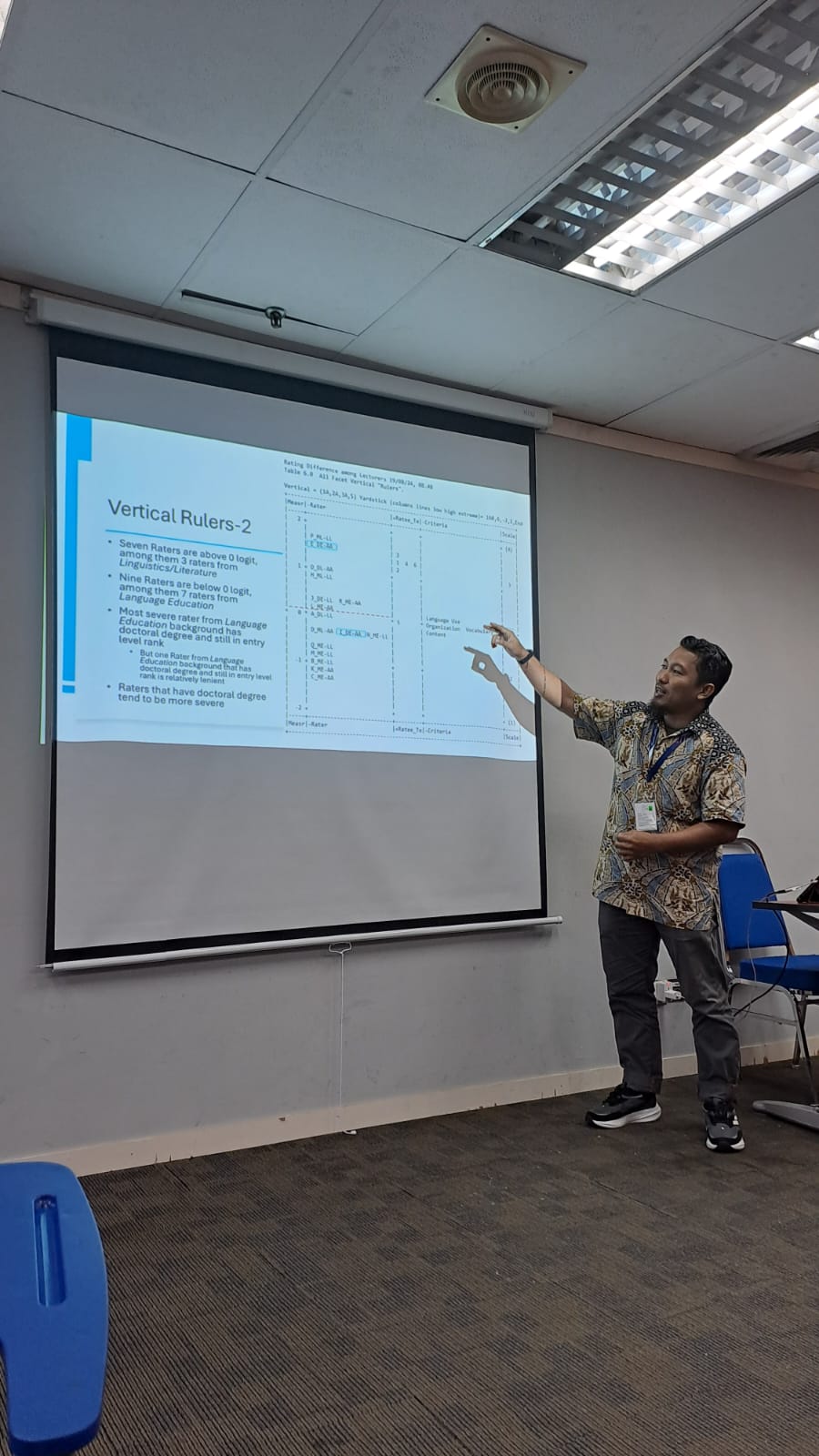
My dissertation research utilizes Many-Facet Rasch Measurement (MFRM) analysis, which is a modern psychometric model built on the idea that observed ratings are influenced by multiple facets, where each contributes to the final measurement. These facets include examinee ability, rater severity, and assessment rubric criteria. MFRM allows estimation of the logit scale for each facet and adjustment for inconsistencies. This model is important for identifying systematic biases or interactions that may be introduced by indirect factors.
From PROMS 2024 to PROMS 2025: My First Steps in the International Arena
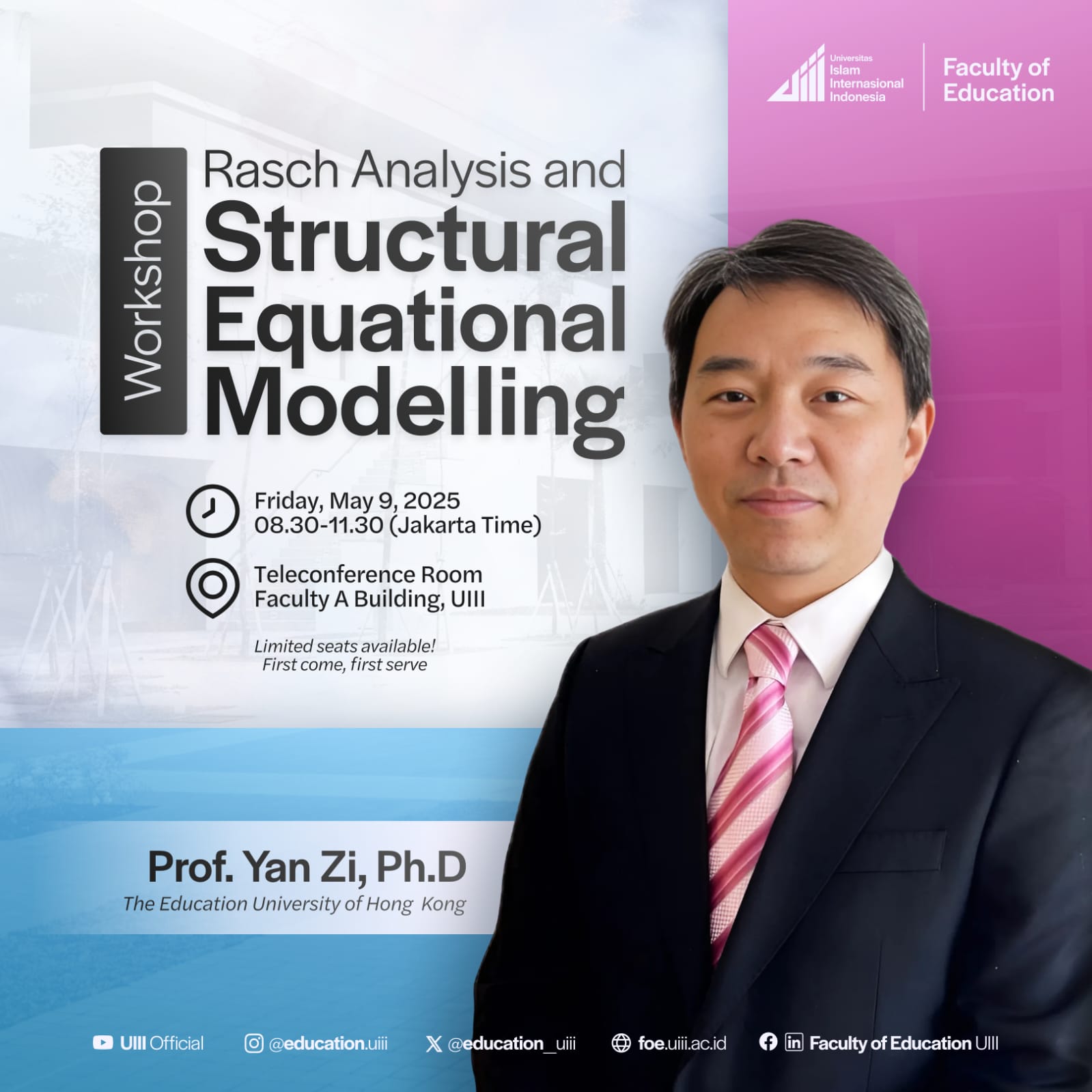
Participating in PROMS 2024 provided a very valuable first-time experience for me. PROMS, as a scholarly society that promotes objective measurement and Rasch measurement, provides a forum for researchers from various backgrounds to share their works. In the 2024 conference, I directly witness the presence of leading experts in the field of Rasch measurement, such as Prof. Trevor G Bond (Founder of PROMS), Prof. George Engelhard (President of PROMS), and Prof. Yan Zi (Vice-President of PROMS), among others. These names I previously knew from books and journal articles only.
I was just started to deeply learn about this field when I participated in PROMS 2024 in Kuala Lumpur, Malaysia last year. I actually did not understand most of the theory when I presented my preliminary study. It was just my strategic action to gain insights and measure the worthiness of my plan and preparation for dissertation research. But I did my best. The feedback that I received, both from Rasch experts and from language assessment experts, resulted in substantial refinements to the analytical framework and methodology of my dissertation research. This experience also strengthened my determination to continue exploring this field.
Upon browsing the PROMS 2025 website, I noticed that the committee of this year’s conference opened applications for Distinguished Student Scholarship. I have just finished analyzing data from the first phase of my dissertation research when I saw the opportunity. I immediately prepared my extended abstract, curriculum vitae, and most importantly, recommendation letter from dissertation supervisor. He strongly supported me and believed that participating in PROMS 2025 will provide valuable feedback at the crucial stage of my dissertation research.
In PROMS 2025, I will present the result of first phase of my dissertation research. In the study, I analyzed assessment behavior of 36 university lecturers in Indonesia. They were tasked to assess English essays written by undergraduate students from various Asian countries. The assessment was conducted using standard analytical rubric with five categories (content, organization, vocabulary, language use, and mechanics).
The analysis indicates the presence of at least three groups of raters based on their level of severity/leniency with significant differences across raters. The statistical fit analysis also identified raters who exhibited inconsistent scoring behavior (overfit and misfit). The most interesting finding of this study was the identification of biases between rater background and scoring criteria. The results show different assessment behaviors of lecturers based on their academic qualifications, field of study, professional rank, and gender. This study is expected to offer practical insights for assessment committees to minimize potential biases, especially when designing multi-rater English writing assessment programs
My Future Plans
Receiving this scholarship will provide me with the opportunity to present some of my dissertation findings at the PROMS 2025 conference. The main event will be held on July 22-23, 2025, located in Singapore University of Social Sciences (SUSS) campus. The Distinguished Student Scholarship presentation session is scheduled for the afternoon of Day One. I believe the scholarship will provide me with a platform to gain insights and interact with leading experts and colleagues from across the Pacific region and beyond. I believed the forum will help me expand my professional network into the field of objective measurement.
I am very grateful for this opportunity and the recognition given through the PROMS 2025 Distinguished Student Scholarship. I believe research focused on improving educational practices, no matter how small, can have international relevance. I hope to make the most of this opportunity to learn from experts, share my research findings, and continue to contribute to the development of the field of educational measurement and language assessment, particularly within Rasch measurement theory.
Islamic Feminists’ Approaches
 Nurmila, N. (2025). Islamic Feminists’ Approaches. In: Bano M, ed. The Cambridge Companion to Women and Islam. Cambridge Companions to Religion. Cambridge University Press; pp. 214-233. https://www.cambridge.org/core/books/abs/cambridge-companion-to-women-and-islam/islamic-feminists-approaches/7D0AA2AE8DDAC391F4BB7B067A724C00
Summary
Nina Nurmila provides a review of key scholarly figures in the field of Islamic feminism and their methodological approaches. She emphasizes how, in Indonesia, their influence has permeated the wider Muslim community more effectively than in other contexts, thanks to local scholars disseminating their ideas through vernacular Islamic scholarship.