Grit, Innovation, and Adaptation: Key Themes in FoE’s 3rd Graduate Forum for Education Future

Grit, Innovation, and Adaptation: Key Themes in FoE’s 3rd Graduate Forum for Education Future
March 24, 2025
Contributor: Supriyono | Editor: Dadi Darmadi | Photo: Virda Lalitya Umam
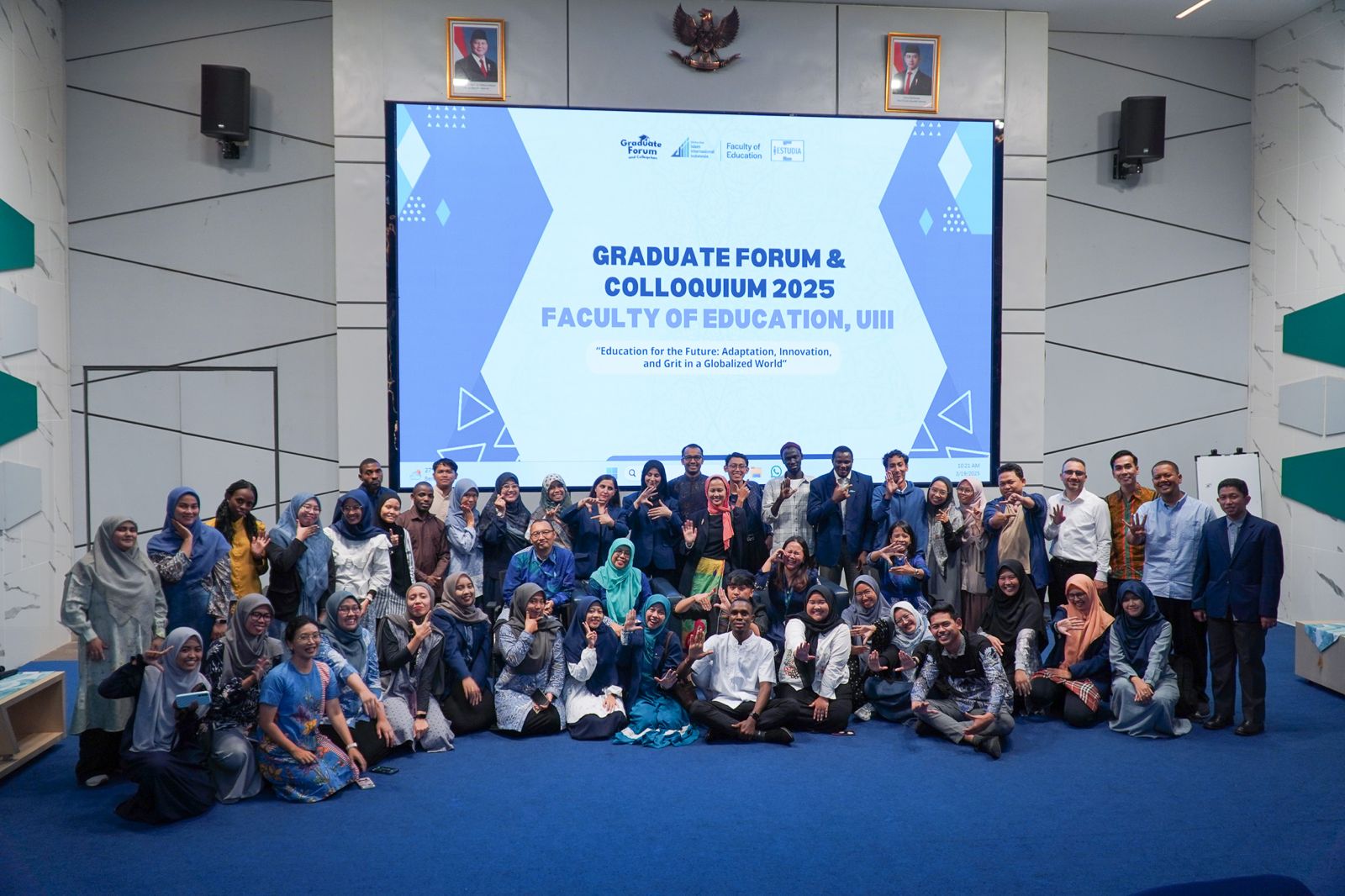
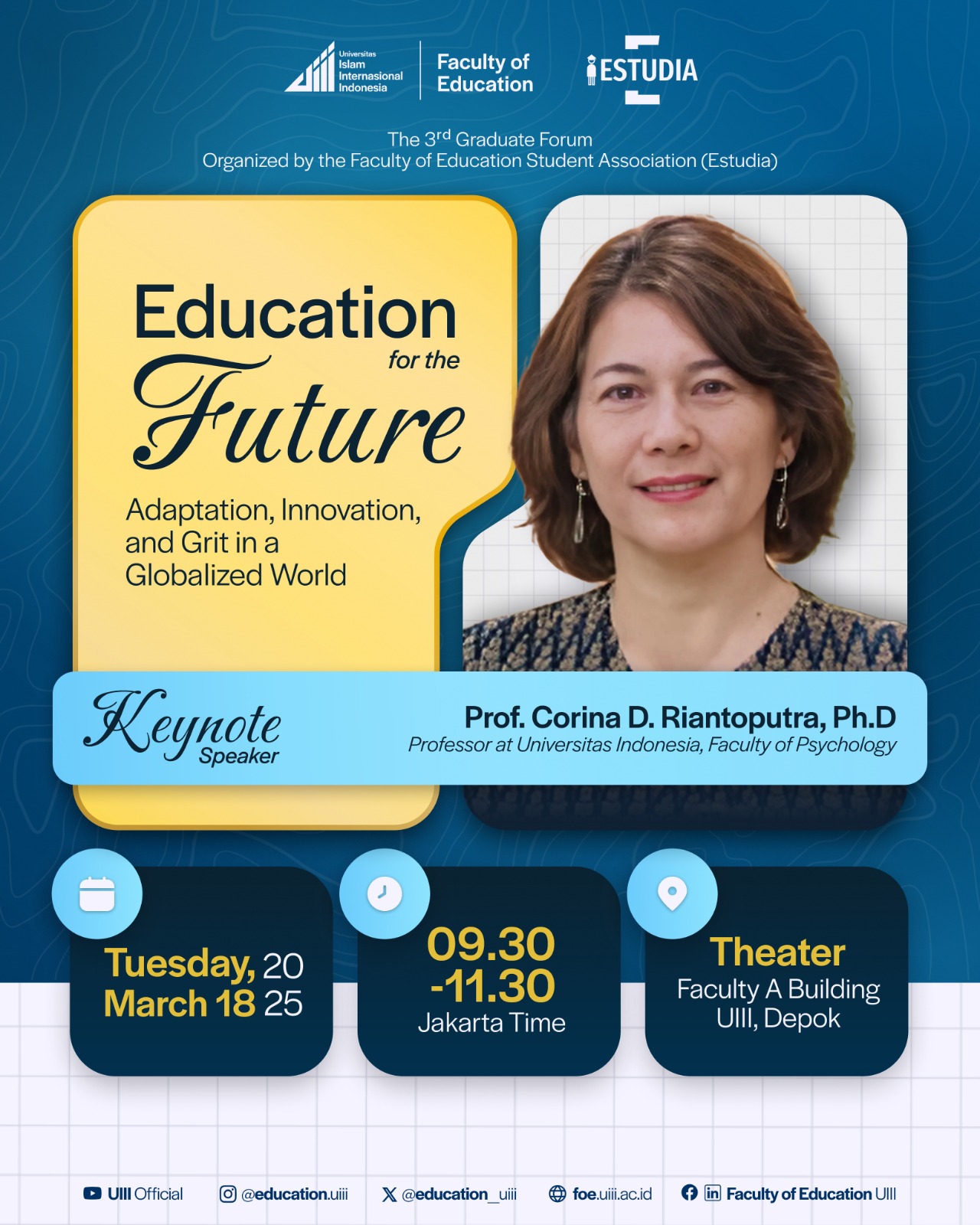
The Faculty of Education (FoE) at Universitas Islam Internasional Indonesia (UIII) has successfully hosted its 3rd Graduate Forum & Colloquium on March 18-19, 2025, at the UIII Campus in Depok, West Java. Themed "Education for the Future: Adaptation, Innovation, and Grit in a Globalized World," the event convenes graduate students to explore the dynamic evolution of education.
In her opening address, Assoc. Prof. Charyna Ayu Rizkyanti underscored the forum's relevance, stating, "talking about the future—who can truly predict it? We’re witnessing the world changing very fast. However, if there’s one thing that we know for sure, education will always be at the heart of how we navigate this uncertain future,” she said.
She emphasized the indispensable role of adaptation, innovation, and grit in modern education, explaining that adaptation ensures survival, innovation drives progress, and grit fortifies resilience in the face of adversity.
Meanwhile, Prof. Nina Nurmila, Dean of the Faculty of Education at UIII, highlighted the forum's function in equipping the students for academic dissemination. She remarked, "This serves as a vital rehearsal for you—to present your research and articulate your ideas to a broader academic audience." Prof. Nurmila also emphasized the significance of timely study completion and scholarly productivity, urging students to remain diligent in their academic publications and maintain the tradition of graduating together onetime.
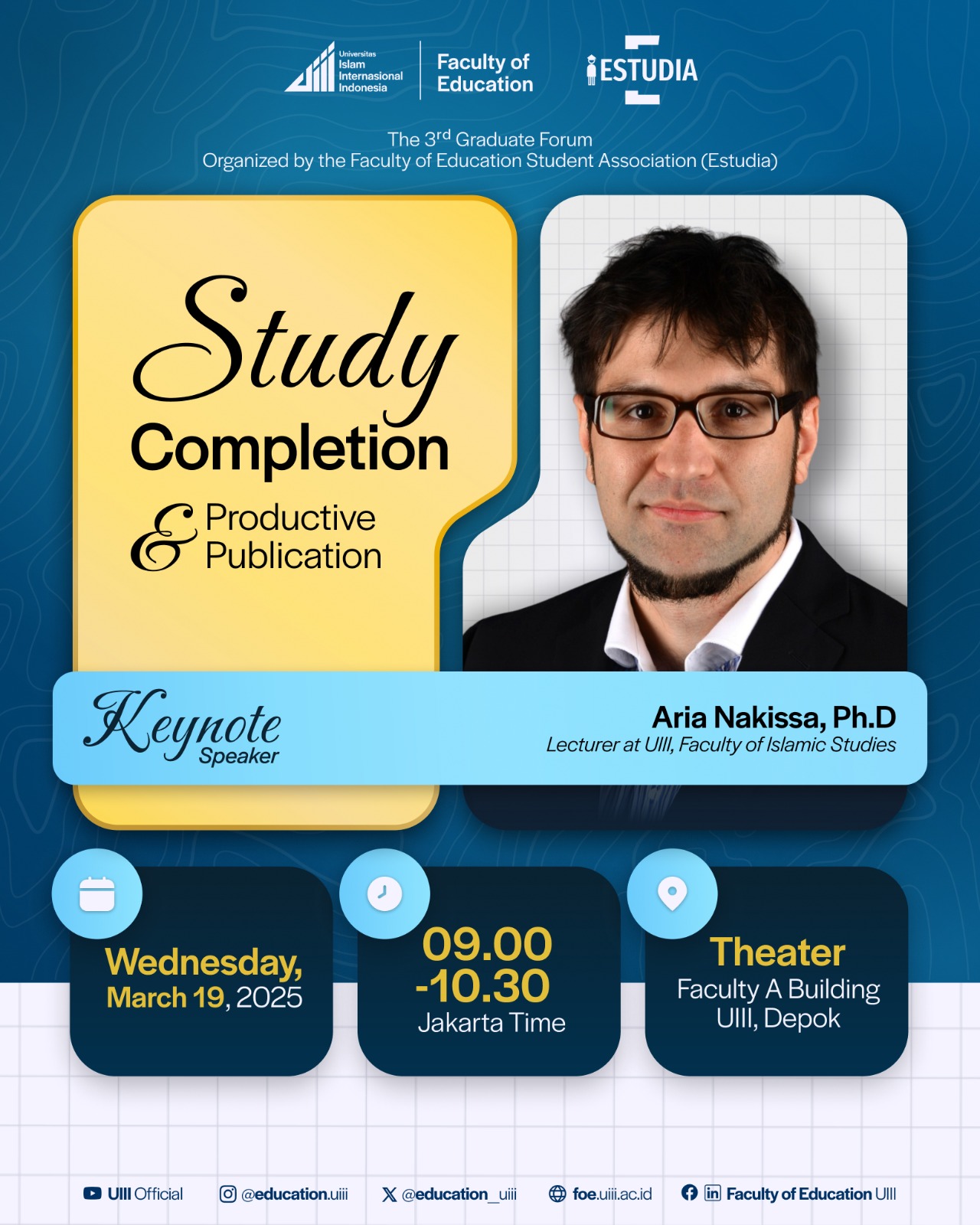
The forum featured two distinguished keynote speakers. On the first day, Prof. Corina D. Riantoputra, a psychology lecturer from the University of Indonesia, explored the primary theme, "Education for the Future: Adaptation, Innovation, and Grit in a Globalized World." On the second day, Aria Nakissa, Ph.D., from UIII's Faculty of Islamic Studies, presented "Study Completion and Productive Publication," aiming to inspire students and faculty members to achieve timely graduation and maintain a robust academic publication record.
Organized by the Education Student Association (ESTUDIA), the forum also marked the inauguration of ESTUDIA’s new leadership cabinet, with Mukhamad Imron Rosadi, an MA in Education student from batch 4, assuming the role of president.
The 3rd Graduate Forum & Colloquium serves as a dynamic platform for participants to engage in intellectual discourse, exchange insights, and challenge prevailing perspectives, embodying the ethos of shaping the future of education in an era of rapid transformation.



Self-handicapping scale: evaluation of psychometric properties among Malaysian and Indonesian university students using Rasch rating scale model analysis

Sumintono, B., Law, M.Y. and Sitasari, N.W. (2025). Self-handicapping scale: evaluation of psychometric properties among Malaysian and Indonesian university students using Rasch rating scale model analysis. Journal of Applied Research in Higher Education. https://doi.org/10.1108/JARHE-08-2024-0429
Abstract
Purpose – This study aimed to evaluate the psychometric properties of SHS in Malaysian and Indonesian university students’ populations using the Rasch Rating Scale Model.
Design/methodology/approach – Specifically, the persons’ and items’ reliability and separation, rating scale’s functionality, unidimensionality, item targeting, item quality and item bias were evaluated using Winstep 4.8.1.0 on a sample of 318 Malaysian and 470 Indonesian university students.
Findings – Both samples show good unidimensional measures. In terms of certain psychometric attributes, the Indonesian and Malaysian samples have relatively similar qualities. The adoption of SHS in measuring the selfhandicapping tendency indicates the scale works well for both Indonesian and Malaysian samples. Practical implications – The findings allow researchers in Malaysia and Indonesia to confidently use the SHS to measure self-handicapping behaviours among university students. This will then enable the design and implementation of a comprehensive intervention programme aimed at reducing self-handicapping and improving the psychological well-being of these future change agents in both countries.
Originality/value – This instrument was first tested in the United States, but its psychometric properties have yet to be evaluated in Malaysia and Indonesia.
Keywords Self-handicapping, Self-handicapping scale, Psychometric properties, Rasch rating scale model, University students
Paper type Research paper
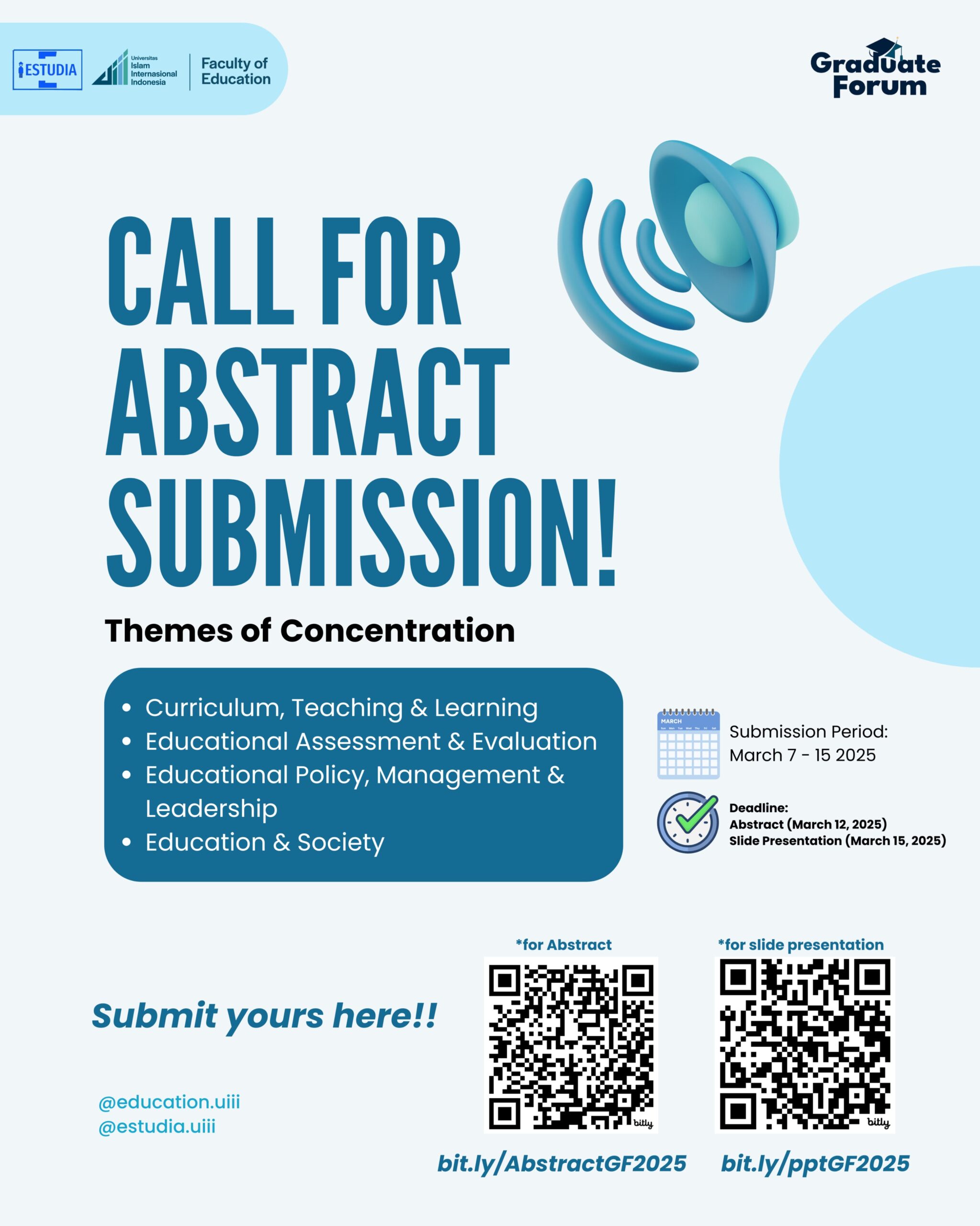
Graduate Forum and Colloquium 2025

? CALL FOR ABSTRACT AND PPT SUBMISSION!
We are excited to invite you to participate in the upcoming Graduate Forum and Colloquium with the theme:
"Education for the Future: Adaptation, Innovation, and Grit in a Globalized World."
? Submission Period:
▪Abstract Submission: March 7-12, 2025 → bit.ly/AbstractGF2025
▪PPT Slide Submission: March 7-15, 2025 → bit.ly/pptGF2025
? Event Dates: March 18-19, 2025
We invite you to submit the abstract of your paper and presentation slides, highlighting your research and contributions to the field of education. Abstracts should align with one of the following focus areas:
a. Curriculum, Teaching, and Learning
b. Educational Assessment and Evaluation
c. Educational Policy, Management, and Leadership
d. Education and Society
? Important: Please use your UIII email to complete the submission forms.
Islam and National Identity: Dr. Andar Nubowo on Indonesia’s Moderate Islamic Framework

Islam and National Identity: Dr. Andar Nubowo on Indonesia’s Moderate Islamic Framework
By Dadi Darmadi
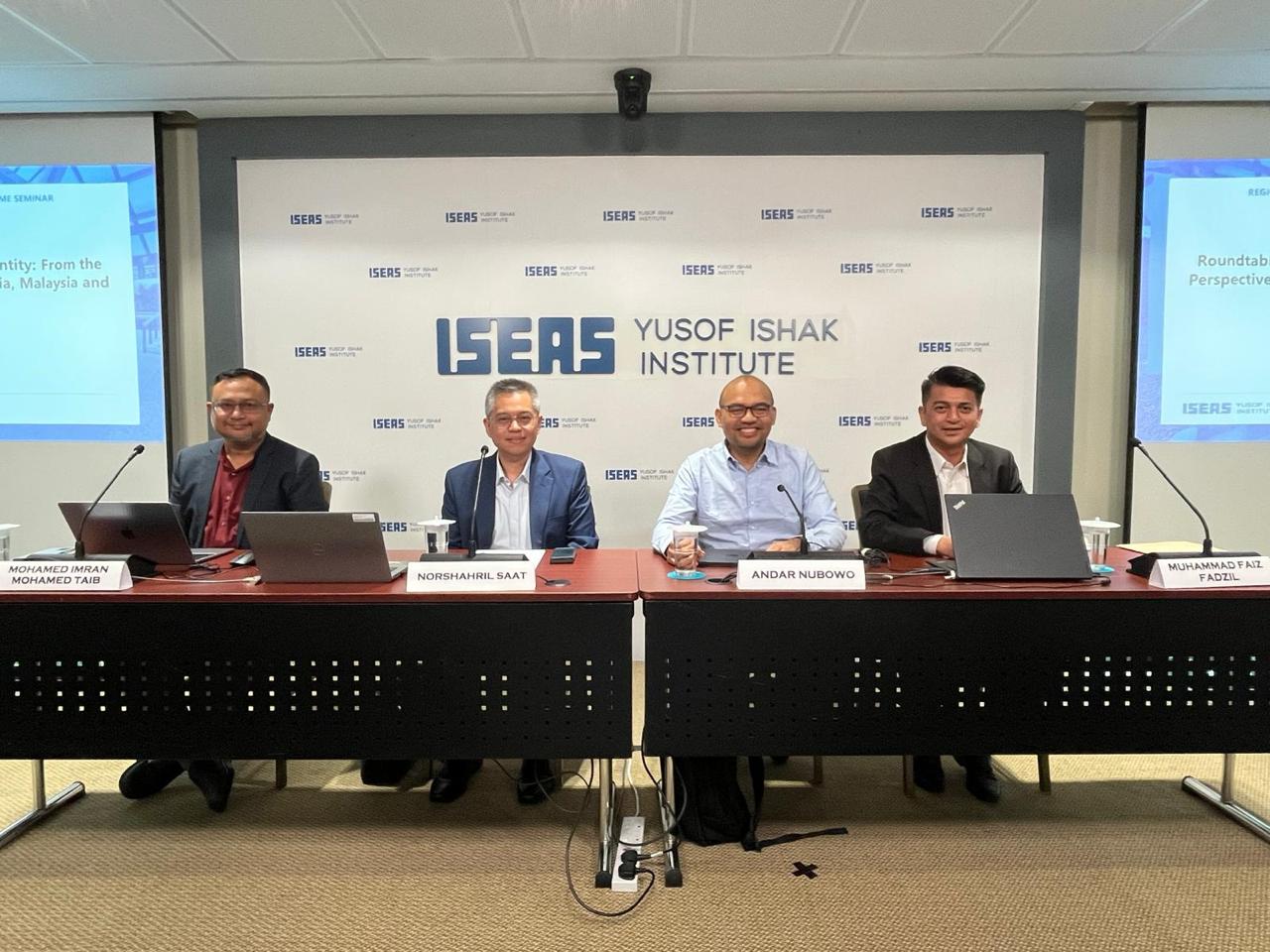
Singapore, 11 February 2025 — The ISEAS – Yusof Ishak Institute hosted a hybrid roundtable seminar titled “Islam and National Identity: From the Perspectives of Contemporary Indonesia, Malaysia and Singapore,” moderated by Dr. Norshahril Saat, Coordinator of the Regional Social and Cultural Studies Programme. The event featured presentations by Dr. Andar Nubowo (Indonesia), Mr. Muhammad Faiz bin Fadzil (Malaysia), and Mr. Mohamed Imran Mohamed Taib (Singapore), drawing 123 participants—researchers, policymakers, students, and diplomats—both online and in person. This article foregrounds Dr. Andar Nubowo’s analysis of Indonesia’s Islamic identity, enriched by his extensive academic and professional background, alongside insights from his counterparts.
Dr. Andar Nubowo, a lecturer at the Faculty of Education, Universitas Islam Internasional Indonesia (UIII), and the newly appointed Executive Director of the Maarif Institute for Culture and Humanity as of May 2024, brought a wealth of expertise to the discussion. Born on 12 May 1980 in Wonosobo, Indonesia, Dr. Andar earned his Master’s degree in Political Science from École des Hautes Études en Sciences Sociales (EHESS) in Paris (2008) and completed his PhD at École Normale Supérieure (ENS) Lyon in December 2023.
Indonesian National Identity
In his presentation, Dr. Andar provided a historical and contemporary analysis of Islam’s integration into Indonesian national identity. He noted that Southeast Asia has traditionally been viewed as peripheral to the Middle East, long considered the center of Islamic learning. However, he argued that the Reformasi movement of 1998 catalyzed a shift, with Indonesian elites seeking to reposition Indonesian Islam as a significant contributor to global Islamic thought, rooted in local traditions. Tracing Islam’s dissemination in the Malay world from the 13th to 15th centuries—aligned with the decline of the Andalusian Islamic empire and the rise of Sufism—Dr. Andar highlighted the late 19th-century establishment of independent Islamic schools by reformists, diverging from Middle Eastern-influenced pesantren.
The 1990s marked a further evolution, as progressive Muslim intellectuals advocated a moderate Islam contextualized within Southeast Asia. This led to the pribumisasi Islam (indigenization) movement in the 2000s and the embrace of wasatiyyat Islam (moderate Islam) as a national identity framework. Dr. Andar pointed to the Universitas Islam Internasional Indonesia, established under former President Joko Widodo, as a key institutional effort to position Indonesia as a hub for Islamic learning. He concluded that embedding wasatiyyat Islam into social, political, and economic policies is essential for its sustained relevance, a theme consistent with his research on moderate Islam’s soft power diplomacy.
Malaysian and Singaporean Perspectives
Mr. Muhammad Faiz bin Fadzil offered a Malaysian perspective, focusing on Prime Minister Anwar Ibrahim’s Madani framework, which integrates six core values—sustainability, prosperity, innovation, respect, trust, and compassion—to address national unity, economic revival, and political reform. He cited data showing Malaysia’s National Integration Index rising from 0.5 in 2023 to 0.6 in 2024, alongside an improved Global Peace Index ranking from 19th to 10th. Emphasizing wasatiyyah (moderation) as a governance principle, he pointed to initiatives like the Madani Lecture Platform and the “Imam Al-Nawawi’s 40 Hadith” module, while noting challenges such as identity politics.
Mr. Mohamed Imran Mohamed Taib addressed Singapore’s context, examining the Muslim religious elite’s “strategic ambivalence” toward secularism. Defining secularism as the separation of religious and state institutions, freedom of belief, and equal treatment across faiths, he observed its lack of a direct Islamic equivalent. In Singapore, traditionalist skepticism—partly influenced by Malaysia’s Islamist critiques—coexists with pragmatic acceptance of secularism’s role in a multi-religious society.
Nationalism and Global Context
The Q&A session explored nationalism versus the global Muslim ummah, perceptions of secularism, and Islam’s varying national expressions. Dr. Andar, drawing on his leadership within Muhammadiyah’s intellectual networks (e.g., Jaringan Intelektual Muda Muhammadiyah), stressed that while Islam is central to Indonesian identity, its political exploitation must be avoided—a view echoed by his peers. His recent work, such as “Covid-19, Fatwas, and Socio-religious Praxis” (Social Sciences and Missions, 2022), reflects his broader engagement with Islam’s societal role, reinforcing his seminar arguments.
Dr. Andar’s contribution, underpinned by his academic credentials—including awards like the “Bourse d’Islamologie” (2023) and “UIII COMPOSE Writing Fellowship” (2022)—and his leadership at the Maarif Institute, highlighted Indonesia’s deliberate crafting of a moderate Islamic identity. Alongside the Malaysian and Singaporean perspectives, his analysis provided a comparative lens on Islam’s intersection with national identity in Southeast Asia.
Credit: ISEAS – Yusof Ishak Institute
Resilient and Sustainable Education Futures, Insights from Malaysia and Indonesia's COVID-19 Experience

Zainuddin, Z., Sumintono, B. & Perera, C.J. (2025). Resilient and Sustainable Education Futures, Insights from Malaysia and Indonesia's COVID-19 Experience. Springer. https://link.springer.com/book/9789819649709
Overview
- Provides empirical insights into teaching and learning approaches using immersive technologies
- Suggests pedagogical strategies and support for curriculum development and realignment assessment methods
- Serves as a guide for remedial learning solutions and learning continuity relevant to sustainability education
About this book
This book creates awareness about effective and innovative learning using technology tools that can induce more fun and engagement in our present-day learning communities. It explores the post-pandemic educational practices of two countries, Malaysia and Indonesia, and presents reports of empirical evidence concerning the challenges and opportunities that have arisen due to the pandemic. This book also serves as a guide to provide educational practitioners, learners, and researchers with the knowledge required for curriculum development and realignment assessment methods, particularly in post-pandemic education. It provides further insights into advancing post-pandemic education, namely digital learning solutions for sustainable education, alternative assessments for remote education settings, continuous professional development for teachers in the COVID-19 recovery phase, learner engagement in virtual learning environments, and qualitative evidence of teaching and learning during the pandemic. This book serves as a point of reference and a useful resource for developing and underdeveloped countries that need to lean on alternative pedagogies that cater to the group of marginalized learners affected by the pandemic, and aligns with the goals of sustainable education worldwide.
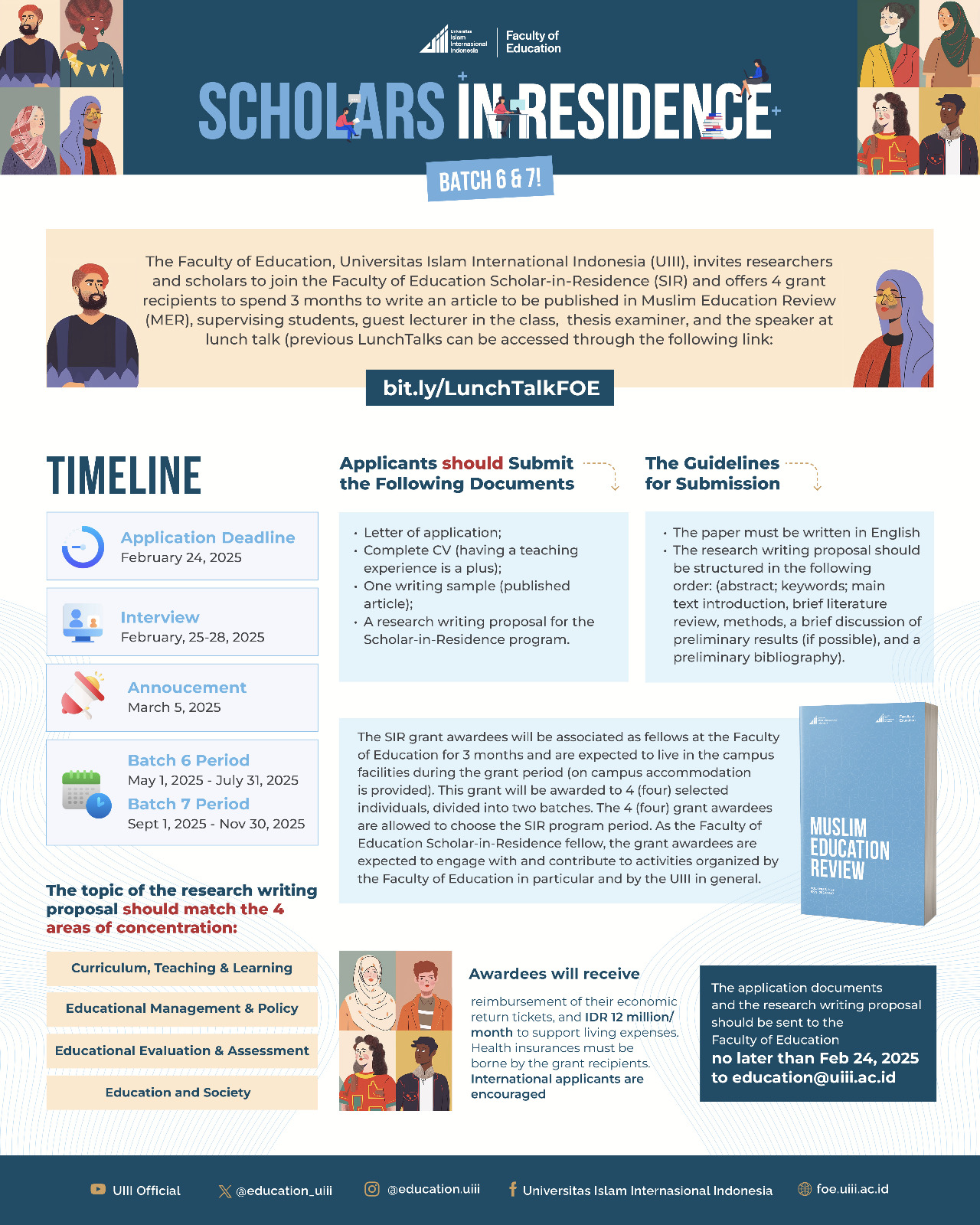
Scholar-in-Residence (SIR) Program 2025, Batch 6 & 7 [extended to 24 Feb 2025]

The Faculty of Education at UIII invites all Ph.D. holders to participate in the Scholar-in-Residence (SIR) Program 2025, Batch 6 & 7 to spend three months as a research fellow.
During the grant period, awardees are expected to serve as guest lecturers, provide academic consultations, act as thesis examiners, present at a LunchTalk, and publish an article in Muslim Education Review (MER). The topic of the article should match the four areas of concentration at the Faculty of Education:
➡Curriculum, Teaching, & Learning
➡Educational Management & Policy
➡Educational Evaluation and Assessment
➡Education and Society
Each recipient will receive IDR 12 Million per month (excluding tax) and are expected to live in the campus facilities during the grant period (reimbursement of economic return tickets and on-campus accommodation are provided).
The awardees will start on:
➡May 1 – July 31, 2025 (Batch 6)
➡September 1 – November 30, 2025 (Batch 7)
Requirements:
➡CV
➡Application Letter
➡Writing sample (published article)
➡Research writing proposal (to be published in MER)
?Deadline: February 24, 2025
?Send your application to: education@uiii.ac.id
Please make sure to read all the details about the program. International applicants are encouraged.
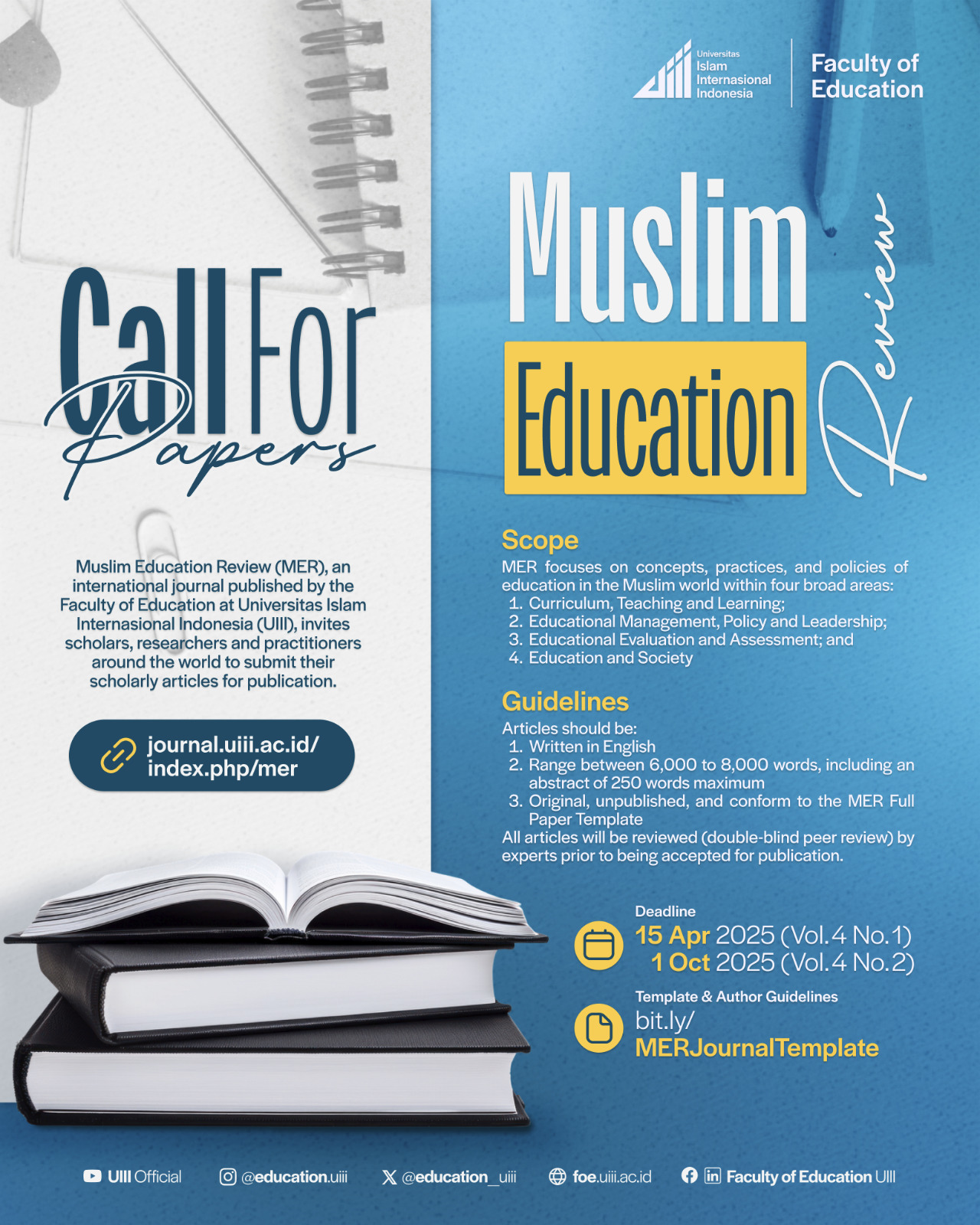
CALL FOR PAPERS: Muslim Education Review (MER) 2025

CALL FOR PAPERS: Muslim Education Review (MER) 2025
The Faculty of Education at UIII is pleased to invite submissions for our 2025 editions of Muslim Education Review (MER). We welcome scholarly articles that explore educational concepts, practices, and policies in the Muslim world.
? Submission Deadlines:
April 15, 2025 (Volume 4, No. 1)
October 1, 2025 (Volume 4, No. 2)
Please submit your manuscripts via email to mer.journal@uiii.ac.id. For more information, including submission guidelines and past editions, visit journal.uiii.ac.id/index.php/mer.
We look forward to receiving your contributions!