An Investment That Paid Off: World-Class Education Close to Home
By Atia Adjani | Photos: Achmad N. Jatnika
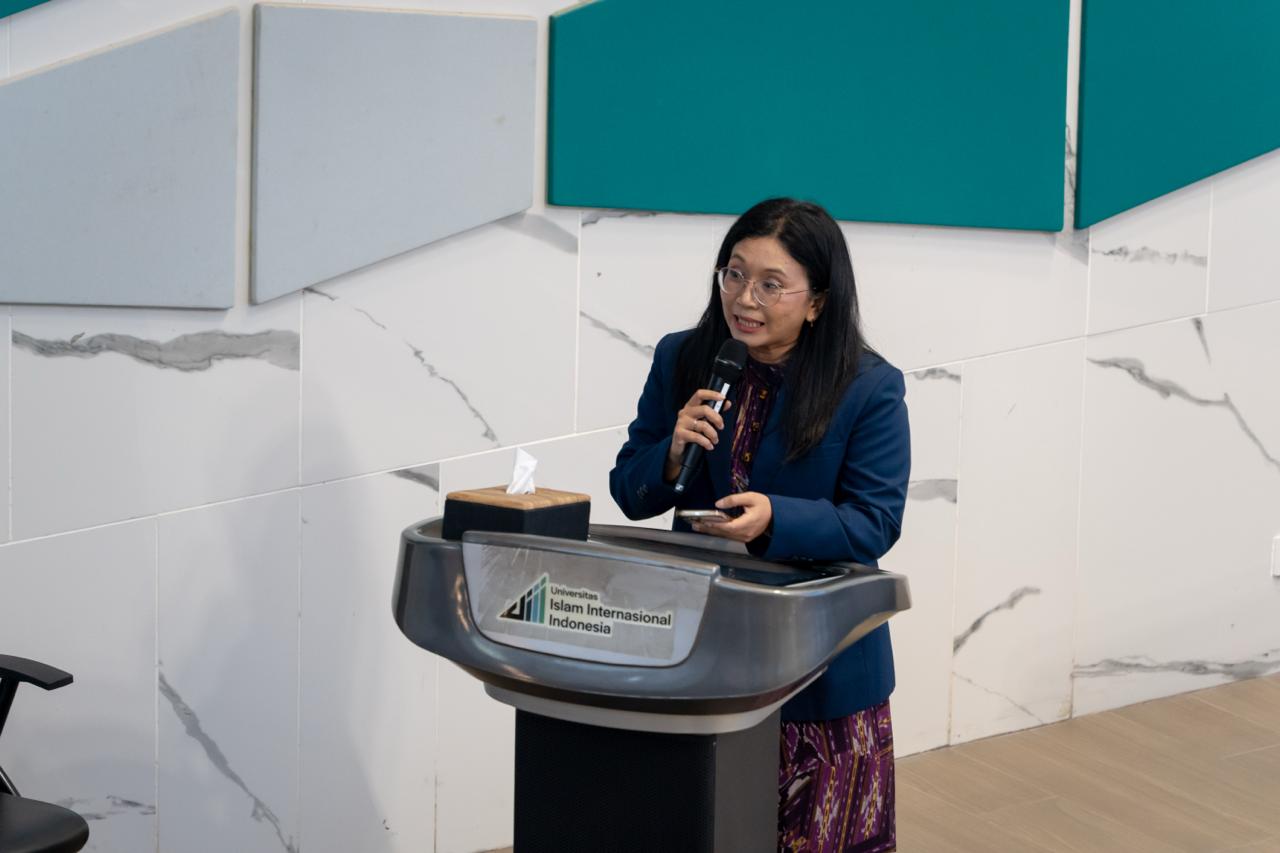
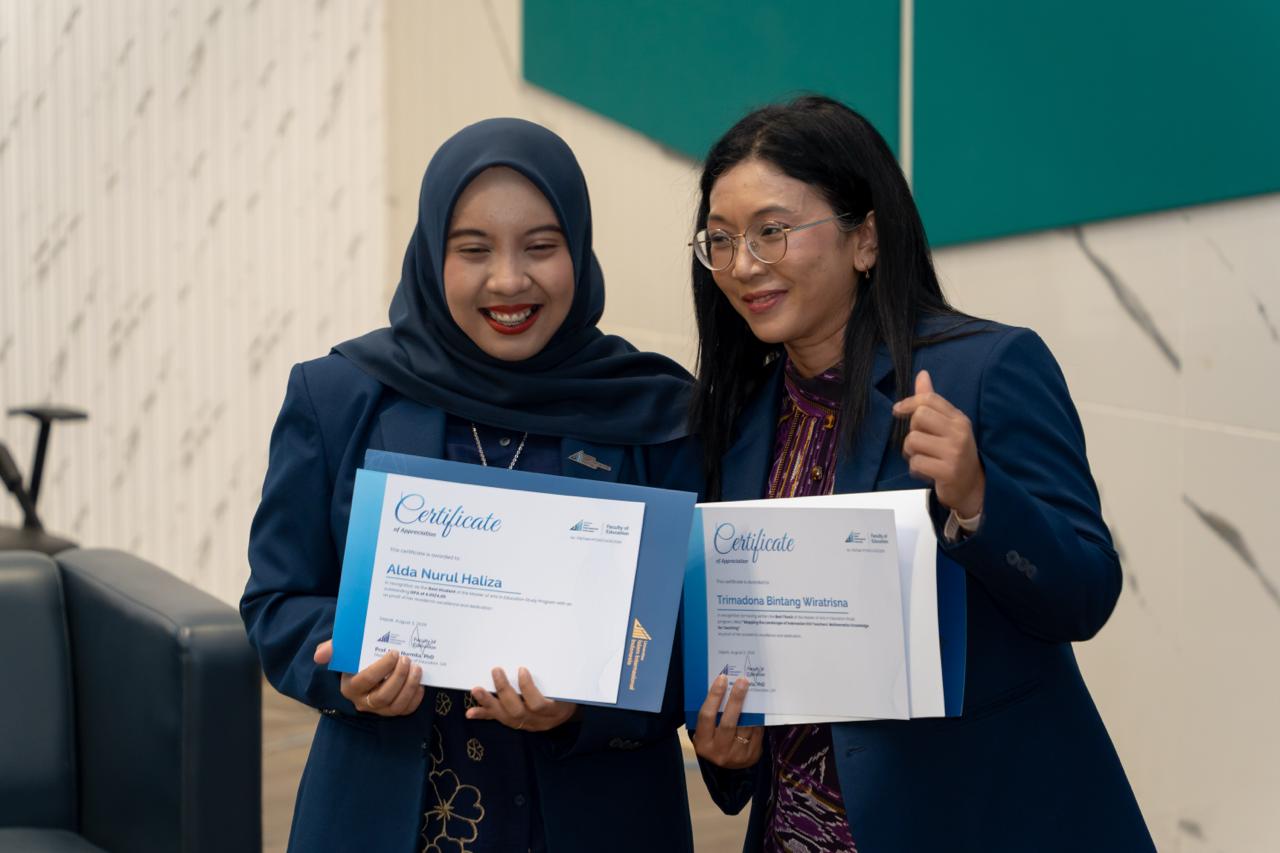
Depok — Is self-funding worth it at a university as young as Universitas Islam Internasional Indonesia (UIII)? For Trimadona — Dona to her friends — the answer is unhesitating yes. As she nears the end of her Master of Arts in Education at UIII’s Faculty of Education.
“You’re not only paying for a degree,” she says. “You’re investing in an international academic environment, lifelong professional networks, outstanding mentorship, and personal growth that is difficult to find elsewhere for the same investment.”
It’s a confident answer, but it didn’t come easily. Dona held off on a master’s degree for more than twenty years after finishing her bachelor’s. “I don’t want to study just anywhere,” she explains. “I was waiting until I found a university and a faculty that truly met my expectations.” She first heard about UIII through friends in education advocacy, then got a closer look by attending its summer courses in 2022 and 2023. By the time she enrolled, it wasn’t a leap of faith, it was a place she already knew well.
Once classes started, what struck her most was how international the experience felt: “In every class, I studied alongside international students from many countries. The lecturers are another major strength. Many of them are internationally recognized scholars, yet they’re incredibly approachable and supportive,” a mix she calls genuinely rare.
Campus life did the rest. A shuttle connecting the dormitory to campus, a strong library, and mornings she looks forward to. Dona describes the campus as peaceful, green, and beautifully maintained. And she says she enjoys jogging around the grounds every morning before class.
For anyone who always dreamed of studying abroad, Dona thinks UIII gets close to that feeling, with advantage. “You can enjoy all of those advantages while remaining close to your family and staying connected to your professional network in Indonesia.”
Her message to hesitant applicants, especially working professionals no longer eligible for scholarships, is direct: don’t let cost stop you. Dona calls her time at FOE one of the best investments she’s made in herself. “You’re joining an international academic community, building networks across countries, and developing skills that will stay with you long after graduation.”
source: https://uiii.ac.id/an-investment-that-paid-off-world-class-education-close-to-home/

Assessing Teacher Competency Disparities Through Rasch and DIF Analysis
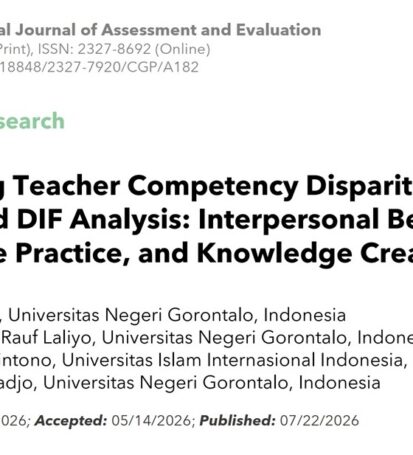
Rahim, M., Laliyo, L. A. R., Sumintono, B., & Lakadjo, Moh. A. (2026). Assessing Teacher Competency Disparities Through Rasch and DIF Analysis. The International Journal of Assessment and Evaluation. https://doi.org/10.18848/2327-7920/cgp/a182
Abstract: Mapping disparities in teacher competencies is essential for advancing equitable education quality in Indonesia. This study investigates the psychometric quality of three teacher competency instruments—the Questionnaire on Teacher Interaction (QTI), Teacher Reflective Practice Questionnaire (TRPQ), and Teacher Knowledge Creation Questionnaire (TKCQ)—and examines competency disparities across teacher demographic groups with explicit attention to measurement fairness. A cross-sectional quantitative survey was conducted with 511 elementary and junior high school teachers in Gorontalo Province. Data were analyzed using the Rasch Measurement Model to evaluate model fit, item and person reliability, unidimensionality, rating scale functioning, and Differential Item Functioning (DIF). The results indicate that all three instruments demonstrated good overall fit to the Rasch model, with very high item reliability (≥0.97) and person reliability ranging from moderate (QTI = 0.68) to very good (TKCQ = 0.86). The rating scales functioned optimally, and item–person targeting was particularly strong for the QTI and TRPQ instruments. DIF analysis revealed meaningful disparities in teacher competencies associated with certification status, teaching experience, and school location, indicating structural inequities rather than measurement bias. These findings confirm the validity and fairness of the instruments and underscore the importance of Rasch–DIF-based analyses for diagnosing competency gaps. The study recommends the implementation of tiered, data-driven professional development (PD) programs to support equitable and targeted teacher competency enhancement.
From a Course Assignment to Publication: My Experience with PISA 2022 Data
 From a Course Assignment to Publication: My Experience with PISA 2022 Data
By Dwi Oktariani
When I entered the Graduate Seminar on Large-Scale Assessment course in the second semester of my doctoral study at the Faculty of Education, Universitas Islam Internasional Indonesia (UIII), I never imagined that the final assignment from the course would lead me to a publication in a reputable international journal. The course, taught by Bambang Sumintono, Ph.D., was a continuation of Advanced Educational Assessment, which had previously started to introduce me to the world of assessment and education measurement.
My academic background is in performing arts education, especially dance. Before starting my doctoral study, most of my research and practice were closely connected to arts and communities. I teach traditional dance at Universitas Tanjungpura, work as an arts practitioner, do choreography and performances, and conduct research on indigenous communities in West Kalimantan. The research world that I knew was very close to people, movement, tradition, and cultural practices. Data involving thousands of respondents, statistical analysis, SPSS, and especially large-scale assessment felt like a world very far from me.
My more serious encounter with quantitative approaches actually began at UIII. In the assessment course, I started learning about the Rasch Model and how to use Winsteps software. I began to understand how the quality of an item is examined and how assessment can produce accountable information. This experience slowly broadened the way I viewed educational research and showed me that there were still many areas outside the field I had been working in that I needed to learn.
A more challenging journey began when PISA was introduced in the Graduate Seminar on Large-Scale Assessment course. For the midterm assignment, I critically examined large-scale assessment practices and began questioning the relatively limited position of the arts in that discussion. I then carried this interest into my final assignment. I wanted to know whether a dataset as large as PISA could actually “speak” about the arts. From this simple question, I started developing a study on gender differences in affective engagement, creativity belief through the arts, and Indonesian students’ participation in school-based arts activities using PISA 2022 data.
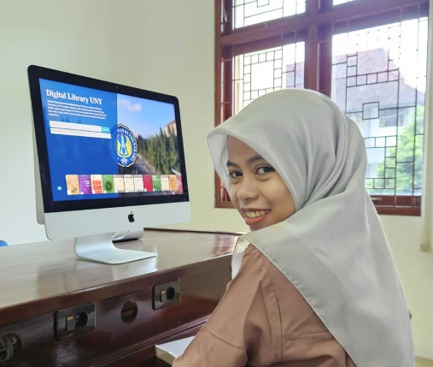
The process was much more difficult than I expected. I had never used SPSS before, let alone worked with large-scale secondary data. From the thousands of data available through the OECD, I chose the Indonesian data because of my own curiosity: what does PISA actually look like when we focus on Indonesian students? I started looking for the questions given to students, understanding the code for each item, identifying relevant variables, and selecting data that could be used in the study. At that stage, the more I searched, the more I felt that I did not know enough. I even visited the libraries at UPI and UNY to look for previous studies that connected PISA with arts education. However, I did not find any study that was exactly the same as what I wanted to do. I also studied the work of senior students who had used PISA data to understand how such data could be developed into an article for a Scopus-indexed journal.
The more I read, the broader the problem became, and the more difficult it was for me to keep the study focused. At the same time, the final assignment deadline was getting closer. I was tired, but stopping was not an option. In the end, I returned to something I understood best: the arts. I went through the PISA 2022 questions again and finally selected seven items related to affective engagement, creativity belief, and participation in visual arts, music, and theatre.
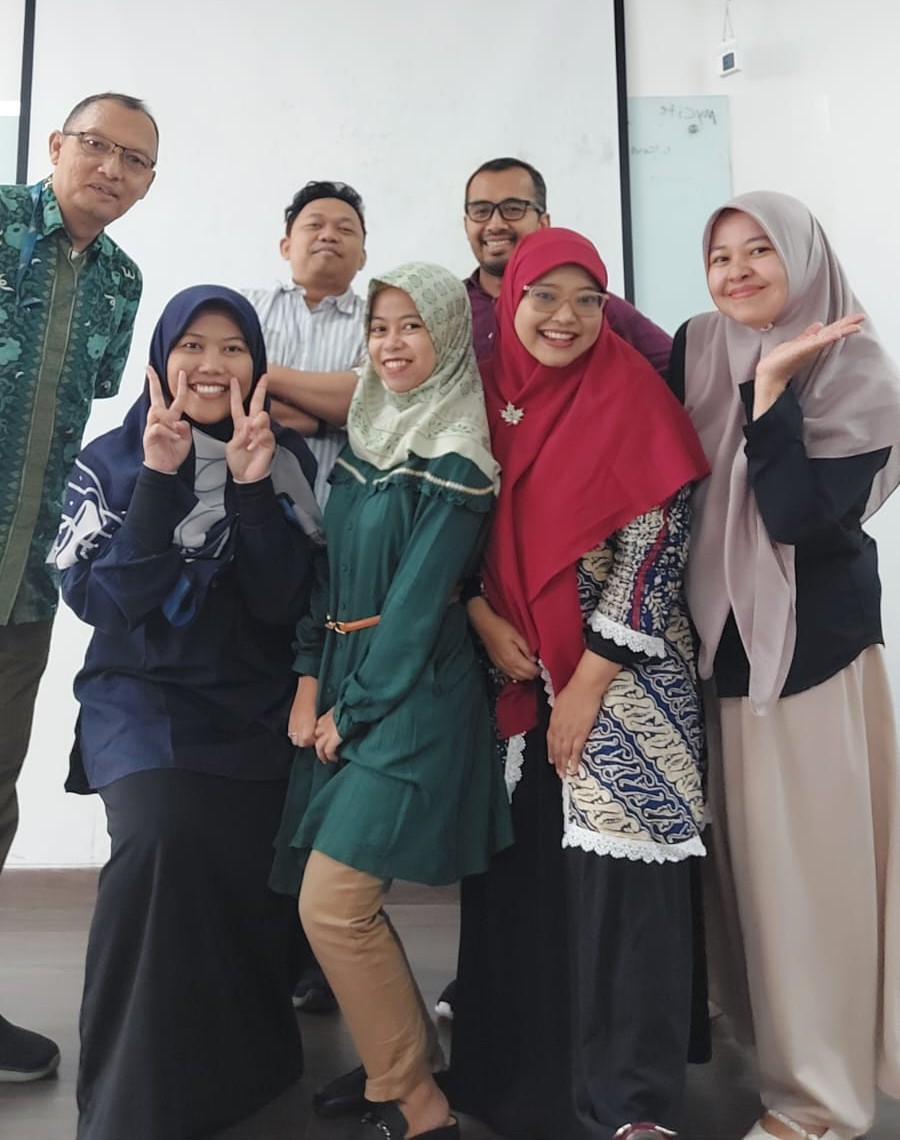
I also did not go through this learning process alone. My classmates became an important part of the journey. Munaya helped me a lot in learning how to do data cleaning, something that was completely new to me at the time. Mbak Nofi and Pak Umam kept encouraging me when I felt overwhelmed by the secondary data. In class, the lecturer also continued to show us different examples of academic articles that we could study as references when developing our final assignments. From this experience, I realized that learning at the doctoral level also grows through asking questions, trying, making mistakes, discussing, and helping one another.
Eventually, the final assignment was completed. The results showed that female students had higher affective engagement with the arts, while male students reported a higher frequency of participation in several school-based arts activities. For me, these findings were not only statistical results. I started to see how large-scale data could offer another perspective on issues in arts education that I had previously understood mainly through practice, observation, and field experience.
After the final grade was released, I did something that was actually quite spontaneous. I tried submitting the paper to Asian Education and Development Studies (AEDS), Emerald, a Scopus Q2 journal. I did not even make major changes. The manuscript I submitted was basically the final assignment from the course. It was also my first experience creating an Emerald account and trying the submission process to an international journal by myself.
When I received the news that the manuscript had passed the initial stage and entered the review process, I was actually confused about how I should react. I sent the review decision to the lecturer and asked what it meant because at that time I still did not fully understand how publication in a Scopus journal worked. He congratulated me and encouraged me to begin “navigating” the reviewer revisions. That phrase turned out to be quite an accurate description of what happened over almost the following year.
The review process became another learning space for me. At one stage, I was very happy when one reviewer gave a minor revision. However, in the next round, I was faced again with a major revision. The manuscript eventually went through several rounds of revision before it was accepted. Even near the end, issues related to consistency of terms, punctuation, number formatting, and proofreading still brought me back to another revision.
Part of this process took place during a very personal period in my life because I was going through childbirth. My concentration was certainly not always at its best. Strangely, however, I do not remember the revision process as an unpleasant experience. I actually enjoyed it. Every reviewer comment showed me a part of my own writing that I had not noticed before. A manuscript that I initially considered only a course assignment slowly became a much more mature piece of work.
The experience of being a single author also left its own impression on me. I handled the entire process myself, from submission, reading and responding to reviewer comments, reanalyzing the data when necessary, revising the manuscript, to communicating with the editorial team. There was freedom in it, but also full responsibility. That was exactly what made the experience enjoyable. I could directly see how my ability developed from one version of the manuscript to the next.
In the end, the article, “Gender Differences in Affective Engagement, Creativity Belief Through the Arts, and Participation in School-Based Arts Activities: Evidence from PISA 2022 Indonesia,” was accepted and published in Asian Education and Development Studies. I still love traditional dance, indigenous communities, and research that allows me to meet people directly and engage with their cultural practices. Learning about PISA and quantitative research simply gave me another way to look at arts education. I now understand that issues in the arts can be read through community stories and teachers’ experiences, but they can also be explored through thousands of student responses in an international dataset.
For this reason, I am very grateful to the lecturer, who, through the Graduate Seminar on Large-Scale Assessment course, opened a door to a research area that I had never imagined I would enter. Thank you for the publication examples, experiences, and encouragement that were always shared with us in class. I am also grateful to my classmates who became part of this learning process, especially Munaya, Mbak Nofi, and Pak Umam. This experience made me understand that a course assignment at the doctoral level does not have to end when a grade has been given. For me, perhaps this is the most valuable meaning of the journey: learning does not always make us feel more comfortable. Sometimes, learning takes us into unfamiliar territory, makes us feel many times that we do not know enough, and then slowly expands the boundaries of what we think we are capable of doing as researchers.
How organizations learn: investigating boundary crossing activities for redesigning equity-oriented principal preparation programs
 Awaludin, A., & Halverson, R. R. (2026). How organizations learn: investigating boundary crossing activities for redesigning equity-oriented principal preparation programs. Cogent Education, 13(1). https://doi.org/10.1080/2331186X.2026.2697539
Abstract
This paper examines how multi-institutional partnerships drive systemic changes in equity-centered principal preparation programs (PPPs). Using a district partnership team (DPT) within the Equity Leadership Pathway (ELP, pseudonym) initiative in the United States as the case study, we apply a multilevel boundary-crossing framework to analyze how organizations learn as universities, districts, and state agencies navigate bureaucratic and cultural friction. Our findings reveal that these discontinuities were not mere barriers, but vital catalysts for ideological negotiation and institutional reforms. Through identification, coordination, reflection, and transformation mechanisms, the stakeholders co-governed the leadership development program to bridge the theory-practice gap. Future research should include longitudinal data to explore how this equity-centered training could impact leadership practices, school environments, and long-term student learning outcomes.
BIPA: Bridges of Language, Gardens of Heart
BIPA: Bridges of Language, Gardens of Heart
by Ramli
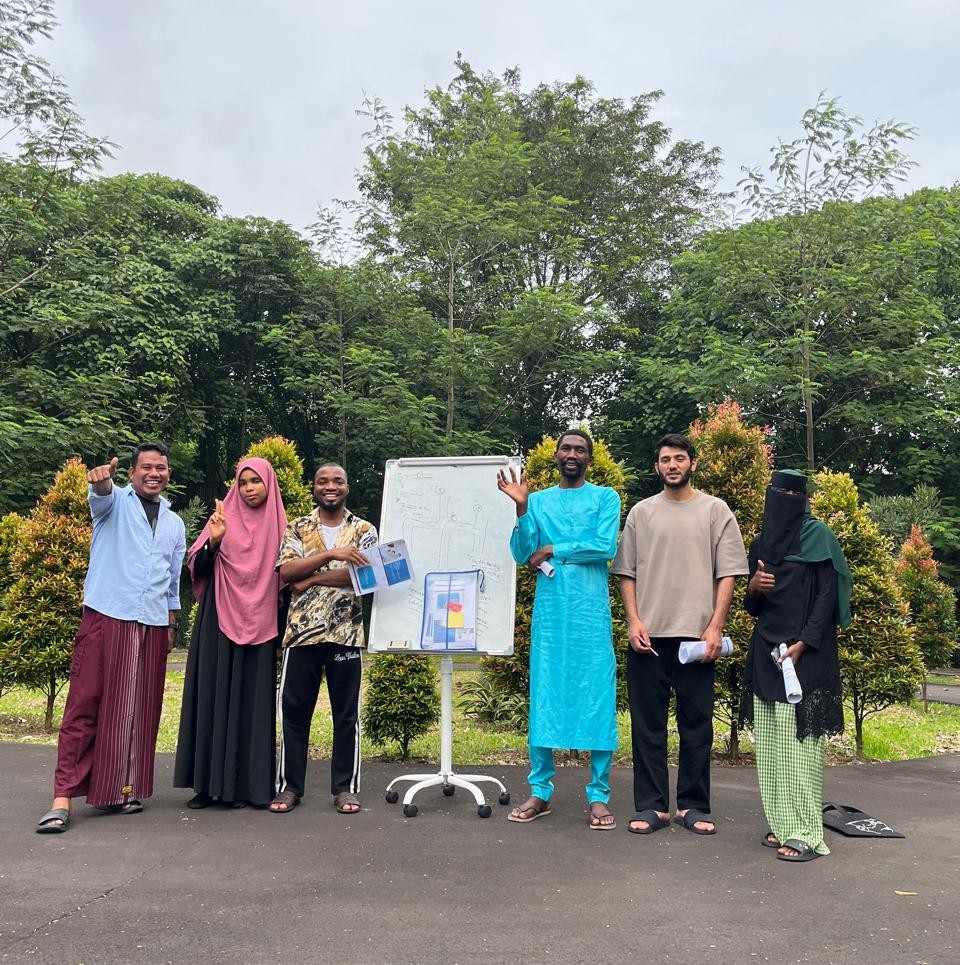
Learning foreign language always a challenge for everybody, not easy and full of surprise. In addition, teaching foreign language even more challenging. Usually, I began with a book of rules and a promise to teach sounds, tenses, and neat sentences. Soon the room refused to be a textbook. It folded itself into a shelter where voices found courage and small triumphs sprouted like green shoots after rain. Teaching Indonesian was supposed to be a craft; instead, it became a quiet liturgy of belonging. We learned through touch and taste. In roleplays, the clatter of imagined markets turned into music; bargaining for a mango felt like learning a heartbeat. The language slipped into palms and plates when we cooked together, each spice a new word, each recipe a story carried across oceans. Walking the neighborhood, directions became poems of streets and storefronts, and the city itself read lessons aloud. These practices made the language a living thing not an abstract code but a breath shared between people.
They brought their worlds with them: lullabies, proverbs, bows, handshakes, meals wrapped in leaves, and jokes that landed with a warmth I could feel. When a student taught us a greeting from his village, the syllables hung in the air like offerings; when another shared a proverb with no Indonesian twin, we leaned closer to listen. Those moments braided our differences into a single tapestry. Mistakes were no longer failures but invitations faint footsteps toward each other.
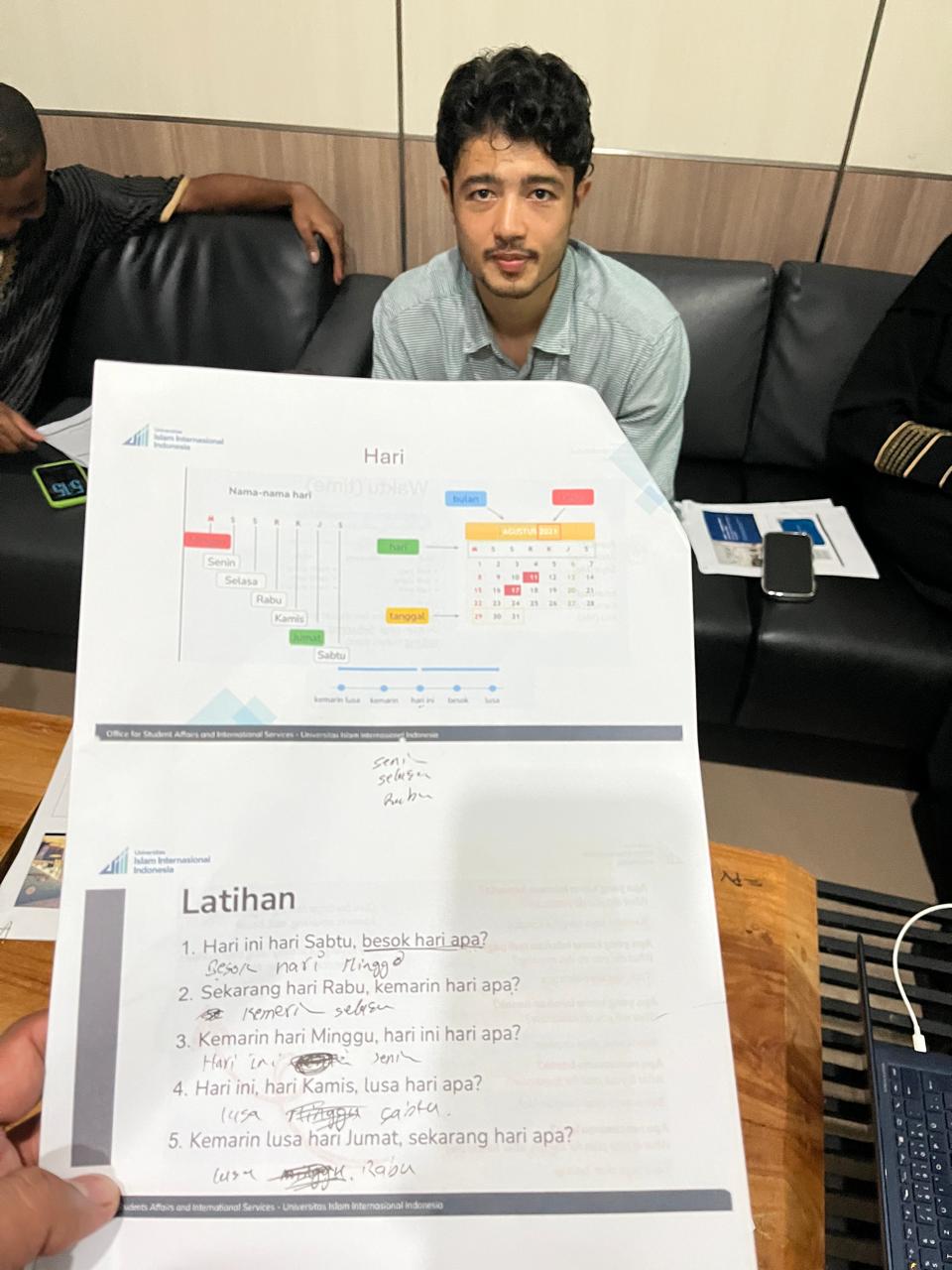
There were days when silence lived in our circle. Homesickness sat like a weight at the back of a chair; anxiety hovered in hesitant responses. We learned to name those shadows gently. A short check-in, a shared cup of tea, a hand on a shoulder small ritual that said, I see you, you are seen. The classroom’s warmth was not accidental; it was built of countless tiny mercies. Inclusion became a poem of actions: subtitles and storyboards, paired voices that balanced one another, tasks that let the quietest hands speak through images. Sometimes they taught me. They corrected my pronunciation with laughter that felt more like love than correction. They fed me food whose flavors mapped to childhoods, and they offered words from tongues I could not yet speak. Those gifts unstitched the old teacher-student seam and rewove it into companionship. I brought grammar and structure; they returned maps of resilience and new ways to look at the world. Their stories of leaving, of longing, of stubborn hope shaped the classroom’s true curriculum.
I discovered that teaching is not merely giving knowledge but tending tender things. It asks patience like sunlight asks the morning. It asks presence: staying after class to listen, asking a hesitant student to tell one more sentence, celebrating mispronunciations as proof of trying. These actions, simple and human, taught the students and taught me how to be a better keeper of those fragile beginnings. When they began to speak with ease, it felt less like perfunctory success and more like watching a chorus learn a new song. Their laughter, their corrected mistakes, their shared festivities these were the harvest. They left with vocabulary, yes, but also with new roots planted in a place that once felt foreign. I left with a heart fuller and softer, heavy with gratitude for being allowed in their journeys.
BIPA became a doorway and a hearth. Language built the threshold; compassion kept the light inside. In teaching Indonesian, I discovered that education is at its most human when it is a shared passage home.
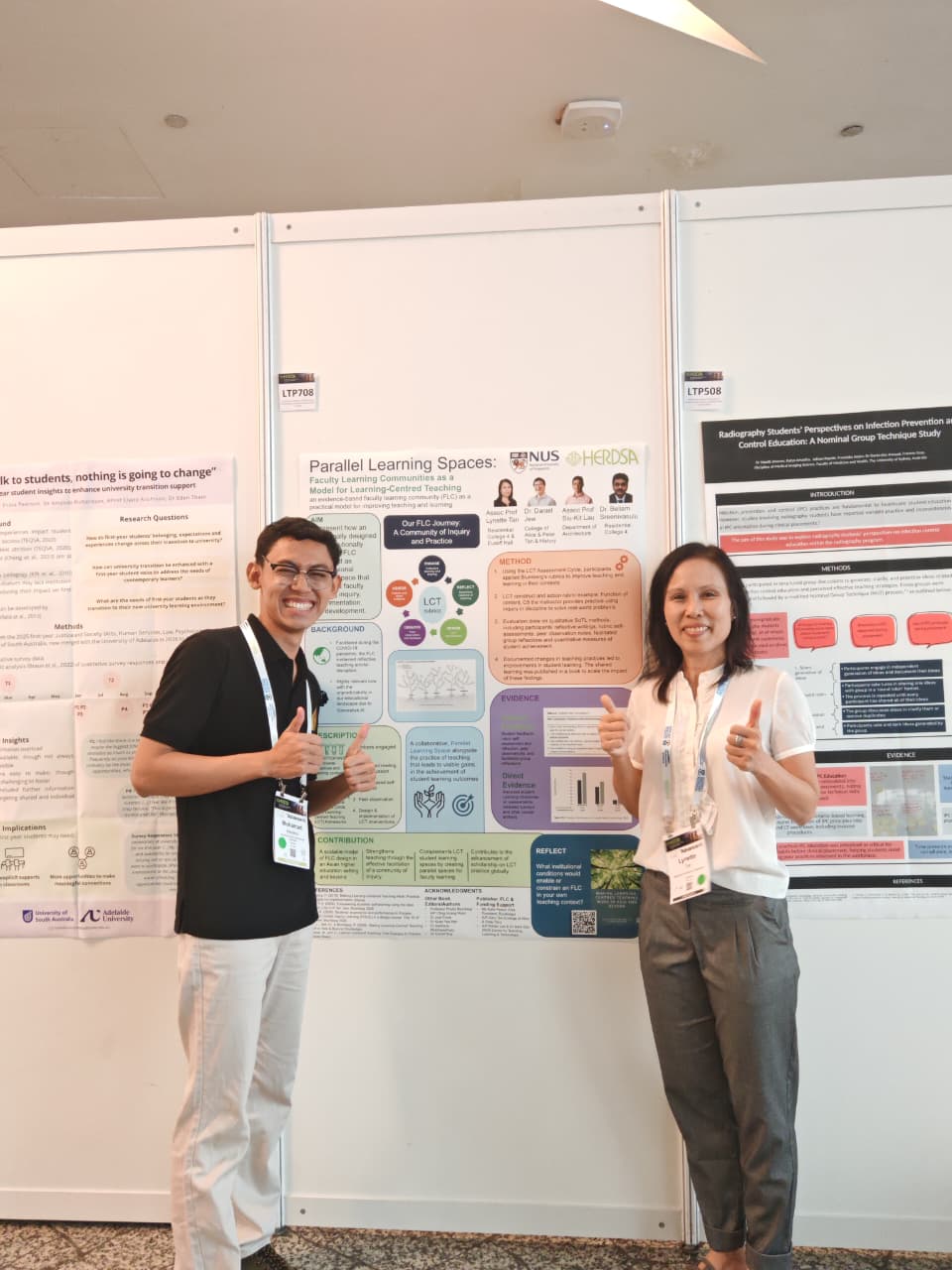
Beyond the Conference: Finding My Academic Home at HERDSA 2026
 Beyond the Conference: Finding My Academic Home at HERDSA 2026
By Muhammad Maulana
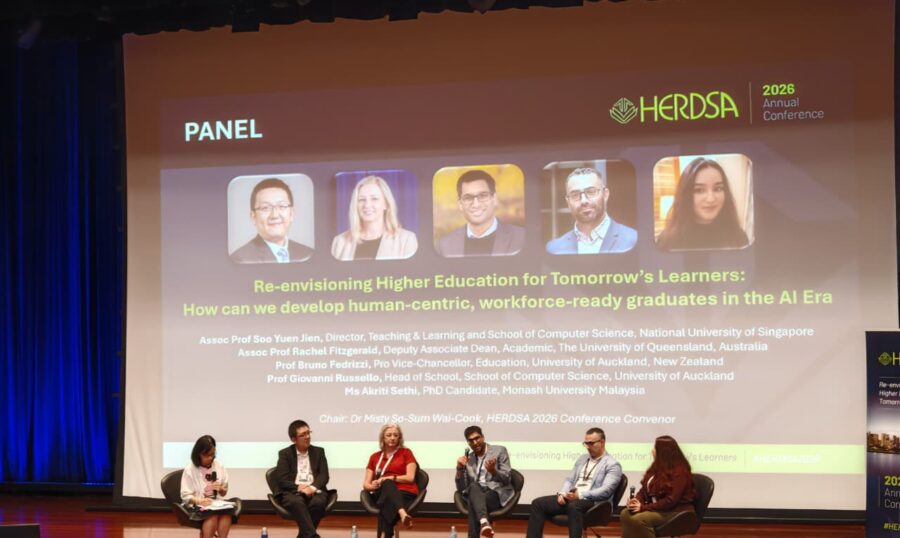
Attending the Higher Education Research and Development Society of Australasia (HERDSA) Annual Conference 2026 at the National University of Singapore (NUS), together with the TATAL (Talking About Teaching and Learning) Pre-Conference Workshop, has been one of the most transformative experiences of my academic journey.
With nearly 1,000 participants from across the world, it was the largest international conference I have ever attended. Yet, what made the experience unforgettable was not its scale, but the people. I found myself surrounded by educators, researchers, academic developers, and leaders who shared a genuine commitment to improving higher education. They were not competing for recognition; they were learning from one another. Conversations were filled with curiosity, generosity, and a shared belief that better universities are built through collaboration rather than competition.
As someone who had only recently completed a master's degree, I initially wondered whether I truly belonged in such a community. Surrounded by professors, experienced scholars, and educational leaders, I felt like the least experienced person in many rooms. However, those feelings quickly disappeared. What I encountered instead was extraordinary humility. People listened, encouraged, and generously shared their ideas regardless of academic titles or career stages. It reminded me that academic excellence is measured not only by what we know, but also by our willingness to help others grow.
One of the most meaningful parts of the conference was participating in the TATAL Pre-Conference Workshop. Throughout the workshop, we were invited to reflect on a simple but profound question: What is the fundamental purpose of teaching? That question stayed with me long after the workshop ended.
As I reflected, I realized that I see educators as mountain guides. A mountain guide cannot climb the mountain for others. Instead, they prepare, support, encourage, and guide people through difficult paths. The journey remains challenging because growth cannot be outsourced. Learning requires effort, perseverance, and resilience. Yet, when students finally reach their own summits, they discover something much more valuable than success itself. They gain perspective, humility, and a deeper understanding of themselves. Standing at the top of a mountain reminds us not of how great we are, but of how much there is still to learn. Perhaps that is what meaningful education should ultimately cultivate.
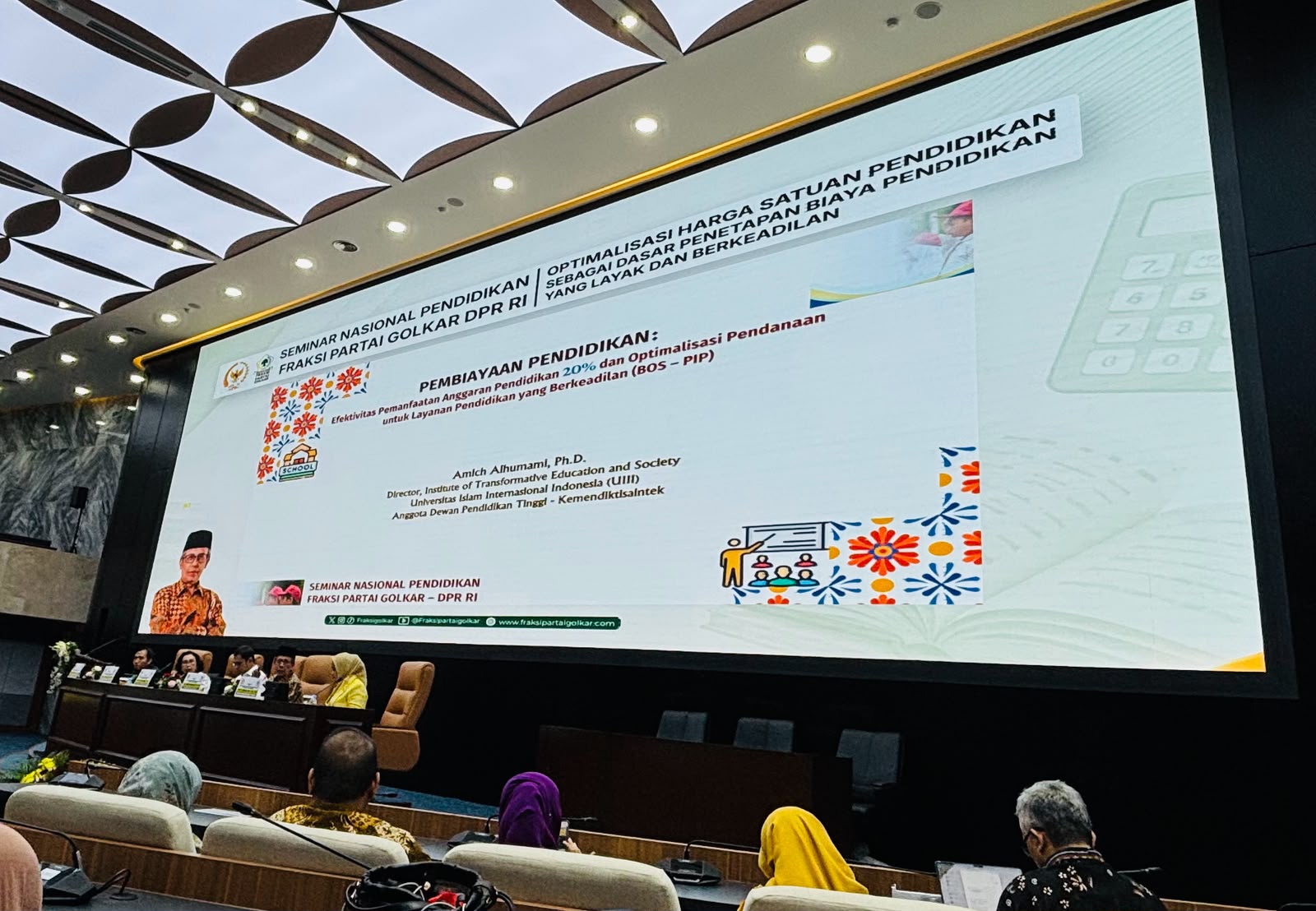
The conference also gave me the opportunity to present my master's thesis through a Roundtable Discussion, a presentation format that was entirely new to me. Unlike traditional conference presentations, the roundtable transformed research into a conversation. Instead of presenting answers, I found myself exploring questions together with participants who openly challenged my assumptions, shared their own experiences, and enriched my thinking.
My presentation, Why Higher Education Often Separates Spiritual Identity and 21st Century Skills? emerged from a concern that many universities are becoming increasingly successful at developing graduates' competencies while paying less attention to the people those graduates are becoming. We often ask what skills students need for the future. Yet perhaps an equally important question is: Who are our students becoming?
In my research, I argue that higher education should not only equip students with critical thinking, communication, collaboration, and creativity, but should also create spaces where they can develop their spiritual intelligence, the capacity to draw upon meaning, values, morality, and existential reflection in navigating life. While this idea remains a proposition requiring further empirical investigation, I believe it offers one possible response to Isaac Asimov's timeless observation:
"The saddest aspect of life right now is that science gathers knowledge faster than society gathers wisdom."
The discussions that followed my presentation reminded me that knowledge grows richer when it is shared. Every comment, question, and perspective helped me see my own research differently.
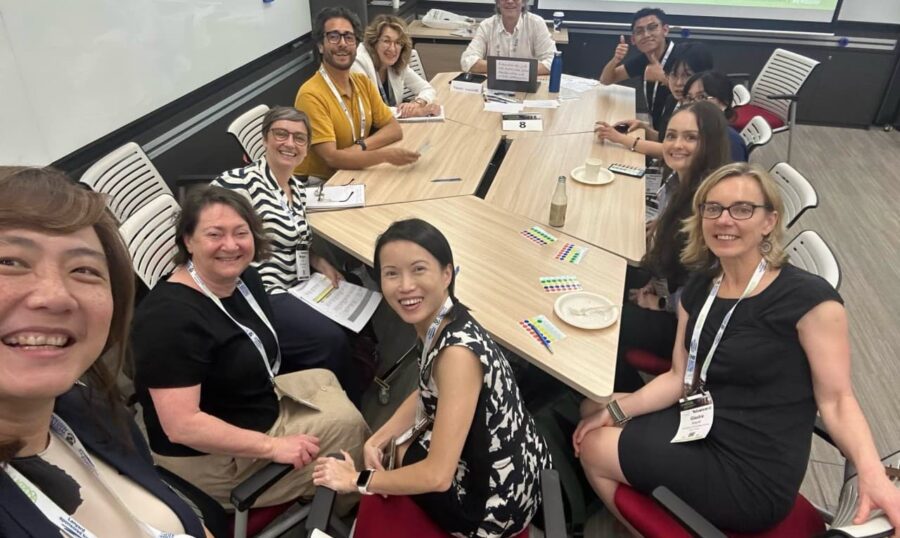
Beyond the formal sessions, many conversations left lasting impressions. One particularly memorable discussion was with a presenter from the National University of Singapore, who explained how lecturers are intentionally organized into cross-disciplinary learning communities where they regularly reflect on teaching, exchange practices, and continuously improve together. Even more inspiring was learning that these collective experiences have been developed into a forthcoming Routledge book, Making Learning-Centered Teaching Work in Asia and Beyond.
What touched me most, however, was not the book itself but the generosity behind their work. When I expressed my interest, they immediately offered to visit our institution, share their experiences, and even seek funding from their own university so that financial limitations would not become barriers to collaboration. That moment quietly changed the way I think about academic communities. Excellent universities do not simply produce excellent research. They cultivate generosity.
As I reflected on these experiences, I could not help comparing them with some of the realities I encounter in Indonesia through my work as an academic developer. Across conversations with colleagues from different universities, we often share similar concerns: sustaining genuine commitment to teaching enhancement remains challenging, and professional conversations about teaching are sometimes overshadowed by administrative responsibilities.
This experience strengthened my belief that Indonesia needs more academic communities like HERDSA, spaces where educators regularly learn from one another, exchange ideas across institutions, and collectively improve higher education. Such communities cannot eliminate every challenge, but they can nurture the culture necessary for meaningful and sustainable change.
Perhaps one of the most unexpected moments of this journey came even before the conference began. Receiving the HERDSA Student Conference Grant was something I never truly expected. Having recently graduated with a master's degree, I assumed the grant would naturally be awarded to outstanding PhD students with much stronger academic portfolios. I submitted my application with hope, but very little expectation. When I received the notification that I had been selected, my first feeling was not pride, it was gratitude.
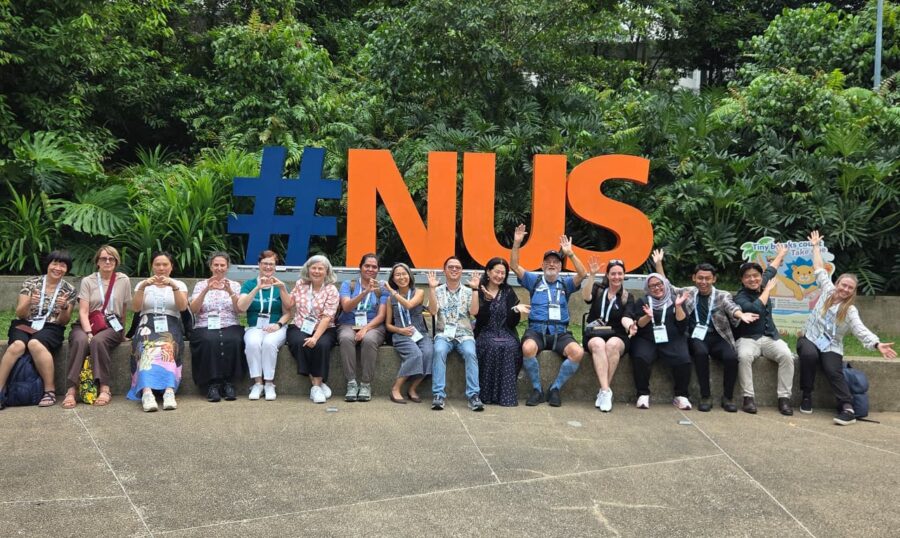
Looking back, I realize that if I had convinced myself that I was "not qualified enough" and never applied, I would have missed one of the most transformative experiences of my academic life. Sometimes, opportunities arrive not because we feel ready, but because we choose to take the first step despite our doubts.
None of this would have been possible without God's grace. I am deeply grateful for every opportunity He has opened for me. I am equally thankful to my mentors at UIII, especially Dr. Destina, my thesis supervisor, and Dr. Bambang, whose continuous encouragement, and countless last-minute recommendation letters, made this journey possible.
As I left Singapore, I realized that I was bringing home much more than conference memories. I was bringing home a renewed vision of what higher education can become. A place where teaching is deeply human. Where research is built through dialogue. Where generosity matters as much as expertise. And where communities grow stronger because people choose to help one another succeed. More than anything else, HERDSA gave me something I had not expected to find. It gave me a sense of belonging.
I sincerely hope that my journey with HERDSA does not end with this conference. Instead, I hope it marks the beginning of a lifelong commitment to this remarkable community, one where I can continue learning, contributing, and perhaps one day, following the inspiring footsteps of many senior colleagues, become a HERDSA Fellow myself.
As one keynote speaker reminded us through John C. Maxwell's words:
"The pessimist complains about the wind. The optimist expects it to change. The leader adjusts the sails."
After this week, I no longer want to wait for higher education to change. I simply want to become one of those who help adjust the sails.
The Development of Sustainability and Education Research in Indonesia: A Systematic Literature Review.
 Nurulsari, N., Sumintono, B., & Hariri, H. (2026). The Development of Sustainability and Education Research in Indonesia: A Systematic Literature Review. Education Sciences, 16(7), 1101. https://doi.org/10.3390/educsci16071101