2025 Research Paper Writing Competition

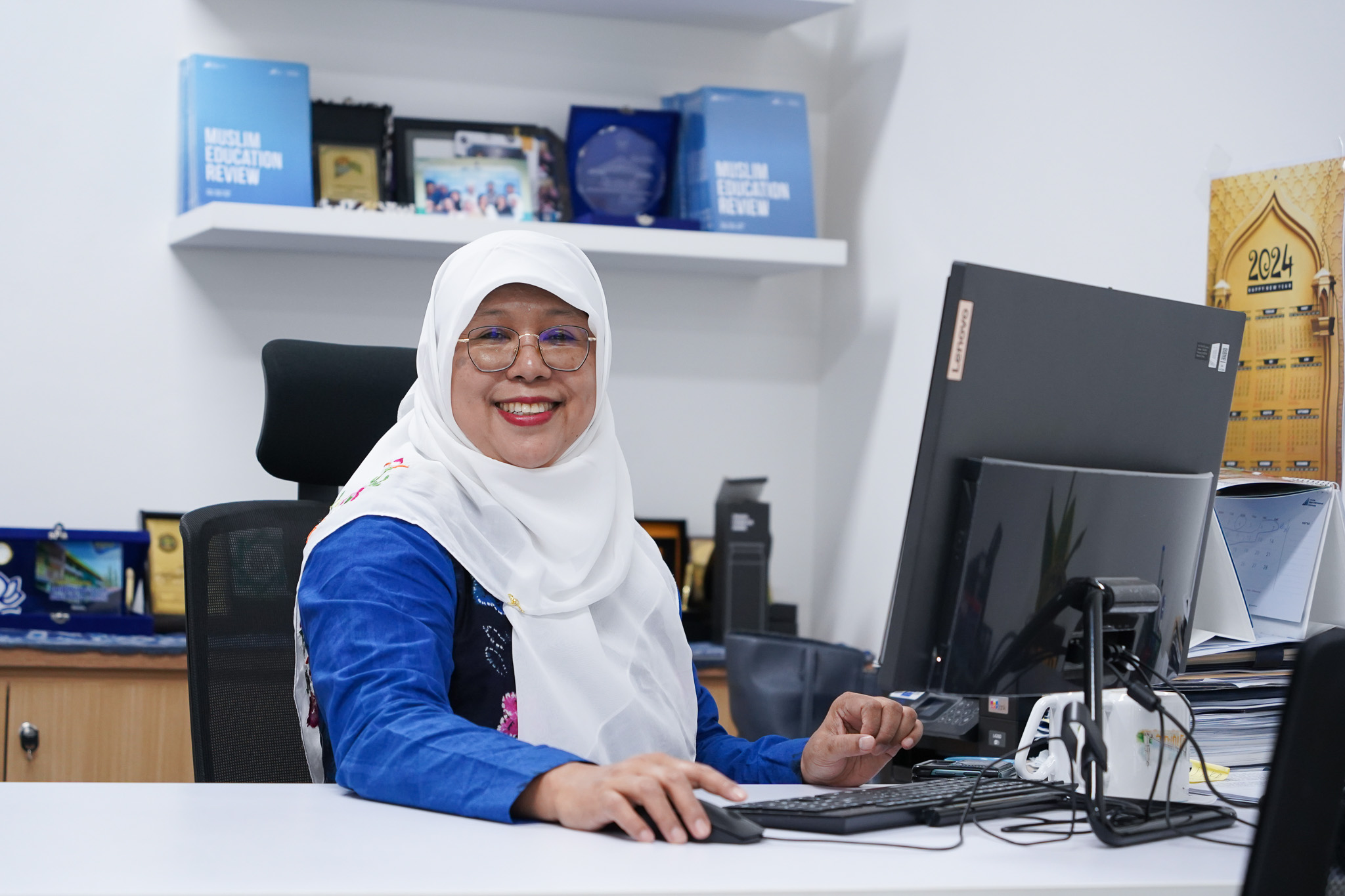
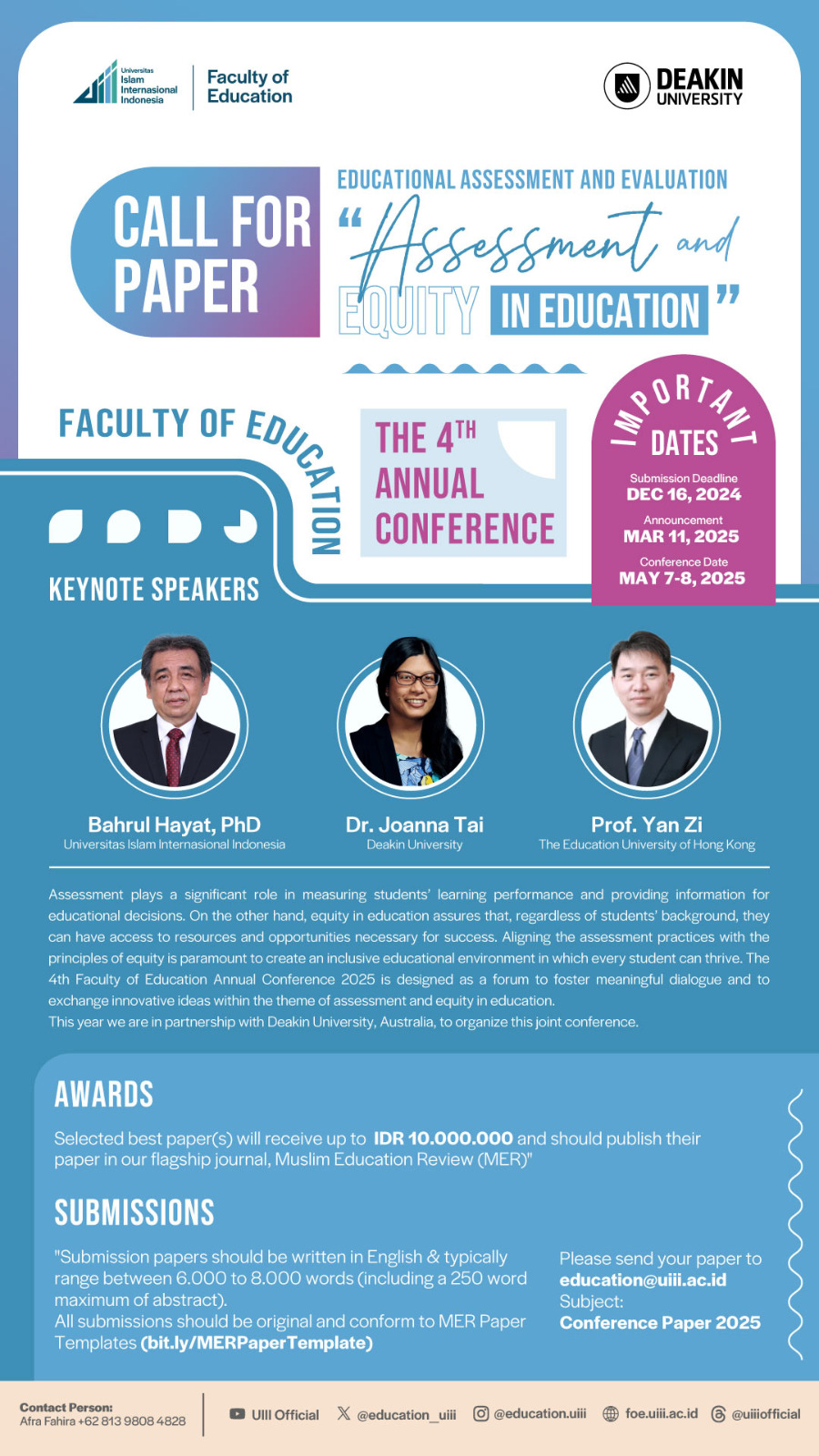
The Faculty of Education is pleased to announce 2025 Research Paper Writing Competition to be included in its flagship journal publication, Muslim Education Review (MER).

MER is an international journal published by Faculty of Education at Indonesian International Islamic University (IIIU). We invite a wide range of topics in education especially those that are within the journal scopes.

MER is a forum for reporting research on education within four broad areas in:
* Curriculum, Teaching and Learning;
* Educational Management, Policy and Leadership;
* Educational Evaluation and Assessment;
* Education and Society.

Submission papers should be written in English and typically range between 6,000 to 8,000 words (including a 250 word maximum of abstract).
All submissions should be
* Original;
* Unpublished;
* and Conform to MER Full Paper Template: https://bit.ly/MERJournalTemplate

Please send all contributions as an attachment to: education@uiii.ac.id
Subject: 2025 Writing Competition

Awards
The awards include cash payment of up to IDR 10,000,000 for up to 3 winners.

Important Dates
Full Paper Submission:  December 9, 2024
Awards Announcement: March 25, 2025

To see previous MER publication, please click this link: bit.ly/MERJournal


Scholars-in-Residence (SIR) Fellows Batch 5, Faculty of Education UIII

✨ Scholars-in-Residence (SIR) Fellows, Faculty of Education ✨

The Faculty of Education is delighted to introduce and announce the result of the Scholars-in-Residence (SIR) Program (Batch 5 for September - November, 2024). Theya are: Zulfa Sakhiyya, PhD (Universitas Negeri Semarang) and M. Arif Rahman Hakim, PhD (UIN Fatmawati Soekarno Bengkulu). Both of them will be participated in many academic activities in the faculty, such as a guest lecturer in MA and PhD courses, giving seminar in Lunch Talk series, open for discussion and consultation for MA and PhD students in the faculty, as well as in social activities too.


Dr. Bambang Sumintono Urges Indonesian Researchers to Prioritize Quality in Educational Leadership Studies

Dr. Bambang Sumintono Urges Indonesian Researchers to Prioritize Quality in Educational Leadership Studies

August 02, 2024

Contributor: Supriyono | Editor: Dadi Darmadi  | Photo: Achmad Jatnika

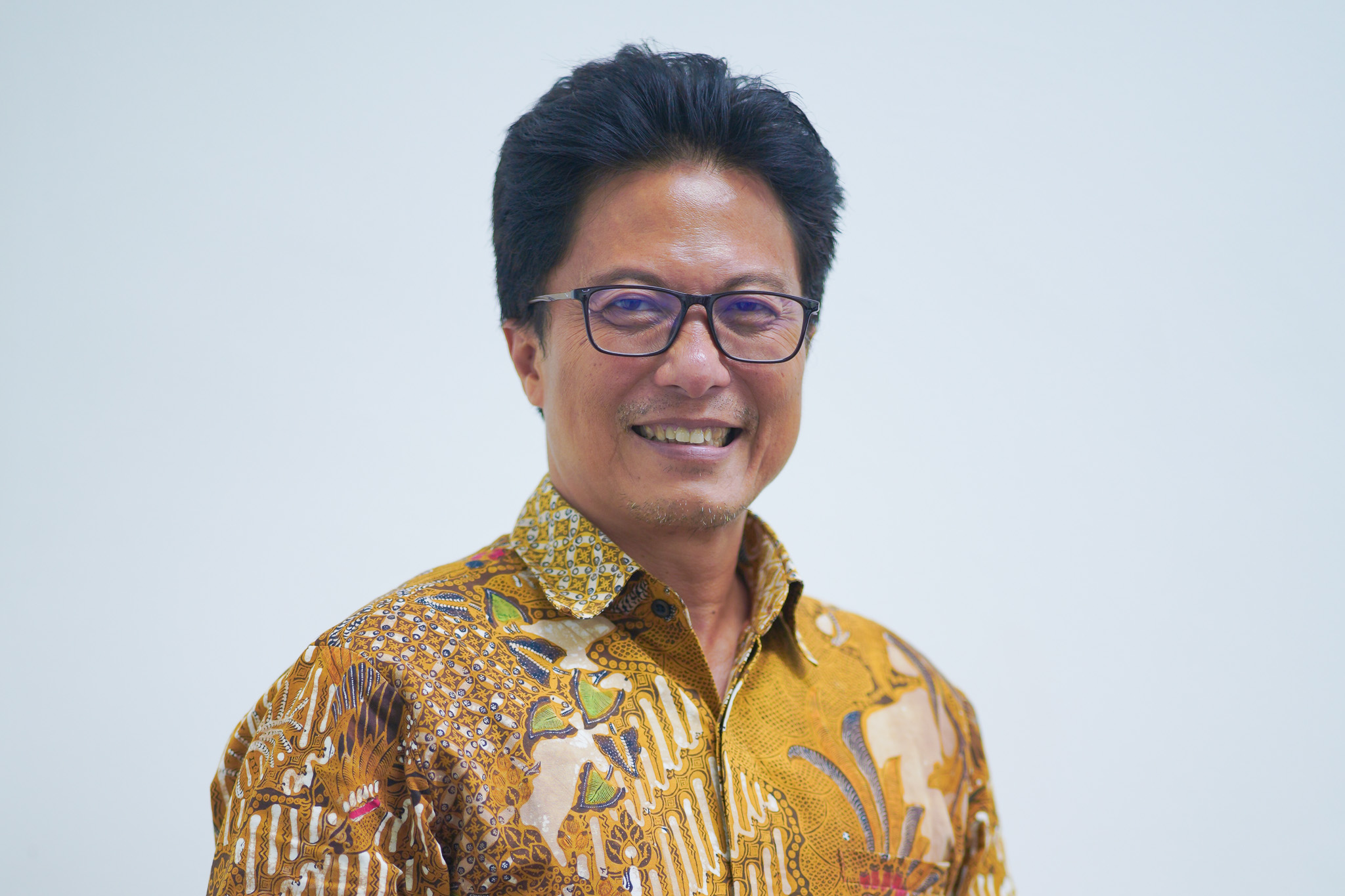
Dr. Bambang Sumintono, Head of the PhD in Education program at UIII, has called on Indonesian researchers to focus on quality over quantity in researching educational leadership. His recommendation stems from a systematic literature review he conducted, which was published as a book chapter by Routledge.

The chapter, published in 2024, is part of the book "Educational Leadership and Asian Culture," edited by Peng Liu and Lei Mee Thien. In this work, Dr. Sumintono, alongside his two colleagues—Hasan Hariri from the University of Lampung, and Erika Setyanti Kusumaputri from UIN Sunan Kalijaga Yogyakarta, highlights the tendency of local researchers to prioritize the volume of research output rather than the quality of their academic works.

Read the full article: School Leadership and Indonesian Culture: Revealing the Local Knowledge Development in Post-New Order Indonesia

A unique aspect of Dr. Sumintono’s chapter is its focus on the "hidden literature", which are research articles written in the Indonesian language and stored in the GARUDA Digital Reference Collection, managed by the Indonesian Ministry of Education and Culture. By examining these often-overlooked resources, the chapter sheds light on insights that are critical for both local and international scholars.

“The review indicates a significant increase in publications on educational leadership starting in 2013, coinciding with the Directorate General of Higher Education's mandate requiring scientific publications as a prerequisite for graduate students' graduation and for lecturers' promotion,” Dr. Sumintono noted.

The policy, he admitted, has led to a surge in the number of publications. However, it has also had unintended consequences. The rapid increase in research output has, in some cases, led to a rise in conference proceedings and potential predatory publications, which could harm the reputation of Indonesian researchers.

“This shows that the ‘frog leap’ policy to international publications in fact needs to be done in stages, whereby empowering local and national journal publications should be the first priority,” Dr. Sumintono advised.

UIII, through its Faculty of Education, is dedicated to equipping scholars with the skills necessary to become outstanding researchers. The faculty offers four concentrations, one of which is Educational Policy, Management, and Leadership. This concentration is designed to prepare students for leadership roles and policy-related work. Through this concentration, UIII aims to cultivate a new generation of education leaders who can drive positive change in society.

sources: https://uiii.ac.id/perspectives/read/57608/dr-bambang-sumintono-urges-indonesian-researchers-to-prioritize-quality-in-educational-leadership-studies


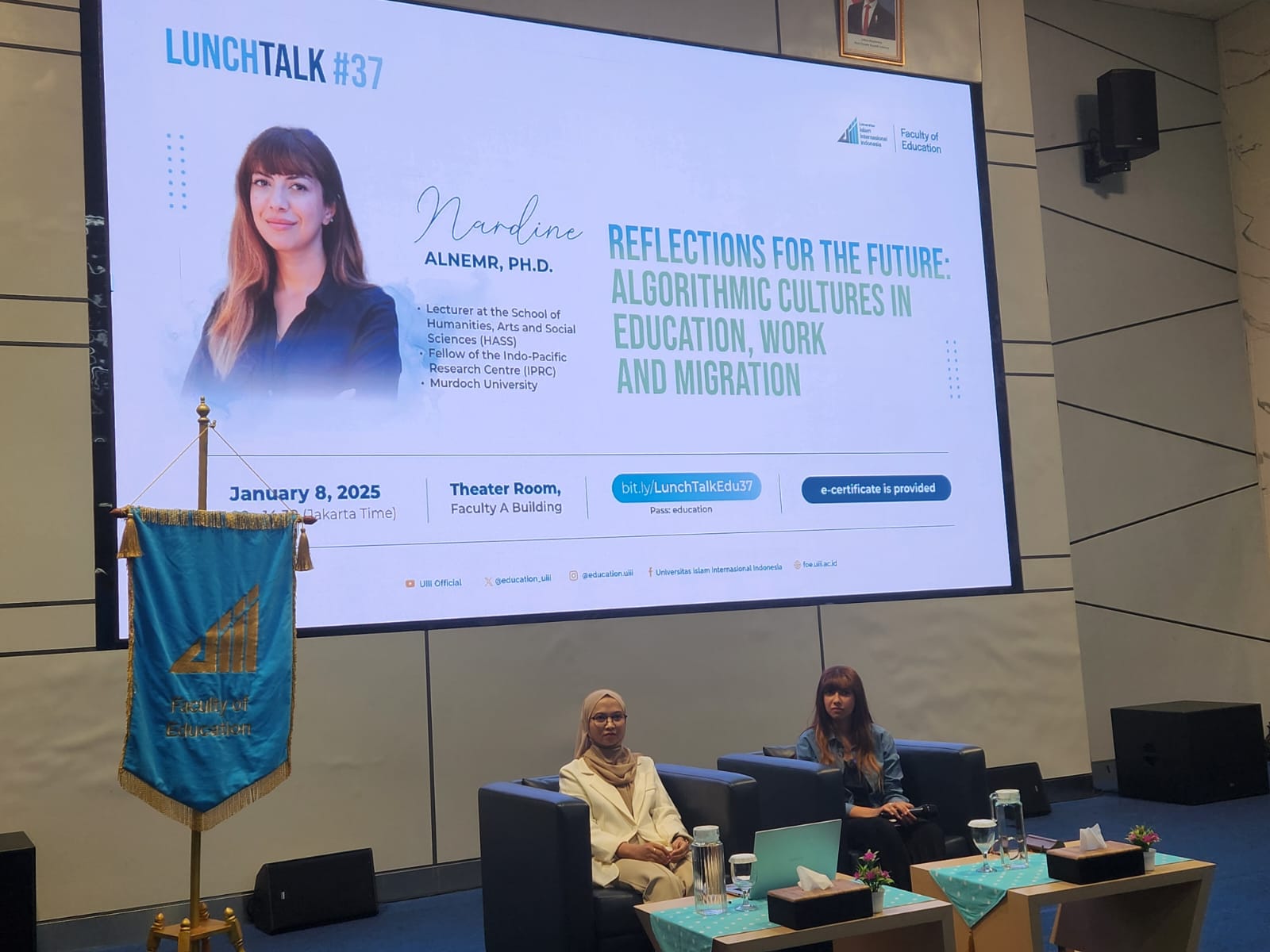
LunchTalk with Dr. Ade Iva Murty: ‘Balance is the Key to Mental Health’

LunchTalk with Dr. Ade Iva Murty: ‘Balance is the Key to Mental Health’

July 31, 2024

Contributor: Supriyono | Editor: Dadi Darmadi 

The UIII Faculty of Education (FoE) organized a LunchTalk on July 30, 2024, featuring Dr. Ade Iva Murty, the Dean of the Faculty of Arts and Science at Sampoerna University, Jakarta. She delivered a presentation titled “Burnout and Balance: Prioritizing Mental Health,” where she asserted the importance of maintaining balance to counter stress and burnout, especially in academic settings.

She centered her presentation around ‘burnout, ' which she mentioned as chronic stress. “This is the result of prolonged, unmanaged chronic stress in a person who does not have the coping tools they need. The risks include excessive working hours, institutional dysfunction, lack of efficacy and control, inadequate incentives, and a particularly stressful workplace,” she explained.

She outlined the burnout cycle, detailing its five stages, starting from initial feelings of overwhelm, increased fatigue and errors, reduced empathy and prosocial behavior, decreased openness to problem-solving, and eventually, performance decrease. Dr. Murty emphasized the crucial link between burnout and mental health, advocating for balance as a preventive measure.

“The key to mental health is balance. Mental health means striking a balance in all domains in your life, private, work personal achievements, family, and relationship,” Dr. Murty elaborated. She advised individuals to take charge of their mental health by identifying and managing conditions that could jeopardize their well-being.

As a graduate institution committed to maintaining a high standard of education, UIII aims to provide a learning environment that not only prioritizes academic excellence but also fosters the well-being and mental health of its community. UIII seeks to create a nurturing environment where individuals can pursue their academic goals with confidence, knowing that their mental and emotional well-being is valued and supported.

source: https://uiii.ac.id/news/preview/57603/home/lunchtalk-with-dr-ade-iva-murty-balance-is-the-key-to-mental-health


Discovering Innovation and Collaboration: An Insight from the 10th SEA-DR (South East Asia Design Research) Conference, Australia

Discovering Innovation and Collaboration: An Insight from the 10th SEA-DR (South East Asia Design Research) Conference, Australia

by Fakhrur Razi 

Being one of the paper presenters at the 10th SEA-DR is a big opportunity in my life. Attending this conference has colored my academic journey as a PhD student at FoE UIII. This international conference with the theme "Fostering Common Sense in Learning: Unveiling the Potential of Design Research" was hosted by Deakin University, Melbourne Australia on 15-16 July 2024. This conference aims to enhance collaboration and exchange of ideas between researchers and graduate students in implementing design research. Apart from that, the conference chaired by Assoc. Prof. Wanty Widjaja invited keynote speakers who are experts in the field of design research from various countries such as Prof. Fou-Lai Lin (Taiwan), Prof. Zsolt Lavicza (Austria), Assoc. Prof. Adi Nur Cahyono (Indonesia) and Prof. Maija Akslea (Finland).

Participating in the conference activities for two days deepened my knowledge in the field of design research. On the first day, the keynote speakers presented materials regarding designing learning workshops as co-learning settings, teacher innovation (augmented/virtual reality and 3D printing), and promoting STEM education through design research which in general provided the latest innovations regarding the development of design research in the world and how it influences teaching and learning in the classroom. Two insightful things are that teacher training is crucial in improving classroom learning and educational innovation in the world following the development of advanced technology nowadays. However, When I look back at my country, Indonesia, innovation is still not evenly distributed due to the lack of collaboration between various educational stakeholders. This conference reminded us of the benefits of design research as a powerful method in contributing to the richness of learning in the classroom. This opened my eyes to continue innovation and collaboration in design research that could enhance education quality in Indonesia.

The process of writing a paper presented at this conference was also quite challenging for me. The paper I wrote is a part of the results of the project “Spatial Reasoning and Numeracy Workshop for Early Childhood Educators” chaired by my advisor, Destina Winarti, Ph.D. We realize that Professional Development (PD) for kindergarten teachers in improving learning is still under discussion, particularly in spatial reasoning. The paper entitled "Designing Play-Based Spatial Reasoning Activities: A Professional Development Program for Early Childhood Education Teachers" aims to design professional development that helps teachers in designing play-based activities. After presenting it on the second day, I got critical questions about the continuation of this professional development in the classroom context. This question led to an exchange of ideas among the panels with positive energy.  Also, I got networking from various countries, both Asia and Australia, to discuss the extent to which design research can influence classroom learning in our respective countries.

I reflect that innovation and collaboration between researchers and practitioners/teachers in Indonesia still need improvement. However, several reliable international assessments (e.g. PISA and TIMSS) that serve as a reference for the quality of education in a country place Indonesia as still below the average compared to other countries in the world. In fact, education in Indonesia still requires learning innovations that will produce effective learning. Furthermore, the keynote speaker also talked about the importance of working with the community to transfer design research into comprehensive education policies. Through this conference, implementing collaboration between teachers and researchers in design research in a sustainable manner is the key to improving classroom learning. In summary, as a young researcher, I have a strong desire to conduct design research and collaborate with various parties in creating sustainable educational innovations to accelerate the quality of education in Indonesia.


Unleashing the potential: spatializing middle school mathematics for enhanced learning

Winarti, D.W., Patahuddin, S.M. & Lowrie, T. Unleashing the potential: spatializing middle school mathematics for enhanced learning. Educ Stud Math (2024). https://doi.org/10.1007/s10649-024-10343-3  


Abstract

This study assessed the effectiveness of a spatialized mathematics intervention on the mathematical performance and spatial visualization skills of students from an underprivileged Indonesian community. Grade 8 students (N = 407) were assigned to one of twelve experimental classes, receiving the spatial mathematics intervention, or one of seven control classes, continuing with the standard mathematics curriculum. Prior to and following the intervention, a pre-test and post-test design was administered. The data were analyzed using Analysis of Covariance to ascertain the effect of the intervention. Results revealed that the students in the experimental group exhibited significant improvements in spatial visualization skills and mathematics performance (including both spatial and non-spatial competencies), compared to the control group. Importantly, the findings provide evidence that the transfer effects of the spatialized curriculum occur differentially for students of varying ability levels. The findings highlight the importance of spatial intervention in enhancing mathematics performance and spatial visualization skills. The study suggests potential avenues for a paradigm shift in mathematics education that recognizes and embraces the profound influence of spatial thinking.
Keywords
Spatializing mathematicsGeometryMathematics performanceSpatial visualization skills


Improving the Quality of Teaching in Basic Education in Indonesia

Improving the Quality of Teaching in Basic Education in Indonesia

July 29, 2024

Contributor: Supriyono | Editor: Dadi Darmadi

The UIII Faculty of Education recently facilitated the dissemination of professional development programs for elementary school teachers, organized by the Penggerak Indonesia Cerdas Foundation (Pengincer). The event, themed “Towards a Mathematically Literate Indonesia,” took place on July 26, 2024, in the Theater Room of Faculty A Building in Depok, West Java.

This event was a follow-up to the Memorandum of Understanding (MoU) signed between UIII's Faculty of Education and Pengincer on May 6, 2024. Pengincer is a non-profit organization dedicated to enhancing the quality of basic education in Indonesian Elementary Schools (ES) and Madrasah Ibtidaiyah (MI).

The dissemination was divided into two sessions. The first session addressed “Current Conditions and Initiatives in Mathematics Teacher Education in Elementary Schools,” with presentations by Arkhadi Pustaka (Sampoerna University), Dhita Puti Sarasvati (University of Indraprasta PGRI), and Regina Nurashari (Pengincer). Dr. Bambang Sumintono, Head of the PhD in Education program at UIII, served as the session’s discussant.

The second session focused on the “Impact and Results of Gernas Taskara Training on Elementary School Teachers.” Gernas Taskara, a national movement initiated by Pengincer in 2018, aims to eradicate mathematical illiteracy by empowering mathematics teachers in elementary schools. Speakers included Trimadona B. Wiratrisna (Pengincer), Hana Sofiyana (Pengincer), Deshinta Puspa Ayu D.A. (Sampoerna University), Faradillah Haryani (UIII PhD student), Arsyiyatul Alawiyah (Pengincer), and Ratna Widianti Utami (STAI Putra Galuh Ciamis). Dr. Destina Wahyu Winarti from UIII served as the discussant for this session.

“We would like to thank all parties who made this research and dissemination possible, especially PT. Bukit Asam Tbk, Perkumpulan Nusantara Utama Cita, and the Indonesian International Islamic University (UIII). Hopefully, this initial research can continue and provide significant benefits to basic education in Indonesia,” said Achmad Rizali, Chairman of the Board of Trustees of Pengincer.

UIII remains committed to improving the quality of teaching in basic education in Indonesia through research focused on literacy and numeracy. As a research-based graduate institution, UIII aims to produce cutting-edge research that positively impacts society.

source: https://uiii.ac.id/events/read/57601/improving-the-quality-of-teaching-in-basic-education-in-indonesia


Deakin University Visit: Educators Must Be Passionate

Deakin Visit: Educators Must Be Passionate

By Muhammad Fayyaz Mumtaz

Getting the chance to visit Deakin University, Victoria, Australia, in my opinion, is one of the best gifts of 2024. How could it not be? Australia, as a country, is one I've been eager to visit. I sincerely hope to gain valuable experiences and lessons to reflect upon throughout my academic journey. Upon arrival at Melbourne airport on May 16th, I felt an extraordinary chill. Thick jackets and jeans seemed insufficient to fend off the cold air. The weather in Melbourne is very cold for someone like me who isn't particularly fond of cold weather. Nonetheless, I still smiled with joy and hoped to create beautiful memories about this journey of mine.

Regarding the cities of Melbourne and Burwood, they exceeded my expectations. I thought Melbourne would be like cities such as Singapore, Dubai, or other modern cities that are rather dull. But I was wrong. Melbourne is incredibly beautiful. Not only is the city well-organized and clean, but there are still many houses that give off an English vibe from the 80s-90s, reminiscent of sitcoms like Mr. Bean. Seeing the scarcity of tall buildings, especially in the area where I stayed in Burwood, where tall buildings are rare, adds to the memorable impression that I'll boast about to my friends because of how beautiful and aesthetic the city is.

Nevertheless, the initial experience of visiting Deakin University campus in Burwood left several positive impressions that are still vivid as I write this reflection. First, the university buildings looked new, tidy, and highly aesthetic. Never before had I felt like visiting a university was akin to visiting a 5-star hotel. Perhaps because I come from a rural area in West Java, I am easily impressed by modern interior nuances. The campus is serene and calming for a campus located in the midst of the city, in Burwood. Secondly, I was accompanied by Deb, one of the Deakin staff, who took us on a campus tour.

What impressed me most was when visiting the Visual Art class taught by a lecturer and (in my opinion, an artist), Dr. Fiona. She introduced us to how she teaches her students. Seeing how Dr. Fiona was so enthusiastic and passionate about her field, I, who was previously indifferent to anything related to music, became enthusiastic as well. Perhaps, I thought, this is the quality of teachers in developed countries like Australia, where they are not just teaching to make a living but genuinely want to share knowledge with passion and positive energy. Then I reflected, why was she so enthusiastic and passionate? Perhaps because Australia is a developed country, economically stable, thus it has a good education system. If the economy and education are well intertwined, it will undoubtedly produce the best and most passionate individuals.

Thirdly, my impression when meeting three PhD students, when they talked about their initial entry process, research, and responsibilities as PhD students, I got the impression that unlike what happens to my friends pursuing their PhDs in Indonesia, which seems more stressful, these Deakin doctoral candidates seemed relaxed yet professional, and they knew exactly what they were researching. This indicates the good quality of education at Deakin University, I believe. Because the better the education system, the less stressed the students are, perhaps. Especially when they explained a new term to me, colloquium, which I think can help in effective dissertation guidance mechanisms. In the Colloquium, they said they could have directed and structured discussions with specialized professors and could be efficient. I thought to myself, this is indeed what good research guidance looks like because it doesn't make you fearful but rather relaxed, and we know that a calm mind and soul usually produce positive outcomes.

In the following days, we visited several branch campuses such as Deakin in Melbourne and Deakin in Geelong. Deakin Geelong is a classic and magnificent building, perhaps equivalent to my home university, Universitas Indonesia, I thought. In Geelong, my friends and I met several PhD students and even attended an English writing class which, in terms of teaching method, I found to be very interactive and enjoyable. Even though the class lasted for two hours, time flew by so quickly, and it didn't feel long at all, seeing how new teaching methods like this were introduced into my life. The Deakin campus in Geelong is serene and peaceful yet interesting to stay at for a long time. Dr. Cheryl and Dr. Anna are the professors I often conversed with at Deakin Geelong. Specifically, during breaks in the cafeteria and in classes throughout the tour in Geelong. This is because both of them seemed interested in my research on Montessori, and it turns out that Dr. Anna specializes in childhood education, which is very relevant to my thesis.

During my moment in Geelong, another unique thing that amazed me was the presence of the 360 theatre. I found this theatre to be incredibly unique and potentially a learning tool for the future. How so? Upon entering the theatre, we were presented with educational videos about primary school that made us feel as if we were right there in the midst of the action. With a 360-degree screen, I believe that when students watch educational videos, it provides efficiency and a real-life experience, making the information they absorb more long-lasting. However, on the other hand, I also pondered that its usefulness might not be so frequent and urgent. Implementing and having a 360 theatre on university campuses in Indonesia, I believe, is not so important because what is more crucial for us is to first improve the system, and then the facilities and infrastructure. In contrast, for Deakin University, with a good system in place, it's reasonable to have luxurious options like this theatre.

Before we returned to our homeland, the meeting with Dr. Claire provided insights that will stay with me forever. It was during our discussion with her about research methodology that I gained a profound perspective. Dr. Claire's focus is on education and well-being. When we asked her about the methods commonly used in these fields of research, she mentioned qualitative research quite often. I was surprised. Why a university as advance and esteemed as this have a positive tendency towards qualitative research? As someone who admires quantitative research and tends to belittle the quality of qualitative studies, I became more open-minded in considering both research models.

From my discussion with Dr. Claire, I concluded that qualitative research can also have significant implications because when it is done well and properly, we can understand and analyse the root causes of a phenomenon. While quantitative research may be more mathematical and standardized, it serves to provide an initial overview of a research situation. Then, with the scalpel of qualitative methodology, the phenomena and problems of a study or research can be resolved. This realization inspired me to appreciate qualitative research more. Thanks to Dr. Claire and our discussion.

Anyway, actually I still want to write a long reflection about the journey at Deakin University specifically and Melbourne in general. However, the things I mentioned above are the impressive and inspiring ones. Before I conclude this writing, I want to summarize that Deakin University is a good campus with a well-structured system that inspires me to consider continuing my studies there, continuing the PhD I mean. With what is called a colloquium, the abundance of faculty members who are experts in their fields makes me even more interested in continuing my studies at Deakin, and even better if, by God's grace, I get the opportunity to be placed at the Geelong campus, I will be very happy.Top of Form


Perspective shifting towards Mathematics Education in Indonesia: A Reflection Journey toward Joining ICME-15 Conference.

Perspective shifting towards Mathematics Education in Indonesia: A Reflection Journey toward Joining ICME-15 Conference.

By Faradillah Haryani

Ph.D Student batch 2 at Universitas Islam Internasional Indonesia

I never imagined I would attend the largest conference in mathematics education, meet many prominent figures, and gain new experiences and insights as an early researcher. I learned about this event from my undergraduate lecturer, Bu Sitti Maesuri P., who is also the supervisor of my current Ph.D. advisor, Dr. Destina. I regularly joined Zoom meetings organized by Ibu Sitti to discuss how to gain entry into this prestigious conference, plan my manuscript, and address financial aspects, particularly securing the Solidarity Fund, which is provided by the conference committee to selected participants.

The entire process took nearly a year, from preparing the manuscript to the start of the conference. I began working on the manuscript during my first month as a student at UIII in 2023, and it was accepted without revisions. Following this, I prepared my application for the Solidarity Fund, which required a recommendation letter from my Ph.D. supervisor, Dr. Destina. Concurrently, I applied for the prestigious UIII conference funding to cover expenses not addressed by the Solidarity Fund. Alhamdulillah, praises to Allah, both funding applications were accepted, allowing me to secure my place at the conference. Remarkably, out of 2,065 speakers from around the world, I am one of the 197 recipients of the Solidarity Fund, as highlighted in the ICME-15 statistics.

Attending the ICME-15 (The International Congress on Mathematical Education) conference, the largest mathematics education conference in the world, held at the International Convention Centre Sydney from July 7-14, 2024, has provided me with numerous new insights.  It has given me a fresh perspective on the education landscape in the world and use it as the new eye to see education in Indonesia. While the conference primarily focuses on mathematics education, the issues discussed offer opportunities to examine the education field from both macro and micro perspectives.

From a macro perspective, global education is now confronted with the fundamental question: "Whose knowledge are we teaching, and is it relevant to every context in every country?" This question encourages educators, not just in mathematics but across all fields, to build awareness and scepticism regarding knowledge delivery. It prompts us in developing countries to recognize the value within our own contexts. However, this then does not necessarily mean to dismiss or detach from the knowledge historically linked to Western ideas. To compete on a global scale, it is essential to consider not only what works within our context, but also how to make it works to be the solid foundation of any knowledge that will be understood by students.

From a micro perspective, the conference aligns with our teaching methods and how concepts are delivered. It encourages us to ground our teaching methods before reaching for the sky. Are our foundations solid? Is our students' conceptual understanding strong enough? A study by Hamsah Verkat and her peers supports the idea that it is crucial to deeply understand basic concepts, such as the base-ten system, and the government also giving the support for strengthening this basic idea to the students, before advancing to more complex topics.

Studies from other developing countries, particularly those with a history of oppression, reveal the importance of valuing concepts that resonate with students' backgrounds. Instead of starting with advanced topics, they begin by having students take photographs of objects they believe relate to mathematics, then discuss these connections. This approach encourages students to explore their surroundings and appreciate mathematics within their immediate environment, fostering a positive disposition toward mathematics and enhancing critical thinking and reasoning skills.

Attending this conference has opened numerous avenues for collaboration. With prominent scholars in mathematics education present, I had the opportunity to see and even speak directly with influential figures whose seminal papers I have studied. I used this chance to connect, discuss my dissertation ideas, and receive valuable feedback. A humorous aspect of my experience was carrying my proposal booklet with me everywhere I went. This dedication paid off when a professor from Auckland University, who chaired my session, agreed to meet and discuss my dissertation on culturally responsive pedagogy in mathematics. He provided valuable reading references, such as Ole Skovsmose's works on Critical Mathematics Education, papers on decolonizing methodologies, and literature on ethnomathematics. I also had the opportunity to discuss my research over dinner with the head of Professional Development of the Algebra Project, a movement in the United States aimed at providing equitable mathematics access to African-American students. This meeting highlighted the importance of re-evaluating basic definitions of literacy to include math literacy and beyond. In addition to that, many practitioners expressed interest in my study and requested to stay in touch via email. A professor from Arizona University even invited me to join a study group focused on indigenous knowledge, the dynamics between the Global South and Global North, and decolonizing methodologies. Interestingly, only two people from Indonesia, including myself, have shown a genuine interest in this topic, even though it is a hotly debated issue worldwide. I feel truly blessed not only for the insights I gained about my research but also for the motivation and passion I witnessed among participants dedicated to advancing education.

Finally, what I love about this conference is how well the committee organizes everything, including the convenient mobile app that allows us to easily view and join sessions. The app provides automatic reminders for each session and facilitates networking by allowing us to scan barcodes to exchange contact information instantly. The format for delivering presentations is also unique. Instead of the typical front-stage presentation, I present through a group discussion for almost one hour. This kind setting allows me to send stronger message about my research and get immediate feedback suggestion and even acknowledgement. The whole conference structure is also impressive, starting with the early career researcher workshop, which includes methodology classes, sessions on topics in mathematics education, meetings with prominent journal editors, and classes on shaping our careers as researchers. This comprehensive approach has significantly contributed to my educational development. To conclude this reflection, I constantly ask myself, "What progress have you made today to build your career as a researcher?"


God in Awe and Intimacy: Jewish and Muslim Perspectives on Understanding and Pronouncing the Name(s) of God and its Relation to the Humanitarian Crisis

Yuliyanti, N. (2024). God in Awe and Intimacy: Jewish and Muslim Perspectives on Understanding and Pronouncing the Name(s) of God and its Relation to the Humanitarian Crisis. Teosofia: Indonesian Journal of Islamic Mysticism, 13(1), 1-18. doi:https://doi.org/10.21580/tos.v13i1.20534 

Abstract

The concept of God is essential for both Jews and Muslims. Instead of using the terms Judaism and Islam, this study considers the terms Jews/Jewish and Muslims as more proper to focus on human beings as the subject of religion who are open to dialogue and change. Loving God’s creations is a process of loving the Creator. Thus, this study tries to connect Jewish and Muslim understanding and belief in God’s Names and its implications for their actions concerning the humanitarian crisis, especially today’s Israel-Palestine relationship. This study applies the content and comparative analysis of the texts (documents, videos, and pictures) related to the issue, along with the teachings of Isaac Luria and Mulla Sadra. In addition, a phenomenological approach is also used as it leads to an effort to understand religious thought and behavior from the point of view of the religious person. This study revealed that how humans understand Divine Names is manifested in how they treat each other. As human beings are the best manifestation of God, how we see, treat, and interact with others reflects our understanding of God’s names and vice versa. God’s names are all beautiful. Therefore, those who believe in God will do good to themselves, others, and the universe.
Keywords: Jews; Muslim; Divine Names; humanitarian crisis


Privacy Preference Center

Bocoran RTP Starlight Princess Paling Dicari Di Komunitas Slot DigitalDominasi Mahjong Ways 2 Dengan Respons Gameplay Cepat yang Sedang Ramai DibahasEvolusi Teknologi Digital Membawa Transformasi Mahjongways Kasino Online Melalui Inovasi Algoritma Pada Platform ModernHarmoni Mahjong Wins 3 Dan PG Soft Jadi Pembicaraan Pecinta SlotImplementasi Teknologi AI Pada Sistem Wild Bandito Yang Lebih AdaptifJejak Scatter Hitam Mahjong Ways Disebut Bawa Peluang Besar Hari IniKejutan Wild Bandito Membawa RTP Tinggi Untuk Pecinta Kasino OnlineKombinasi Spin Bonanza Gold Dan RTP Stabil Sedang Viral Di Media SosialKontribusi Komunitas Pragmatic Digital Dalam Evolusi Pola Permainan Cepat Di Era Hiburan ModernMetode Meraih Bonusan Fantasy Dragon Treasure Dari Pg Soft Secara EleganPendalaman Interaksi Data Untuk Menelusuri Hubungan Pola Symbol Dan Kemenangan DigitalPerkembangan Analitik Berlapis Menciptakan Stabilitas Baru Pada Gaming ModernSorotan Transformasi Komunitas Digital Komunitas Pemain Game Online Dalam Pola Adaptasi Pemain AktifTidak Banyak Yang Menyangka, Evolusi Platform Modern Kini Mulai Mengubah Cara Orang BerinteraksiTinjauan Adaptif Modern Terhadap Perubahan Ritme Aktivitas Digital Masa KiniAdvanced Digital Framework Platform Game Online Menghadirkan Transformasi Performa Melalui Struktur Data Yang Lebih Adaptif Dan DinamisArah Baru Sistem Digital Platform Game Digital Dalam Analisis Algoritma Mengungkap Perubahan Yang Dipicu Teknologi Adaptif ModernFluktuasi Gaming Modern Kini Bisa Dipahami Lewat Strategi Analitik TemporalGaming Generasi Masa Kini Kini Lebih Adaptif Berkat Teknologi AIHyper Digital Movement Sistem Digital Berbasis AI Menghadirkan Transformasi Platform Dengan Interaksi Yang Lebih Cerdas Dan StabilKunci Bertahan Lebih Lama Melalui Manajemen Variansi Pada Baccarat LiveLompatan Sweet Bonanza Dengan Pola Scatter Emas Yang Sering MunculMember Baru Di Game Online PGSOFT Dapatkan Bonus Awal Dan Promo Terbatas Dalam Berbagai Event MenarikNuansa Live Casino Baccarat Kini Dipenuhi Tren RTP Mahjong Wins 3Uji Sistematis Dan Validasi Data RTP Pada Infrastruktur Kasino Online InternasionalGrafik Aktivitas Harian Jadi Instrumen Baru untuk Membaca Perubahan Tren Digital melalui Visualisasi DataMomentum Digital Modern Menguat berkat Dukungan Algoritma Adaptif di Berbagai Platform Interaktif Masa KiniStudi Dinamika Mahjong Ways 2 dalam Siklus Transformasi Digital dan Perkembangan Teknologi Gaming ModernAnalisis Distribusi Simbol Mahjong Ways dan Dampaknya terhadap Performa Sistem Berbasis ProbabilitasMahjong Ways dan Pola Ritme Digital yang Dinilai Lebih Efektif lewat Observasi Aktivitas Komunitas ModernArsitektur Probabilistik Modern Membentuk Distribusi RTP yang Lebih Responsif terhadap Aktivitas PenggunaTren Analitik SBO Sport dan Momentum Variansi Gates of Olympus 1000 dalam Dinamika Digital ModernRekonstruksi Neural Probability Engine untuk Membaca Pergeseran Interaksi Digital melalui Pendekatan AIPendekatan Analitis dalam Parlay sebagai Strategi Rasional dan Terukur berdasarkan Data HistorisAztec Games dalam Kajian Teori Peluang dan Efektivitas RTP Modern melalui Statistik DigitalArsitektur Event Driven Kian Menarik Diterapkan dalam Pengembangan Sistem Game Digital Berbasis Real TimeMahjong Modern Kembali Menjadi Sorotan saat Minat pada Sistem Adaptif Berbasis Data Terus Menguat di KomunitasPeluang Kecil Kini Banyak Dikelola lewat Pendekatan Terstruktur Berbasis Analisis Data ModernKonten Ringan Dinilai Kian Efektif Meningkatkan Ketertarikan Pengguna pada Pengetahuan Digital dan Teknologi InteraktifSistem Acak dalam Dunia Digital Kini Banyak Dikaji untuk Memahami Ritme Pergerakan lewat Observasi Data BerkelanjutanAnalisis Distribusi Data dan Dampaknya terhadap Pengalaman Pengguna dalam Sistem Digital Berbasis Teknologi AdaptifDinamika Interaksi Digital melalui Perspektif Teknologi Adaptif Modern yang Membentuk Pola Aktivitas PenggunaStudi Akademik Ritme Aktivitas dan Stabilitas Sistem Digital melalui Statistik serta Observasi Data ModernImplementasi Analitik Cerdas untuk Membaca Perubahan Tren Interaktif pada Platform Digital Generasi TerbaruKajian Machine Learning terhadap Pergerakan Data Gaming Modern dalam Mendukung Keputusan Digital yang Lebih TerukurTransformasi Teknologi Gaming melalui Integrasi Sistem Prediktif yang Makin Akurat Membaca Aktivitas PenggunaAnalisis Komputasional terhadap Variabilitas Aktivitas Pengguna dalam Lingkungan Interaktif Berbasis DataModel Statistik Adaptif dalam Memahami Perubahan Pola Sistem Modern yang Berkembang Dinamis dan BerkelanjutanPeran Data Historis dalam Pengembangan Algoritma Gaming Generasi Baru yang Lebih Responsif terhadap PerubahanKajian Infrastruktur Digital terhadap Performa Sistem Interaktif Masa Kini dalam Menjawab Kebutuhan Pengguna ModernSistem Probabilitas dalam Gaming Digital Modern Kian Menarik Dikaji lewat Pendekatan Matematis dan KomputasionalTeknologi Monitoring Real Time Kini Banyak Dipakai untuk Membaca Tren Perilaku Pengguna dengan Lebih AkuratSistem Adaptif Berbasis Data Interaktif Kembali Jadi Sorotan dalam Pengembangan Teknologi Gaming ModernEvolusi Algoritma pada Platform Digital Mulai Dikaji Lebih Mendalam karena Dinilai Mengubah Ekosistem InteraktifTransformasi Data Kian Berpengaruh terhadap Modernisasi Ekosistem Gaming yang Terintegrasi dengan Teknologi CerdasBig Data Kini Membantu Membaca Interaksi Pengguna dan Stabilitas Sistem dalam Perkembangan Platform DigitalAI Adaptif Dinilai Mampu Mendorong Pengembangan Teknologi Gaming Masa Depan yang Lebih Responsif dan EfisienStatistik Modern Kian Menarik Diterapkan untuk Mengukur Efektivitas Sistem Interaktif di Tengah Perubahan Tren AktivitasTren Gaming Berbasis Data Real Time Kini Lebih Mudah Dipahami lewat Observasi Digital di Era Teknologi ModernIntegrasi Analitik AI dan Big Data Mulai Mengubah Sistem Digital Modern menjadi Pengalaman yang Lebih InteraktifData Real Time dan Model Prediktif Kini Banyak Dipakai untuk Membaca Transisi Gameplay dan Perubahan Perilaku PenggunaTeknologi Monitoring Modern Meningkatkan Akurasi Analisis Sistem Gaming lewat Data Interaktif yang BerkelanjutanMahjong Wins 3 Kian Menarik Dibahas Komunitas Digital di Tengah Perkembangan Game Modern Berbasis Teknologi AdaptifPendekatan Statistik Digital Membantu Menentukan Ritme Aktivitas yang Lebih Stabil melalui Pengamatan Data Real TimeMetode Pengamatan Digital Terus Berevolusi untuk Membaca Pola Perilaku Temporal yang Dinamis di Lingkungan Interaktif Modern
Transformasi Analisis Data Digital Kian Menarik Dikaji untuk Membaca Pergeseran Tren Interaktif di Ekosistem Gaming ModernAlgoritma Mahjong Ways Mulai Dibedah dari Perspektif Ilmu Komputer dan Arsitektur Digital Masa KiniVariasi Taruhan Kini Banyak Dikelola lewat Pendekatan Analitis dan Perhitungan Rasional di Permainan DigitalKomunitas Joker Gaming Menarik Perhatian lewat Kajian Psikologi Digital dan Perubahan Perilaku Pengguna ModernRitme Aktivitas Digital Kian Menarik Diamati karena Dinilai Berkaitan dengan Stabilitas Sistem Interaktif Platform GamingStatistik Modern Kini Berperan Besar dalam Membentuk Pengalaman Gaming Online yang Lebih KonsistenFitur Premium pada Slot Digital Kembali Ramai Dibahas Komunitas lewat Perspektif Teknologi Interaktif ModernAktivitas Pengguna Kini Banyak Diprediksi untuk Menentukan Waktu Interaksi yang Lebih Efektif Berbasis Data DigitalKapabilitas Analitik Berbasis AI di PG Soft Mulai Menjadi Sorotan dalam Evolusi Sistem Slot ModernPendekatan Data Modern Membuka Cara Baru Memahami Dinamika RTP dalam Sistem Interaktif Digital yang Semakin AdaptifMahjong Wins dan Evolusi Permainan Mobile dalam Lanskap Digital Indonesia yang Semakin Cepat BerkembangKajian Aktivitas Interaktif Real Time terhadap Perkembangan Ekosistem Digital Berbasis Teknologi AdaptifMekanisme Bonus Bertingkat Gates of Olympus dalam Perspektif Sistem Adaptif dan Probabilitas ModernMengapa Pola Aktivitas Digital Kini Lebih Mudah Diprediksi melalui Analisis Data dan Kecerdasan BuatanKonsistensi Pengamatan Data Harian sebagai Kunci Membaca Ritme Sistem Stabil di Lingkungan Digital ModernImplementasi Model Cerdas untuk Membaca Kombinasi Berlapis pada Game Interaktif Berbasis Algoritma AdaptifAlgoritma Generasi Baru dan Pengaruhnya terhadap Dinamika Game Digital di Era Transformasi TeknologiAnalisis Probabilitas Ritme Scatter dalam Sistem Adaptif Masa Kini melalui Pendekatan Statistik DigitalMembaca Sesi Stabil melalui Laporan RTP Live dan Observasi Pengguna dalam Lingkungan Gaming InteraktifPengaruh Waktu Bermain terhadap Stabilitas Aktivitas Digital dalam Ekosistem Interaktif Berbasis Data Real TimeTeori Probabilistik Modern Kini Banyak Dipakai untuk Memprediksi Waktu Aktivitas Pengguna di Platform DigitalHiburan Digital Terus Berevolusi lewat Arsitektur Interaktif yang Kian Responsif terhadap Kebutuhan Pengguna ModernSistem RTP Dinamis PG Soft Kian Menarik Dikaji karena Dinilai Membentuk Pola Sesi Digital yang BerbedaRitme Aktivitas dan RTP Live Mulai Banyak Diteliti lewat Riset Komputasi pada Ekosistem Gaming Berbasis DataSistem Adaptif dalam Game Interaktif Modern Dinilai Semakin Efektif berkat Dukungan Teknologi Kecerdasan BuatanAnalisis Data dan Perilaku Pengguna dalam Evolusi Sistem Game Digital Berbasis Teknologi Modern dan AITransformasi Digital melalui Evolusi Strategi Pengguna di Era Interaksi Modern yang Semakin AdaptifVolatilitas Tinggi Pragmatic Play dalam Studi Perilaku Digital dan Dinamika Aktivitas Pengguna Masa KiniTeknologi Sistem Dinamis Modern Membuka Cara Baru Memahami Aktivitas Interaktif melalui Data Real TimeDinamika Sistem Game Digital Berbasis Data Real Time dalam Menghadapi Perubahan Tren Aktivitas PenggunaOrientasi Pemula terhadap Distribusi Aktivitas dan Karakter Visual Mahjong Ways dalam Lingkungan Gaming ModernIntegrasi Visual dan Respons Sistem PG Soft dalam Ekosistem Game Modern yang Semakin KompleksData Real Time dan Infrastruktur Cerdas dalam Pengembangan Platform Digital yang Lebih Responsif dan EfisienObservasi Gates of Olympus terhadap Struktur Pola Adaptif yang Konsisten dalam Ekosistem Permainan DigitalSistem Statistik Interaktif Berbasis RTP dalam Membaca Momentum Aktivitas Digital melalui Analisis DataMahjong Ways Kian Menarik Dicermati lewat Evaluasi Sistem Visual dan Internal pada Pembaruan Teknologi ModernSistem Evaluasi Digital PG Soft Kini Mengandalkan Big Data Adaptif untuk Meningkatkan Efektivitas InteraksiPendekatan Temporal dan Prediktif Membuka Cara Baru Menganalisis Dinamika Interaksi Pengguna di Era DigitalSistem Digital Modern Kian Menarik Dikaji lewat Pendekatan Adaptif Berbasis Pengamatan Data yang Lebih MendalamRitme Bonus pada Sistem Interaktif Kini Banyak Dikelola lewat Strategi Adaptif dan Observasi Aktivitas PenggunaSistem Analitik Data Pragmatic Play Mulai Mengubah Cara Memahami Aktivitas Digital dengan Pendekatan TeknologiParameter Stabilitas pada Sistem Modern Kembali Menarik Perhatian lewat Kajian Matematis yang Lebih LanjutScatter Beruntun Kini Banyak Dianalisis lewat Intensitas Aktivitas Server dalam Lingkungan Gaming Berbasis DataDinamika Algoritma Modern Membuka Pemahaman Baru tentang Aktivitas Platform Digital yang Terus BerkembangAnalisis Game Digital Kini Bertransformasi lewat Implementasi AI yang Meningkatkan Efisiensi dan Akurasi SistemEvaluasi Sistem Analitik dalam Membaca Dinamika Game Berbasis Data Real Time saat Perilaku Pengguna Terus BerubahMemahami RNG dalam Permainan Digital melalui Kajian Akademik dan Pendekatan Probabilitas ModernDinamika Sistem RNG di Industri Game Digital Kontemporer yang Terus Bergerak mengikuti Inovasi TeknologiAnalisis Frekuensi Digital dan Hubungannya dengan Ritme Sistem Berulang dalam Aktivitas Interaktif ModernEvaluasi RTP Adaptif Mahjong Wins 3 melalui Statistik Modern untuk Memahami Dinamika Sistem Digital
Data Interaktif Kini Mengungkap Ritme Baru dalam Ekosistem Digital lewat Observasi Aktivitas Real TimeAuto Spin Mulai Banyak Dikaji karena Dinilai Berkaitan dengan Aktivitas Harian pada Sistem Permainan ModernTurbo Spin Kian Menarik Dicermati lewat Pengamatan Real Time terhadap Pola Return dan Aktivitas PenggunaSistem Modern Kini Banyak Dianalisis untuk Membaca Perubahan Perilaku Pengguna dengan Pendekatan Kecerdasan BuatanFaktor Emosional Mulai Disorot dalam Simulasi Distribusi Kontinu pada Sistem Digital yang Kian TerotomatisasiModernisasi Game Digital Terus Bergerak lewat Analisis Data dan Kecerdasan Buatan yang Mendukung Inovasi TeknologiKomunitas Mahjong Ways Kian Tumbuh dan Menjadi Fenomena Hiburan Digital Modern di Berbagai KalanganScatter Bonus dan Struktur Betting Kini Banyak Dikaji lewat Perspektif Sistem Berbasis Probabilitas dan Data DigitalStatistik Real Time Mulai Dipandang sebagai Fondasi Penting dalam Pengembangan Gaming Interaktif ModernData Harian Kini Semakin Berperan dalam Pengambilan Keputusan Digital yang Lebih Terukur dan AnalitisRTP Live dan Algoritma Adaptif PG Soft Jadi Sorotan dalam Tren Analisis Data Modern Komunitas DigitalImplementasi AI untuk Analisis Sistem Kasino Online Dinilai Membuka Akurasi Baru di Era DigitalTransformasi Big Data Membentuk Ekosistem Gaming Interaktif yang Lebih Responsif terhadap Perilaku PenggunaMachine Learning dan Data Historis Mulai Digunakan untuk Membaca Perubahan Pola Pengguna di Lingkungan Digital ModernKajian Akademik Efisiensi Algoritma Platform Digital dan Dampaknya terhadap Pengalaman Pengguna Masa KiniMengulas Fenomena Scatter yang Muncul Beruntun melalui Pendekatan Probabilitas dalam Sistem Permainan Digital Modern Analisis Pola Kemunculan Simbol Khusus dalam Grid Digital yang Sering Dianggap Tidak Terduga oleh Pengguna Pendekatan Temporal dalam Memahami Stabilitas Sweet Bonanza pada Ekosistem Game Digital yang Semakin Adaptif Kajian Dinamika Sistem Sweet Bonanza dalam Menjaga Keseimbangan Visual Ritme dan Respons Permainan Wild West Gold Menjadi Perhatian karena Mekanik Permainan yang Dinamis dan Pola Interaksi yang Mudah Dipelajari Membaca Perkembangan Wild West Gold melalui Data Permainan Pola Visual dan Respons Sistem secara Lebih Terstruktur Navigasi Game Modern Berbasis Data sebagai Cara Baru untuk Memahami Alur Mekanik dan Respons Sistem Digital Peran Analisis Data dalam Membantu Pengguna Mengenali Struktur Permainan Digital yang Semakin Kompleks Transformasi Sistem Permainan Modern dalam Menghadirkan Pengalaman Visual yang Lebih Interaktif dan Responsif Perkembangan Desain Game Digital yang Menggabungkan Visual Dinamis Efek Responsif dan Kenyamanan Pengguna Event Spesial dalam Game Digital Kini Lebih Mudah Diikuti melalui Pola Aktivitas yang Ringan dan Terarah Strategi Mengikuti Event Digital dengan Pendekatan Sederhana agar Pengguna Tetap Fokus pada Alur Permainan Evaluasi Real Time terhadap Perubahan Engine Madame Destiny dalam Sistem Digital yang Terus Berkembang Mengamati Perubahan Mekanik Madame Destiny melalui Pendekatan Sistem Respons Visual dan Analisis RealTime Skenario Permainan Online Cerdas yang Membantu Pengguna Memahami Kinerja Strategi secara Lebih Matang Pengembangan Strategi dalam Game Online melalui Pembacaan Sistem Pola Interaksi dan Evaluasi Berkelanjutan Dampak Teknologi Multiplayer terhadap Cara Pengguna Memahami Ritme Probabilitas dan Interaksi Permainan Peran Fitur Multiplayer dalam Membentuk Pengalaman Bermain yang Lebih Sosial Dinamis dan Berbasis Data Eksperimen Probabilitas Baccarat Modern yang Membahas Fokus Pengguna dalam Lingkungan Permainan Digital Bagaimana Sistem Baccarat Digital Memunculkan Tantangan Fokus melalui Pola Probabilitas dan Interaksi Visual yang Dinamis