
School Leadership and Indonesian Culture: Revealing the local knowledge development in Post New Order Indonesia
 Sumintono, B., Hariri, H. and Kusumaputri, E.S. (2023). School Leadership and Indonesian Culture: Revealing the local knowledge development in Post New Order Indonesia. In Liu, P. and Thien, L.M. (eds). Educational Leadership and Asian Culture, Implications for Culturally Sensitive Leadership Practice. Routledge. https://www.routledge.com/Educational-Leadership-and-Asian-Culture-Implications-for-Culturally-Sensitive/Liu-Thien/p/book/9781032213675
Abstract
The debacle of Soeharto’s regime has opened up reformation and democratisation in Indonesia. Many structural changes like educational decentralisation, school-based management, and principal preparation training have been made in the education sector since 2001. Research on educational leadership and management (ELAM) has also flourished since academicians and researchers were required to meet journal publication requirements in the 2010s. This chapter consists of a systematic review of ELAM research in the Indonesian context that appears in the GARUDA database, a knowledge-based system of journal articles in the Indonesian language. This review aims to describe the Indonesian knowledge development in ELAM reflecting the Indonesian culture of school leadership. After the selection and sorting stages, 119 journal articles published from 2001 to 2021, and written in the Indonesian language were reviewed. The review found variations in terms of knowledge production, including different type of articles, methodological approaches, leadership theories, school levels, and research topics. The findings indicate that the development of the Indonesian ELAM knowledge base is promising and more productive compared to the previous era, but capacity development is still needed.

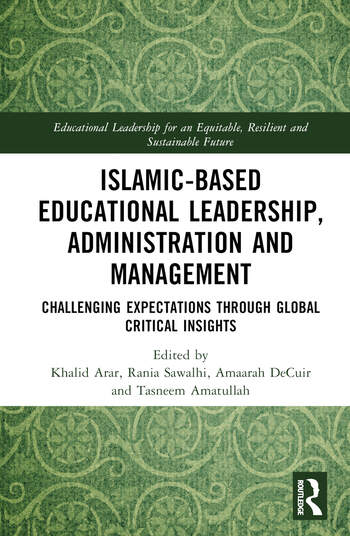
Islamic Educational Leadership: Southeast Asia perspectives
 Abstract
This chapter explains the emerging landscape of educational leadership knowledge based in Southeast Asia region, which usually called as Muslim archipelago. Historical, political and socio-cultural forces forms unique Islamic identity in this region which resulted to different practice and thinking about Islamic educational leadership. Based on empirical and theoretical perspective from peer reviewed journal articles, it found out that different country in this region has salient emphasize. Influence of the Western theories still has effect, as well as trying to formulate unique Islamic thinking about educational leadership; whereas country’s development also reflecting kind of Islamic educational leadership is practiced in their school institutions.
Sumintono, B., Kusumaputri, E.S., Hariri, H. and Juniardi, Y. (2023). Islamic Educational Leadership: Southeast Asia perspectives. In Arar, K., Sawalhi, R., Decuir A., and Amatullah, T. (Eds.). Islamic-Based Educational Leadership, Administration and Management, Challenging Expectations through Global Critical Insights. Routledge. https://www.routledge.com/Islamic-Based-Educational-Leadership-Administration-and-Management-Challenging/Arar-Sawalhi-DeCuir-Amatullah/p/book/9781032418551
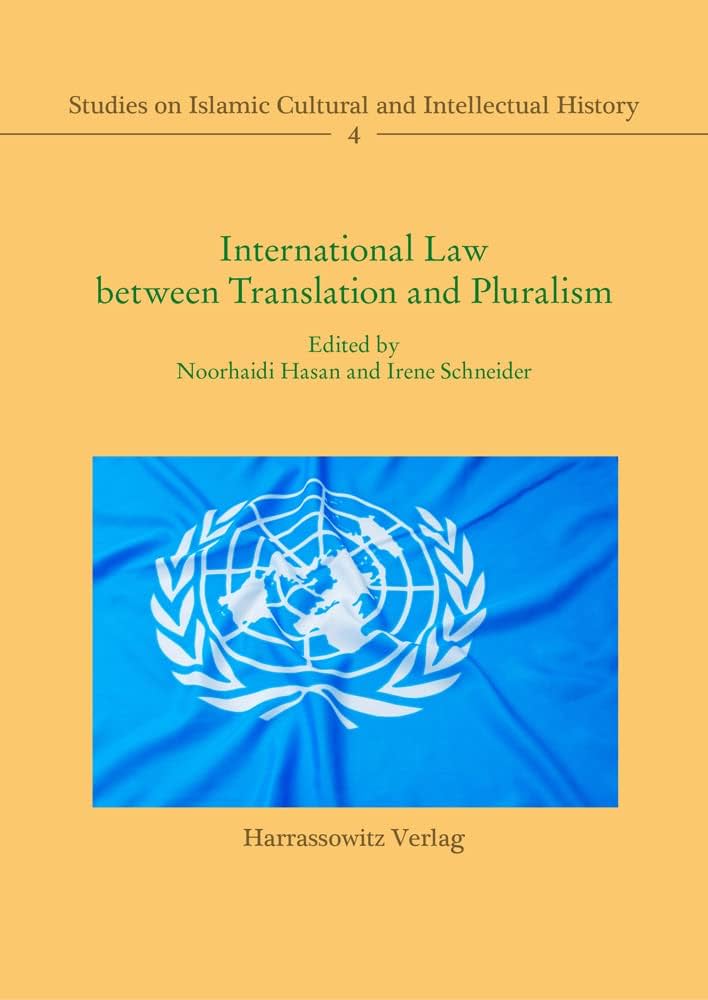
International Law between Translation and Pluralism: Examples from Germany, Palestine and Indonesia
 Nurmila, N. (2022). The Implementation of the Convention on the Elimination of All Forms of Discrimination Against Women (CEDAW) in Indonesia, in Noorhaidi Hasan and Irene Schneider (eds.) International Law between Translation and Pluralism. Examples from Germany, Palestine and Indonesia. Germany: Harrassowitz Verlag. https://www.harrassowitz-verlag.de/International_Law_between_Translation_and_Pluralism/title_7095.ahtml

Menjadi Feminis Muslim
 Nurmila, N. (2022). Menjadi Feminis Muslim [On Being Muslim Feminist] (ed.). Bandung: Afkaruna.