Navigating Teacher Agency: Implementing an Innovative Literacy Teaching Model in Indonesian Classrooms
 Durriyah, T.L., Dewayani, S., Parlindungan, F. (2025). Navigating Teacher Agency: Implementing an Innovative Literacy Teaching Model in Indonesian Classrooms. In: Zainuddin, Z., Sumintono, B., Perera, C.J. (eds) Resilient and Sustainable Education Futures. Sustainable Development Goals Series. Springer, Singapore. https://doi.org/10.1007/978-981-96-4971-6_17

School Digitalization Strategies in Non-strategic Setting: Insights from Islamic Boarding Schools in Rural Indonesia
 Supriyono, Numan, M., Mumtaz, M.F. (2025). School Digitalization Strategies in Non-strategic Setting: Insights from Islamic Boarding Schools in Rural Indonesia. In: Zainuddin, Z., Sumintono, B., Perera, C.J. (eds) Resilient and Sustainable Education Futures. Sustainable Development Goals Series. Springer, Singapore. https://doi.org/10.1007/978-981-96-4971-6_11
Conclusion: Global Implications and Future Directions of Resilient Education Systems in the Post-pandemic Era

Zainuddin, Z., Sumintono, B., Perera, C.J. (2025). Conclusion: Global Implications and Future Directions of Resilient Education Systems in the Post-pandemic Era. In: Zainuddin, Z., Sumintono, B., Perera, C.J. (eds) Resilient and Sustainable Education Futures. Sustainable Development Goals Series. Springer, Singapore. https://doi.org/10.1007/978-981-96-4971-6_20
Reinventing Sustainable Learning in Malaysia and Indonesia: Lessons Learned from COVID-19

Zainuddin, Z., Perera, C.J., Sumintono, B. (2025). Reinventing Sustainable Learning in Malaysia and Indonesia: Lessons Learned from COVID-19. In: Zainuddin, Z., Sumintono, B., Perera, C.J. (eds) Resilient and Sustainable Education Futures. Sustainable Development Goals Series. Springer, Singapore. https://doi.org/10.1007/978-981-96-4971-6_2
Background: Resilient and Sustainable Education Futures

Perera, C.J., Zainuddin, Z., Sumintono, B. (2025). Background. In: Zainuddin, Z., Sumintono, B., Perera, C.J. (eds) Resilient and Sustainable Education Futures. Sustainable Development Goals Series. Springer, Singapore. https://doi.org/10.1007/978-981-96-4971-6_1
The Global Ikhwan Women’s Experiences in Polygamous Marriages in Malaysia: Polygamy as Means to Be Closer to God
 Nurmila, N. (2025). The Global Ikhwan Women’s Experiences in Polygamous Marriages in Malaysia: Polygamy as Means to Be Closer to God. In: Othman, N., Nadarajah, Y., Mohd Isa, R. (eds) Polygamous Marriages in Peninsular Malaysia. Springer, Singapore. https://doi.org/10.1007/978-981-97-9104-0_12
Abstract
As one of the ways to recruit more membership for Global Ikhwan and to counterbalance the negative image of polygamy, Global Ikhwan launched the Polygamy Club on 15 August 2009. This chapter will elaborate the Global Ikhwan women’s experiences of living in polygamous marriages. Based on my interview with 14 Global Ikhwan members consisting of 3 polygamous husbands, seven first wives and four second wives, this chapter shows that all polygamous marriages among Global Ikhwan members were arranged by their leader, Buya Ashaari. All of the research participants have communal life arrangements, in which each member contribute economically to the jama`ah (the community of the Global Ikhwan) and in return, their basic needs are fulfilled by the Global Ikhwan.None of the wives receive maintenance from their husband, reducing economic conflict among the wives. However,this does not mean that the wives have no problem in their polygamous marriages. They must suppress their feeling of jealousy and in doing so, they were trained by their leaders to overcome this feeling by trying to be closer to God, “cleaning” their “selfishness” to have their husband for only herself.
Islamic Feminists’ Approaches
 Nurmila, N. (2025). Islamic Feminists’ Approaches. In: Bano M, ed. The Cambridge Companion to Women and Islam. Cambridge Companions to Religion. Cambridge University Press; pp. 214-233. https://www.cambridge.org/core/books/abs/cambridge-companion-to-women-and-islam/islamic-feminists-approaches/7D0AA2AE8DDAC391F4BB7B067A724C00
Summary
Nina Nurmila provides a review of key scholarly figures in the field of Islamic feminism and their methodological approaches. She emphasizes how, in Indonesia, their influence has permeated the wider Muslim community more effectively than in other contexts, thanks to local scholars disseminating their ideas through vernacular Islamic scholarship.
University Student Readiness and Academic Integrity in Using ChatGPT and AI Tools for Assessments.
 Chuah, K.M. and Sumintono, B. (2024). University Student Readiness and Academic Integrity in Using ChatGPT and AI Tools for Assessments. In: Grosseck, G., Sava, S., Ion, G. and Malita, L. (eds). Digital Assessment in Higher Education, Navigating and Researching Challenges and Opportunities. https://link.springer.com/chapter/10.1007/978-981-97-6136-4_4
Abstract
This chapter explores the use of ChatGPT for academic support in higher education, concentrating on students’ readiness, perception of its usefulness, and understanding of academic integrity issues. A quantitative approach with a non-experimental design was employed. The study involved 374 university students as participants, with data cleaning and validation carried out using WINSTEPS software and further analysis was conducted using Rasch Rating Scale Model. The key findings highlight varied levels of student readiness and awareness concerning the use of ChatGPT and adherence to academic integrity. The study points to the urgent need for universities to provide more explicit guidelines on using artificial intelligence (AI) tools within academic contexts. The results reveal that while students see the potential benefits of ChatGPT in aiding their studies, many lack full preparedness for its incorporation into their academic routines. The analysis of variance indicated significant differences in the readiness and perceived usefulness of ChatGPT among students based on the frequency of its usage. However, there were no significant differences in terms of academic integrity across different demographic groups. This research contributes to the understanding of how students perceive and engage with AI tools in higher education. It also provides insights on the future of digital assessments in higher education, particularly how AI tools like ChatGPT might reshape assessment methods, particularly in upholding academic integrity and honesty.
Disinformasi di Youtube: Pemilihan Presiden 2019 dan 2024

Alamsyah, P., Wijaya, G., Hakim, L.N. (2024). Disinformasi di Youtube: Pemilihan Presiden 2019 dan 2024. Dalam Ningtyas, E. Jurnalisme Cek Fakta Melawan Disinformasi Pemilu 2024. (h. 15-36). Jakarta: AJI Indonesia. https://aji.or.id/data/jurnalisme-cekfakta-melawan-disinformasi-pemilu-2024
Attraction of Authority: The Indonesian Experience of Educational Decentralization
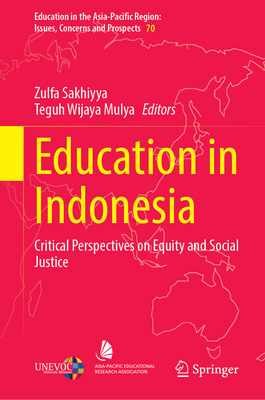
 Sumintono, B., Hariri, H., and Izzati, U.A. (2023). Attraction of Authority: The Indonesian Experience of Educational Decentralization. In: Sakhiyya, Z., Wijaya Mulya, T. (eds) Education in Indonesia, Critical Perspectives on Equity and Social Justice. Springer, Singapore. https://doi.org/10.1007/978-981-99-1878-2_10
Abstract
The fall of the New Order government in 1998 changed the landscape of Indonesian education from a highly centralized system to a decentralized one. With this paradigm shift, district governments received a transfer of power in most public sectors in 2001, including education. The central questions in this chapter are: (1) How has Indonesia managed education in the decentralization era? and (2) How has the country managed the changes so far? Four key issues are discussed, namely, new regime of standardization, school operational cost, teachers and principals, and National Exam. We argue that Indonesian educational decentralization has mostly been about legitimacy and authority dialectics between local/district and central institutions. Moving from a highly centralized system to a more locally oriented one contests the legitimacy of each actor involved, resulting in competition for resources and survival. Nevertheless, we also identified some advances in terms of social justice and student learning support in this process of decentralization.