

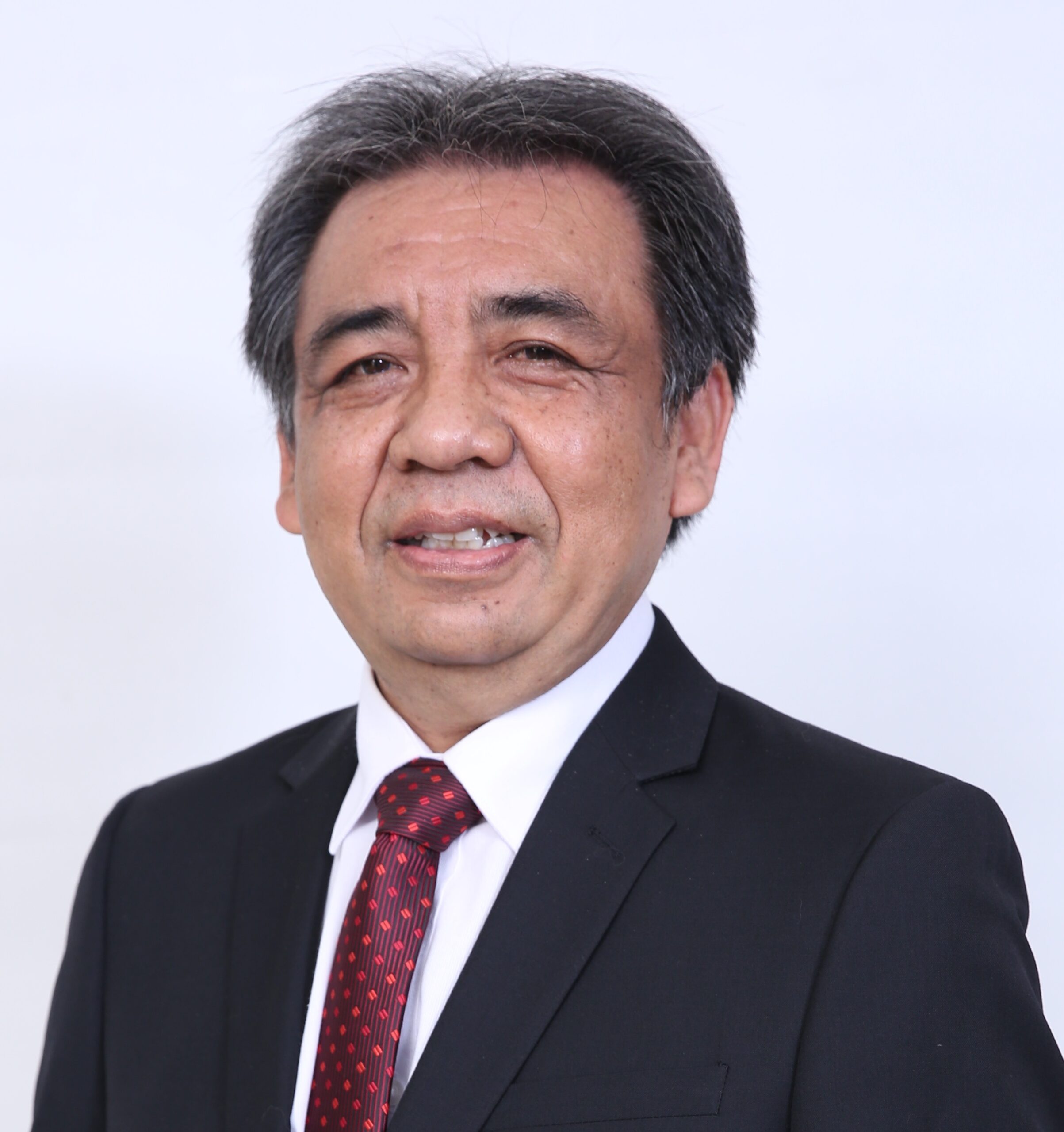
Bahrul Hayat, Ph.D.
About Lecturer
Bahrul Hayat, Ph.D., previously was a Vice-Rector for Academic, Student Affairs, and Human Resource UIII. He got his Ph.D. from the University of Chicago, specializing in psychometrics and statistical analysis. His MA was from the University of Pittsburgh, and his first degree was from the Bandung Institute of Teacher Training and Education (now Education University of Indonesia, Bandung). He teaches classical and modern psychometric theory, the construction of psychological instruments, and psychological research methodology. He is a former Secretary-General of the Ministry of Religious Affairs. He has held various positions in the Ministry of Education and Culture, including as Director of the Center for Educational Assessment, Secretary of Directorate General for Teachers and Education Personnel, and Secretary of the National Board of School Accreditation. He is now an Education Advisor to the Innovation for Indonesia’s School Children (INOVASI) Program, a partnership between the governments of Australia and Indonesia, and also an Islamic Education Adviser to DFAT’s Pathways program in the Philippines (Education Pathways for Peace in Mindanao) where he is advising the newly autonomous Bangsamoro government on regulating the education sector. He can be reached by email at bahrul.hayat@uiii.ac.id.|
About research interest: “I’m an expert in psychometrics, statistical meta-analysis, and educational and psychological assessment.”





Department of Education, Division of Social Sciences, University of Chicago, USA
M.A. in Measurement and Research Methodology (1989)
Department of Psychology in Education, School of Education University of Pittsburgh, USA
Bachelor of Arts (1984)
Department of English Education, Faculty of Languages and Arts Institute of Teacher and Education (IKIP), Bandung, Indonesia
2021-2024
Senior Lecturer, Faculty of Education, Universitas Islam Internasional Indonesia, Depok
2021-present
Senior Lecturer, Universitas Islam Negeri Syarif Hidayatullah, Jakarta. Courses: Psychometrics, Classical Test Theory (CTT), Item Response Theory (IRT), Psychological Research Methodology, Constructing Psychological Instruments, Research Seminar on the Recent Development in Psychometrics.
2008-present
Senior Lecturer, Graduate School, Education University of Indonesia (UPI), Bandung. Course: Psychometrics
2010-present
Senior Lecturer, Graduate School, Jakarta State University. Courses: Classical Test Theory (CTT), Item Response Theory (IRT), Constructing Standardized Measurement Instruments.
2010-present
Secretary General, Ministry of Religious Affairs, Republic of Indonesia
2006-2014
Senior Lecturer, Graduate Program, Faculty of Psychology, University of Indonesia. Courses: Classical Test Theory (CTT), and Item Response Theory (IRT).
2000-2013
Acting Director General for Catholics Affairs, Ministry of Religious Affairs, Republic of Indonesia.
2010
Acting Director General for Islamic Education, Ministry of Religious Affairs, Republic of Indonesia.
2007
Acting Director General for Hajj Pilgrimage, Ministry of Religious Affairs, Republic of Indonesia
2007
Secretary, Directorate General for Teachers and Education Personnel, Ministry of National Education, Republic of Indonesia.
2005-2006
Spokesperson, Ministry of National Education, Republic of Indonesia.
2005-2006
Senior Lecturer, Graduate School, Krisnadwipayana University, Jakarta. Course: Performance Appraisal, Management Information System, and Management Science.
1993-2006
Senior Lecturer, Air Force Command and Staff College, Bandung. Course: Human Resource Management.
2003-2006
Secretary, National Board of School Accreditation (BASNAS), Ministry of National Education, Republic of Indonesia.
2003-2006
Director, Center for Educational Assessment, Ministry of National Education, Republic of Indonesia.
2002-2005
Acting Director, Examination Center, Ministry of Education and Culture, Republic of Indonesia.
2002
Deputy Director for Academic Assessment, Examination Center, Ministry of Education and Culture, Republic of Indonesia.
2000-2002
Senior Lecturer, Master of Agribusiness Management Program, Bogor Institute of Agriculture, Course: Performance Appraisal for Human Resources.
1997-2001
Senior Lecturer, Master of Public Policy and Administration Program, Faculty of Social and Political Sciences, University of Indonesia. Course: Social Research Methodology and Statistics.
1996-2000
Acting Secretary, Institute for Research and Development, Ministry of Education and Culture, Republic of Indonesia.
2000
Deputy Director for Achievement Testing, Center for Examination Research and Development, Ministry of Education and Culture, Republic of Indonesia.
1996-2000
Books
Hayat, B. & Suryadi, B., (2023). Metode Penelitian Psikologi. Bibliosmia Karya Indonesia.
Hayat, B. (2022). Sertifikasi guru: Studi dampak kebijakan sertifikasi terhadap komitmen, kepuasan kerja, motivasi, dan kompetensi guru. Bibliosmia Karya Indonesia.
Suryadi, B., & Hayat, B. (2021). Religiusitas: Konsep, pengukuran dan implementasi di Indonesia. Bibliosmia Karya Indonesia.
Suryadi, A., Hayat, B., Rustana, C., Abduhzen, M., Sulistiyo, Rosyidi, U., & Latif, Y. (2014). Pendididikan untuk transformasi bangsa: Arah baru pendidikan untuk perubahan mental bangsa. Kompas Media Nusantara.
Hayat, B., & Ali, M. (2012). Khazanah dan praksis pendidikan islam di Indonesia. Pustaka Cendekia Utama.
Hayat, B. (2012). Mengelola kemajemukan umat beragama. Saadah Pustaka Mandiri.
Hayat, B., & Yusuf, S. (2010). Benchmark internasional mutu pendidikan. Bumi Aksara.
Book chapter
Hayat, B. (2020). Asesmen hasil belajar. In M. Ali, A. Hufad, A. H. Hernawan, & R. Susilana (Eds.), Pendidikan menuju Indonesia emas (pp. 1777-1794). Universitas Pendidikan Indonesia (UPI) Press.
Journal Articles
Hayat, B., Putra, M. D. K., Rahmawati, R. & Isa, K (2023). Rasch Calibration and Differential Item Functioning (DIF): Analysis of the Indonesian National Assessment Program-Language (INAP-L). World Journal of English Language, 13(6) 402-413. https://doi.org/10.5430/wjel.v13n6p402
Hayat, B., Rahayu, W., Putra, M.D.K., Sarifah, I., Deviana, T., Puri, V.G.S. & Isa, K. (2023). Metacognitive Skills Assessment in Research-Proposal Writing (MSARPW) in the Indonesian University Context: Scale Development and Validation Using Multidimensional Item Response Models. Jurnal Pengukuran Psikologi dan Pendidikan Indonesia (JP3I), 12 (1), 36-47. https://journal.uinjkt.ac.id/index.php/jp3i/article/view/31679
Suseno, M., Hayat, B., Putra, M. D. K., Bien, J. K., Rachmawati, R., & Hartanto, H. (2022). A differential item functioning (DIF) analysis of the mobile phone problem use scale in Indonesian schools with and without smartphone banned policy. Cogent Psychology, 9(1), 2137306. http:// doi.org/10.1080/23311908.2022.2137306
Hayat, B. (2022). Adjustment for guessing in a basic statistics test for Indonesian undergraduate psychology students using the Rasch model. Cogent Education, 9(1), 2059044. https://doi.org/10.1080/2331186X.2022.2059044
Azizah, N., Suseno, M., & Hayat, B. (2022). Item analysis of the Rasch model items in the final semester exam Indonesian language lesson. World Journal of English Language, 12(1), 15-26. http:// doi.org/ 10.5430/wjel.v12n1p15
Nisa, Y. F., Umar, J., Arista, P. D., Widianingrum, H., & Hayat, B. (2022). Development and validation of situational judgement test to measure continuous learning competency. Jurnal Pengukuran Psikologi dan Pendidikan Indonesia (JP3I), 11(1), 34-44. https://journal.uinjkt.ac.id/index.php/jp3i/article/view/25302
Hayat, B., Hidayat, R., & Putra, M. D. K. (2021). Exploring the factor structure of environmental attitudes measure in a sample of Indonesian college students. Revista CES Psicologia, 14(1), 112-129. http://dx.doi.org/10.21615/cesp.14.1.9
Hidayati, H. N., Hayat, B., & Rahayu, W. (2021). Assessment of the validity and reliability of mental health instruments of high school student in Indonesia. European Journal of Educational Research, 10(2), 729-742. https://doi.org/10.12973/eu-jer.10.2.729
Rahayu, W., Putra, M. D. K., Rahmawati, Y., Hayat, B., & Koul, R. B. (2021). Validating an Indonesian version of the What Is Happening in this Class? (WIHIC) questionnaire using a multidimensional Rasch model. International Journal of Instruction, 14(2), 919-934. https://doi.org/10.29333/iji.2021.14252a
Hayat, B. (2021). Klasika: Program analisis item dan tes dengan pendekatan klasik. Jurnal Pengukuran Psikologi dan Pendidikan Indonesia (JP3I), 10(1), 1-11. http://dx.doi.org/10.15408/jp3i.v10i1.20551
Suryadi, B., Hayat, B., & Putra, M. D. K. (2021). The Indonesian version of the Life Orientation Test-Revised (LOT-R): Psychometric properties based on the Rasch model. Cogent Psychology, 8(1), 1869375. https://doi.org/10.1080/23311908.2020.1869375
Hadiana, D., Hayat, B., & Tola, B. (2020). Comparison of methods for detecting anomalous behavior on large-scale computer-based exams based on response time and responses. Research and Evaluation in Education (REiD), 6(2), 87-97. https://doi.org/10.21831/reid.v6i2.31260
Deviana, T., Hayat, B., & Tresniasari, N. (2020). Female Hedonistic Behavior Questionnaire (FHBQ): Psychometric properties based on the Rasch model. Jurnal Pengukuran Psikologi dan Pendidikan Indonesia (JP3I), 9(2), 44-56. https://doi.org/10.15408/jp3i.v9i2.15132
Suryadi, B., Hayat, B., & Putra, M. D. K. (2020). Evaluating psychometric properties of the Muslim Daily Religiosity Assessment Scale (MUDRAS) in Indonesian samples using the Rasch. Mental Health, Religion & Culture, 23(3-4), 331-346. https://doi.org/10.1080/13674676.2020.1795822
Ambarwaty, U. D., Suryadi, B., Hayat, B., & Sumiati, N. T. (2020). Psychological factors that influence smartphone addiction of Islamic school students. Indonesian Journal of Educational Review, 7(1), 51-59.
Hayat, B., Putra, M. D. K., & Suryadi, B. (2020). Comparing item parameter estimates and fit statistics of the Rasch model from three different traditions. Jurnal Penelitian dan Evaluasi Pendidikan, 24(1), 39-50. https://doi.org/10.21831/pep.v24i1.29871
Deviana, T., Hayat, B., & Suryadi, B. (2020). Validasi instrumen Social Provision Scale pada siswa sekolah menengah atas: Studi dengan penerapan Rasch model. Indonesian Journal of Educational Assessment, 3(1), 1-15. https://doi.org/10.26499/ijea.v3i1.54
Suryadi, B., Sawitri, D. R., Hayat, B., & Putra, M. D. K. (2020). The influence of adolescent-parent career congruence and counselor roles in vocational guidance on the career orientation of students. International Journal of Instruction, 13(2), 45-60. https://doi.org/10.29333/iji.2020.1324a
Suryadi, B., Rahmawati, Y., Hayat, B., & Suprananto. (2019). Indonesia national curriculum reform in the context of standard-based education: Policy and implementation. TARBIYA: Journal of Education in Muslim Society, 6(1), 76-87. https://doi.org/10.15408tjems.v6i1.12883
Ali, M., & Hayat, B. (2019). Non-academic factors influencing students’ achievement: A study in the Indonesian madrasahs. International Journal of Learning and Intellectual Capital, 16(2), 180-192. https://doi.org/10.1504/IJLIC.2019.10018851
Hayat, B. (2018). The effect of mastery learning on affective characteristics of students quantitative research. Indonesian Journal of Educational Assessment, 1(1), 45-53. https://doi.org/10.26499/ijea.v1i1.6
Putra, M. D. K., Umar, J., Hayat, B., & Utomo, A. P. (2017). The effect of sample size and intraclass correlation coefficients (ICC) on bias estimating parameter of multilevel latent variable modeling: a monte carlo study. Jurnal Penelitian dan Evaluasi Pendidikan, 21(1), 34-50. https://doi.org/10.21831/pep.v21i1.12895
Hayat, B. (2012). Perempuan dan pendidikan dalam perspektif HAM. Millah, 12(1), 193-217. https://doi.org/10.20885/millah.vol12.iss1.art10
Hayat, B. (2012). Kontribusi islam terhadap masa depan peradaban di Asia Tenggara. MIQOT: Jurnal Ilmu-ilmu Keislaman, 36(1), 192-204. http://dx.doi.org/10.30821/miqot.v36i1.115
Hayat, B. (2010). Literacy of our youngsters: Results and restraints from pisa. International Journal of Education, 5(1), 1-16. https://doi.org/10.17509/ije.v5i1.5644
Hayat, B. (2004). Penilaian kelas (classroom assessment) dalam penerapan standar kompetensi. Jurnal Pendidikan PENABUR, 3(3), 108-112.
Conference Proceedings
Hadiana, D., Hayat, B., & Tola, B. (2021). A new method for setting response-time threshold to detect test takers’ rapid guessing behavior. In B. H. Prakoso, Safari, Asrijanty, & Rahmawati (Eds.), Proceedings of the International Conference on Educational Assessment and Policy (ICEAP 2020) (pp. 46-50). Atlantis Press. https://doi.org/10.2991/assehr.k.210423.062
Djunaedi, W., Supriyati, Y., Sastrawijaya, Y., & Hayat, B. (2020). A structural equation modeling on factors affecting lecturer knowledge sharing in islamic universities for strengthening islamic economy. In J. Simarmata, R. Rahim, & A. Kholis (Eds.), Proceedings of the 1st Unimed International Conference on Economics Education and Social (pp. 825-832). Scitepress. https://doi.org/10.5220/0009507608250832
Azizah, N., Suseno, M., & Hayat, B. (2020). Severity-leniency in writing assessment and its causal factors. KnE Social Sciences, 4(14), 173–185. https://doi.org/10.18502/kss.v4i14.7870
Putra, T. A., Hayat, B., & Latifa, R. (2019). Why do we buy virtual goods? In Proceedings of the 7th International Conference on Cyber and IT Service Management (CITSM). IEEE. https://doi.org/10.1109/CITSM47753.2019.8965331
Hidayati, H. N., Hayat, B., & Rahayu, W. (2019). Validity and reliability instrument of noble character of adolescence. In R. Rahim, I. S. Wekke, R. Tosepu, & M. Nadir (Eds.), Proceedings of the International Conference on Environmental Awareness for Sustainable Development in conjunction with International Conference on Challenge and Opportunities Sustainable Environmental Development (ICEASD & ICCOSED 2019). EAI. http://dx.doi.org/10.4108/eai.1-4-2019.2287285
Automaty Vavada i Bonusy w Gry Online 2023
Automaty Vavada i Bonusy w Gry Online 2023
Warto skupić się na wybieraniu gier, które oferują ciekawe rozwiązania oraz dodatkowe korzyści. Sprawdź, które z automatycznych rozrywek zapewniają nie tylko emocje, ale też lepsze szanse na wygraną. Przyjrzyj się różnym proponowanym tytułom, które mogą zaskoczyć swoimi funkcjami oraz układami. Wybierając, zwróć uwagę na procenty wypłaty oraz różne tryby rozgrywki, które mogą zwiększyć Twoje szanse.
Nie zapominaj także o przyznawanych ofertach promocyjnych. Dzięki nim możesz znacząco zwiększyć swoje saldo oraz liczbę prób. Sposoby ich aktywacji mogą być różne i często warto już na starcie skorzystać z dostępnych promocji. Starannie przemyśl, które z opcji najbardziej Ci odpowiadają i jak najlepiej przekładają się na Twoje preferencje w codziennym korzystaniu z platformy.
Kiedy już wiesz, na które tytuły postawić, warto zwrócić uwagę na interfejs oraz dostępność gier na urządzeniach mobilnych. Wygoda korzystania z aplikacji lub przeglądarki to kluczowy aspekt w wyborze odpowiedniego serwisu. Upewnij się, że korzystasz z platformy, która umożliwia płynne i szybkie przeżywanie emocji, niezależnie od miejsca, w którym się znajdujesz.
Niezależnie od tego, czy jesteś nowicjuszem, czy doświadczonym graczem, inwestycja czasu w obeznanie się z różnymi propozycjami na pewno przyniesie owoce. Zadowolenie z rozgrywki oraz możliwość korzystania z atrakcyjnych ofert to klucz do sukcesu w świecie kasyn.
Jak Wybrać Najlepsze Automaty Vavada w 2023 Roku?
Zapoznaj się z recenzjami dostępnych gier, aby wyselekcjonować te, które mają najwyższe stawki zwrotu. Sprawdź, czy oferują progresywne nagrody, które zwiększają szansę na zdobycie większych sum. Oto konkretne kroki:
- Analizuj procent RTP (Return to Player): Wybieraj tytuły z RTP powyżej 95% dla lepszych szans na wygraną.
- Preferuj niskie i średnie ryzyko: Te opcje często oferują częstsze, choć mniejsze wygrane, co zwiększa satysfakcję z gry.
- Sprawdź mechanikę gry: Zwróć uwagę na różnorodność funkcji, takich jak bonusy, darmowe spiny czy dodatkowe poziomy, które zwiększają emocje w trakcie zabawy.
- Wykorzystuj promocje: Obserwuj oferty, które mogą wzbogacać Twoje doświadczenia, zapewniając dodatkowe możliwości bez ponoszenia większych wydatków.
Obserwuj społeczność graczy. Uczestnictwo w forach oraz grupach tematycznych pozwoli Ci zdobyć cenne informacje o ulubionych grach innych użytkowników.
Wybierając nowości, zwracaj uwagę na rekomendacje ekspertów oraz analizy tendencji. Nowe tytuły często są świetnie dopracowane i oferują świeże doświadczenia.
Na koniec, testuj różnorodne propozycje. Większość platform oferuje tryb demo, co pozwoli Ci poznać różne tytuły zanim zainwestujesz własne pieniądze. Dzięki temu znajdziesz najlepsze opcje zgodne z Twoimi preferencjami. Powodzenia przy wybieraniu gier!
Rodzaje Bonusów w Gry Online: Co Oferuje Vavada?
Obowiązkowo skorzystaj z dostępnych promocji przy rejestracji. Nowi użytkownicy mogą liczyć na atrakcyjne zachęty, które często obejmują zwiększenie początkowego depozytu. To świetny sposób na zwiększenie banku na start!
Warto również zwrócić uwagę na oferty lojalnościowe. Gracze, którzy regularnie korzystają z platformy, zyskują możliwość zdobycia unikalnych nagród i przywilejów. Zbieraj punkty i wymieniaj je na ekskluzywne oferty.
Kolejną korzystną opcją są promocje weekendowe. Obserwuj kalendarz, by nie przegapić dodatkowych środków lub darmowych spinów, które mogą pojawić się w końcu tygodnia. To doskonała okazja na rozrywkę bez większych wydatków.
Również podczas specjalnych wydarzeń czy świąt można liczyć na unikalne oferty. Tematyczne tygodnie często wiążą się z wieloma niespodziankami, które dodatkowo umilą zabawę.
Jeśli masz ochotę na zabawę w aplikacji mobilnej, nie przegap opcji mobilnych. Specjalne promocje są dostępne dla tych, którzy korzystają z telefonu. Zainstaluj aplikację, skorzystaj z vavada aplikacja pobierz i ciesz się dodatkowymi korzyściami!
Strategie Wykorzystania Bonusów w Automatach Vavada
Zacznij zawsze od przeczytania zasad promocji. Wiele ofert ma konkretne wymagania dotyczące obrotu, dlatego warto znać je na wylot. Sprawdź, jakie tytuły kwalifikują się do wykorzystania nagród – nie wszystkie sloty mogą się do tego zaliczać.
Kiedy masz już bonus, spróbuj zminimalizować ryzyko. Ustal maksymalny limit stawki, aby nie przekroczyć budżetu. Rozważ również korzystanie z mniejszych stawek na początku, by zrozumieć, jak działają mechaniki gry i jakie są jej płatności.
Gra na slotach z wysokim RTP (zwrotem dla gracza) to mądry wybór. Szukaj tytułów, które oferują RTP na poziomie 96% lub wyższym, co zwiększa szansę na długoterminowy zysk. Analizuj tabele wypłat, by dowiedzieć się, gdzie najwyższe nagrody są do zdobycia.
Nie zapomnij, że korzystanie z funkcji obstawiania (gambling) może zwiększyć potencjalną wygraną, ale również wiąże się z ryzykiem. Zawsze podejmuj decyzję na podstawie strategii, a nie impulsu. Ustal maksymalną stawkę na obstawianie – lepiej trzymać się granic niż później żałować.
Aktywuj wszystkie dostępne funkcje bonusowe w grze. Często można zyskać dodatkowe spiny lub inne przywileje, które mogą zwiększyć szanse na wygraną. Upewnij się też, że korzystasz z promocji czasowych, które oferują lepsze warunki, na przykład zwiększoną ilość obrotów uwalniających prize.
City zróżnicowane podejście do różnych gier jest kluczowe. Każdy tytuł ma swoje unikalne cechy, które mogą wpływać na strategię. Bądź elastyczny i dostosuj swoją taktykę w zależności od gry, w którą grasz oraz aktualnych ofert.
Prowadź szczegółowy dziennik swoich gier i wygranych. Oceniaj, co działa, a co nie. To pozwoli ci lepiej planować przyszłe sesje. Analizowanie wcześniejszych wyników pomoże uniknąć powielania błędów czy strategii, które źle się sprawdziły.
Pamiętaj, aby gra była zabawą. Osiąganie celów jest ważne, ale najważniejsza jest radość z gry. Utrzymuj zdrowy balans i nie pozwól, aby presja na zysk zepsuła przyjemność z rozgrywki.
Partnership
Faculty of Education Partnership
Through a harmonious blend of innovation and academia, our Faculty Partnership Program stands as a bridge that connects theoretical knowledge with practical implementation. We believe in empowering and nurturing this powerful collaboration to reshape the future of education
National Partnership
Synergy Across Borders: The Power of Our National Partnerships
Through our Partnership Program, we’re driving educational excellence, fostering innovation, and empowering our nation’s educators. Together, we’re making a difference.











International Partnership
Our International Partnership Initiative
Our International Partnership Initiative stands as a testament to the strength of global unity and shared aspirations. Through this collaboration, we’re contributing to a globally connected and inclusive future.




Custom | Event Detail
Event
Author: foe.admin
I am text block. Click edit button to change this text. Lorem ipsum dolor sit amet, consectetur adipiscing elit. Ut elit tellus, luctus nec ullamcorper mattis, pulvinar dapibus leo.

custom | profil scholar
Author: foe.admin

Saida Ulfa, Ph.D
About Lecturer
Dr. Saida Ulfa is a Lecturer of Educational Technology Department, Faculty of Education, Universitas Negeri Malang. She is an academic expert who specializes in the field of Massive open Online Courses (MOOCs), Learning Analytics, Instructional Technology, Mobile and Ubiquitous Learning, Adaptive and Personalized Learning in the Online Learning Environment Artificial Intelligence in Education.
Saga University, Japan (2009)
M. Ed. in Education Technology
Saga University, Japan (2005)
Undergraduate in Electrical Engineering Department
Hasanuddin University, Indonesia (2001)
Universitas Negeri Malang
2008 - Present
Journal Articles
Nurrijal, Setyosari, P.,Kuswandi, D. Ulfa, S. (2023). Creative Problem Solving Process Instructional Design in the Context of Blended Learning in Higher Education. Electronic Journal of e-Learning, 21(2), pp. 80–97. https://doi.org/10.34190/ejel.21.2.2653
Diningrat, S.W.M. Setyosari, P.,Ulfa, S.,Widiati, U. (2023). The Effect of an Extended Flipped Classroom Model for Fully Online Learning and its interaction with Working Memory Capacity on Students' Reading Comprehension. Journal of New Approaches in Educational Research, 12(1), pp. 77–99. https://doi.org/10.7821/naer.2023.1.1073
Pradana, F. Setyosari, P., Ulfa, S. Hirashima, T. (2023). Development of Gamification-Based E-Learning on Web Design Topic. International Journal of Interactive Mobile Technologies, 17(3), pp. 21–38. https://doi.org/10.3991/ijim.v17i03.36957
Lasfeto, D.B., Ulfa, S. (2023). Modeling of Online Learning Strategies Based on Fuzzy Expert Systems and Self-Directed Learning Readiness: The Effect on Learning Outcomes. Journal of Educational Computing, 60(8), pp. 2081–2104. https://doi.org/10.1177/07356331221094249
Bringula, R.,Ulfa, S. Miranda, J.P.P., Atienza, F.A.L. (2022). Text mining analysis on students’ expectations and anxieties towards data analytics course. Cogent Engineering, 9(1), 2127469. https://doi.org/10.1080/23311916.2022.2127469
Budianto, A., Setyosari, P., Kuswandi, D., Ulfa, S. (2022). Summaries Writing to Enhance Reading Comprehension: Systematic Literature Review from 2014 to 2021. Eurasian Journal of Applied Linguistics, 8(1), pp. 149–161. https://ejal.info/menuscript/index.php/ejal/article/view/175
Wahyu Ridhoni, Punaji Setyosari, Dedi Kuswandi, Saida Ulfa, Dahlia Janan. (2022). CC Thinker: Mobile-based Assessment to Train Creative and Critical Thinking in Student. IJIM; International Association of Online Engineering; Vol 16 No 15; PP 16-29. https://doi.org/10.3991/ijim.v16i15.29991
Saida Ulfa, Deddy Barnabas Lasfeto,Izzul Fatawi. (2021). Applying fuzzy logic to customize learning materials in e-learning systems. Ubiquitous Learning: an International Journal. 2475-9686(e) ; Vol 14. No.2 DOI: 10.18848/1835-9795/CGP/v14i02/49-61
Saida Ulfa, Izzul Fatawi. (2012). Predicting Factors That Influence Students’ Learning Outcomes Using Learning Analyticsin Online Learning Environment. IJET; International Association of Online Engineering; 1863-0383 (e); Vol: 16 No 1. https://doi.org/10.3991/ijet.v16i01.16325
Rex Bringula* , Jon Jester Reguyal, Don Dominic Tan, Saida Ulfa. (2021). Mathematics self-concept and challenges of learners in an online learning environment during COVID-19 pandemic. Smart Learning Environments; Springer Open; Vol 8 No.22; PP 1-23. https://doi.org/10.1186/s40561-021-00168-5
Adlia Alfiriani, Punaji Setyosari , Saida Ulfa, Henry Praherdhiono. (2021). Developing Networked Online Learning Design and Its Effectiveness on The Works of Student in Higher Education: Case Studies in Indonesia. Journal of Technology and Science Education; 2013-6374(e); Vol 12 No.1; PP 4-20. https://doi.org/10.3926/jotse.1189
Bambang Budi Wiyono*, Agus Wedi, Saida Ulfa, Arda Purnama Putra. (2021). The use of information and communication technology (Ict) in the implementation of instructional supervision and its effect on teachers’ instructional process quality Information; Multidisciplinary Digital Publishing Institute; Vol 12 Mo 11; PP 1-15. https://doi.org/10.3390/info12110475
Muhibuddin Fadhli, Billy Brick, Punaji Setyosari, Saida Ulfa, Dedi Kuswandi. (2020). A Meta-Analysis of Selected Studies on the Effectiveness of Gamification Method for Children International Journal of Instruction Vol 13 No 1; PP 845-854. https://e-iji.net/dosyalar/iji_2020_1_54.pdf
Mutiara Sari Dewi, Punaji Setyosari, Dedi Kuswandi, Saida Ulfa. (2020). Analysis of kindergarten teachers on pedagogical content knowledge. EJER; Eurasian Society of Educational Research; Vol 9. No.4; Hal 1701-1721. https://www.eu-jer.com/analysis-of-kindergarten-teachers-on-pedagogical-content-knowledge
Intan Safiaha, I Nyoman Sudhana Degeng,Punaji Setyosari, Saida Ulfa. (2020). Design and development of seamless learning to improving learning outcome of Islamic economic course: a case study in Indonesia. Journal of E-learning and Knowledge Society; Vol 16. No.3; PP Hal 60-67. https://doi.org/10.20368/1971-8829/1135249
I Kadek Suartama, Punaji Setyosari, Sulthoni, Saida Ulfa. (2019). Development of an instructional design model for mobile blended learning in higher education. International Journal of Emerging Technologies in Learning; 1863-0383(e), Volume 14 No 16, pp 4-22; https://doi.org/10.3991/ijet.v14i16.10633
Izzul Fatawi, I Nyoman Sudana Degeng, Punaji Setyosari, Saida Ulfa, Tsukasa Hirashima. (2020). Effect of Online-Based Concept Map on Student Engagement and Learning Outcome. IJDET; IGI Global Publishing; Vol 18 No 3; PP42-56. https://www.igi-global.com/article/effect-of-online-based-concept-map-on-student-engagement-and-learning-outcome/257204