
Experts from FoE UIII and Deakin University Share Practices for Assessing Diverse Students

Experts from FoE UIII and Deakin University Share Practices for Assessing Diverse Students
September 04, 2023
Contributor: Maroof Ahmed | Editor: Supriyono
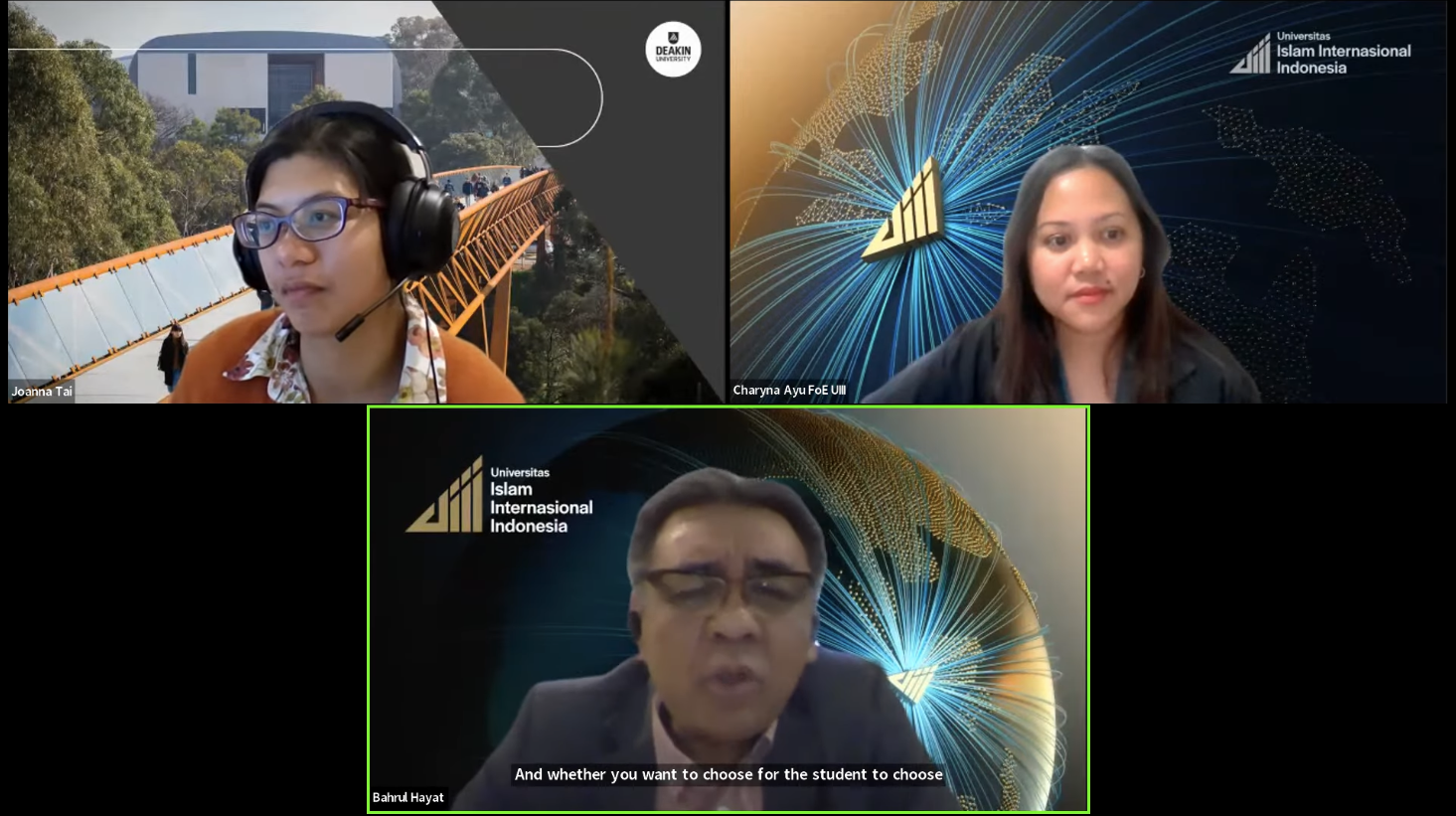
The Faculty of Education (FoE) of Universitas Islam Internasional Indonesia (UIII), in partnership with Deakin University, Australia, orchestrated an online joint lecture on September 4, 2023, that brought together two esteemed speakers, namely Dr. Bahrul Hayat, Vice Rector for Academic, Student Affairs and Human Resources at UIII, and Dr. Joanna Tai, Senior Research Fellow at Deakin University.
Part of the UIII-Deakin Joint Lecture Series 2023, the event served as a platform for the sharing of thoughts concerning non-cognitive assessment in education and inclusive assessment in higher education. Both speakers, drawing from their extensive research, emphasized the need for a holistic approach to assessment that recognizes and values the diverse attributes and backgrounds of students.
Dr. Bahrul Hayat began his lecture by emphasizing the importance of non-cognitive attributes and skills in education. He cited various research findings that underscore the significant contribution of non-cognitive attributes and skills toward student success. These attributes and skills not only promote academic achievement but also lay the foundation for life success.
He elaborated on the vast array of non-cognitive constructs, ranging from tenacity, collegiality, and enthusiasm to motivation, conscientiousness, and adaptability. Dr. Hayat also highlighted the challenges in assessing these non-cognitive attributes, such as the potential for faking, subjectivity, and the complexities of the assessment instruments. However, he proposed potential approaches like the Situational Judgment Test (SJT) and Classroom Response Systems ("Clickers") as effective methods for non-cognitive assessment in education.
"Non-cognitive is a popular term found in the literature and is one of the many terms used in lieu of social and emotional learning (SEL). In education, non-cognitive encompasses attitude, behavior, skills, and strategies that powerfully affect students’ academic performance but are not components of the core content area knowledge and skills taught to students," said Dr. Bahrul Hayat.
Switching gears to Dr. Joanna Tai's segment, she provided an overview of the Australian context for inclusive assessment within higher education. Dr. Tai emphasized the increasing diversity in student demographics and the importance of designing assessments that are inclusive of all students.
She shared her research findings on student experiences of inclusive assessment, in which students highlighted the importance of clear and consistent instructions, meaningful assessment tasks, flexible due dates, and opportunities for formative feedback. Dr. Tai also discussed the challenges in changing assessment practices, including staff attitudes, university policies, and resource constraints.
"Assessment should recognize diversity in student learning and endeavor to ensure that no student is discriminated against by virtue of features other than their ability to meet appropriate standards," said Dr. Joanna Tai.
The collaboration between UIII and Deakin University in organizing this lecture is a testament to the importance of international academic exchanges in fostering understanding and promoting best practices in education. As the world of education continues to evolve, such discussions pave the way for more inclusive and effective teaching and assessment methodologies.

Navigating the Learning Map with Dr. Jarrod Hingston at FoE

Navigating the Learning Map with Dr. Jarrod Hingston at FoE
August 27, 2023
Contributor: Maroof Ahmed | Editor: Dadi Darmadi
On August 2, 2023, the Faculty of Education (FoE) at Universitas Islam Internasional Indonesia (UIII) was honored to host a public lecture by Dr. Jarrod Hingston, the Director of School and Early Childhood Education Services at the Australian Council for Educational Research (ACER). The topic of discussion was ‘The Learning Progression Concept,’ and it provided valuable insights into the modern approaches to educational assessment and progression.
Dr. Jarrod Hingston is an esteemed academic and a pivotal figure at ACER, an independent, not-for-profit research organization established in 1930. ACER's mission is to "create and promote research-based knowledge, products, and services that can be used to improve learning across the lifespan". With a global presence, including an office in Indonesia established in 2015, ACER has been actively collaborating with Indonesian educators for over three decades.
Dr. Hingston emphasized the importance of assessment in the educational journey. He highlighted that good assessment begins with a clear purpose, whether it is for selection, certification, or understanding achievement. A crucial aspect of assessment is its construct, which refers to 'what students know and can do'. This construct is further divided into definition, structure, content strands/processes, proficiencies, and contexts.
One of the central themes of Dr. Hingston's lecture was the Progressive Achievement Approach. He explained that while the traditional year-level achievement approach focuses on curriculum expectations, it often fails to acknowledge that learning is cumulative and not confined to specific year levels.
To address this, Dr. Hingston introduced the concept of a 'progress map,' which serves as a guide to understanding what skills and concepts a student needs to learn next. This map also allows educators to track a student's progress over time.
ACER's approach to this concept is rooted in providing reliable and valid methods to measure attainment at specific points in time and track progress over extended periods. Their Progressive Achievement assessments are designed to provide evidence to support teaching and learning, emphasizing that all students can demonstrate progress.
Dr. Hingston's lecture was a testament to the evolving nature of education and the need for a more holistic approach to assessment. The Progressive Achievement Approach underscores the importance of understanding each student's unique learning journey. It shifts the focus from mere year-level achievements to a more comprehensive view of a student's progress over time.
The lecture was not just an academic discourse but a call to action for educators to adopt a more inclusive and progressive approach to teaching and assessment. It emphasized the importance of evidence-based teaching and the need to support every student in their unique learning journey.
Dr. Jarrod Hingston's lecture was a valuable addition to the academic discourse at UIII. It provided a fresh perspective on assessment and emphasized the importance of a student-centric approach to education. As we move forward, it is essential to incorporate these insights into our educational practices to ensure that every student gets the best possible learning experience.
source: https://www.uiii.ac.id/news/57405/navigating-the-learning-map-with-dr-jarrod-hingston-at-foe
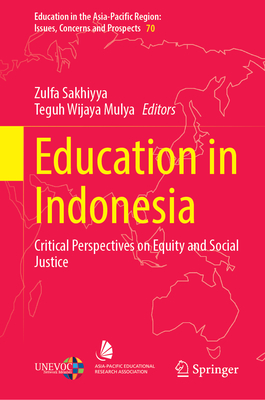
Attraction of Authority: The Indonesian Experience of Educational Decentralization
 Sumintono, B., Hariri, H., and Izzati, U.A. (2023). Attraction of Authority: The Indonesian Experience of Educational Decentralization. In: Sakhiyya, Z., Wijaya Mulya, T. (eds) Education in Indonesia, Critical Perspectives on Equity and Social Justice. Springer, Singapore. https://doi.org/10.1007/978-981-99-1878-2_10
Abstract
The fall of the New Order government in 1998 changed the landscape of Indonesian education from a highly centralized system to a decentralized one. With this paradigm shift, district governments received a transfer of power in most public sectors in 2001, including education. The central questions in this chapter are: (1) How has Indonesia managed education in the decentralization era? and (2) How has the country managed the changes so far? Four key issues are discussed, namely, new regime of standardization, school operational cost, teachers and principals, and National Exam. We argue that Indonesian educational decentralization has mostly been about legitimacy and authority dialectics between local/district and central institutions. Moving from a highly centralized system to a more locally oriented one contests the legitimacy of each actor involved, resulting in competition for resources and survival. Nevertheless, we also identified some advances in terms of social justice and student learning support in this process of decentralization.

'Creative Schools' book review by Maroof Ahmed
Mr Marook Ahmed, an MA in education student from Pakistan provide popular book entitle "Creative Schools" by Sir Ken Robinson. This book is an inspiring call for educational reform. Robinson critiques the standardized approach to learning, advocating for a system that nurtures individual creativity and diverse talents. He highlights real-world success stories of innovative schools and educators who prioritize student engagement and exploration. Through engaging anecdotes and compelling arguments, Robinson challenges conventional methods and offers a vision for an education that encourages curiosity, collaboration, and critical thinking. While the book's ideas are invigorating, some may find its practical implementation challenging. Overall, "Creative Schools" urges a reimagining of education to better prepare students for the complexities of the modern world.
https://www.youtube.com/watch?v=KW1pFfUfxjE
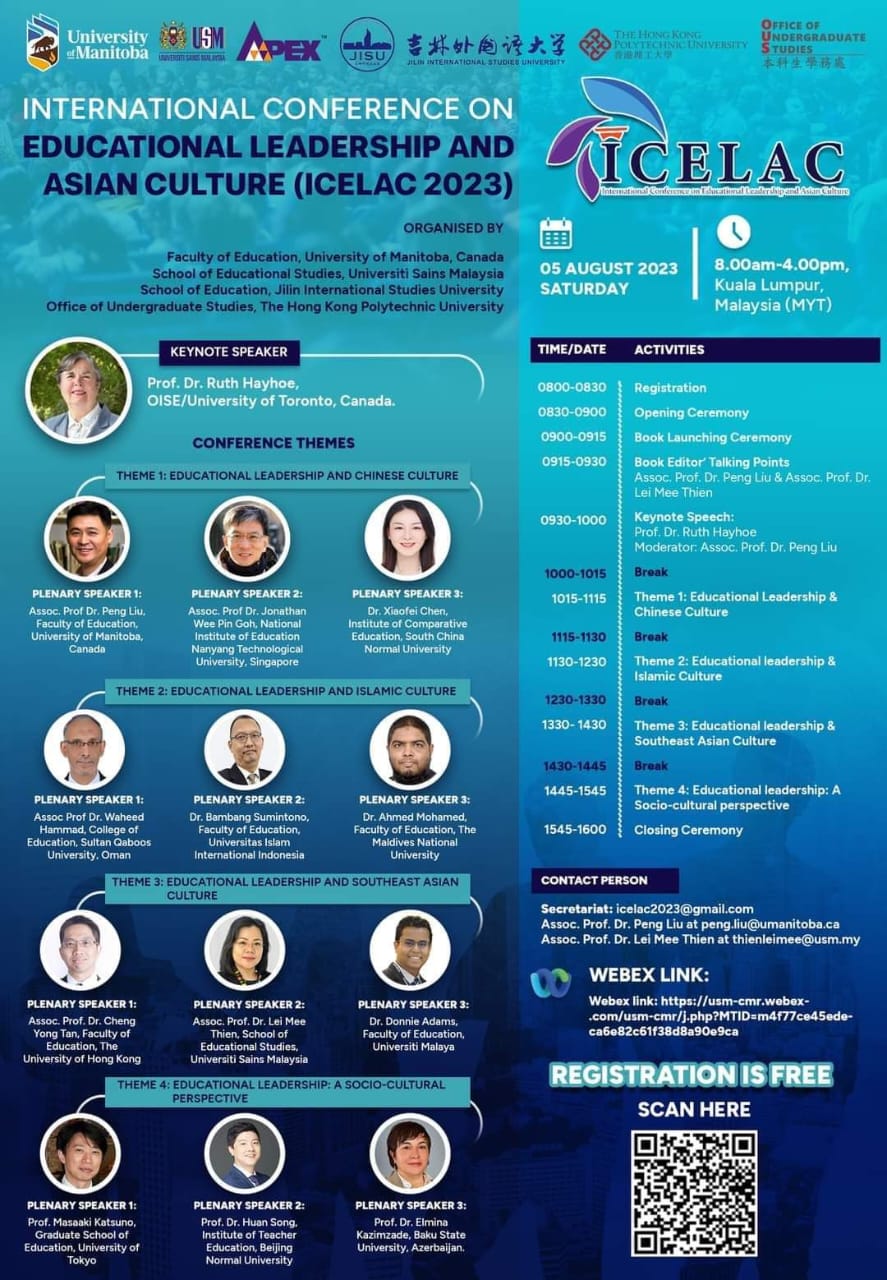
International Conference on Educational Leadership and Asian Culture (ICELAC) 2023
 Dr Bambang Sumintono, the faculty member of FoE UIII, has presented as one of the Plenary Speaker for the International Conference on Educational Leadership and Asian Culture (ICELAC) 2023. Dr Sumintono presented topic about Islamic Educational Leadership: Southeast Asia Perspectives. The conference organized by Faculty of Education, Universiti Manitoba, Canada and School of Educational Studies, Universiti Sains Malaysia, Malaysia. ICELAC 2023 was successfully held online (via Webex) and attracted 571 registered participants from 31 countries worldwide who jointly explored prospects and developments in educational leadership and Asian culture.
The official news about the conference: https://news.usm.my/index.php/english-news/9338-usm-co-hosted-icelac-2023-promoting-asian-culture-and-research-on-development-of-educational-leadership?fbclid=IwAR0Nu6eJ7ciilOrdpbvismpOhlyLU6KcwzyDp7JoZqaHjGq1TY-mOHhMmNY

Advancing TVET in Indonesia: Insights from Dr. Abdul Malik's Lecture at FoE

Advancing TVET in Indonesia: Insights from Dr. Abdul Malik's Lecture at FoE
August 05, 2023
Contributor: Maroof Ahmed | Editor: Dadi Darmadi
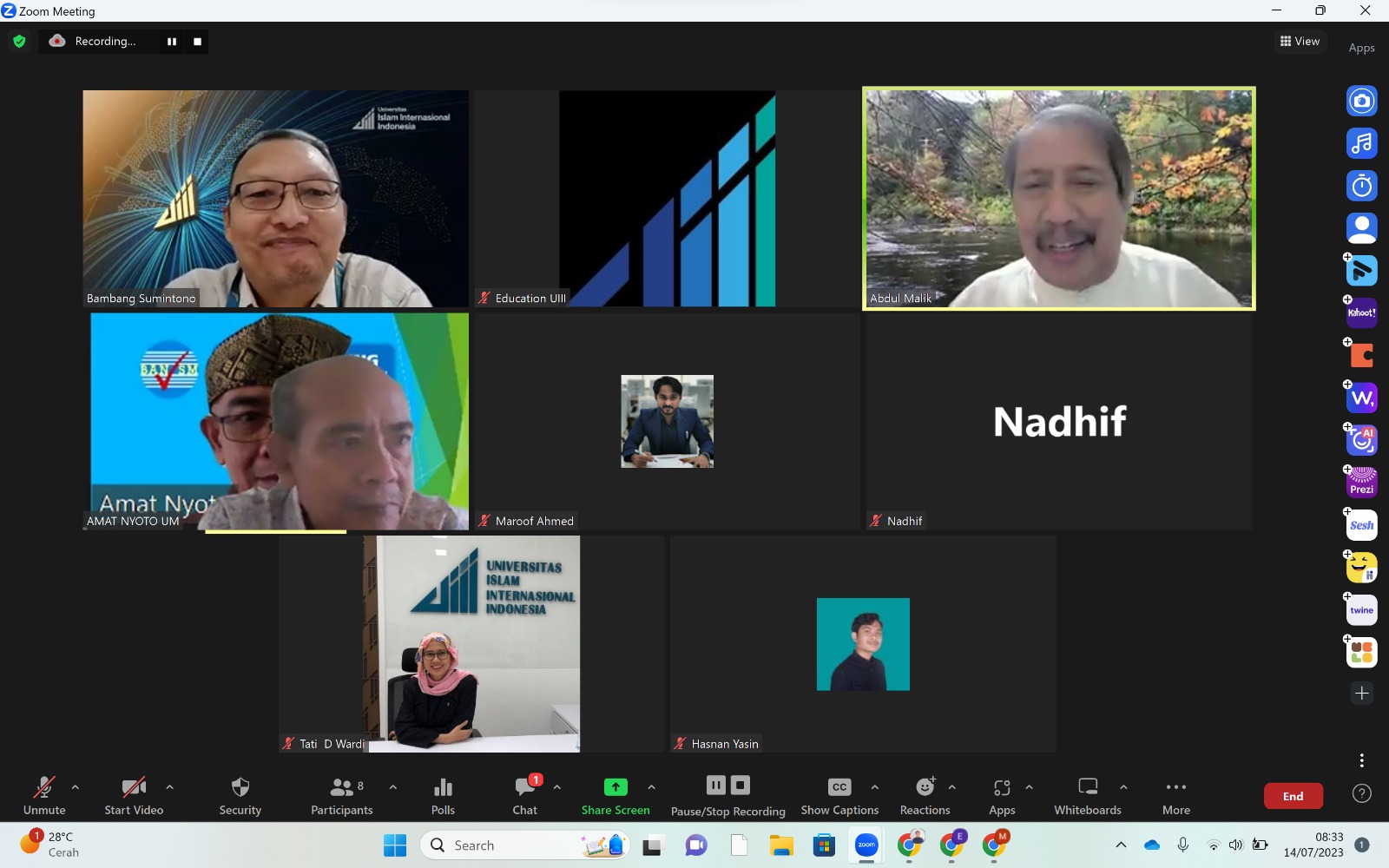
On July 14, 2023, the Faculty of Education (FoE) at Universitas Islam Internasional Indonesia (UIII) had the privilege of hosting a distinguished guest lecturer, Dr. Abdul Malik, from the National Accreditation Agency for Schools/Madrasahs (Badan Akreditasi Nasional Sekolah/Madrasah). The online lecture focused on the Technical and Vocational Education and Training (TVET) Policy in Indonesia.
Dr. Malik commenced the lecture with a comprehensive overview of TVET within the National Education System, emphasizing its significance in Indonesia's education landscape. He then delved into the National Vocational Education and Training Portfolio, providing an outline of the available vocational education and training programs in the country.
Throughout his lecture, Dr. Malik discussed the institutional framework supporting vocational education and training in Indonesia. This framework involves various ministries, professional associations, and independent accreditation boards, all working collaboratively to ensure the quality and relevance of TVET.
Addressing the challenges faced by TVET, Dr. Malik highlighted issues such as the lack of demand-side perspective, the variable basis for program design and curricula, and difficulties in competency assessment and certification. Additionally, he brought attention to the inadequate availability and quality of teachers and instructors with industry exposure, as well as the lack of proper infrastructure and equipment for practical skills training in schools.
Despite existing regulations, Dr. Malik noted that the unemployment rate among Senior Secondary Vocational School (SMK) and Diploma graduates was 8.49% and 6.76%, respectively, in 2020, indicating a need for further improvements in the system.
To address these challenges, Dr. Malik presented some recent reform initiatives that have been undertaken, including the National TVET Revitalization Program. Key elements of this reform involve the development of a comprehensive labor market information system, the strengthened involvement of the private sector and industry in TVET policy, planning, and implementation, and improvements in vocational education at both secondary and tertiary levels.
In conclusion, Dr. Malik emphasized the importance of demand-oriented, competency-based vocational education and training to align educational programs with industry needs. This approach aims to produce a more skilled and competent workforce, ultimately enhancing the employability of graduates.
Dr. Malik's lecture offered valuable insights into the current state of TVET in Indonesia and the ongoing policy reforms aimed at its improvement. It served as an enlightening session, highlighting the pivotal role of vocational education and training in equipping the Indonesian workforce with the necessary skills and competencies to meet industry demands.
UIII Faculty of Education's Student Receives Top Presenter Award at International Conference
 UIII Faculty of Education's Student Receives Top Presenter Award at International Conference
July 06, 2023
Contributor: Safiullah Junejo | Editor: Supriyono & Dadi Darmadi
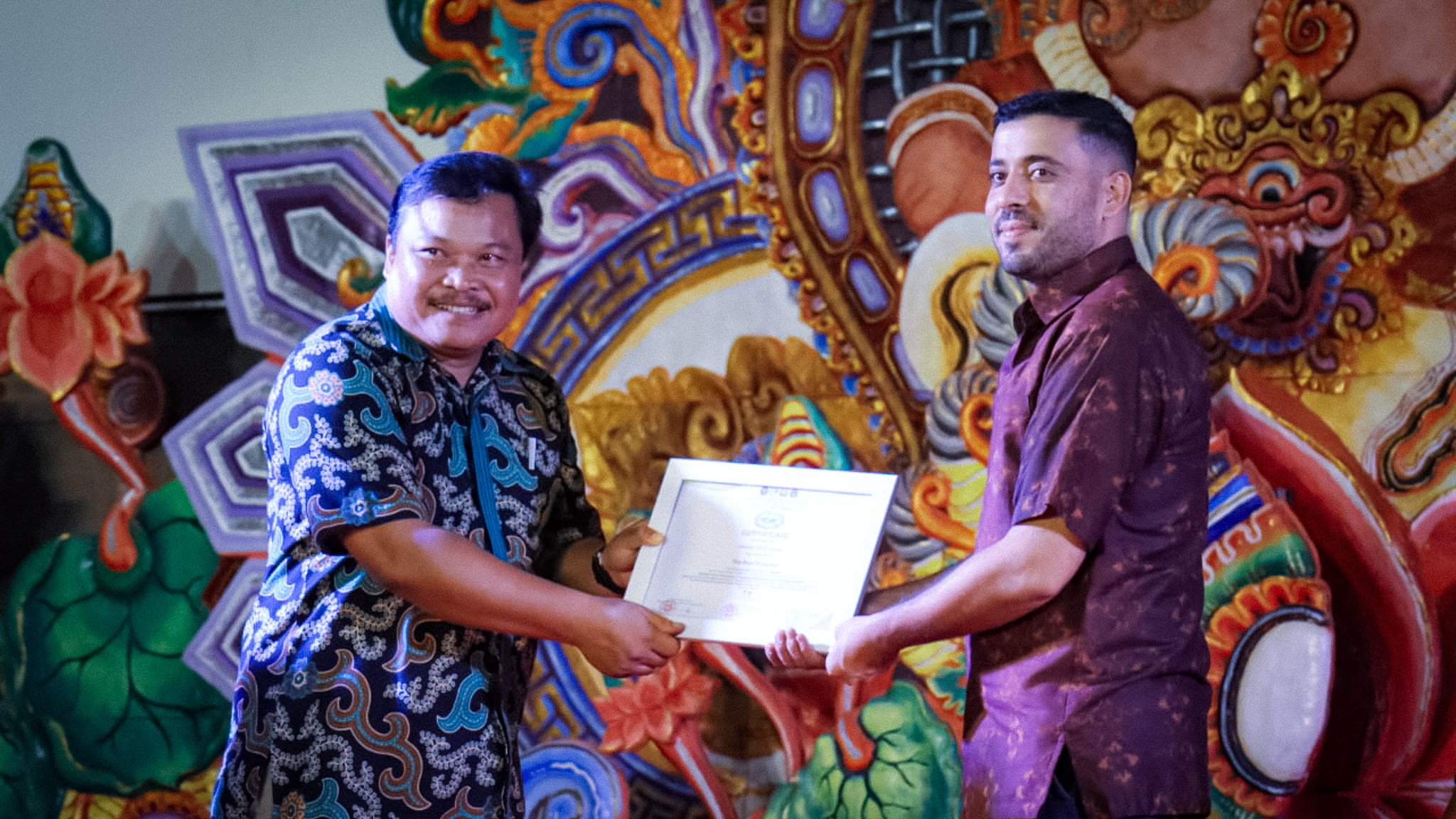
Hazrat Shah Kayen, a student in the Faculty of Education at Universitas Islam Internasional Indonesia (UIII), was awarded the Best Presenter prize at the 5th Annual Civic Education Conference and the 5th International Conference on Law and Social Science in Bali, Indonesia. Hazrat received this prestigious award on May 31 in recognition of his exceptional presentation skills and research contributions.
Expressing gratitude and elation, Hazrat stated that receiving the award was an incredible experience. He attributed his triumph to meticulous planning and a well-organized presentation. The conference provided him with a platform to showcase his research and excel in his field.
Hazrat's research focused on the impact of child labor on children's development, particularly in Afghanistan. Motivated by the prevalence of child labor and its negative effects on education in Afghanistan, Hazrat chose this field of study. His presentation shed light on this crucial issue and emphasized the educational rights of children.
To ensure the success of his presentation, Hazrat diligently prepared his materials in advance. He organized his research and findings into a PowerPoint presentation, dividing it into stages and phases. This approach allowed him to transition seamlessly between various points and maintain a connection throughout his presentation.
Hazrat faced no significant obstacles during the conference, as his presentation was well-received by both his colleagues and the professionals in attendance.
Reflecting on his participation in the conference, Hazrat highlighted the significant benefits he gained in terms of networking, experience, and potential collaborations with other researchers. The award has significantly boosted his confidence to pursue similar academic endeavors, further enhancing his knowledge and skills in educational research.
When asked about the most memorable moments during the conference, Hazrat mentioned two major highlights. First, receiving the title of Best Presenter was a remarkable accomplishment. Second, he was gratified by the positive feedback and acknowledgment he received from the conference delegates, who recognized the significance of his presentation.
Hazrat believes that this honor will positively influence his future academic and professional pursuits. It has inspired him to actively seek additional opportunities for personal and professional development within the field of education research.
He advises fellow students who aspire to excel in academic presentations or conferences to stay updated on international forums, symposia, and gatherings. By engaging in such activities, students can pave the way for future academic success.
Hazrat expressed profound gratitude for the assistance he received from UIII. The university provided financial and motivational support, enabling him to attend the conference and achieve this notable recognition. He acknowledged the entire education faculty and the UIII community for their unwavering encouragement and support.
This recognition is a testament to the academic environment and opportunities offered at UIII. As a globally renowned university, UIII is dedicated to nurturing a research culture and fostering the growth and development of its students, faculty, and staff.
Hazrat aspires to become a prominent figure in education research, focusing on crucial issues such as education policy and leadership, access to quality education, and educational evaluation and assessment. He plans to build upon this accomplishment by participating in similar events, paving the way for a prosperous and rewarding academic career.
UIII takes pride in its students' achievements and will continue to support them in their pursuit of academic and professional excellence.

School Leadership and Indonesian Culture: Revealing the local knowledge development in Post New Order Indonesia
 Sumintono, B., Hariri, H. and Kusumaputri, E.S. (2023). School Leadership and Indonesian Culture: Revealing the local knowledge development in Post New Order Indonesia. In Liu, P. and Thien, L.M. (eds). Educational Leadership and Asian Culture, Implications for Culturally Sensitive Leadership Practice. Routledge. https://www.routledge.com/Educational-Leadership-and-Asian-Culture-Implications-for-Culturally-Sensitive/Liu-Thien/p/book/9781032213675
Abstract
The debacle of Soeharto’s regime has opened up reformation and democratisation in Indonesia. Many structural changes like educational decentralisation, school-based management, and principal preparation training have been made in the education sector since 2001. Research on educational leadership and management (ELAM) has also flourished since academicians and researchers were required to meet journal publication requirements in the 2010s. This chapter consists of a systematic review of ELAM research in the Indonesian context that appears in the GARUDA database, a knowledge-based system of journal articles in the Indonesian language. This review aims to describe the Indonesian knowledge development in ELAM reflecting the Indonesian culture of school leadership. After the selection and sorting stages, 119 journal articles published from 2001 to 2021, and written in the Indonesian language were reviewed. The review found variations in terms of knowledge production, including different type of articles, methodological approaches, leadership theories, school levels, and research topics. The findings indicate that the development of the Indonesian ELAM knowledge base is promising and more productive compared to the previous era, but capacity development is still needed.