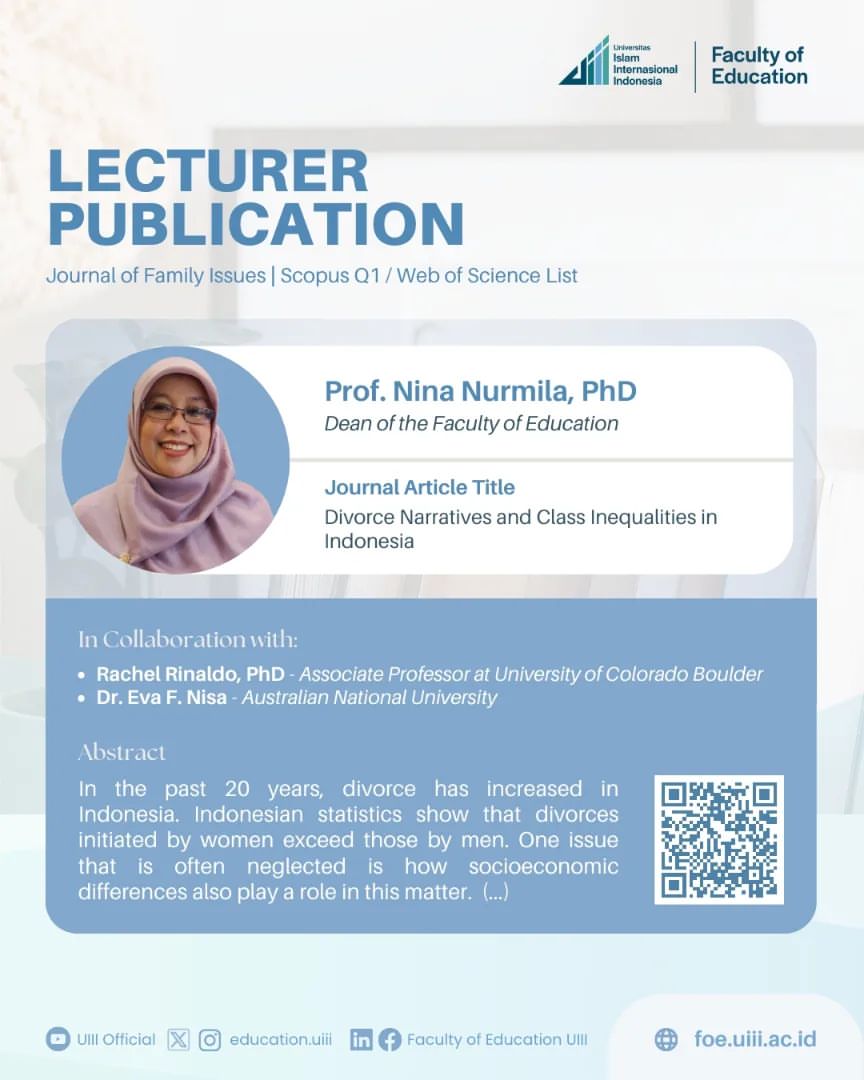
Lecturer Publication 2023: Prof. Nina Nurmila, PhD
 In collaboration with Dr Rachel Rinaldo and Dr Eva Nisa, Prof. Nina Nurmila, PhD (@nurmilanina - Dean of the Faculty of Education) has published an article with the title "Divorce Narratives and Class Inequalities in Indonesia" on Sage Journal - Journal of Family Issues (Scopus Q1/Web of Scince list).
This paper focuses on the interplay between divorce strategies and socioeconomic differences among Muslim couples. In-depth interviews with 93 Muslim men and women and 19 judges from Islamic courts show that class differences shape distinctive dynamics of divorce among Muslim Indonesians.
Scan the QR code or click the link on the highlight menu to access the full paper.
#scopusQ1#education_UIII
#facultyofeducation #UIII #universitasislaminternasionalindonesia
Link: Nurmila, N., & Windiana, W. (2023). Understanding the Complexities of Child Marriage and Promoting Education to Prevent Child Marriage in Indramayu, West Java. Ulumuna, 27(2), 823-853. https://doi.org/10.20414/ujis.v27i2.680


Exploring the Depths of Rasch Model with Prof. David Andrich
 Exploring the Depths of Rasch Model with Prof. David Andrich
December 12, 2023
Contributor: Maroof Ahmed | Editor: Supriyono
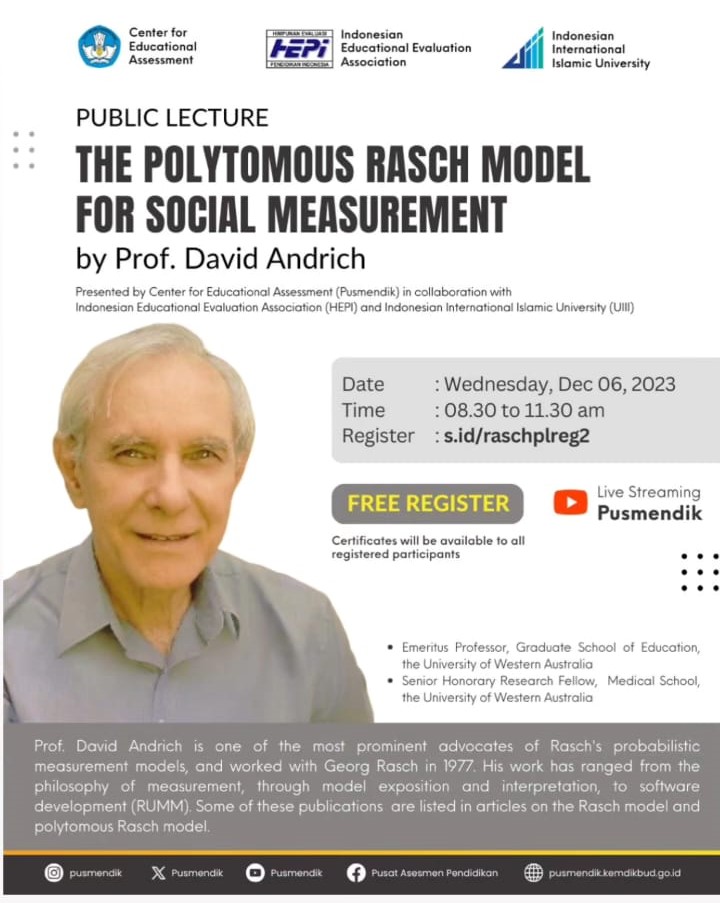
In a public lecture hosted on Dec. 6, 2023, Prof. David Andrich, Emeritus Professor in the Graduate School of Education and Senior Honorary Research Fellow in the Medical School at the University of Western Australia, shared his extensive insights into the Polytomous Rasch Model for Social Measurement, highlighting its pivotal role and enduring relevance in educational assessment and social research.
Organized by the Center for Educational Assessment (Pusmendik), in collaboration with the Indonesian Educational Evaluation Association (HEPI) and the Universitas Islam Internasional Indonesia (UIII), the event was moderated by Dr. Bambang Sumintono, Head of the Doctoral Program at UIII’s Faculty of Education.
The lecture illuminated the depths of Georg Rasch's work, marking 50 years since Prof. Andrich's scholarly journey began. "It's been a rich 45 years since that seminal 1978 paper, with the implications of Rasch's work for ordered category data continually unfolding," said Prof. Andrich.
Prof. Andrich meticulously outlined the significance of ordered category data within the Rasch Model, emphasizing the need to comprehend its implications thoroughly. "I worked on that for three or four years after my Ph.D. to work out the implications of what Rasch was saying for ordered category data," he said. The dedication to the subject was palpable as he walked the audience through various aspects of the model, from equidistant thresholds to the implications of reverse thresholds.
Moreover, Prof. Andrich highlighted the inherent connection between the Rash Model's ordered thresholds and the concept of randomness in measurement. "The Rash distribution in the model is a discrete form of the normal distribution," he explained. This point is a testament to the model's robustness and seamless integration with traditional measurement principles.
As Prof. Andrich progressed, he underscored the criticality of the model's algebra, which ensures that the comparison between instruments remains independent of the objects of measurement. He noted: "The model is derived from the algebra of this requirement." Prof. Andrich's elucidation of the mathematical underpinnings conveyed a sense of elegance and precision that underlies the Rash Model's framework.
The lecture was a retrospective and a forward-looking reflection on the model's relevance. Prof. Andrich made it clear that understanding the distribution of probabilities within the model is paramount. "This is an example of an item with ten thresholds. These thresholds are not equidistant," Prof. Andrich demonstrated, making the complex concepts accessible to the audience through vivid visualizations and patient explanations.
Another highlight from the lecture was Prof. Andrich’s discussion on the implications of reverse thresholds, a situation where the expected order of threshold values is not maintained, leading to interpretational challenges. "What is the implication of this in this region?" he questioned, pointing to a graph, "If someone happens to be here, this is the distribution." The professor's ability to distill such nuanced details into comprehensible insights was a testament to his expertise.
Prof. David Andrich’s lecture was not merely an academic exercise but a profound exploration of the Rasch Model's foundational principles and their practical applications in educational assessment. His parting wisdom emphasized the necessity for examiners and educators alike to revisit the model's core tenets when faced with data anomalies. The UIII community and its associates were left with much to ponder on the model's capacity to shape educational assessment practices for years to come.
source: https://www.uiii.ac.id/news/57436/exploring-the-depths-of-rasch-model-with-prof-david-andrich
Dr. Abdushomad Delivers a Lecture on Learning Organizations at FoE's UIII

Dr. Abdushomad Delivers a Lecture on Learning Organizations at FoE's UIII
December 10, 2023
Contributor: Maroof Ahmed | Editor: Ari Stoltze
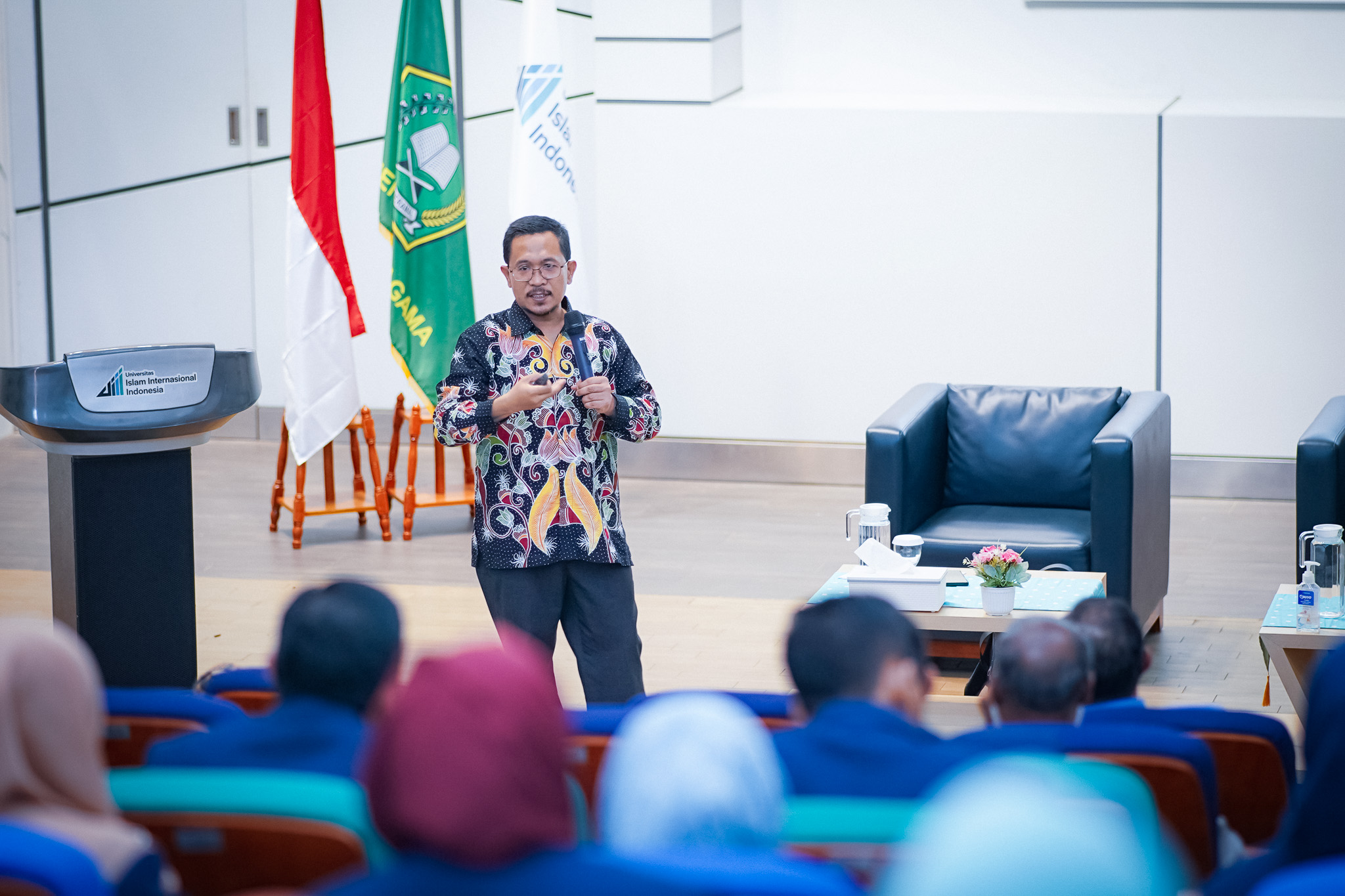
DEPOK, UIII.AC.ID - The Faculty of Education (FoE) at Universitas Islam Internasional Indonesia (UIII) hosted a LUNCHTALK with Dr. Muhammad Adib Abdushomad, Head of the Sub-directorate of Islamic Religious Education at the Senior High School Level within the Directorate of Islamic Education, discussing the relevance of learning organizations and their evaluation at the Ministry of Religious Affairs of Indonesia (MORA).
Dr. Abdushomad emphasized the importance of transforming educational organizations into learning organizations. He highlighted the necessity of continual expansion of capacity, nurturing new patterns of thinking, setting collective aspirations, and fostering an environment of continuous learning.
Dr. Abdushomad advocated for embracing the five disciplines proposed by Senge: system thinking, personal mastery, mental models, shared vision, and team learning. These elements, he argued, are crucial for the personal growth of educators and students alike, reflecting a deep-seated desire for learning and improvement within the organization.
Furthermore, Dr. Abdushomad underscored the influence of mental models and attitudes within an organization. He noted that these models significantly impact the working dynamics and the overall efficacy of an educational system. He also stressed the importance of a shared vision rooted in commitment and values, arguing that this is essential for the successful operation of an organization like MORA.
The concept of team learning, as presented by Dr. Abdushomad, involves aligning and developing the capacity of a team to achieve its collective goals. This builds on the development of a shared vision and personal mastery, bringing together talented individuals for collective success. Additionally, Dr. Abdushomad touched upon the importance of system thinking, emphasizing the need to understand the interrelationships among key system components while acknowledging the human factor as a critical asset.
In addition, Dr. Abdushomad delved into the current challenges and strategies in knowledge management at MORA. He critiqued the tendency to view knowledge as a product rather than a process, calling for a shift towards a process strategy. This strategy, he suggested, should involve facilitating conversation and exchange of tacit knowledge, hiring qualified personnel capable of tolerating ambiguity and sharing knowledge, and encouraging one-on-one mentoring.
At the end of his lecture, Dr. Abdushomad called for a change in strategy from a product-centric approach to one focused on processes. He urged the need for spaces that enable more effective and efficient knowledge sharing. He also highlighted the need for leaders for change at MORA who can adapt to new ways of working and respond with flexibility and learning-oriented leadership.
Dr. Muhammad Adib Abdushomad’s insights offer a compelling vision for the future of Islamic education. His emphasis on learning organizations, personal mastery, and collective learning aligns with the global shift towards more dynamic, responsive, and collaborative educational models. His call for change and adaptive leadership resonates with the current needs of educational institutions worldwide, particularly in the context of Islamic education, where traditional methods are being reevaluated in light of contemporary challenges and opportunities.
source: https://www.uiii.ac.id/news/57434/dr-abdushomad-delivers-a-lecture-on-learning-organizations-at-uiii
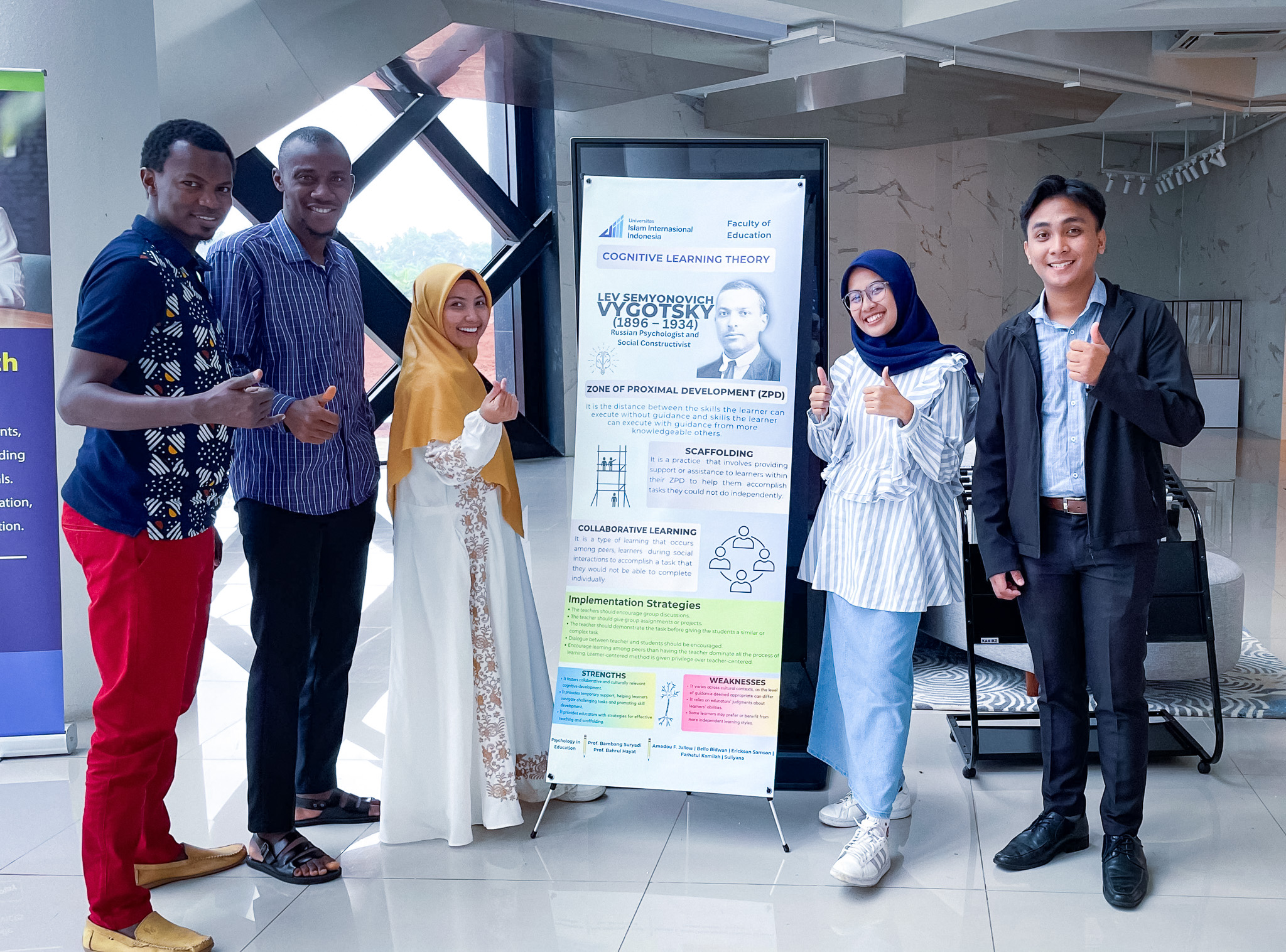
Assignment Beyond Papers: FoE’s Innovative Approach in Delving into Educational Psychology

Assignment Beyond Papers: FoE’s Innovative Approach in Delving into Educational Psychology
December 05, 2023
Contributor: Erickson Samson | Editor: Supriyono
The 3rd Batch of MA students at UIII’s Faculty of Education (FoE) took a significant step towards fostering a deeper understanding of educational psychology by exhibiting the infographic banners at select UIII facilities. This project is part of the innovative assignment required in the Psychology in Education course, convened by an educational psychology expert Prof. Bambang Suryadi.
Placed prominently at the various strategic campus facilities, the exhibit showcases key ideas, concepts, and implementation strategies, as well as the strengths and weaknesses of renowned figures in educational psychology.
Taking banners as a means of visual communication, the project is aimed not only at promoting awareness and showing appreciation for prominent figures in education and psychology but also to equip the students with creative skills in innovatively communicating knowledge.
The guidance of Prof. Bambang Suryadi ensured the strategic placement of the exhibit in key areas, making the wealth of knowledge easily accessible to the UIII community. Some students included Quranic verses written in Arabic texts to support the theories of prominent figures since UIII, by its name, stands as an Islamic university.
Beyond meeting academic requirements, the students approached this project with a broader vision. Fadlilah Novia Rahmah, a student from Indonesia, highlighted the dual purpose of the initiative, saying: "Students need a lot of information for academic needs, as well as to fulfill their curiosity." Hence, the objective was not merely to check off a task list but to actively contribute to the dissemination of knowledge throughout the campus.
Meanwhile, Bello Ridwan Alaba, a Nigerian student, emphasized the inclusive nature of the exhibit, saying: "It nourishes the readers with detailed information about the [educational psychology] at a glance regardless of what faculties they are from.”
The benefits of this initiative extend beyond the immediate academic community. The visually appealing and information-rich infographics cater not only to the current student body but also serve as valuable resources for the wider UIII community. As individuals take a moment to relax in various areas on campus, they now have the opportunity to absorb insights from these educational and psychological figures.
The showcased figures encompass a diverse range of educational and psychological thought leaders, reflecting the multidimensional nature of the field. From groundbreaking pedagogical methodologies to pioneering psychological theories, the infographics provide a comprehensive overview to foster a culture of lifelong learning within the UIII community.
As the UIII community engages with these infographics, there is a ripple effect of knowledge dissemination. Future students stand to benefit as these visual aids become integral components of the campus environment. The project not only serves as a testament to the dedication of the MA in Education students but also underscores UIII's commitment to nurturing an intellectually vibrant community.
In a world where information is abundant yet often overwhelming, initiatives like these bring clarity and focus to essential concepts in the field of education. The MA in Education students' collaborative effort, guided by Prof. Suryadi, stands as a testament to the potential of education to transcend classrooms and permeate every corner of the campus, exemplifying UIII's commitment to holistic education and the cultivation of a knowledge-rich environment.
source: https://www.uiii.ac.id/news/57429/assignment-beyond-papers-foes-innovative-approach-in-delving-into-educational-psychology
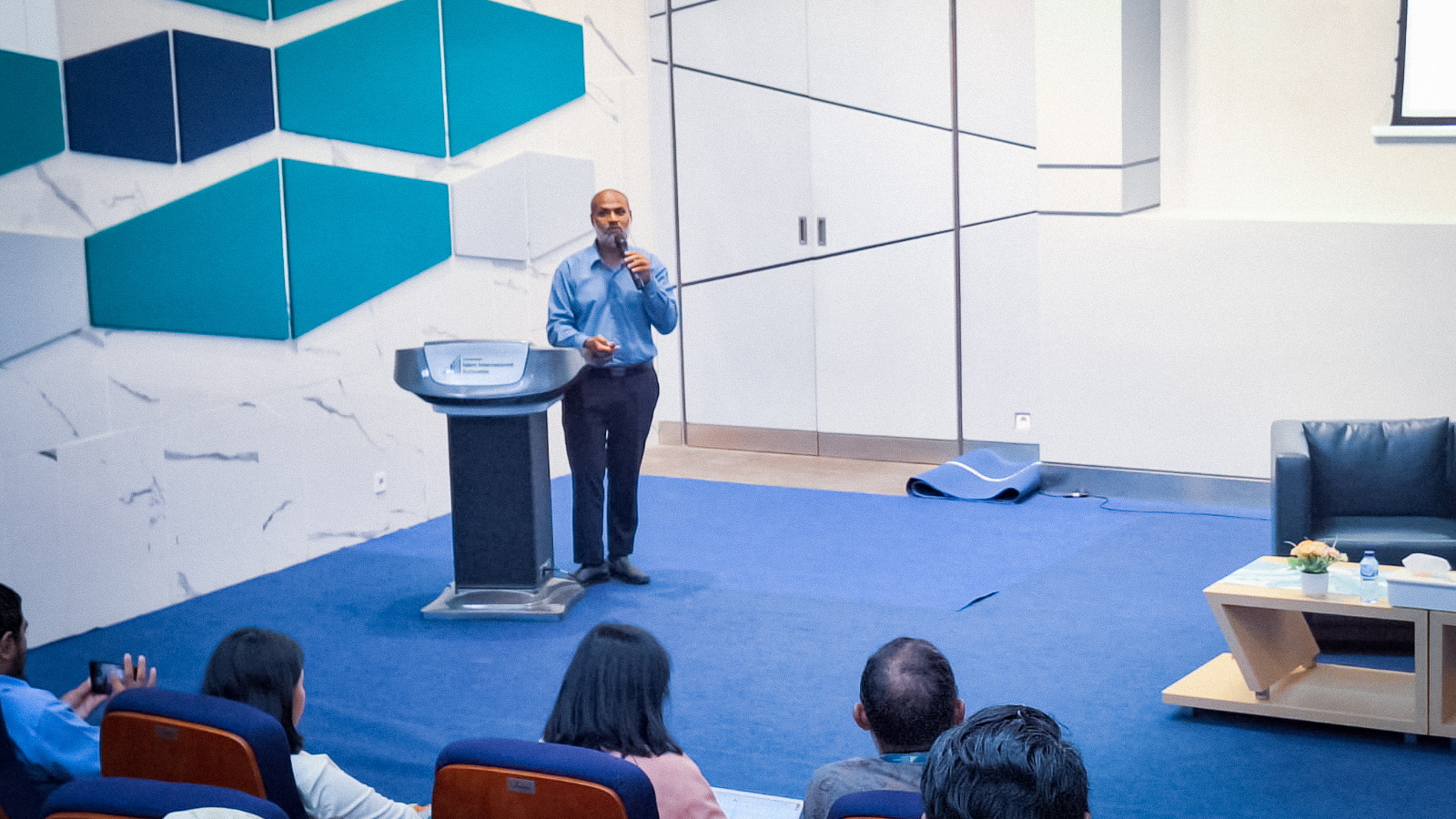
Decoding Bibliometrics: Dr. Visal Moosa's Intriguing Lecture at FoE UIII

Decoding Bibliometrics: Dr. Visal Moosa's Intriguing Lecture at UIII
December 04, 2023
Contributor: Maroof Ahmed | Editor: Supriyono
The Faculty of Education (FoE) at Universitas Islam Internasional Indonesia (UIII) hosted on October 10, 2023, a captivating guest lecture by Dr. Visal Moosa, a distinguished lecturer from the Islamic University of Maldives and a Scholar in Residence at UIII, focusing on Bibliometric Analysis, a subject of growing importance in academic research.
Dr. Moosa began his lecture by establishing a foundational understanding of bibliometrics, referred to as "the application of mathematics and statistical methods to books and other media of communication", and as "the quantitative treatment of the properties of recorded discourse and behavior pertaining to it". This initial discussion set the stage for a deeper dive into the nuances and applications of bibliometric analysis.
A key portion of the lecture was dedicated to discussing bibliometric indicators. Dr. Moosa emphasized their critical role in various aspects of research analysis, such as identifying research trends, forecasting publishing trajectories, and assessing the impact of research outputs. He shed light on how bibliometrics can reveal research strengths and weaknesses, authorship trends, and collaboration opportunities, ultimately guiding the productivity assessments of publishers, authors, and institutions.
Dr. Moosa detailed the methodologies involved in bibliometric data analysis. He elaborated on essential techniques like Booleans, quotation marks, parentheses, wild cards, and truncation for efficient data retrieval. These techniques are vital for researchers to navigate through bibliometric databases and extract pertinent information for their studies.
The lecture also covered the topic of bibliometric network visualization, in which Dr. Moosa introduced various software tools, including HistCite, VantagePoint, Pajek, CiteSpace II, Gephi, Bibexcel, VOSviewer, and Biblioshiny. He explained how these tools are instrumental in visualizing the complex relationships and structures within bibliometric data, offering a more comprehensive understanding of the research landscape.
In his closing remarks, Dr. Moosa emphasized the bibliometric analysis's wide-ranging applicability and benefits in different fields. He particularly urged early-career researchers to explore bibliometric research papers as a valuable publication option, due to their extensive relevance and role in deciphering the knowledge structure across various domains.
The guest lecture by Dr. Visal Moosa at UIII’s FoE was not just an academic presentation but a beacon of inspiration and knowledge for the students and faculty. It exemplified the depth of research possibilities within the education field and showcased the evolving landscape of academic research, enriched by bibliometric analysis. The event stands as a testament to UIII's commitment to fostering a robust and forward-thinking academic environment.
source: https://www.uiii.ac.id/news/57426/decoding-bibliometrics-dr-visal-moosas-intriguing-lecture-at-uiii
Challenges and Opportunities to Collaborative Distance Learning in ESP Instruction
Ridwan, A., & Athena, T. (2023). Challenges and Opportunities to Collaborative Distance Learning in ESP Instruction. Academic Journal Perspective: Education, Language, and Literature, 11(2), 70-88. https://ejournalugj.com/index.php/Perspective/article/view/9161

Abstract
In post pandemic instruction fueled by digital media and technology, distance learning emerges as a powerful opportunity for higher education collaboration. The Directorate of Students’ Learning, Ministry of Education and Culture of Indonesia opens opportunities for universities across Indonesia to have collaborative online learning with those students based on underprivileged regions in Indonesia. This research investigates a case of collaborative online learning project between two universities in East Java and East Nusa Tenggara province with two ESP courses designed collaboratively and implemented with shared classes in online mode. Through this case study, two things are explored during the program: challenges and opportunities in the stage of course development and course implementation. Two course developers, four university instructors, and thirteen selected students from both universities were involved in this study. Data collection combined interviews, virtual observations, and instructional documents. Analysis employed thematic layering and triangulation, revealing challenges in four areas: course development, technology readiness, teaching methods, and student support. However, rooms of improvement are there for more prepared future collaboration. Despite the challenges, collaborative distance learning conducted by both universities can be a lesson to learn for a better online instruction in the future amidst the pluralistic backgrounds of the students and problematic technology support.
The contribution of profit company on education in Indonesia: an analysis of character education management in public elementary school.
 Nuraini, S. D., Rukiyati, & Putera, A. R. (2023). The contribution of profit company on education in Indonesia: an analysis of character education management in public elementary school. Journal of Educational Management and Instruction, 3(1), 51-62.
Introduction. https://ejournal.uinsaid.ac.id/index.php/jemin/article/view/7913

Exploring teacher collaboration: what’s inside the Malaysian PLC black box?
 Mohd Zabidi, Z., Abdullah, Z. and Sumintono, B. (2023), “Exploring teacher collaboration: what’s inside the Malaysian PLC black box?”, Journal of Professional Capital and Community. https://doi.org/10.1108/JPCC-03-2023-0020
Abstract
Purpose
Design/methodology/approach
Findings
Research limitations/implications
Originality/value
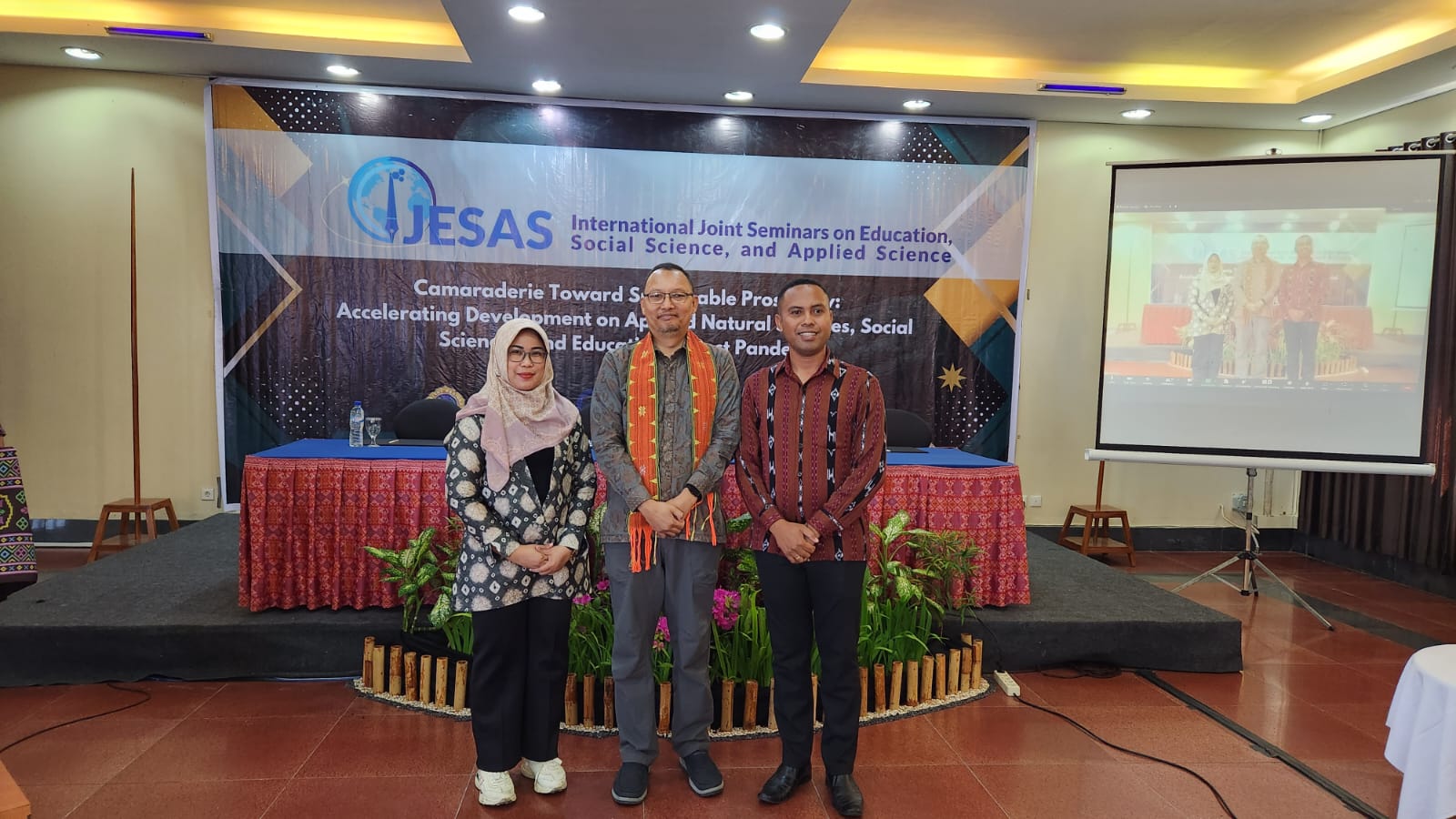
The 1st International Joint Seminars on Education, Social Science, and Applied Science (IJESAS) in Labuan Bajo, East Nusa Tenggara
 Dr Bambang Sumintono, the faculty member of FoE UIII, has presented as one of the Speaker for The 1st International Joint Seminars on Education, Social Science, and Applied Science (IJESAS) that managed by Institut Nasional Flores (INF), Asosiasi Pendidik Nusantara (Apentara), BREC Borneo, and Dharma Samakta Edukatulistiwa (DSE), with theme “Camaraderie Toward Sustainable Prosperity: Accelerating Development on Applied Natural Science, Social Science, and Education at Post Pandemic” October 28th, 2023. The conference conducted hybrid , virtual Meeting as well as offline in Labuan Bajo, East Nusa Tenggara, Indonesia.
