Unity in Diversity: Examining Religious Moderation across Religions in Indonesia
Unity in Diversity: Examining Religious Moderation across Religions in Indonesia
Keywords:
religious, moderation, unity in diversity, Indonesia
Abstract
Indonesia's rich religious diversity, epitomized by the concept of "Unity in Diversity," presents both opportunities and challenges. This study delved into religious moderation across Indonesia's six recognized religions, Islam, Christianity (Catholic and Protestant), Hinduism, Buddhism, and, Confucianism, defining it as a commitment to tolerance, inclusivity, and critical thought within religious contexts. In addition to these six religions, Indonesia is unique in recognizing the existence of diverse indigenous beliefs according to different tribes and cultures. Through a literature review, the study revealed that religious moderation varies across different faith communities, yet remains crucial for fostering peace and harmonious coexistence. Interfaith initiatives, religious institutions, and education were identified as key factors in promoting religious moderation. The study concludes that embracing the diverse expressions of religious moderation is essential for building a more inclusive and harmonious Indonesia, where “Bhinneka Tunggal Ika” transcends rhetoric to become a vibrant reality.
Maulana, M., Alifia Putri, N. N., & Fahira, Z. (2024). Unity in Diversity: Examining Religious Moderation across Religions in Indonesia. Dialog, 47(1), 61–76. https://jurnaldialog.kemenag.go.id/index.php/dialog/article/view/910

Scholarly Discourse on Equity, Inclusion, and Education by Scholars in Indonesia: A Bibliometric and Science Mapping Analysis
 Moosa, V., Rizkyanti, C. A., & Sumintono, B. (2024). Scholarly Discourse on Equity, Inclusion, and Education by Scholars in Indonesia: A Bibliometric and Science Mapping Analysis. Muslim Education Review, 3(1), 63-95. https://doi.org/10.56529/mer.v3i1.178
Abstract
Equity, inclusion, and education are remarkable elements encompassed in the United Nations sustainable development goals (SDGs). As such, there is a growing number of publications on these topics presenting some challenges to envision an overarching understating of the connections among these subjects. Hence, the purpose of the current study is to explore the body of research that involves equity, inclusion, and education that is contributed by Indonesian academia by employing bibliometric and science mapping analysis. The search was conducted on SCOPUS database which resulted in some 400 plus documents after applying the pre-defined inclusion and exclusion criteria. Data was analyzed employing various bibliometric analysis indicators such as number of publications, contributing institutions, citation, co-citation, and keywords. Microsoft excel and VOSviewer software was employed for conducting the analysis. The findings revealed that the number of publications and citations on the topics has been quiet fluctuating. Analyses of the intellectual and conceptual structure revealed that trans-disciplinary nature of scholarship on the topic. Based on the findings, the needs for a greater emphasis on research in these areas by Indonesian institutions/researchers are realized. It is also suggested that researchers employ an integrated approach by investigating variables from the policy and practice perspectives as well as at an organizational or systemic level. The findings are string support that education is an integral component of achieving equity and inclusion which should be taken into account while devising policies and implementing the same.
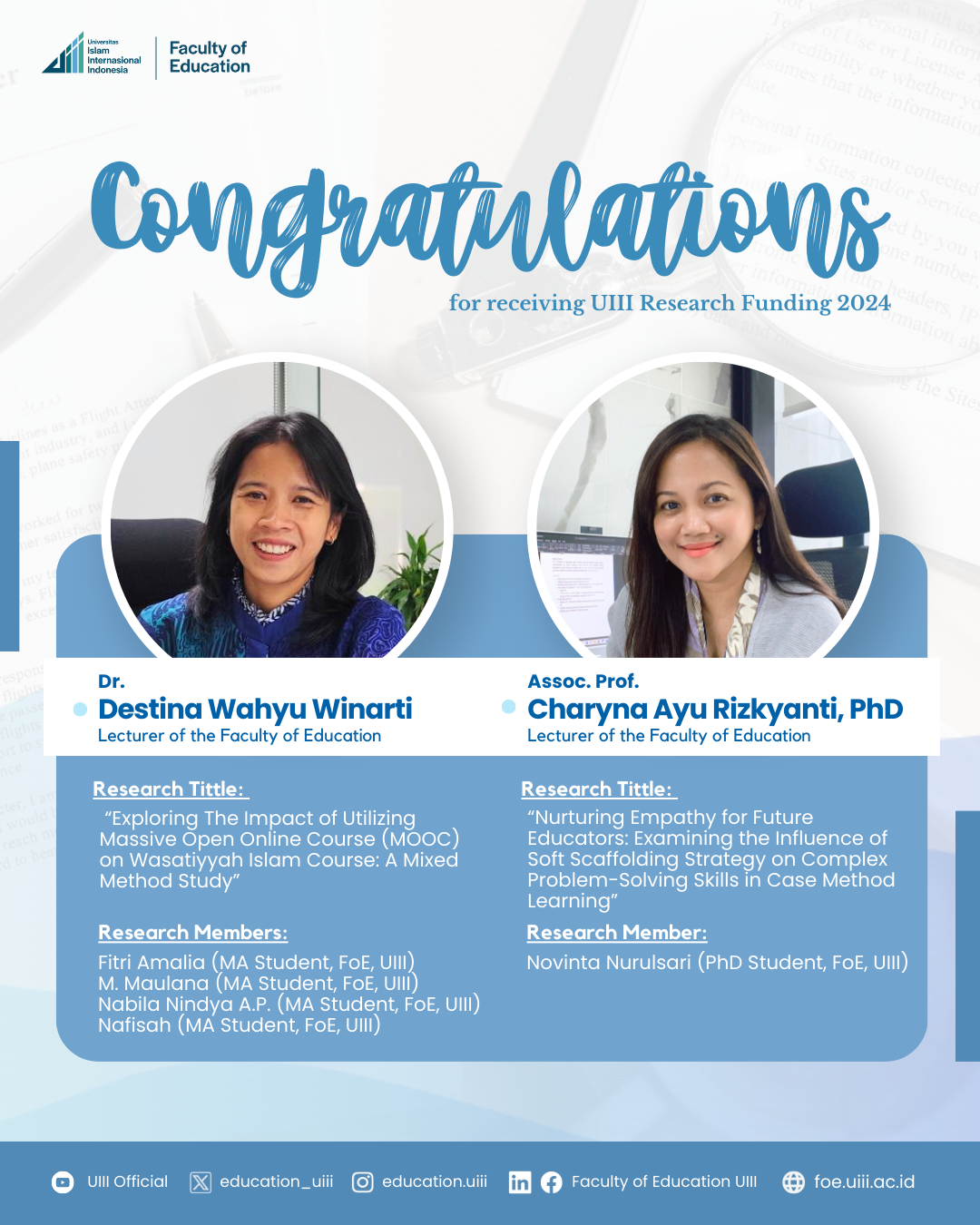
Congratulations for Receiving Research Grant from Universitas Islam Internasional Indonesia
 Congratulations to Dr. Destina Wahyu Winartis' team and Assoc. Prof. Charyna Rizkyanti, Ph.D's team who have passed the selection to receive UIII Research Funding 2024. We are proud to hear this news and hope the research can be useful for the knowledge development.
Validation of the Indonesian version of the psychological capital questionnaire (PCQ) in higher education: a Rasch analysis

Ratnaningsih, I.Z., Prihatsanti, U., Prasetyo, A.R. and Sumintono, B. (2024), "Validation of the Indonesian version of the psychological capital questionnaire (PCQ) in higher education: a Rasch analysis", Journal of Applied Research in Higher Education, https://doi.org/10.1108/JARHE-10-2023-0480
Abstract
Purpose – The present study aimed to validate the Indonesian-language version of the psychological capital
questionnaire (PCQ), specifically within the context of higher education, by utilising Rasch analysis to
evaluate the reliability and validity aspect such as item-fit statistics, rating scale function, and differential item
functioning of the instrument. These questionnaires are designed to assess students’ initial psychological
status, aiming to ease their transition from school to university and monitor undergraduate students’ mental
health.
Design/methodology/approach – A total of 1,012 undergraduate students (female 5 61.2%;
male 5 38.8%) from a university in Central Java, Indonesia completed the 24-item Indonesian version of
the PCQ. The sampling technique used is quota sampling. Data were analysed using The Rasch model
analysis, it was performed using the Winsteps 3.73 software.
Findings – The results of the Rasch analysis indicated that the reliability of the instrument was good
(a50.80), item quality was excellent (1.00), and person reliability was consistent (0.77). In the validity aspect,
all four domains of the PCQ exhibited unidimensionality, and a rating scale with four answer choices was
deemed appropriate. The study also identifies item difficulty level in each dimension.
Practical implications – The practical implications of this study are beneficial for higher education
institutions. They can use the validated Indonesian version of the PCQ to monitor the mental well-being of
undergraduate students. Mapping the PsyCap can serve as a basis for developing and determining learning
policies, potentially leading to improvements in student academic performance. The theoretical implications
of this study are related to the advancement of measurement theory. By employing Rasch analysis, the study
contributes to enhancing the validity and reliability of measurement, particularly in the context of educational
and psychological assessment in Indonesia.
Originality/value – This current study confirmed that the Indonesian version of PCQ adequately measures
psychological capital in higher education, particularly in the Indonesian context.
Keywords Psychological capital, Rasch analysis, Undergraduate student, Validation, Indonesia
UIII Students Visit DPR RI to Gain Insights on Policymaking
 UIII Students Visit DPR RI to Gain Insights on Policymaking
June 10, 2024
Contributor: Intan Fasya Zahara | Editor: Supriyono
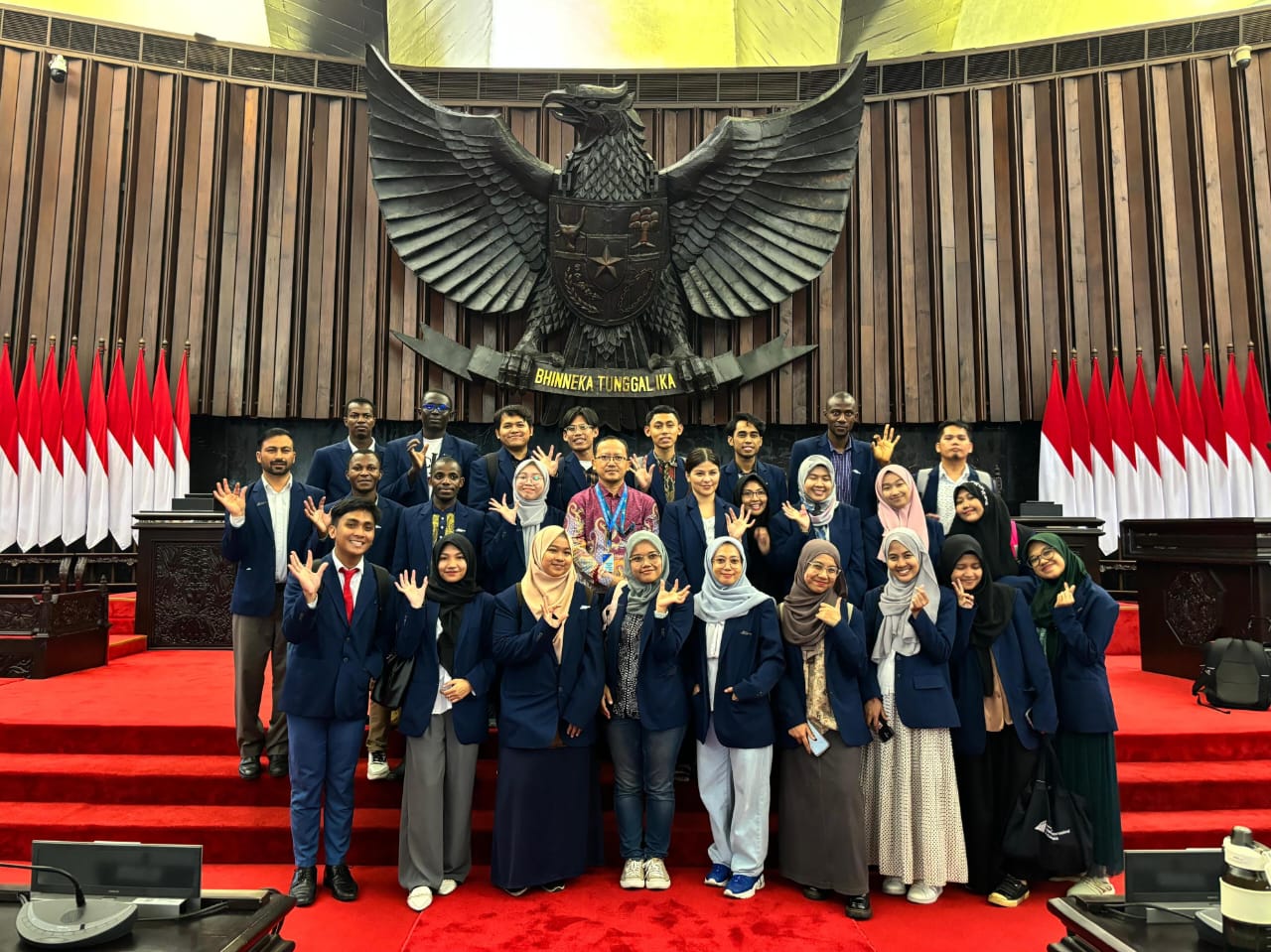
UIII, JAKARTA - On June 3, 2024, the third batch of MA in Education students of Universitas Islam Internasional Indonesia (UIII) visited the Indonesian House of Representatives, also known as DPR RI, in Senayan, Jakarta. The visit was part of the field trip agenda within the Educational Policy Analysis course, convened by Dr. Lukman Nul Hakim, a UIII lecturer and a former policy analyst in the parliament office.
Dr. Lukman Nul Hakim explained that the visit was aimed at offering students experience in a realistic understanding of the policy-making process while giving them inspiration for potential career pathways and prospects beyond the classroom's theoretical study.
At the event, the students had an exclusive session with the officials from the Center for Parliamentary Analysis (PUSAKA) which is one of the House of Representatives sections in charge of analysis, assistance, and exposure. This division is known as a medium between society and parliamentarians which greatly contributes to analyzing, assisting, and further exposing the facts and materials crucial for policy-making.
The PUSAKA Chairman, Mr. Achmad Sani Alhusain, enlightened the students about the legislative environment, discussing the history of the policy analysis division and the outcomes of initiatives. These include a simple analysis, weekly issues and a short analysis twice a week.
“Reviewing the process of adopting a law requires 575 parliamentary votes, comprising 51 lawmakers from nine different factions, with each member of the session having three opportunities to express their views,” Mr. Alhusain noted, while highlighting the critical and practical procedure, as well as the challenges, in the policymaking process.
During the session, students actively engaged in a discussion. Santi Ganiswari, from Lombok, inquired about decentralizing education and the need for a gender-related curriculum in Indonesia. In response to the question, PUSAKA Senior researcher Mrs. Sali Susiana explained that the national education law governs these issues. However, the practice has been hampered by challenges, saying that while the government aims for equal access to education, improvements are needed.
Furthermore, Karamo Ceesay, a student from Gambia, asked how policymakers ensure objectivity in their decision-making process, considering that everyone has a political stand. The practitioners explained that the analysts were deemed civil servants and should not express any political stance. The inquiry brought by Ceesay led to a discussion of the ethical considerations of being a policy analyst.
The overall visit was undoubtedly a remarkable experience for the students. “It was a very good trip because it availed us with the opportunity to interact with practitioners in the field of policy analysis and learned from them. Moreover, it also exposed us to the historical information of the Indonesian political evolution and its growth, which alone was splendid," Karamo Ceesay said.
Supporting the statement, Nasrullah, from Sulawesi, expressed his gratitude for the experience. "In the past, I could only see this building from the television, and now I am able to see it directly. This visit makes me understand the policymaking process and its considerations through a thorough explanation," he testified.
The trip concluded by touring inside the DPR RI buildings, visiting the museum displaying historical records, observing the plenary meeting room, and taking a class photo. Dr. Lukman Nul Hakim ended the trip by encouraging the students to gain inspiration from the trip, highlighting that the daily assignments that they have in the Educational Policy Analysis course, such as reflections, policy papers, or briefs, can prepare them to be competent policy analysts in the future.


source: https://www.uiii.ac.id/student/read/57550/uiii-students-visit-dpr-ri-to-gain-insights-on-policymaking
Lansia Berdaya Bangsa Sejahtera: Konsep Active Ageing terhadap Anak Muda Studi di Yogyakarta
Putri, A. A. A., & Hakim, L. N. (2024). Lansia Berdaya Bangsa Sejahtera: Konsep Active Ageing terhadap Anak Muda Studi di Yogyakarta. Sosio Konsepsia: Jurnal Penelitian dan Pengembangan Kesejahteraan Sosial, 13(2). https://ejournal.kemensos.go.id/index.php/jsk/article/view/3358
 ABSTRACT
Indonesia mengalami peningkatan pada struktur penduduk usia lanjut. Hal ini menyebabkan dampak positif dan negatif khususnya bagi keberlangsungan kehidupan bangsa. Lansia berdaya merupakan salah satu hal yang dapat meringankan kondisi bangsa untuk menjadi bangsa yang sejahtera. Konsep Active Ageing membawa bangsa Indonesia menjadi bangsa yang sejahtera. Konsep active ageing sendiri terdiri dari 8 faktor yang dibagi menjadi 2 bagian. Tentunya konsep ini akan berangkat sejak masa muda. Anak muda yang memahami konsep active ageing dapat menjadi lansia berdaya saat masa lanjut usia nanti. Hasil penelitian melalui metode statistic deskriptif ini penulis didapati bahwa anak muda memberikan hasil positif terhadap pengetahuan, sikap dan tindakan terhadap konsep active ageing tersebut. Bahwa Anak Muda sudah mengetahui pengaplikasian konsep active ageing dalam kehidupan sehari- hari mereka. Secara teori kebanyakan anak muda belum maksimal dalam pemahaman konsep active ageing ini. Untuk penerapan konsep active ageing harus terus diterapkan oleh anak muda dan diteruskan kepada generasi berikutnya. Pemerintah dalam hal ini dapat memberikan pendampingan dan pemberdayaan kepada remaja agar dapat menjadi individu yang produktif bahkan hingga masa lanjut usianya yang berdampak juga pada kesejahteraan bangsa Indonesia nantinya.
Flourishing and Well-being: Prof. Lindsay Oades’ Keynote Speech at FoE Conference
 Flourishing and Well-being: Prof. Lindsay Oades’ Keynote Speech at FoE Conference
June 03, 2024
Contributor: Supriyono
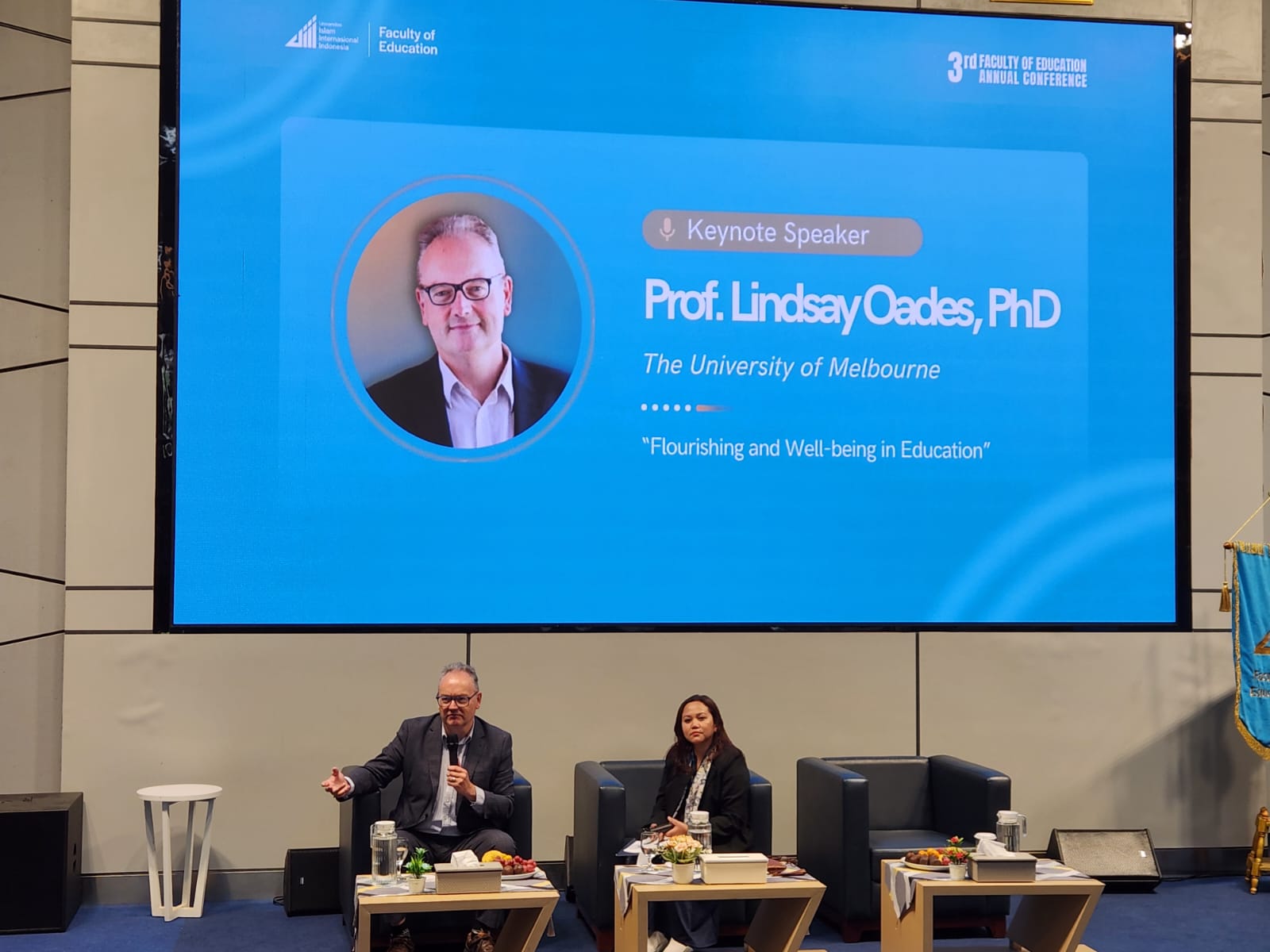
UIII, DEPOK – The 3rd Annual Conference of the Faculty of Education (FoE) at the Universitas Islam Internasional Indonesia (UIII) featured a keynote speech by Professor Lindsay G. Oades from the University of Melbourne, Australia, with the topic “Flourishing and Well-being in Education” in which he delved into the integration of well-being and education and how it will help students to flourish their life.
Professor Lindsay G. Oades, PhD, is an internationally renowned well-being scientist, researcher, educator, and author. He serves as Deputy Dean of the Faculty of Education and Professor of Wellbeing Science at the University of Melbourne, Australia. Recently, he collaborated with UNESCO on the International Science and Evidence-Based Education Assessment.
Professor Oades began his speech by praising the conference theme, emphasizing its global relevance. “What we’re seeing around the world is society struggling with mental health issues and the health system won’t solve that issue. I strongly believe that a large part of the solution will come through education,” he stated.
He further distinguished mental health from well-being, noting that mental health pertains to the mental state of an individual, while well-being encompasses broader dimensions of human flourishing, citing UNESCO’s aim of education which reads: “Promoting forms of learning and development that equip students to live flourishing lives is the appropriate overall aim of education.”
“In the educational context that could mean academic achievement, ethical goodness, and feeling good while you’re doing it that overall concept of human flourishing sits above a lot of the more specific areas. The key idea here is that this is an appropriate overall aim of education,” he explained.
Professor Oades contrasted this flourishing aim of education with the economic focus of other institutions, such as the Organization for Economic Cooperation and Development (OECD), which emphasizes developing human capital as the aim of education. While acknowledging the value of this concept, he noted its lack of ethical considerations.
“Flourishing includes ethics. In this context, that could mean the core ethical tenets of Islam,” he said. “It is a broader thing. Not only the mental health functioning of an individual, but it is the overall experience, which includes education, and economics […] Therefore, I also argue that this is the role of education than it is of a health system. Well-being lives in education. It’s learnable, teachable, doable.”
Central to his discussion, Professor Oades highlighted the need to improve well-being literacy, saying that if we are to embed well-being and flourishing into education, we need literacy as a way of talking about and understanding it.
He mentioned "well-being literacy" as the capability to comprehend and compose well-being language. This capability model includes five components, encompassing well-being vocabulary and knowledge, well-being comprehension (listening, reading, and viewing), well-being composition (speaking, writing, and creating), context awareness (adapting language to context), and intentionality (habit of communicating intentionally for well-being).
“You might ask, why so much emphasis on language? One of the key reasons is that many things are psychological; they live in language. They are largely metaphorical because so many of these things are non-physical, so we use metaphors to make sense of the non-physical,” he explained.
In his conclusion, Professor Oades stressed the importance of language in achieving population well-being and differentiating between well-being and mental health. “If we want to change well-being, let us have a look at the way we use language. Let’s also think about well-being as different than mental health. It is not that one is right and one is wrong; It is that they are two different dimensions,” he concluded.
This year’s theme of the Faculty of Education’s annual conference is “A New Way of Teaching and Learning: Integrating Well-Being in Educational Settings” which emphasizes the integration of well-being into the core aspects of education. The theme resonates with UIII’s mission to provide an inclusive international education that takes care of the well-being of its individuals despite striving for academic excellence aimed at flourishing human life through education.
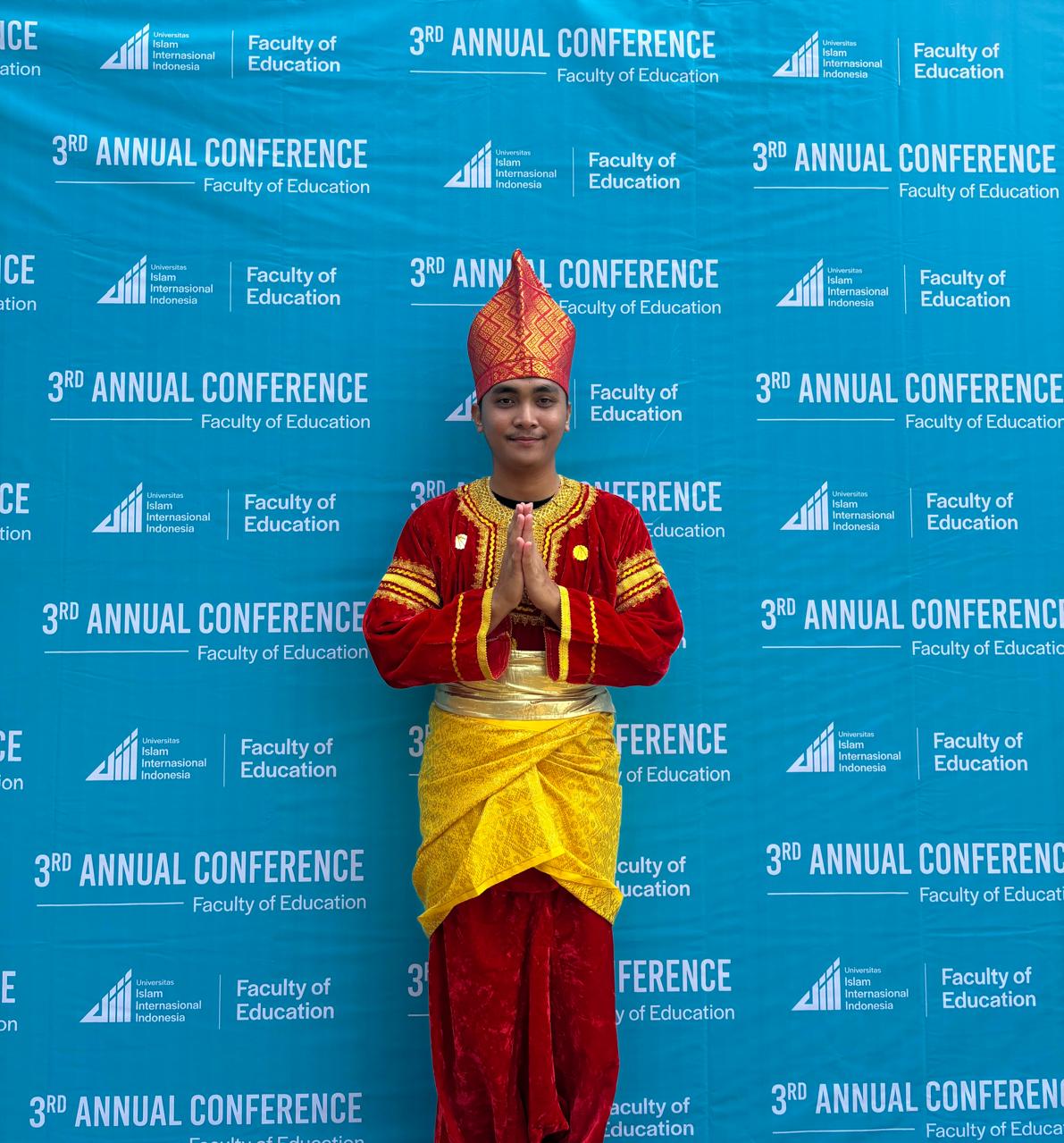
My Memorable Experience in Performing Indonesian Cultural Dance as a Filipino
 My Memorable Experience in Performing Indonesian Cultural Dance as a Filipino
by Erickson Samson (MA in Education student batch 3)
Performing Indonesian cultural dance, especially the "Dindin Badindin" from West Sumatra, is one of the most fulfilling things I have ever done as a Filipino and an international student at UIII. This was something that I will never forget in my life. I am very grateful that I have been part of the cultural dancers and, most especially, the UIII community.
As a person who is not into dancing, nor had I experienced performing in front of a big crowd, I firstly hesitated to accept the invitation of my friends to join them because I was afraid that I could not perform well, which I thought I might have ruined the whole performance because of me. However, I still sincerely grabbed it after believing it was a once-in-a-blue-moon thing. Thus, I had to seize this opportunity because I knew that everything could be learnt by continued practice and everyone's cooperation.
I acknowledge the guidance of my course mates Andi Ilham, Furqanul Hakim, and Ulfia Muru'ah, as well as the continued support of friends and lecturers. Throughout the duration of practice, when everyone was busy with their papers, it was very challenging because we had to spare time to practice, and everyone's presence and cooperation were needed. As a result, our practices went very well, with happy moments and laughter.
Each day of practice and observing my friends, I reflected that I would never forget this moment when I became part of this, with my utmost appreciation and respect. I even learnt how to appreciate and sense the music with all my heart. In the future, I will remember that these are my friends with whom I have shared some of the best memories in my postgraduate journey in Indonesia.
On the first day of the conference, I did not feel nervous during this period at all; I told myself we just needed to enjoy this day and our performance with all smiles. I was elated after the performance, as it was done smoothly, telling myself that all our efforts had paid off, and everyone seemed to enjoy and love it. Also, what I loved was hearing that our dean of the Faculty of Education, Dr. Nina Nurmila, told the visitors that I was not an Indonesian, but a Filipino. Moreover, some were surprised by that kind of thing; my friends and lecturers were happy with that, which I loved most.
At the end of the day, I have learnt that we must enjoy the journey and our process. These help us grow and appreciate the people we are sharing the memories with. These things only happen once in our lives, but the memories that we have shared with our friends may not happen again.
Our cultural performance has made me appreciate Indonesia's culture, attached me to this country, its people, and its language, and encouraged me to act locally as part of cultural understanding and appreciation. This is why I have learnt to love this country.


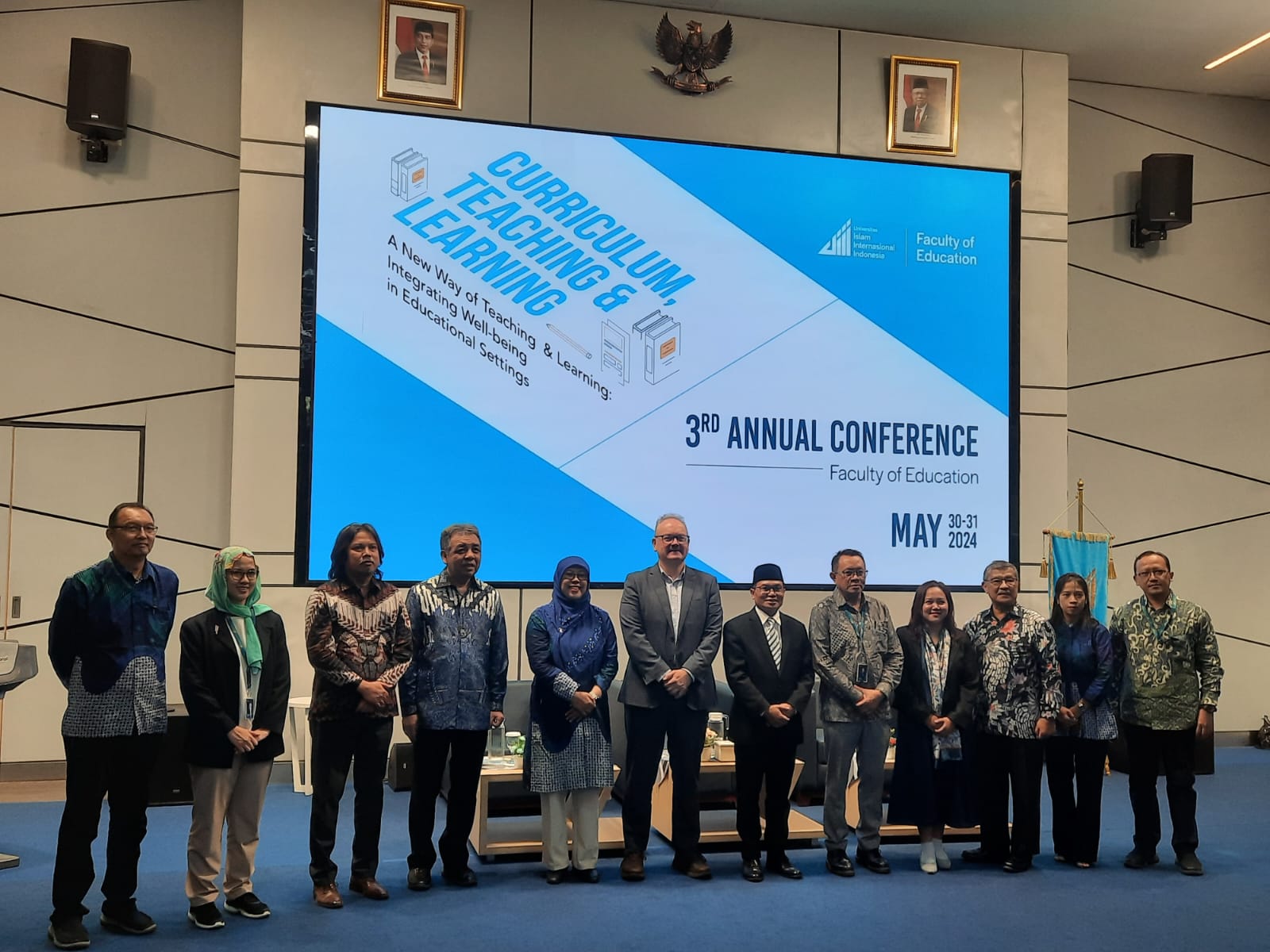
At UIII, FoE Kick-Offs the 3rd Annual Conference on Well-Being and Education
 At UIII, FoE Kick-Offs the 3rd Annual Conference on Well-Being and Education
Contributor: Supriyono | Editor: Dadi Darmadi
UIII, DEPOK – The Faculty of Education (FoE) at the Universitas Islam Internasional Indonesia (UIII) has officially kicked off its 3rd annual conference on Thursday, May 30, 2024, under the theme “A New Way of Teaching and Learning: Integrating Well-Being in Educational Settings” emphasizing the integration of well-being into the core aspects of education.
In her opening speech, the Dean of the Faculty of Education, Prof. Nina Nurmila, PhD, welcomed the keynote speakers, presenters and audiences, saying that this year’s FoE conference has attracted more paper submissions with better quality papers. She elaborated that in 2022, the conference received 13 papers and selected 6 papers to be presented in the 1st annual education conference. In 2023, the committee received 19 papers and selected 15 papers to be presented. Meanwhile this year, the conference received 46 papers and selected 26 papers for presentation.
“All of these numbers are less than the number of papers we received for the Writing Competition, which reaches 75 papers. Perhaps the awards and money we granted could be the motivating aspects for authors to submit their paper for writing competition. Therefore, beginning last year, we provide similar awards for the best papers submitted for the conference,” Prof. Nina Nurmila remarked.
In terms of the country of origin, Prof. Nurmila explained that her team expanded the origin country of the paper writers from only Indonesia in 2022, to three countries (Indonesia, Malaysia and UK) in 2023, to four countries (Indonesia, Australia, Malaysia and Pakistan) in 2024. “All of these still show that we need to build broader networking to spread our conference to attract more participants from various different countries,” Prof. Nurmila said.
Following the Dean’s speech, Prof. Dr. Jamhari, Rector of UIII, highlighted the importance of the conference theme, saying that it resonates with UIII’s mission of inclusivity and to deliver top-notch postgraduate education, foster innovative research, and contribute to science and social welfare.
“This approach recognizes the importance of addressing students’ emotional intelligence, psychological, and physical well-being throughout their academic development,” Prof. Dr. Jamhari said in his remark.
Meanwhile, Associate Professor Charyna Ayu Rizkyanti, PhD, the organizing committee, explained the reason behind the theme, associating it with the human development theory in which universities are the places for adult learners either those in the early to late adulthood phase. Hence, well-being becomes an integral part of the university environment.
“Inevitably, the increasing focus on well-being, particularly mental health, in the education sector occurs for a crucial reason. Educational institutions must adopt a holistic approach to teaching and learning and integrate well-being into their policies and practices,” Associate Professor Rizkyanti said.
This year’s conference invited three keynote speakers. On the first day, Thursday, May 30th, 2024, K. H. Saiful Rahmat Dasuki, S.IP., M.Si. from the Ministry of Religious Affairs of the Republic of Indonesia discussed how to improve the well-being in education setting through practicing moderate Islam. Additionally, Prof. Lindsay Oades from the University of Melbourne, Australia presented the “Flourishing and Well-being in Education”. On the second day, Friday, May 31st, 2024, Prof. Vina Adriany, PhD from Indonesian Education University (UPI) will discuss “Teachers’ Welfare, Professionalism and Well-being” as the conference’s final keynote speaker.
This is the third time the UIII Faculty of Education has held its annual conference. The first annual education conference in 2022 was under the broad theme of Education and Society concentration; the second annual conference in 2023 was under the theme of Education Policy, Management, and Leadership; and this year’s conference is under the theme of Curriculum, Teaching and Learning. Next year, the faculty will have the fourth annual conference under the theme Educational Assessment and Evaluation.


Recording on YouTube
Day 1 (Opening and Keynote Speaker)
https://www.youtube.com/watch?v=PoUISroZdsc
Day 2 (Keynote Speaker)
https://www.youtube.com/live/qRGr1vpP354?si=YyRVaqVn9gGJ3zjF
Day 2 (Closing Ceremony)
https://www.youtube.com/live/WUNafcLo_9c?si=T4xn85OIJobb6yX7
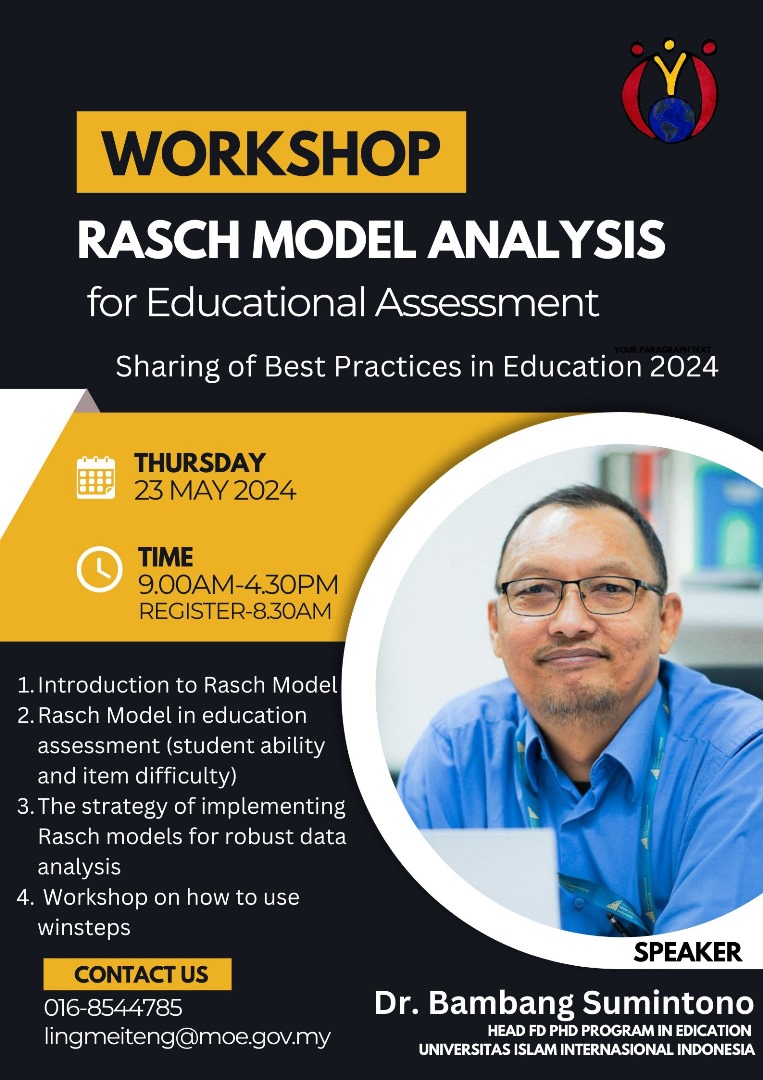
FoE UIII's lecturer provided workshop about Rasch Model measurement for teachers in Miri, Sarawak, Malaysia
 The Rasch model is a powerful tool in cognitive testing, transforming raw scores into interval measures, which allows for more precise and meaningful interpretations of test results. On Thursday 23 May 2024, Dr Bambang, one of the lecturer in Faculty of Education UIII, provided whole day workshop for teachers in Miri, Sarawak, Malaysia. The workshop introduces the fundamentals of the Rasch model, focusing on its application in cognitive assessment, particularly about instrument analysis as well as person analysis. Participants learned how the model ensures that test items are appropriate for different ability levels, providing a fair and accurate measure of cognitive skills. Through hands-on sessions, attendees will practice calibrating test items and interpreting Rasch output using relevant software. Key topics include item difficulty, person ability estimation, and the creation of invariant measurement scales. The workshop is designed especially for teachers to enhance their understanding of test adn item development, and data analysis in cognitive testing. By the end, workshop participants equipped with the skills to apply the Rasch model to improve the reliability and validity of cognitive assessments in their respective teaching subject.

