18 Hours to Kangean? A Journey Beyond Distance, Language, and Learning
By Jihan Ariqatur Rafiah
Depok to Jakarta, Jakarta to Surabaya, Surabaya to Sumenep, and finally, almost 12 hours across the sea to Kangean Island, East Java. The journey took me across cities, roads, and waters before bringing me back to the island I call home. But this time, I returned with a different purpose: to contribute to an educational initiative in the community where I grew up.
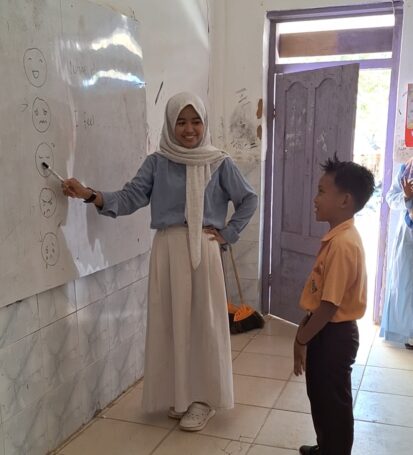
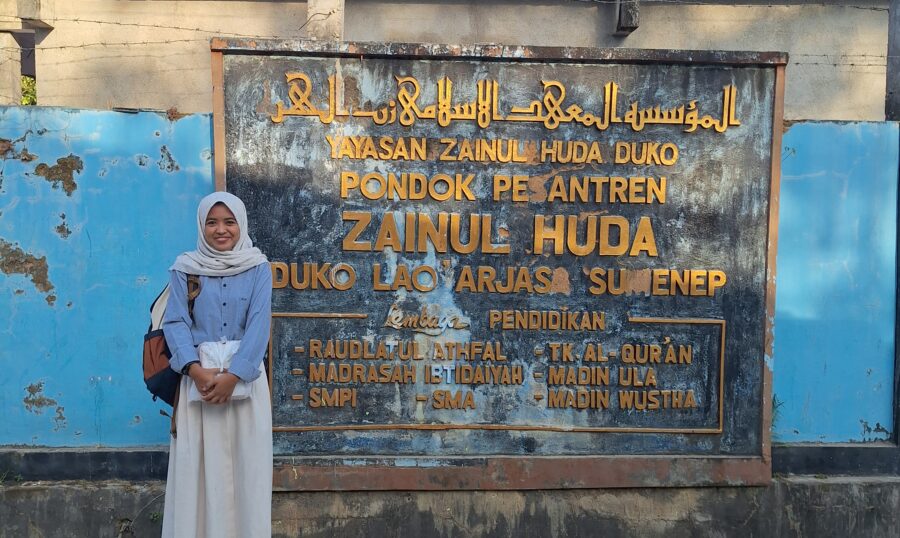
On September 10–11, 2026, I had the opportunity to facilitate a two-day community engagement program entitled “LANGUAGE MATTERS!” at Madrasah Ibitdaiyah (Islamic primary school) Zainul Huda, Duko Laok, Kangean Island, Sumenep Regency, in collaboration with the Faculty of Education, Universitas Islam Internasional Indonesia (UIII). Ms. Afifah Muharikah, PhD, a lecturer at UIII’s Faculty of Education, served as the resource person.
For me, this was more than an opportunity to conduct a workshop. It was also a chance to reconnect with the educational realities of an island community (whihc is a remote situation) and reflect on a question that has always mattered to me: how can we make education more meaningful for children, regardless of where they grow up?
Understanding Before Teaching
The program addressed an issue that may seem simple but has significant implications for classroom learning: language. In Kangean, students are often more familiar with their regional language in everyday interactions, while textbooks and formal learning materials predominantly use Bahasa Indonesia. This difference can create a gap between what students hear, read, and are expected to understand.
It made me realize that what appears to be a learning difficulty is not necessarily a reflection of students’ abilities. Sometimes, the language used to communicate knowledge may also be part of the challenge. Since, language heavily impact to thinking and communcation skills.
Through the introduction of Linguistically Responsive Teaching (LRT), teachers were encouraged to recognize students’ linguistic backgrounds as valuable resources rather than obstacles to learning. We explored practical strategies, including connecting unfamiliar academic terms with familiar expressions, using examples from students’ surroundings, clarifying instructions, and gradually introducing formal academic vocabulary.
Importantly, recognizing regional languages does not mean abandoning Bahasa Indonesia (a national language). Instead, students’ existing linguistic knowledge can serve as a bridge toward understanding formal learning materials. I believe this is particularly important in multilingual communities, where children navigate different languages in their homes, communities, and classrooms.
Rethinking Educational Equity in 3T Areas (remote location)
The experience also encouraged me to reflect on educational equity in Indonesia’s 3T regions (tertinggal, terdepan, dan terluar). Discussions about education in these areas often focus on geographical isolation, limited infrastructure, inadequate facilities, and unequal access to learning resources. While these challenges deserve serious attention, another dimension should not be overlooked: whether students can genuinely understand the knowledge presented to them.
Having a school, a teacher, and a textbook does not automatically guarantee meaningful learning. Students also need learning experiences that connect with their backgrounds, experiences, and ways of understanding the world. For me, educational equity should go beyond providing equal resources. It should also involve creating learning environments that respond to students’ different circumstances and needs. Children in remote island communities should not be defined by what they lack. Their linguistic knowledge, cultural experiences, and local wisdom are valuable resources that can enrich the learning process.
Learning Together with Teachers and the Community
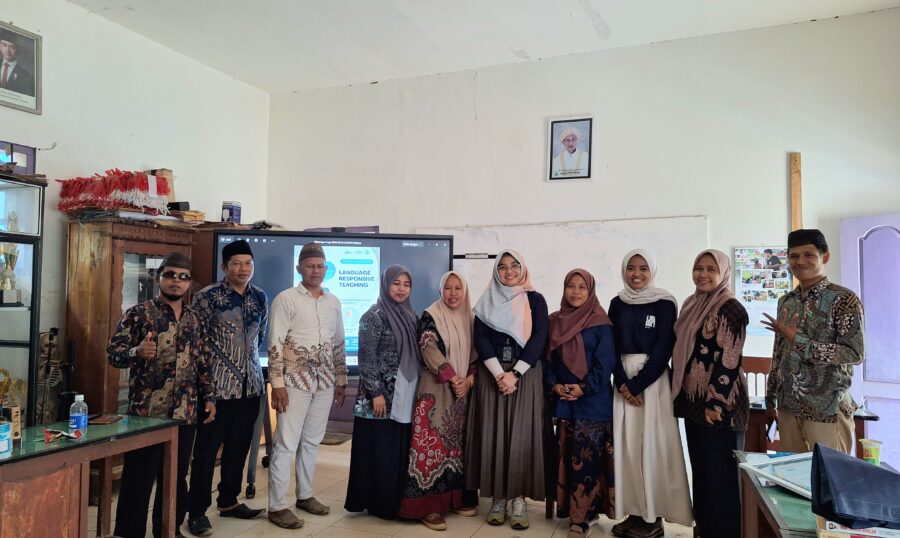
Another meaningful aspect of this initiative was engaging directly with many teachers. The workshop was not intended to position university knowledge as something teachers simply needed to adopt. Rather, it created space for exchanging perspectives, reflecting on classroom experiences, and exploring strategies that could realistically be implemented in their schools.
The program also included practical learning activities and technical assistance in developing contextualized teaching materials. Teachers were encouraged to utilize resources available in their surroundings, while students from Grades V and VI participated in learning activities.
This reminded me that meaningful educational initiatives cannot be built through academic perspectives alone. Teachers understand their students and communities in ways that cannot always be captured through research or theoretical frameworks. Their experiences are essential in identifying what works and what needs improvement. Sometimes, meaningful innovation does not require sophisticated technology or expensive facilities. It begins with understanding students better and making thoughtful use of the resources already available.
Returning to Where It Matters
Perhaps the most personal part of this experience was contributing to an educational initiative in Kangean communities. Having grown up on the island and later pursued higher education at UIII, returning with an opportunity to share what I had learned felt particularly meaningful.
It reminded me that knowledge should not remain confined to university classrooms, academic publications, or research discussions. It should also find ways to contribute to society, particularly communities whose educational realities deserve greater attention.
I recognize that a two-day program cannot resolve the complex challenges facing education in remote areas. Sustainable improvement requires long-term collaboration and commitment. Nevertheless, small initiatives can open important conversations and encourage educators to reconsider familiar teaching practices.
I am grateful to UIII’s Faculty of Education, Ms. Afifah Muharikah, PhD, the teachers and students of MI Zainul Huda, and everyone who contributed to making this initiative possible. More than anything, this experience reminded me that education is not only about transferring knowledge. It is also about understanding people, listening to their experiences, and finding ways to make knowledge accessible to them.
Because sometimes, before asking students to understand the lesson, we need to make sure that the lesson speaks a language they can understand.
And perhaps, that is where more inclusive education begins.