 From the Tunnel of Friendship to the Pesantren: Rethinking Islamic Knowledge Through Women Ulama
By Musyarrafah Sulaiman Kurdi
Reflections on the International Short Course 2026, 2–9 November, Jakarta and Cirebon. I began my eight-day experience, not with a book, however, located beneath Jakarta, while passing through The Tunnel of Friendship that connected Istiqlal Mosque and Jakarta Cathedral. These two sites of worship in the Indonesian capital city were physically linked by an underpass tunnel. This provided an interesting opportunity to explore how religious divisions can be transformed into bridges of opportunity for people to connect instead of divide. The physical bridge (i.e. underpass tunnel) also served as a clear representation of my own intellectual development.
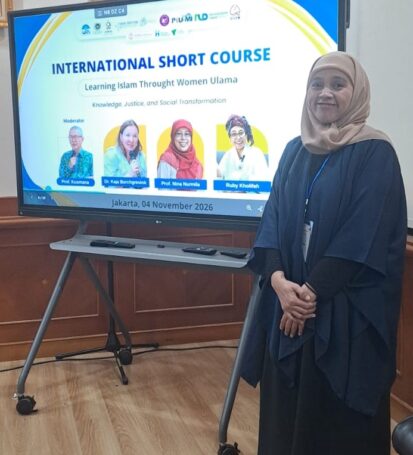
The program “Learning Islam Through Women Ulama: Knowledge, Justice, & Social Transformation in Indonesia,” was held from November 2-9, 2026. As part of this competitive short course program, I had the opportunity to learn about religion and ulama at both a university classroom level in Jakarta and a traditional Islamic boarding school (i.e. pesantren) level in Cirebon. Participants included other researchers and students representing multiple countries. When I arrived at the short course I was interested in learning more about the role of women in religious authority; however, when I departed the short course I was considering how it is possible for knowledge itself to be considered authoritative.
When we visited Istiqlal Mosque, the Minister of Religious Affairs Prof. KH. Nasaruddin Umar spoke of Indonesia being a laboratory of living Islam. At this mosque, we met with Professor Tib Raya, who discussed religious diversity. Rector Professor Asep Saepudin Jahar welcomed us into the program where dialogue was to become a tool used for learning, not just another topic for discussion, here we learned about our host institution, UIN Syarif Hidayatullah Jakarta and Pendidikan Kader Ulama Masjid Istiqlal.
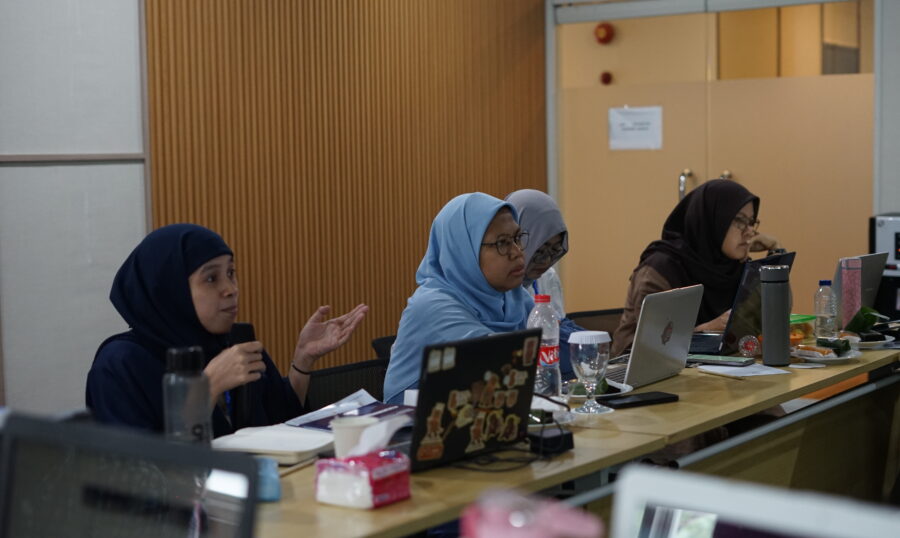
It was during our visit to UIN Syarif Hidayatullah Jakarta that our intellectual foundation was developed. Dr. Nur Rofiah asked us to think critically about women’s keadilan hakiki or substantive justice based on women’s bodies and social realities. Kamala Chandrakirana presented information regarding the history of the Congress of Indonesian Women Ulama (KUPI), which has been organized since 2017. In addition, she reported that there was a second KUPI congress in 2022. It was here that Dr. Farid Saenong challenged us to ask ourselves “who gives authority to provide religious guidance,” and why gender continues to influence whether someone receives such authorization.
My horizon was further expanded when I engaged with others. Dr. Kaja Borchgrevink of Norway’s Peace Research Institute Oslo (PRIO) analyzed ways that religious gender-justice advocates can form bridges across polarized positions. Professor. Nina Nurmila demonstrated that the way people interpret sacred texts depends on who is doing the interpreting and the context of history. She deepened my understanding of religious knowledge and gender justice. Ruby Kholifah linked women’s peace-building to women’s lived experience of exclusion and conflict. In Professor Amelia Fauzia’s comparative workshop, these were transformed into research questions, as opposed to simply being idealistic concepts.
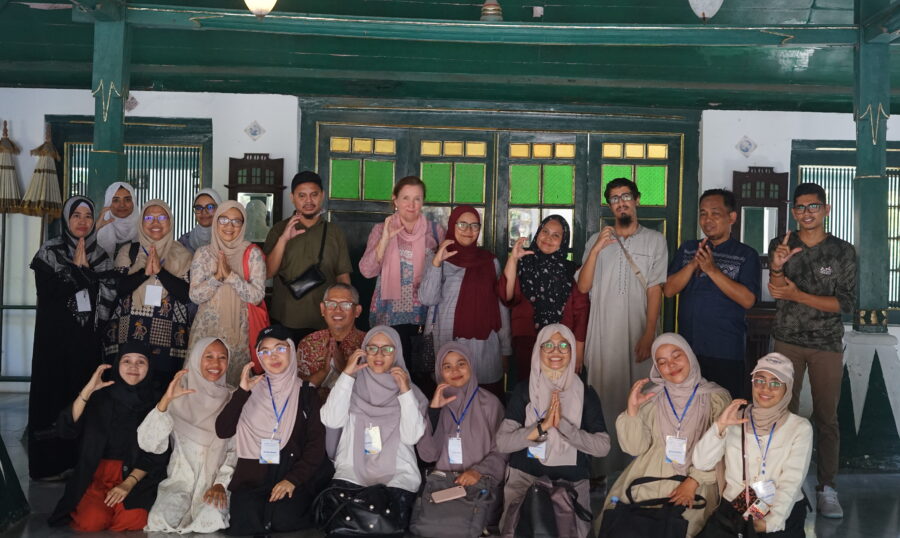
We then traveled to Cirebon where the classroom looked very different. At Pesantren Kebon Jambu, Nyai Masriyah Amva’s leadership demonstrated to me that a woman could be exercising religious authority within a traditional pesantren setting. The values I learned about in class came alive through daily routines, relationships and learning while living among the santri. Nyai Toah Ja’far’s eco-pesantren program at khas Kempek broadened my understanding of worship: sorting waste, reducing plastic and reusing materials can represent an expression of ecological responsibility if it is done equitably by all members of the community.
At UIN siber Syekh Nurjati Cirebon, Professor Faqihuddin Abdul Kodir taught us mubādalah, a reciprocal approach that sees women and men as equal moral agents. Dr. Wahid’s session applied KUPI’s collective ijtihad: taṣawwur investigates a problem using evidence and women’s experiences; adillah studies qur’an, Hadith and scholarship; and istidlāl relates those findings to a rational decision making process. Along side mubādalah, KUPI incorporates ma‘rūf—goodness recognized by the community —and keadilan hakiki —real justice—into its interpretation process. Justice requires not only carefully studied texts but also carefully listened-to voices.
The Keraton Kasepuhan and a batik workshop in Trusmi that followed provided one last lesson: Islamic heritage is expressed not only through monuments but through stories, crafts, and cross-cultural exchanges. This really open-up perpespective about cultural aspect that built society and maintaing its values.
On our final day I gave a presentation titled “Before Inheritance, Whose Property?” analyzing Sheikh Muhammad Arsyad al-Banjari’s associated tradition of harta perpantangan and the Property rights of Indonesian women before inheritance is distributed. The accepted abstract for my paper entitled “From the Margins to Authority: Women Ulama, Islamic Knowledge, and Gender-Just Education in Indonesia” has now been directed toward this area of study due to these interactions.
I will always be grateful to LP2M UIN Jakarta, the Social Trust Fund UIN Jakarta and PRIO for providing the scholarship that enabled me to participate. I would like to thank the organizers Bu Lutfiana and Bu Fitriyani UIN Jakarta, all speakers, and also Prof. Nina Nurmila (Dean of the Faculty of Education, UIII), communities and participants for your hospitality, support, and generosity during my time there. Upon returning to Universitas Islam Internasional Indonesia I have committed myself to collaborative research between universities and countries regarding knowledge, justice, women, and social transformation. One thing I have fundamentally altered is: instead of asking only what Islamic texts say, I now ask whose experiences shape our understanding of these texts; whose voice is being heard; and does the knowledge we generate make every-day life more equitable?