 Representing Indonesia at the 4th China-ASEAN Excellent Youth Summer Camp 2026
By Anza Zahya Qeysha, student at the Faculty of Education, Universitas Islam Internasional Indonesia
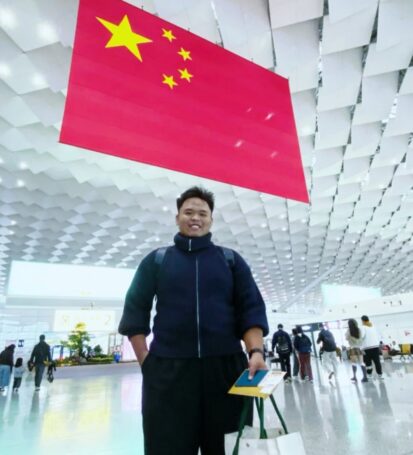
From 18 to 24 October 2026, I took part in the Fourth China-ASEAN Excellent Youth Summer Camp at Henan Normal University (HNU) in Xinxiang, China. The theme for this year was “A Tour of Central Plain Culture”, and there were 48 of us: ten participants from seven ASEAN countries and 38 HNU students. Because I study education in UIII, I paid most attention to how China trains and treats its teachers, and I kept comparing it with home.
HNU is a normal university (shifan daxue), founded to train teachers. It now has more than 50,000 full-time students and 79 study programmes, but teacher education is still at its core. The closest Indonesian comparison is could be like UPI in Bandung, UNY in Yogyakarta or UNESA in Surabaya, which were previously teacher training institutes (IKIP) until they became full universities in 1999.
On day three we visited the Henan Provincial Teacher Ethics Museum on the HNU campus. Its logo is a duo, a wooden bell with a metal clapper, drawn from the character for teacher (師). The motto comes from the Analects of Confucius and compares teachers to bells that wake society. Screens around the hall profile model teachers. One of them is Zhang Guimei, who founded China’s first free girls’ high school in Lijiang, Yunnan; more than 1,800 of her students have gone on to university.
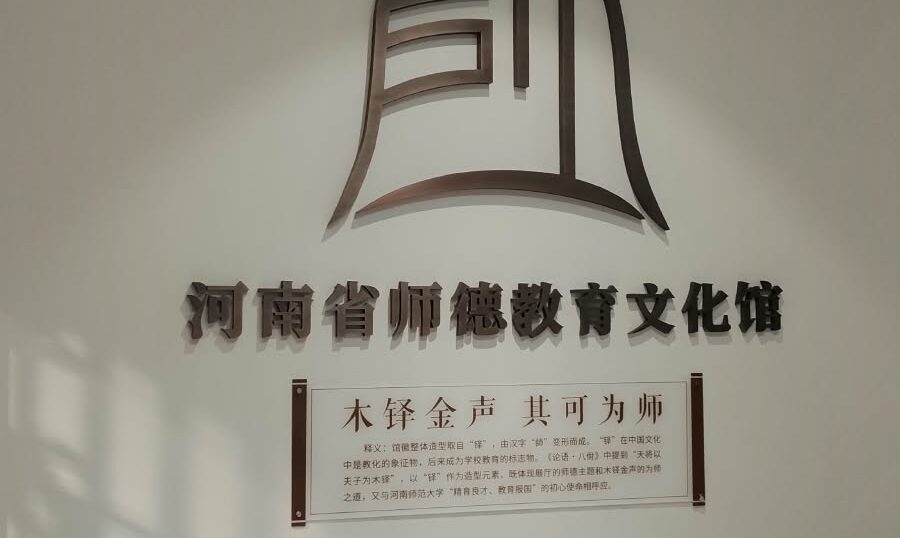
The logo of the Henan Provincial Teacher Ethics Museum: a bell formed from the character 師 (teacher)
A wall text spells out the reasoning behind the museum: a strong nation needs strong education, and strong education needs strong teachers. Standing in that museum, I thought about how we talk about teachers in Indonesia. We call them “heroes without medals”. The phrase is meant as praise, but it can also sound like permission to leave them unrewarded. Many honorary teachers still earn very little, and few of our top graduates choose teaching first. In Henan, respect for teachers had a building and a place in a national planning in China.
Planning is the other thing I noticed. China sets national goals for 2035 and 2049 and expects education to serve them. In Indonesia we joke that a new minister means a new curriculum, and teachers spend years adjusting to each change before they can build on what works. Faculties of education like mine train the next generation of teachers, but we cannot give them stability that national policy does not provide.
The same wall text has a third line, though: strong teachers need a forged “soul”. Here that includes Party ideology. HNU has a School of Marxism, and the campus museums present Party-building as part of the university’s mission. Indonesia has its own state ideology in Pancasila, and our schools teach it as a subject matter. I think its value lies in holding a very diverse country together, and that only works if teachers stay free in what they think and believe. This is the part of the Chinese model I would leave behind.
Running education as a state project has it costs too. In July 2021 China aggresively banned for-profit tutoring in core school subjects almost overnight, to cut costs and pressure on families. The ban wiped out an industry worth more than 700 billion yuan along with tens of thousands of jobs, and families who could afford it moved tutoring underground. Indonesia has its own large bimbel industry, so the question of who can pay for extra lessons is familiar here. China’s answer shows how hard it is to solve with one decree.
On day four we went to Anyang, the last capital of the Shang dynasty. At the Yinxu Museum and the National Museum of Chinese Writing we saw oracle bones more than 3,000 years old and learned how traditional paper is made. Both museums are built for students as much as for tourists. Some of ours still feel like storage rooms, even though Indonesia has just as much history to teach from. I also visited Anyang’s mosque, with its tiered Chinese palace-style roofs and Arabic calligraphy over the door. It reminded me of the Menara Kudus Mosque in Central Java, where Islam also took on local architecture. China’s policy of “sinicisation of religion” is contested, though, and human-rights groups say it restricts religious expression.
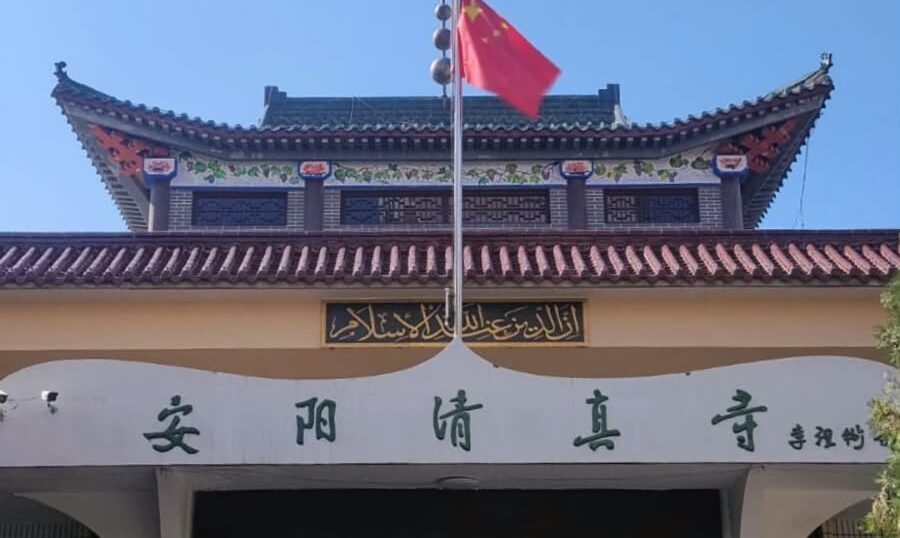
Anyang Mosque, with a Chinese palace-style roof and Arabic calligraphy over the door
In the final competition I argued that China could become a strategic education partner for ASEAN as some Western countries become harder for students to get into, provided the partnership is reciprocal, transparent and in line with Indonesia’s free and active foreign policy.
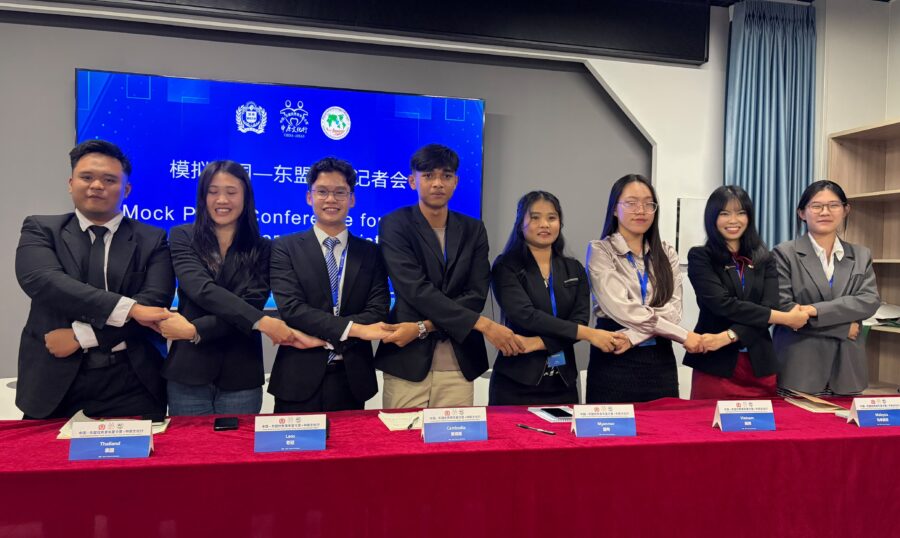
The mock press conference with fellow ASEAN delegates
The bell has stayed with me. In the Confucian image, a teacher’s job is to wake people up. For Indonesia, that means teachers who are respected in their pay and status, policies that last longer than one minister, and freedom to think for themselves. China has done a great deal on the first two. We have the chance to do all three.
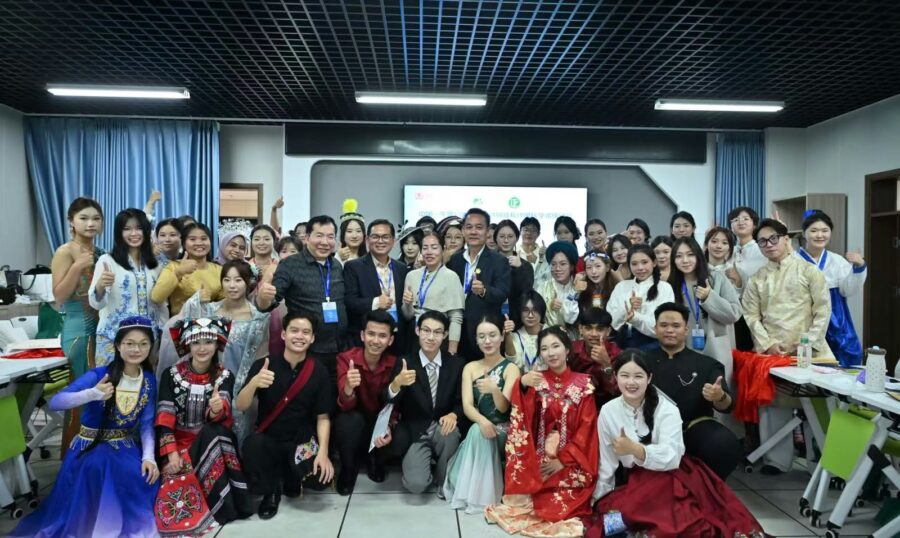
Closing night at Henan Normal University