
 Rethinking Disciplinary Boundaries: Integrating STEAM into Islamic Religious Education
By Nofi Maria Krisnawati
“Can Science, Technology, Engineering, Arts, and Mathematics (STEAM) meaningfully contribute to Islamic Religious Education? And more importantly, should every Islamic Religious Education lesson be integrated with STEAM? “
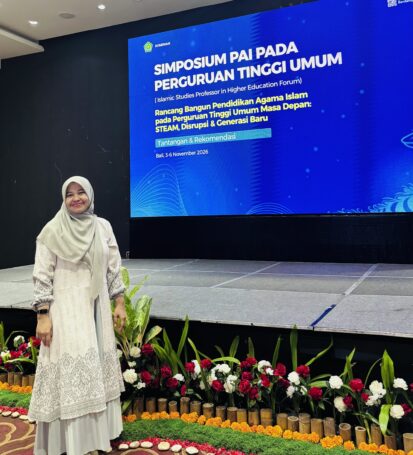
These questions accompanied me to Bali, where I participated in the National Symposium on Islamic Religious Education in General Higher Education Institutions, organised by the Directorate of Islamic Religious Education, under the Directorate General of Islamic Education, Ministry of Religious Affairs (MoRA) of the Republic of Indonesia, on November 3–6, 2026. Under the theme “Designing the Future of Islamic Religious Education: STEAM, Disruption, and New Generations,” the symposium brought together lecturers, researchers, students, professional associations, university representatives, and policymakers to rethink the future of Islamic Religious Education (PAI) in Indonesia.
As a PhD student at the Faculty of Education, Universitas Islam Internasional Indonesia (UIII), participating in this forum was both an exciting opportunity and an intellectual challenge. I came with a research-based perspective on STEAM education, entering a space where discussions were shaped by diverse experiences and understandings of Islamic education. This encounter reminded me that interdisciplinary dialogue is not simply about bringing different fields together, but also about exploring how diverse perspectives can enrich our understanding of education.
One of the perspectives I shared at the symposium was that STEAM can be explored not only through the knowledge of its constituent disciplines, but also through their ways of thinking and its practices. As highlighted by the National Research Council (2012), science education involves both disciplinary knowledge and scientific practices, such as inquiry and reasoning from evidence. Similarly, other STEAM disciplines offer their own approaches, including technological problem-solving, engineering design, creative expression, and mathematical reasoning.
These broader dimensions open up possibilities for connecting STEAM with Islamic Religious Education. However, recognising possible connections does not automatically justify integration. This distinction became one of the central ideas I explored in the paper I wrote for the symposium, “PAI Berorientasi STEAM: Dari Integrasi ke Justifikasi Pedagogis” (STEAM-Oriented Islamic Religious Education: From Integration to Pedagogical Justification). Rather than asking how many STEAM components could be incorporated into PAI, I proposed a more fundamental question: What makes such integration educationally meaningful?
Drawing on the framework proposed by Lowrie et al. (2017), which comprises three dimensions: Ideas, Methods, and Values (IMV), my paper explored how interdisciplinary connections can be examined through the knowledge involved, the practices used to investigate problems, and the values guiding decisions. Yet identifying these connections is only the beginning. Integration must ultimately be justified by its relevance to the existing learning objectives and disciplinary character of PAI. For example, learning about halalan tayyiban may create opportunities to connect Islamic principles with food safety, nutritional evidence, and informed decision-making.
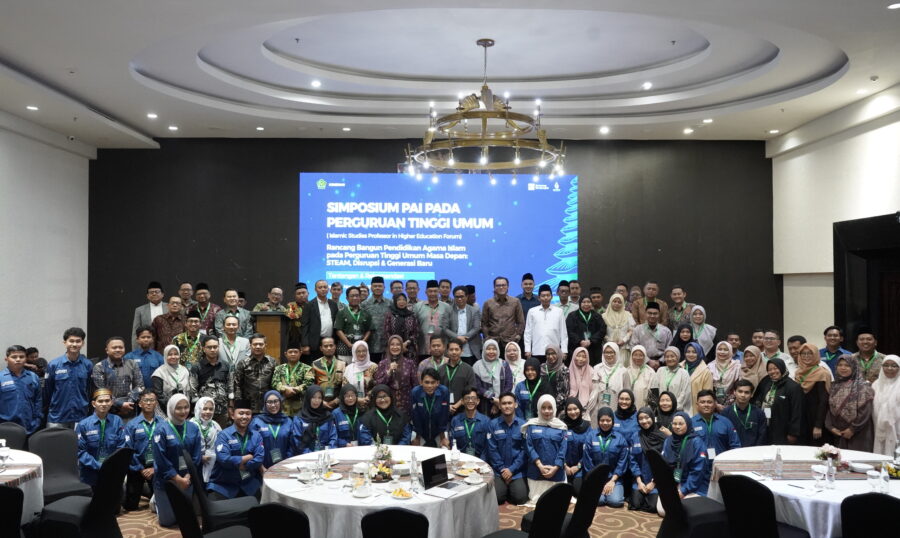
Figure 1. Participants at the National PAI Symposium in Bali, November 2026.
Students might examine food information, evaluate relevant evidence, and develop arguments grounded in both religious understanding and scientific reasoning. The intention is not to turn PAI into a science lesson, but to enrich students’ understanding of Islamic principles through meaningful interdisciplinary engagement. This does not mean that every PAI topic need STEAM. Some learning objectives may be better achieved through disciplinary approaches. Recognising when integration contributes to learning, and when it does not, is itself a crucial pedagogical decision.
Beyond presenting these ideas, the symposium also gave me the opportunity to learn from diverse perspectives on the future of Islamic Religious Education. One presentation I found particularly insightful was delivered by Ibu Nyai Alissa Qotrunnada Wahid, M.Psi., who discussed the importance of strengthening the Islamic Religious Education ecosystem in higher education. I was especially drawn to her discussion of systems thinking and the importance of questioning underlying assumptions in education. Her insights connected with the questions I had explored in my paper on the pedagogical justification of STEAM integration in PAI, while also encouraging me to reflect on how educational practices are shaped by institutional support, collaboration, and the relationships among different stakeholders.
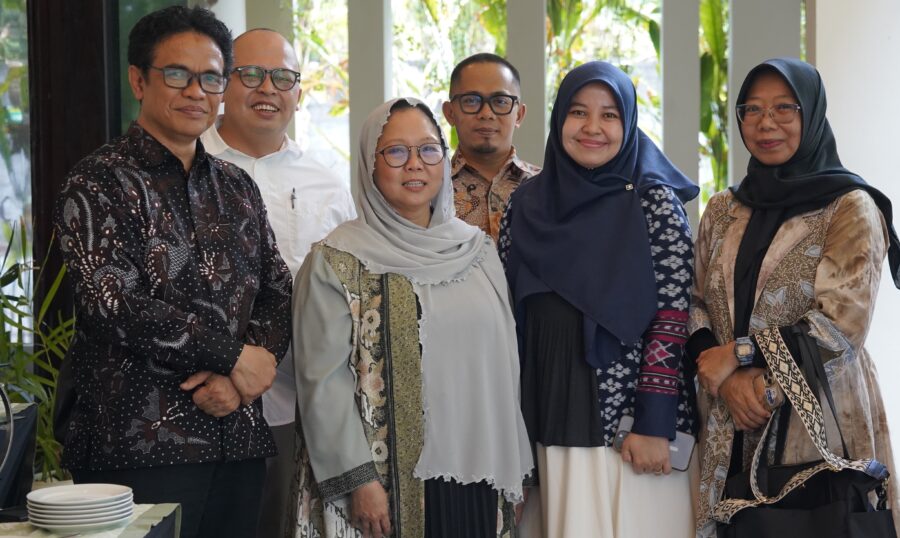
From left to right: Dr. M. Munir, S.Ag., M.A. (Director of Islamic Religious Education), Muhib, Alissa Qotrunnada Wahid, M.Psi. (Expert Advisor to the Minister of Religious Affairs), Moch. Ziaul Haq, S.H.I. (Head of Administration, Directorate of Islamic Religious Education), Nofi Maria K. (UIII), and Lelis Tsuroya Herniatin, S.Pd.I., M.Si. (Head of the PAI Subdirectorate for Senior and Vocational High Schools).
This perspective also connected with other discussions throughout the symposium, including curriculum reform, lecturer development, digital transformation, and religious moderation. I was interested in learning how different universities have developed their own approaches to strengthening Islamic Religious Education in response to their students’ needs and institutional contexts. These experiences reminded me that there is no single approach that works for every institution, but there is much that universities can learn from one another.
Listening to these experiences also led me to reflect on how institutional initiatives could be strengthened through policy collaboration. In Indonesia, the Directorate of Islamic Religious Education under the Ministry of Religious Affairs plays an important role in guiding PAI, including at general higher education institutions, while these universities operate within the higher education system overseen by the Ministry of Higher Education, Science, and Technology. Collaboration between the two ministries is therefore important, particularly in supporting the implementation of national initiatives, such as the recently introduced PAI curriculum guidelines, while remaining attentive to the different contexts of universities. The symposium provided a meaningful space for these conversations, allowing experiences from educational practice to inform discussions about future directions and policy support.
For me, participating in these discussions reinforced the importance of connecting educational research with the realities of teaching, institutional practices, and policy development. I particularly valued the opportunity to share ideas, listen to different experiences, and reflect on how research can contribute to educational conversations beyond academic publications. This experience also made me appreciate my academic journey at UIII’s Faculty of Education, where I have been encouraged to question assumptions, engage with different theoretical perspectives, and connect research with real-world educational challenges. Bringing what I have learned into this national forum, while continuing to learn from others, was a meaningful opportunity to grow as both a doctoral student and a researcher.
I returned from Bali with a deeper understanding of how educational ideas can contribute to meaningful change when thoughtfully connected to learners’ needs and the realities of educational practice. As Islamic Religious Education continues to evolve, I hope that interdisciplinary research can contribute to conversations about how teaching and learning might be enriched without losing sight of their educational purposes. This is also the message I hoped to convey through my paper: integrating STEAM into PAI is not simply about bringing disciplines together, but about understanding when and why those connections can genuinely enrich students’ learning experiences. Ultimately, meaningful educational innovation begins not with what we can integrate, but with why it matters for learning.