Scholars-in-Residence (SIR) Fellows Batch 7, Faculty of Education UIII

Scholars-in-Residence (SIR) Fellows batch 7, Faculty of Education - UIII
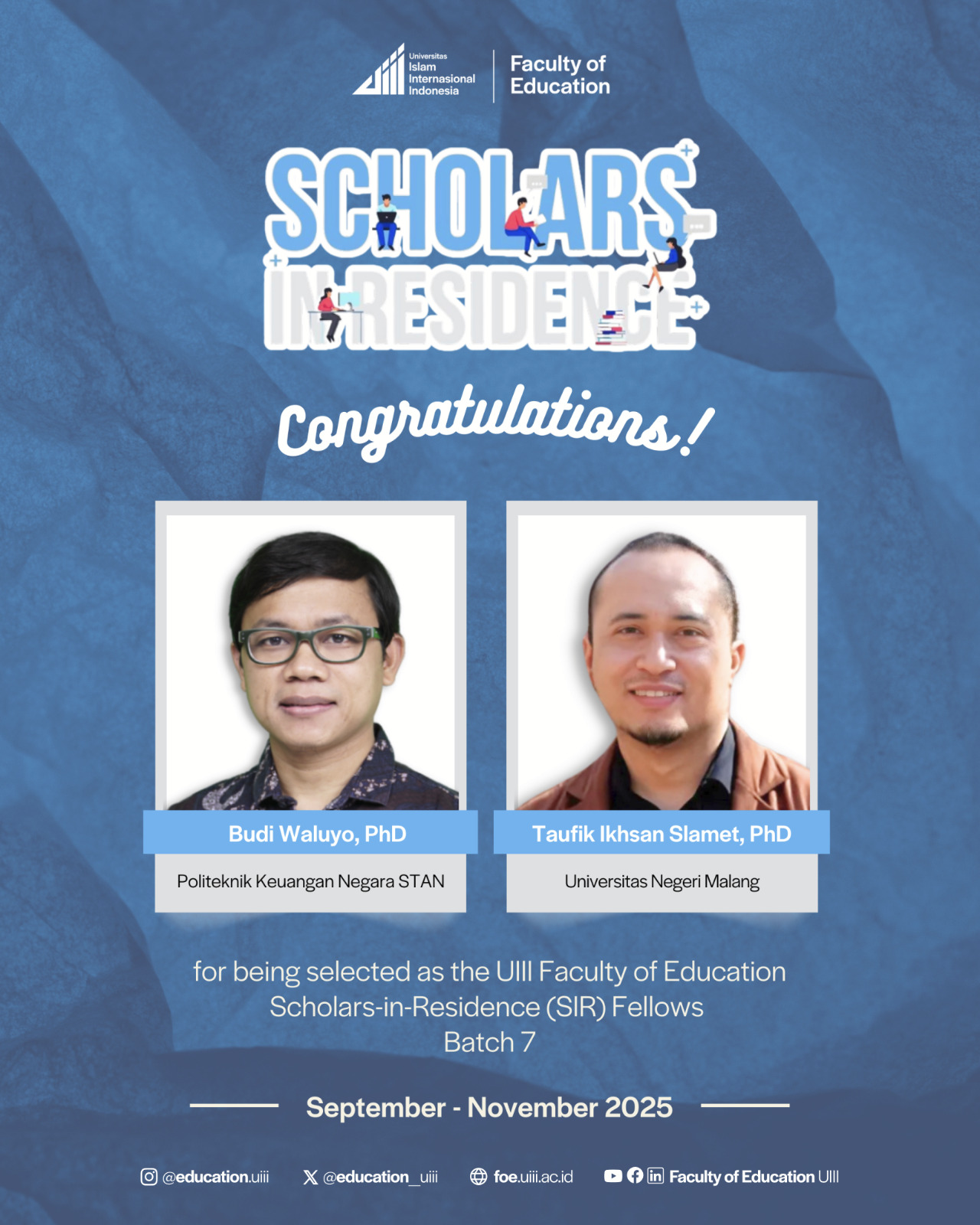
The Faculty of Education is delighted to introduce and announce the result of the Scholars-in-Residence (SIR) Program (Batch 7 for September – November, 2025). Theya are: Budi Waluyo, PhD (from Politeknik Keuangan Negara STAN) and Taufik Ikhsan Slamet, PhD (Universitas Negeri Malang). Both of them will be participated in many academic activities in the faculty, such as a guest lecturer in MA and PhD courses, giving seminar in Lunch Talk series, open for discussion and consultation for MA and PhD students in the faculty, as well as in social activities too. Welcome Pak Budi and Pak Taufik.


FoE Celebrates 2025 Judicium Ceremony, Honoring Best Graduate and Best Thesis Awards

Contributor: Supriyono | Editor: Dadi Darmadi | Photo: Virda L. Umam
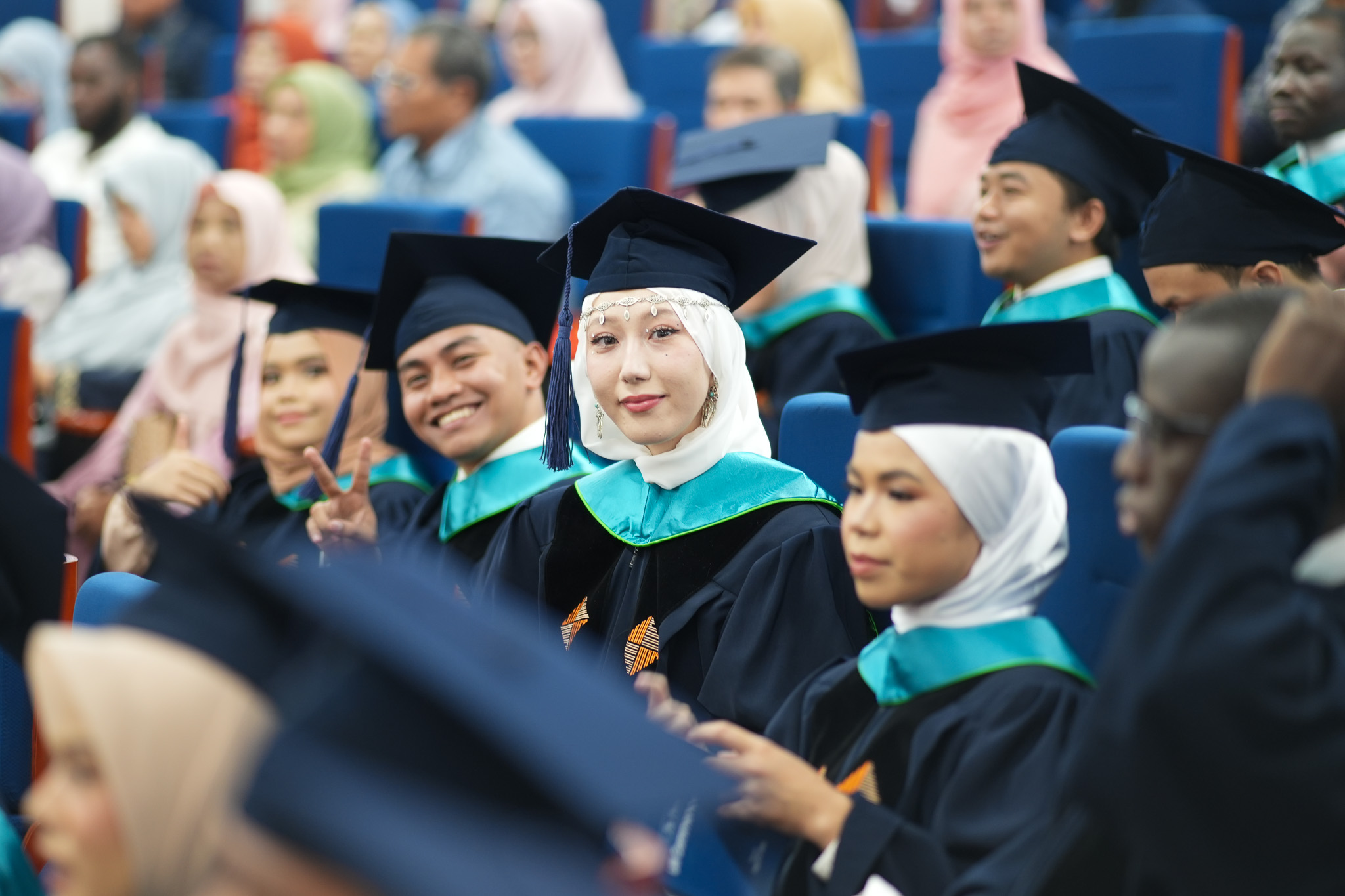
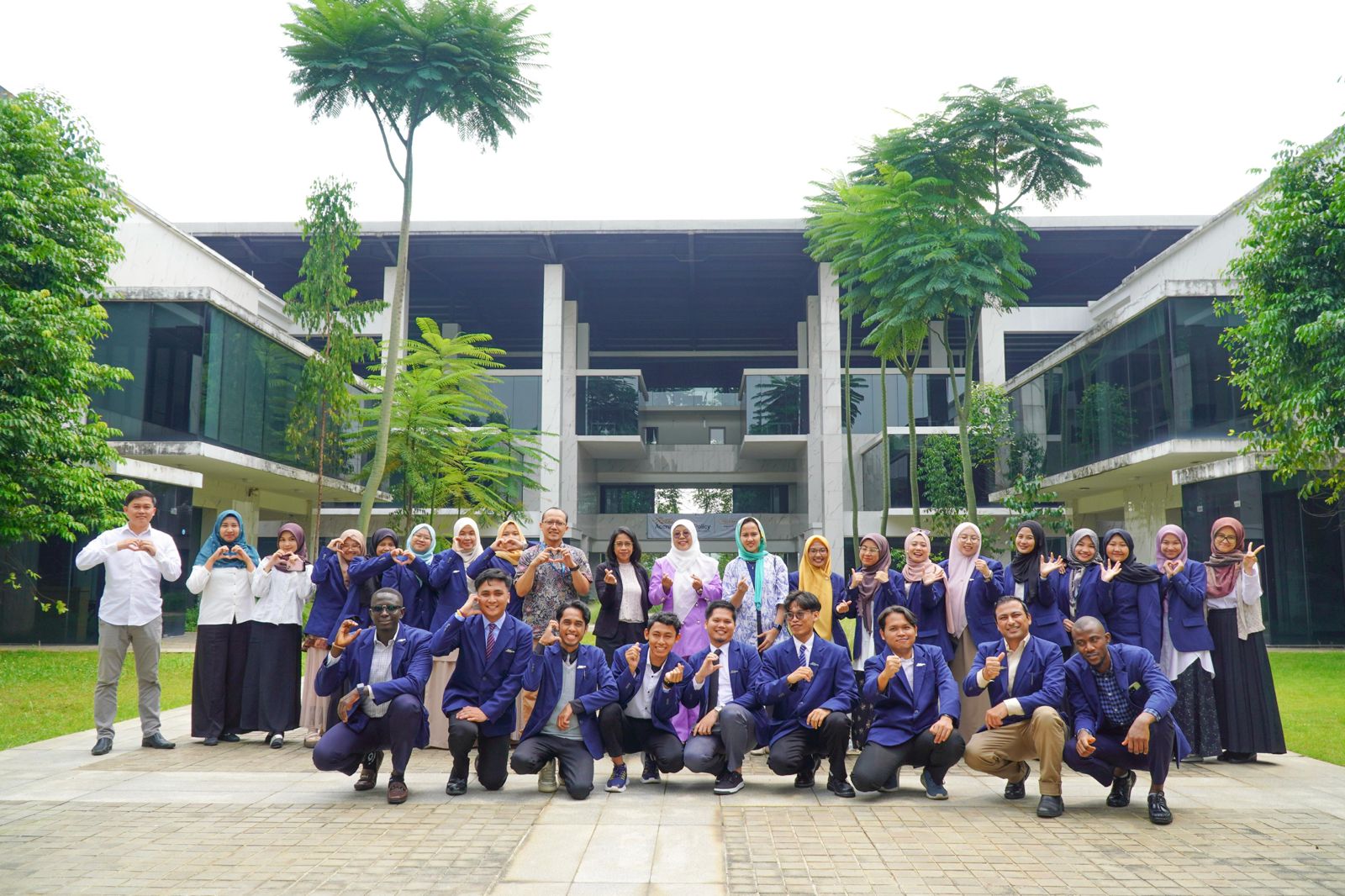
The Faculty of Education at Universitas Islam Internasional Indonesia (UIII) held its Judicium Ceremony on August 25, 2025, marking an important milestone for graduating students as they embark on the next chapter of their academic and professional journeys.
During the ceremony, two outstanding students were honored for their exceptional achievements. Muhamad Maulana was named Best Graduate with a perfect GPA of 4.00, reflecting his consistent dedication and academic excellence throughout his studies.

Meanwhile, Karamo Ceesay received the Best Thesis Award for his research titled “Exploring Parental Involvement in Student’s Academic Achievement: A Case Study of Public Primary Schools in Rural Gambia”, which earned an impressive score of 96.67.

Prof. Nina Nurmila, Dean of the Faculty of Education praised the graduates for their hard work and commitment. “This judicium is not just a celebration of academic success but also a testament to the resilience and passion of our students. We are confident that our graduates will continue to contribute meaningfully to education and society,” she stated.
The ceremony concluded with reflections on the Faculty’s vision to nurture globally competitive scholars and educators, reinforcing UIII’s commitment to advancing education rooted in academic rigor and social responsibility.
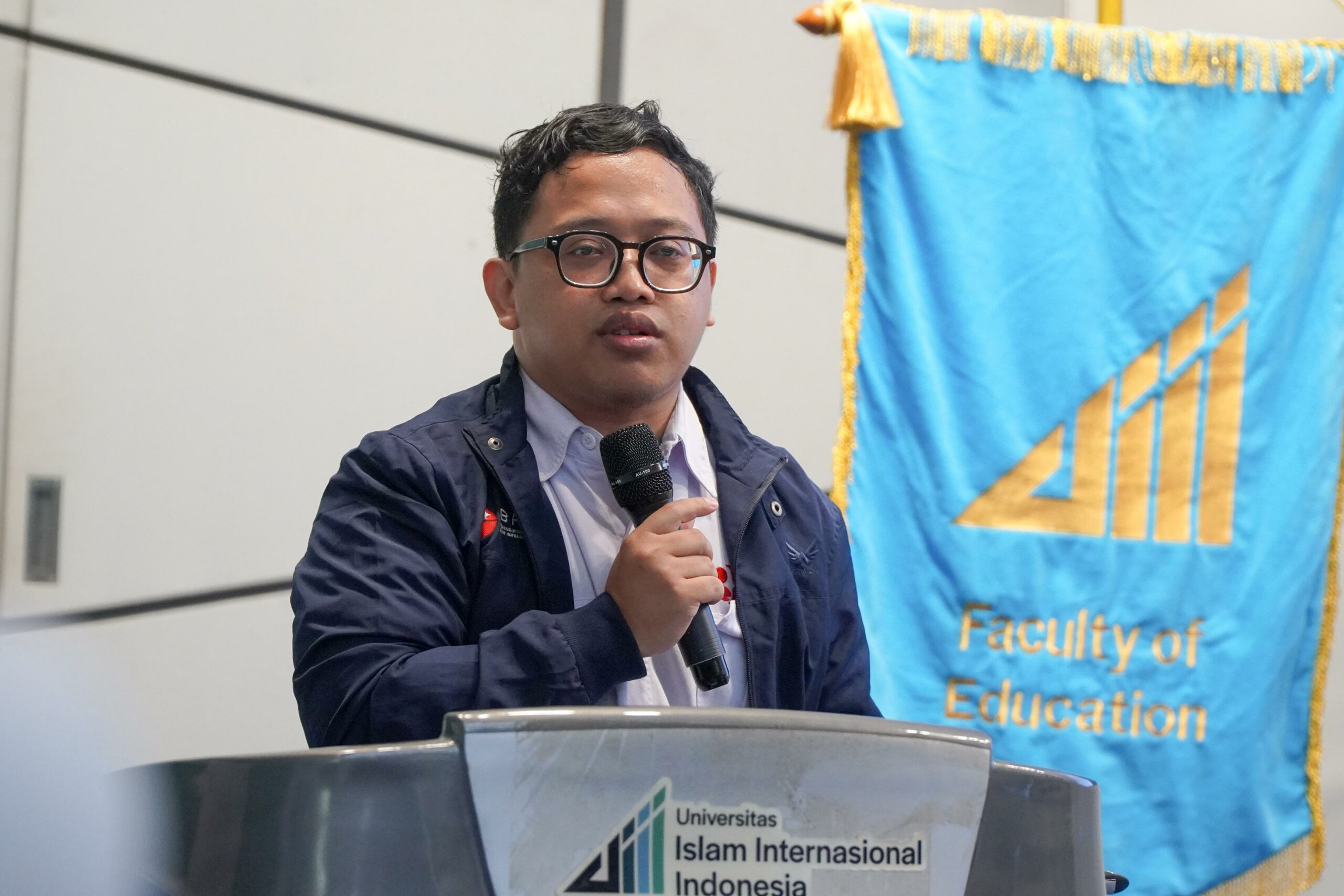

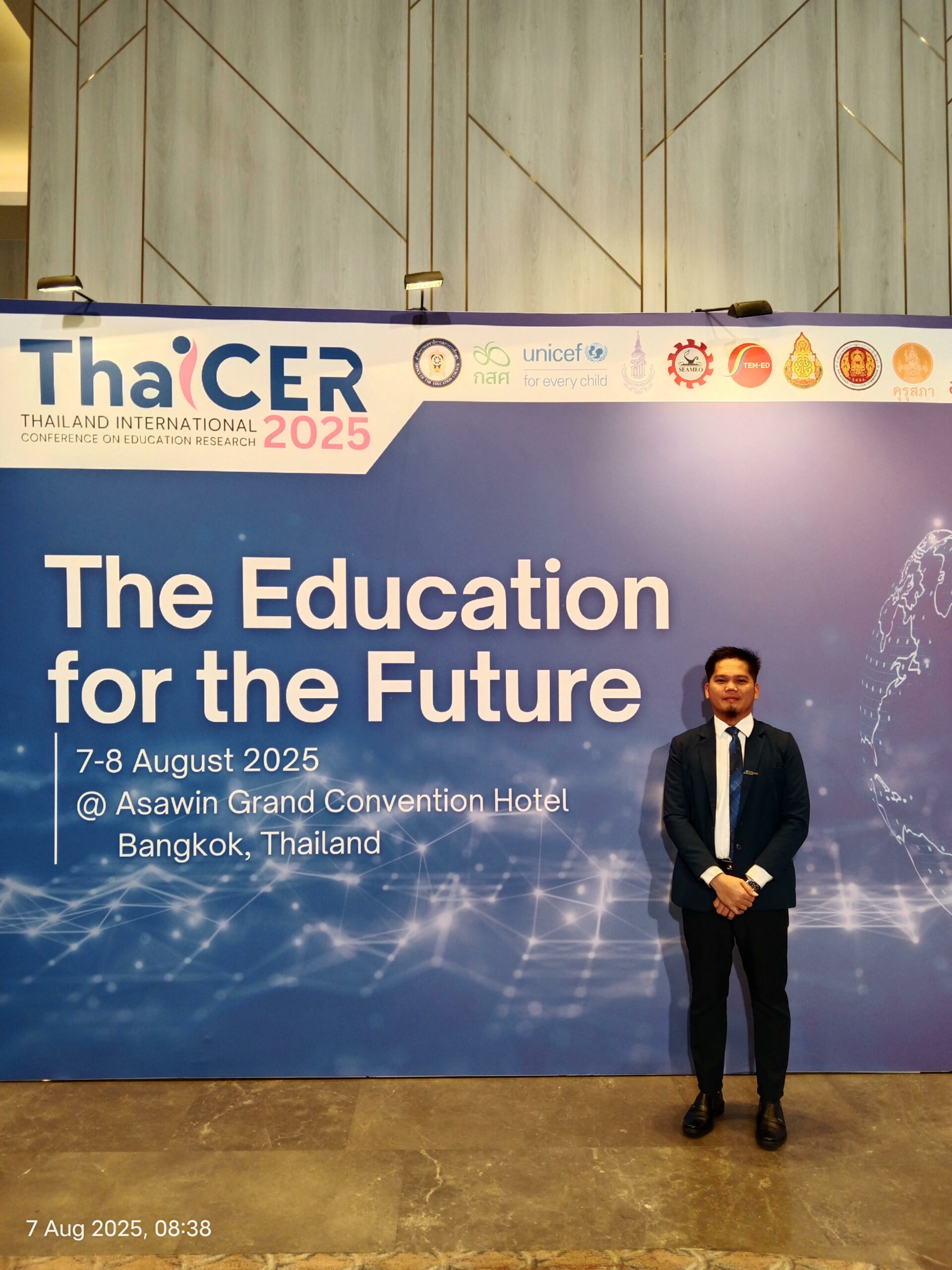
It’s Now or Never: Overcoming Self-Doubt
 It’s Now or Never: Overcoming Self-Doubt
By Rakim Legawan Sammy
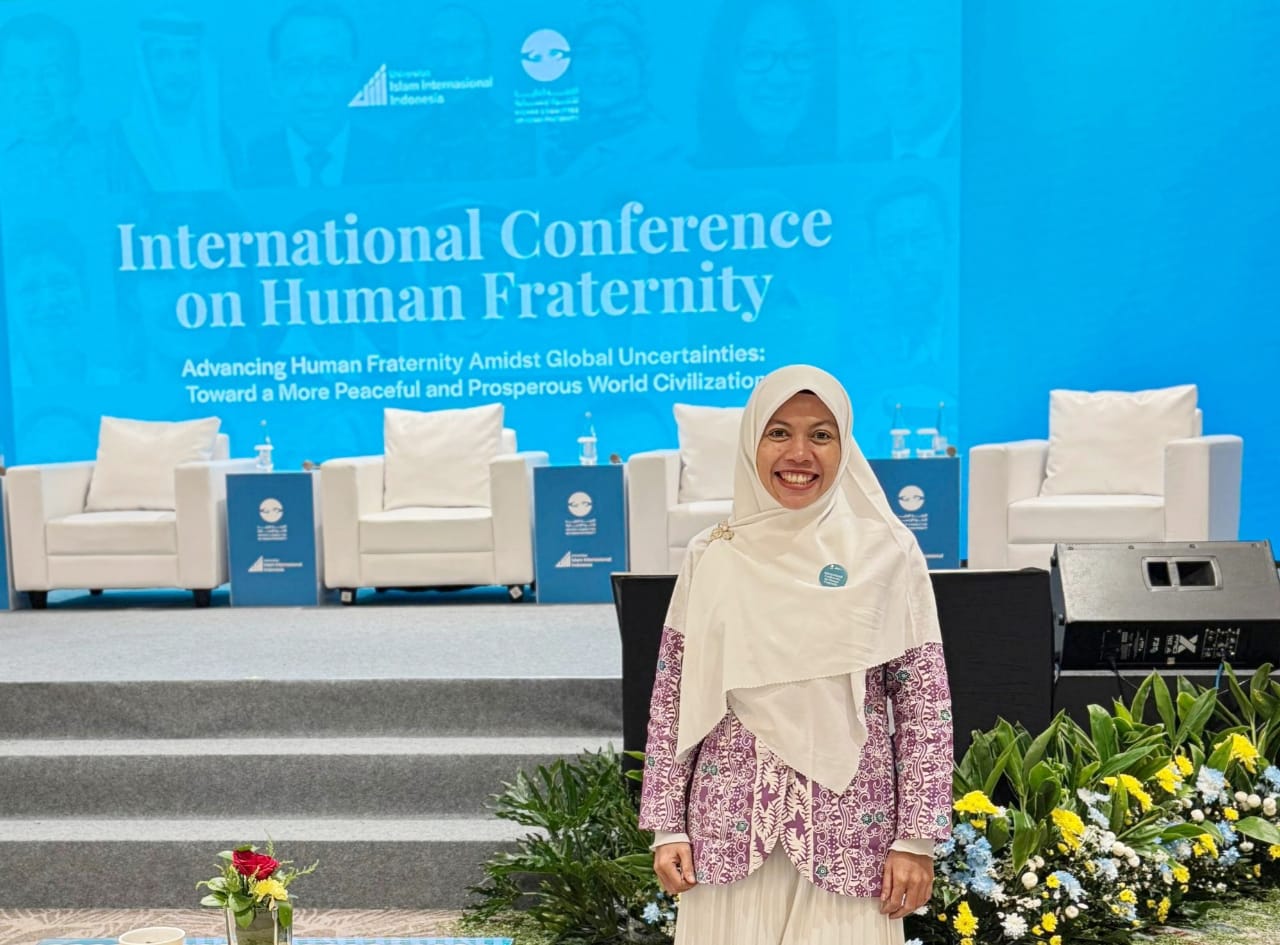
Standing Side by Side: Rediscovering Humanity through the Lens of Human Fraternity

Standing Side by Side: Rediscovering Humanity through the Lens of Human Fraternity
Uswatun Hasanah
PhD Student in Education batch 3
Tuesday, 29th July 2025, marked a historic moment for Indonesia, as it witnessed the official launch of the International Institute for Human Fraternity (IIHF) through a two-day international conference themed “Advancing Human Fraternity Amidst Global Uncertainties: Toward a More Peaceful and Prosperous World Civilization.” The event was initiated by the Higher Committee of Human Fraternity (HCHF), in collaboration with Universitas Islam Internasional Indonesia (UIII). This momentum represented a concrete follow-up to the Document on Human Fraternity, signed in Abu Dhabi in 2019 by Pope Francis and Grand Imam of Al-Azhar, Sheikh Ahmed el-Tayeb. The document laid the foundation for promoting peace, mutual understanding, and coexistence across global communities.
The opening ceremony was led by three prominent figures: Prof. Jamhari, Rector of UIII; Dr. Khalid Al-Ghaith, Secretary General of the Higher Committee of Human Fraternity; and Dr. Pratikno, Coordinating Minister for Human Development and Cultural Affairs of Indonesia. Their presence highlighted the importance of this initiative in advancing global peace, interfaith dialogue, and the values of human fraternity. The establishment of the IIHF signifies Indonesia’s growing leadership in fostering inclusive cooperation and ethical responsibility at the international level.
The event continued with a series of thoughtful and emotionally resonant sessions addressing urgent humanitarian issues across the globe. Participants from diverse backgrounds (professions, religions, communities, races, and countries) immersed themselves in the event with a shared goal and a united vision: to take meaningful action in supporting displaced individuals, stateless people, and marginalized communities, so they can live their lives with dignity, recognition, and purpose.
This sense of unity became especially clear during Session 1, titled “Building Fraternity Across Borders: Migration, Poverty Alleviation, and Refugee Solidarity,” when the discussion turned to the global refugee crisis. The session seemed to bring everyone together, as if we were all in the same boat, driven by a shared desire to contribute through our own roles and efforts as a real expression of human fraternity.
This idea was reinforced by one of the speakers, Dr. Valeria Martano, Consultor of the Pontifical Council for Interreligious Dialogue, who offered a powerful reflection on the language we use when engaging with difference. She challenged the use of the word tolerance, explaining that it can imply a sense of superiority, as if one group is in the position to 'tolerate' another. Instead, she proposed the terms coexistence and mutual respect, which suggest equality and shared dignity. Her insight reminded me that true human fraternity is not about enduring each other’s presence, but about walking alongside one another with humility and genuine respect. It’s not about who gives space to whom, but how we share that space.
 During this event, I had a conversation with Simon from the Eden community, whose existence I had not been aware of before. It made me realize that just because something is unseen doesn't mean it doesn't exist. And if it does exist, whether it's a voice, a struggle, or an identity, it deserves to be recognized with equal rights, equal opportunities, and shared responsibilities.
In the third session on the first day, during the discussion on The Media's Role in Bridging Divides, Combating Misinformation, and Promoting Human Fraternity, Simon shared that his community often faces discrimination and even persecution as a result of misleading information circulated on social media. I felt a deep sense of empathy when he shared that reality. It made me realize that while the Human Fraternity program addresses global issues on a broad scale, its values should be applied in our immediate surroundings. This experience reminded me that we don’t always have to look far to practice human fraternity; it starts with the smallest actions and the people closest to us.
The values of accepting diversity and living side by side with others have been deeply instilled at UIII. One of the courses offered at the Faculty of Education is Education in a Pluralistic Society, taught by the Dean, Prof. Nina Nurmila. In this course, she invited guest speakers from minority groups such as the Bahá’í, Shi’a, and Ahmadi communities. Being exposed to their stories and presence made me realize something deeply significant that they are human beings, just like me. When I shook their hands, I felt their skin touching mine , and it felt no different. When they shared joyful stories, their eyes lit up, and I smiled with them. But when they shared painful memories of being discriminated against and persecuted, it tore my heart. In those moments, I stopped seeing differences in labels and started seeing shared humanity.
At the heart of this entire experience, I came to understand a deeper dimension of solidarity. It is important to hold on to our identity, our faith, our culture, our background, but sometimes, the most profound act of fraternity is being willing to set it aside, to stand side by side with those who remain unrecognized by the systems around them. Setting aside our identity, in this sense, becomes an act of compassion and solidarity. It is not a loss, but a gift, an intentional step back to allow others to step forward. As the saying goes, "Nothing can be gained without losing; even heaven demands death." If letting go of our identity allows our brothers and sisters to reclaim theirs, then the gain is far greater. And that, to me, is what human fraternity truly means.
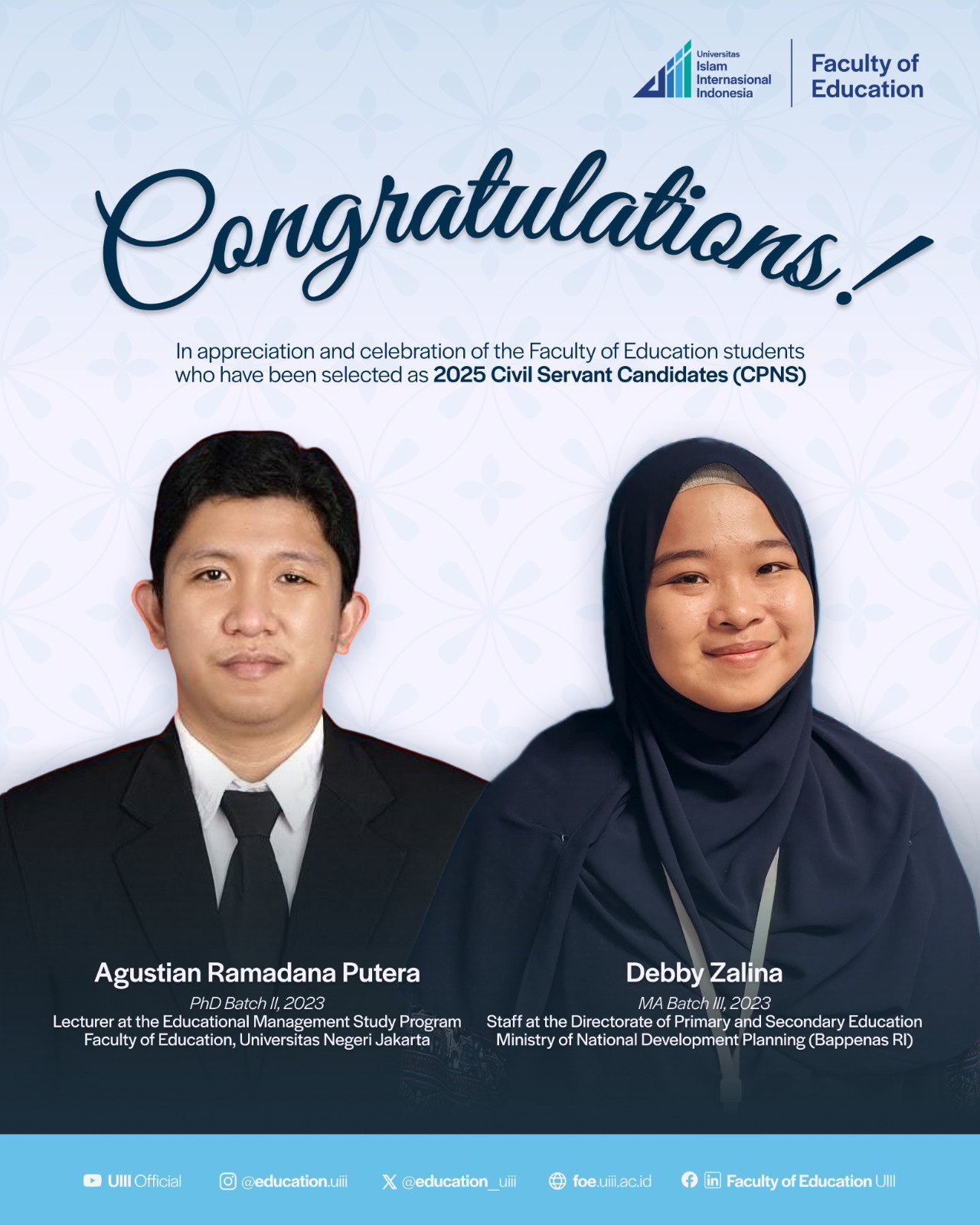


Three Keys to Win A Travel Grant to the USA Conference
Three Keys to Win A Travel Grant to the USA Conference
By Muhammat Sabar Prihatin (Phd student at the Faculty of Education UIII 2023)
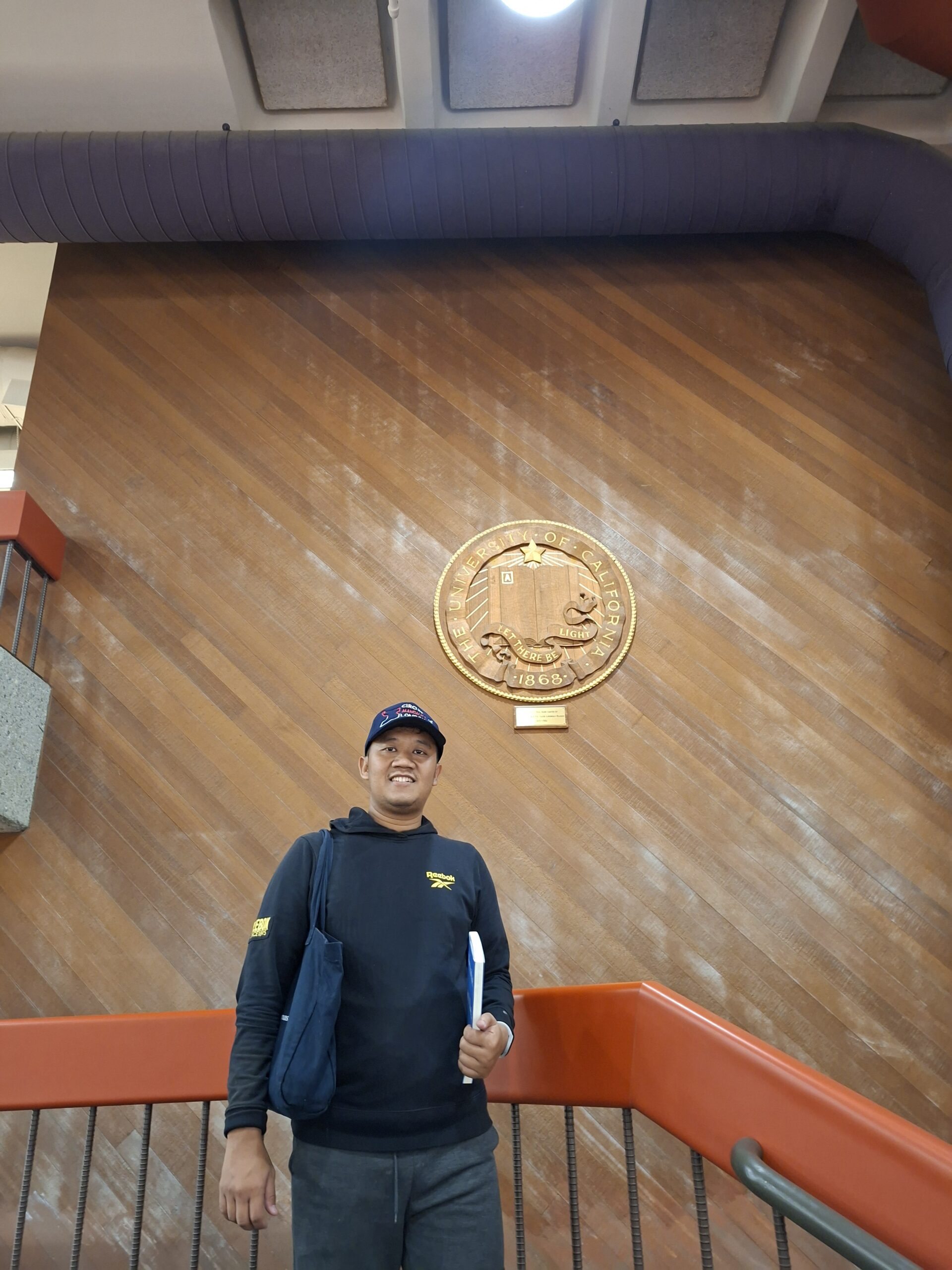
 Being accepted as a presenter in six different international conferences in Indonesia and abroad marks a significant ambition of my second-year study journey here in the faculty of education UIII. From November 2024 to June 2025, I already presented my papers in several conferences, such as the third International Conference on Religious Moderation (ICROM) held by the Ministry of Religious Affairs of Indonesia in Jakarta, 5-7 November 2024, where our lecturer Dr. Andar was one of the keynote speakers in this event. I also had a chance to present my paper online in the International Conference on Research, Community Service, and Gender Studies (ICRCSGS) conducted by UIN Imam Bonjol Padang, West Sumatera, 5-6 December 2024. Prof. Nina, our dean, was one of the keynote speakers. Not to mention, on 10-11 May 2025, I presented my paper in the third International Conference on Islamic Education and Science Development (ICONSIDE) held by UIN Mataram, Lombok, West Nusa Tenggara. The head of the PhD in Education program, Dr. Bambang, was one of the keynote speakers in this forum. Lately, I have flown all the way from Jakarta to Los Angeles to present my work in the Society for the Anthropology of Religion (SAR) Biennial Conference conducted by the American Anthropological Association, taking place in the University of California, Santa Barbara (UCSB), California, USA, 21-23 June 2025.
Those experiences reflect my endeavours to engage in national and global academic conversations as an emerging scholar. This story would have never happened unless because of various valuable lessons I learned, particularly from our beloved university. I figured out three keys that I believe had enabled me successfully to participate in such meaningful academic events I mentioned before, including winning a competitive travel grant for the U.S. conference. Let me share my reflection on this story in more detail, as follows.
Themed Religiosities, Ecologies, and Environmentalisms in the Age of the Anthropocene, the SAR conference was attended by hundreds of presenters, such as university students, lecturers, and professional researchers, coming from world top institutions and universities, such as Harvard, Stanford, Oxford, Michigan, Toronto, Cambridge, Edinburg, SOAS, Melbourne, Sydney, Beijing, Taiwan, and many more. In that conference, I was the one and only presenter coming from Indonesian university, which is our beloved UIII. I shared my comparative findings about the roles of two prominent Indonesian Islamic mass organizations, NU and Muhammadiyah, in their stewardship towards environmental obstacles in Indonesia based on Wasatiyah principles. Actually, there was another Indonesian presenter, my colleague who is currently a PhD student in the faculty of Humanities and Social Sciences at UCSB. He is the one who shared the information about this conference with me. Thanks to a friendship that turned into networking.
Thank God, in addition to being accepted as presenter, I also won a travel grant that is awarded to only five grantees in the SAR conference. I was so happy to be one of them. To apply for this grant, we are required to submit an accepted abstract, statement letter explaining why we fit the requirements, and latest CV. This grant was very beneficial to facilitate my U.S. Visa application as well as to financially support my departure to the USA.
The SAR conference, for me, is one of the most prestigious and essential academic forums I have ever joined. It presented expert scholars who shared their academic works that positively have direct impacts on wider society, including in the environment where the study was conducted. Additionally, their findings offer adaptable policies and recommend concrete actions that can be adopted by governments and the stakeholders, leveraging benefits of the research itself. Overall, their presentation really amazed me in the sense of the way they did their study, and this is what I mean by essential, that academic conferences become an inspiring platform to exchange knowledge and shape understanding through thoughtful and meaningful research for the goods of human beings as well as the environment.
Should I leave a message to encourage colleagues, as emerging scholars, to take part in such academic forums, I have three things to say. First I would say public events matter. Let us join in public lectures, such as seminars, conferences, book discussions, etc., that we think can enrich our knowledge and broaden perspectives even if the topic falls apart from the field of our study. Such programs often help unexpectedly connect our study field with other branches of disciplines. This combined-areas meeting can be crucial to discover distinct sights in conducting research as well as a key factor for collaborative study. The SAR conference topic is actually not really my study area since it is more on religion, society, and environment, while my major is education. However, I remember the fifth ClimateTalk on Muslims Environmentalism held by FOSS and a public lecture on Faith & Environment: Pragmaticism, Piety, and Ethics held by our university inspired me to write the paper.
Secondly I suggest that anything can be studied scientifically. Let us take benefits from classes, courses, or programs, such as writing clinics in our library, that offer us opportunities to learn research methodology, whether qualitative, quantitative, or mixed-methods. For me, research skills, such as collecting and analysing data, constructing conclusions or reflections, and knowing proper tools are keys that enable us to conduct a scientific study properly. Surely it is great if we can apply more than one method in doing research. But, truly mastering one approach only is already sufficient to study any human activities, events, or phenomena academically. So, instead of doing complex research such as field work for my paper in the SAR conference, I chose the most doable method for me by doing a comparative content-analysis study. I can do this because I have learned several research methodology courses previously.
Last but not least, thanks to the existing various communities in our university. I believe such Islamic Global Challenges (IGC) initiative under the faculty of Islamic Studies in our university is crucial for all civitas academia, including students and lecturers from any department. Such programs can serve as a platform for collaboration and contribution to increase our concerns toward global issues through research or real actions. Thus, our university should optimize their roles/functions so that the beneficiaries will also get more maximum. I strongly believe that the potential of IGC I mentioned in the SAR Travel Grant proposal form at that time became one of the most powerful reasons why I won the award.
Call for Papers: The 5th Faculty of Education Annual Conference 2026
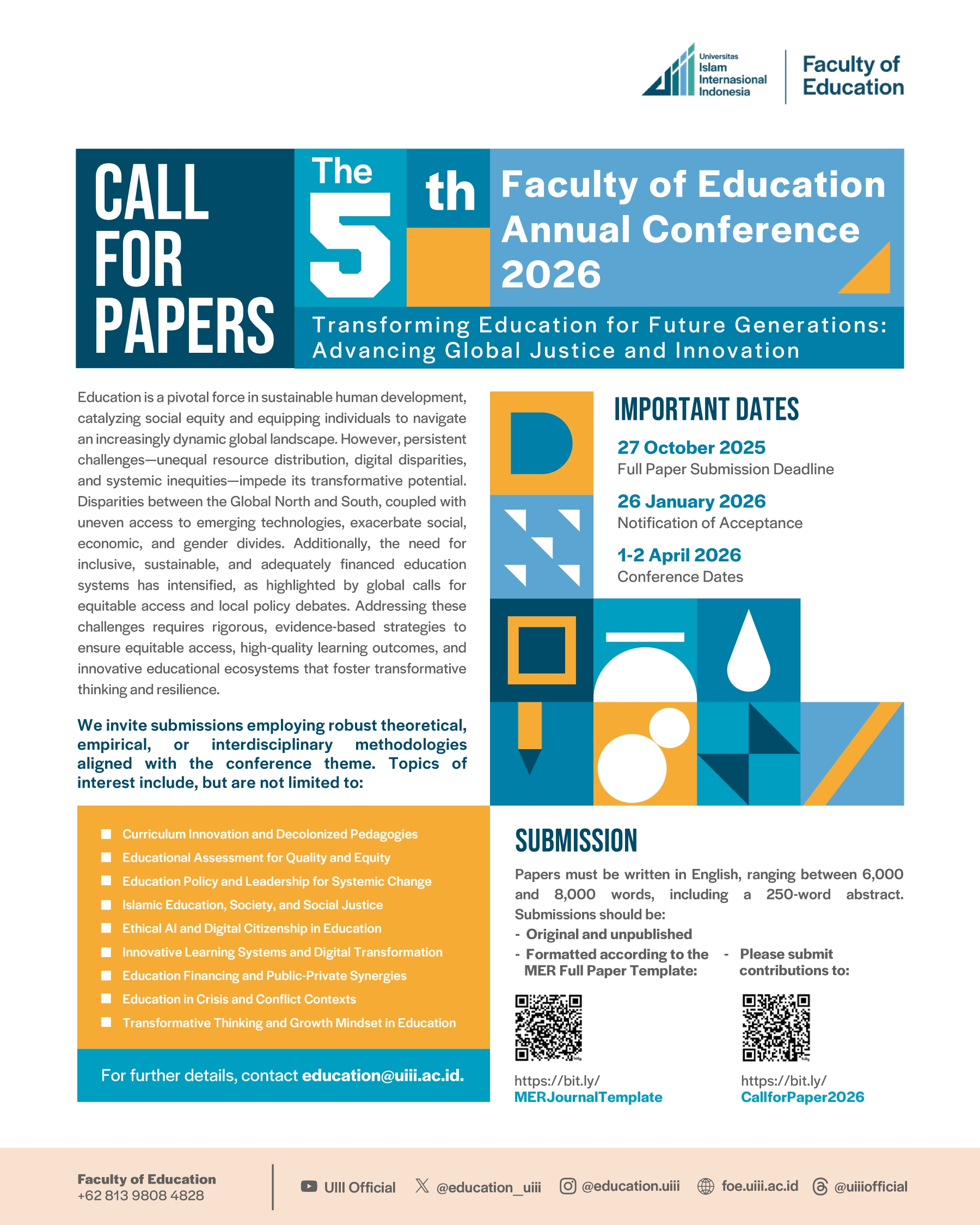
 Call for Papers: The 5th Faculty of Education Annual Conference 2026
Transforming Education for Future Generations: Advancing Global Justice and Innovation
Education is a pivotal force in sustainable human development, catalyzing social equity and equipping individuals to navigate an increasingly dynamic global landscape. However, persistent challenges—unequal resource distribution, digital disparities, and systemic inequities—impede its transformative potential. Disparities between the Global North and South, coupled with uneven access to emerging technologies, exacerbate social, economic, and gender divides. Additionally, the need for inclusive, sustainable, and adequately financed education systems has intensified, as highlighted by global calls for equitable access and local policy debates. Addressing these challenges requires rigorous, evidence-based strategies to ensure equitable access, high-quality learning outcomes, and innovative educational ecosystems that foster transformative thinking and resilience.
The Faculty of Education at Universitas Islam Internasional Indonesia (UIII) invites scholars, policymakers, educators, and researchers to submit abstracts and papers for the 5th Annual Conference, to be held in 2026, under the theme "Transforming Education for Future Generations: Advancing Global Justice and Innovation." This two-day hybrid conference will serve as a global platform for interdisciplinary dialogue, empirical research, and policy-relevant solutions, drawing on UIII’s Faculty of Education concentrations: Curriculum, Teaching, and Learning; Educational Assessment and Evaluation; Education Policy, Management, and Leadership; and Education and Society. The conference aims to address pressing challenges in global education, from ethical AI integration to fostering growth mindsets and equitable financing.
We invite submissions employing robust theoretical, empirical, or interdisciplinary methodologies aligned with the conference theme. Topics of interest include, but are not limited to:
- Curriculum Innovation and Decolonized Pedagogies: Designing inclusive curricula and teaching practices that integrate diverse cultural, historical, and Islamic perspectives to foster equitable, innovative, and deep learning environments.
- Educational Assessment for Quality and Equity: Advancing evidence-based assessment and evaluation methodologies to ensure high-quality, inclusive learning outcomes, particularly for diverse and marginalized groups.
- Education Policy and Leadership for Systemic Change: Formulating policies and leadership strategies to promote global partnerships, sustainable financing, and resilient education systems, linked to the Education Policy, Management, and Leadership concentration.
- Islamic Education, Society, and Social Justice: Investigating education’s role in promoting social cohesion, civic engagement, and equitable access for girls, boys, and disadvantaged groups, especially in conflict-affected regions.
- Ethical AI and Digital Citizenship in Education: Leveraging artificial intelligence and digital technologies to enhance learning while addressing ethical challenges, algorithmic biases, and access disparities.
- Innovative Learning Systems and Digital Transformation: Developing hybrid, lifelong, and technology-enabled learning ecosystems to shift paradigms from traditional schooling to flexible, inclusive learning.
- Education Financing and Public-Private Synergies: Creating sustainable funding models through public-private partnerships to support free education mandates and strengthen school ecosystems, particularly in underserved areas.
- Education in Crisis and Conflict Contexts: Ensuring children’s right to education in times of conflict and displacement through resilient school ecosystems and global partnerships.
- Transformative Thinking and Growth Mindset in Education: Fostering resilience, adaptability, and innovative thinking in learners and educators through evidence-based pedagogical and policy interventions to promote lifelong learning and equitable educational outcomes.
Submission Guidelines
Papers must be written in English, ranging between 6,000 and 8,000 words, including a 250-word abstract. Submissions should be:
- Original and unpublished
- Formatted according to the MER Full Paper Template:
https://bit.ly/MERJournalTemplate
Please submit contributions to: https://bit.ly/CallforPaper2026
Important Dates
- Full Paper Submission Deadline: 27 October 2025
- Notification of Acceptance: 26 January 2026
- Conference Dates: 1-2 April 2026
This conference is free of charge. However, participants are expected to cover their own travel and accommodation expenses. For affordable on-campus accommodation, please contact: +62 812-8000-6307 (Direktorat Pengembangan Usaha UIII)
Collaboration of Three Campuses Brings Forth STEM Trails in Aceh
 Collaboration of Three Campuses Brings Forth STEM Trails in Aceh
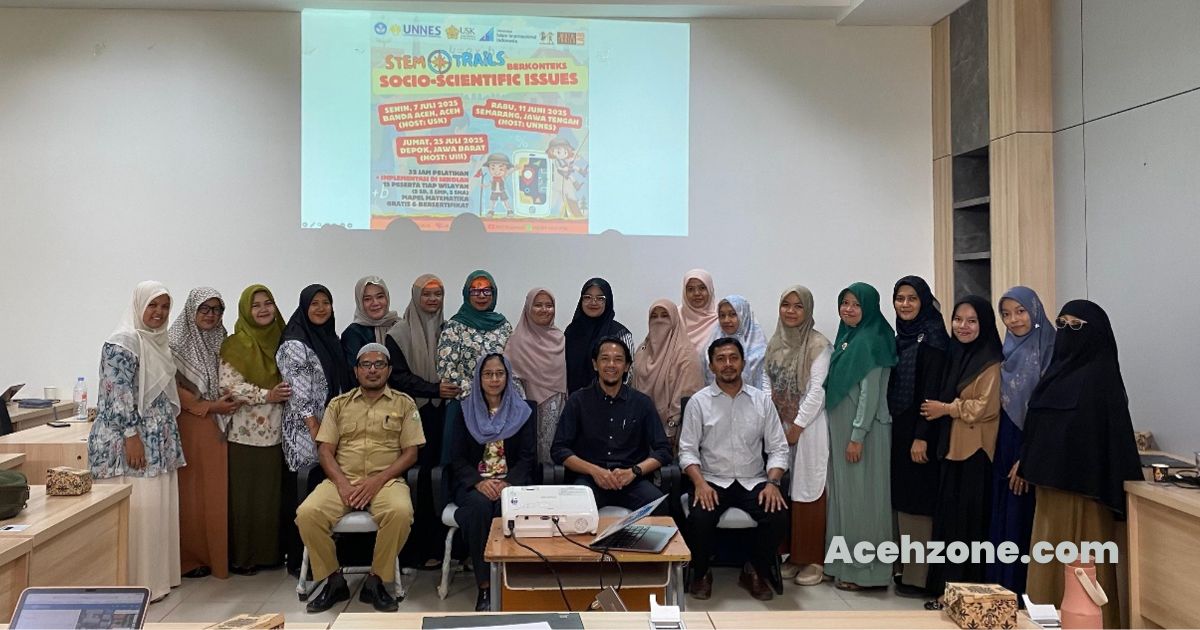
Banda Aceh (7/7/2025)—An innovative educational training program under the name STEM Trails with Socio-Scientific Issues was successfully held in Banda Aceh on Monday, July 7, 2025. This event was born from a collaboration between Universitas Syiah Kuala (USK), Universitas Negeri Semarang (UNNES), Universitas Islam Internasional Indonesia (UIII), and Math Trails Lab as part of the Indonesian Collaborative Research (Riset Kolaborasi Indonesia) program.
This training program, attended by elementary, middle, and high school teachers from various regions of Aceh, aims to provide educators with in-depth STEM teaching skills. Participants were supplied with 32 hours’ worth of materials, discussions, and hands-on implementation in their respective schools—all free of charge.
Three speakers were invited to facilitate this training session: Prof. Mailizar (USK) on STEM Learning, Dr. Adi Nur Cahyono (UNNES) on the concept of Math Trails, and Dr. Destina Wahyu Winarti (UIII) on integrating socio-scientific issues into learning.
Participants weren’t just passive recipients in this training, as they were also assigned to create and implement Math Trails in schools, which would then be documented into MathCityMap, a GPS-based educational application. Through this approach, mathematics is no longer a mere number-centered concept, but also a relevant, real-world experience.
This event is an endeavor to strengthen national-level synergy in developing a relevant and engaging educational framework that encourages critical thinking through deep learning. Banda Aceh serves as the first point in a series of national trainings, which will be continued in Semarang and Depok on later dates.
Organizing parties hope that this event can become a catalyst for educational transformation in Aceh as well as Indonesia. This cross-sector collaboration is expected to continue through mentoring, further research, and development of STEM-based learning models that can adapt to the ebbs and flows of time.
