Theories of Learning
This course is a concentration core subject in a doctorate program in the Faculty of Education of UIII. The course provides a broad overview of some of the influential learning theories and the implications of these theories for educational practice.
Each of us carries assumptions about how, why, and where people learn and what constitutes adequate learning or understanding in various situations. These assumptions come from our cultural backgrounds and upbringing, from our own “apprenticeship of observation”(Lortie, 1975) as learners who have engaged in different endeavors, perhaps from our work as educators of children and adults, and from other pursuits such as being a researcher or an expert in some arena. One major goal of this course will be for each of us to make our assumptions about the processes and products of learning as explicit as possible. Becoming aware of our theories of learning assists us with the second major goal of this course—gaining a deeper understanding of the significant theories of learning and development that have influenced our educational systems.

Qualitative Data Analysis
This course aims to provide students with an orientation to the discipline and practice of qualitative research, especially qualitative data analysis as part of research methodology-related courses. Topics include: the discipline and practice of qualitative research, qualitative research design, qualitative research characteristics, and objectives. The course will also offer the students with practice of choosing a qualitative research approach, formulating a good qualitative research question, collecting, analyzing, interpreting qualitative data, drawing a conclusion, and appraising a qualitative research report. A high proportion of course will be devoted to practices of analyzing and discussing qualitative data, especially those from observations, interviews, and documents. Over the course scaffolding will be provided under the apprenticeship.
Quantitative Analysis and Advanced Statistics
This course aims to provide an overview of quantitative research methods and the advance statistics that often encounter within educational study. This course gives opportunity for students to understand and use more sophisticated statistical techniques to formulate and test research hypotheses, conduct rigorous data analysis up to interpret and disseminate the findings as well as evaluate the existing quantitative research.
Graduate Seminar in Educational Research
This course is designed as a foundation for postgraduate students to beginning their PhD in Education at UIII. The aim of this course is to provide students with the concepts and approaches in formulating educational research, including identifying research interests, research questions, and selecting appropriate research methods (quantitative and qualitative) through oral and written modes of communication. The course will also discuss various research issues in educational settings. Numerous careers are designed within this course, such as researcher, educator, and policy analyst.
Wasathiyatul Islam in the Globalizing World
In this course, students learn various concepts and practices of wasatiyya as introduced by scholars and practiced within Indonesian societies. Students are trained to become familiar with wasatiyya conceptually from the Qur’an, Hadis and contemporary Islamic thinkers, as well as from experiences in Indonesia as exposed and managed by civil society exponents and the state. At the end of the lecture, students are expected to have in-depth knowledge of various concepts and practices of wasatiyya in contemporary Indonesia. The teaching method used includes lecture, presentations, discussions, and assignments (paper writing), all of which are summarized in class seminar activities.
Advanced Islamic Education
The course aims to introduce students to critically explore diverse interpretations of ‘Islamic Education’ and examine historical, theological and
philosophical aspects of classical and modern Muslim educational thought, practice and institutions. Students will be introduced to the concept of ‘critical, contextual, plural and transformative Islamic Education’ through discussing diverse perceptions and scholarly approaches to define the subject. Students will have the opportunity of engaging critically with the Muslim educational/pedagogical legacy and explore how it shaped the formation of classical Islamic scientific and scholarly traditions. The course provides a reflective insight into the sources and origins of Islamic educational thought with special reference to perceptions of education in the Qur’an, prophetic traditions and the wider Muslim intellectual heritage. The role of knowledge(ilm) and knowledge bearers (ulama) in expressing Islamic civility within ethnically, culturally plural and gendered social spaces.
The course will specifically examine the traditions of Islamic Education, their historical formation and contemporary articulations within the
context of majority/minority Muslim societies in Global Southeast Asia. Students will assess existing national Islamic Education policies (
construction of curriculum, textbooks, pedagogy and teacher education systems) regarding mainstream as well as Islamic higher education
institutions. They will further discuss the educational challenges facing global Muslim communities with a special reference to understanding the process of educational change and its relationship with the wider sociopolitical reform initiatives. The course will critically examine how best to develop appropriate Islamic educational strategies to tackle religious extremism and address issues concerning the faith development of Muslim young people in the modern world.
The emphasis will be on the importance of contemporary educational research into Islamic Education, especially research springing from the
Social Sciences and Humanities directed towards philosophy, pedagogy, curriculum and policy related developments in contemporary Islamic
Education. Students will explore empirical and conceptual interdisciplinary research agenda of the field and develop their own specific areas of
research interest in Islamic Education. They will be encouraged to develop their own philosophies of Islamic Education.
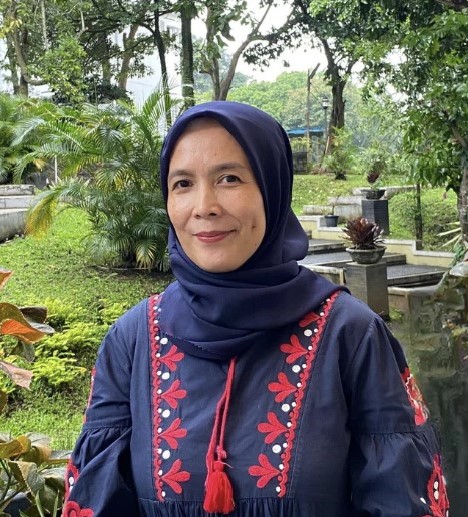
Gin Gin Gustine, Ph.D.
About SIR Fellow
Gin Gin Gustine is a dedicated researcher and faculty member with extensive experience in the field of English language education. Currently serving as an Associate Professor at English Education Study program in Universitas Pendidikan Indonesia (UPI), she has been actively involved in both academic and applied research for over 23 years. Her research focuses on language and literacy education, teacher professional development, collaborative online international learning, and her works have contributed to advancements in English as Foreign Language (EFL) teaching and learning. She has been granted numerous and competitive research fund, both from the Indonesian Ministry of Education and local institutions and published numerous articles in peer-reviewed journals and presented at international conferences, showcasing her commitment to advancing knowledge in her field. She holds a Doctoral degree in field of language and literacy education from Deakin University, Australia, along with prior degrees from UPI. When not immersed in academic pursuits, she enjoys spending time in nature and savouring the aroma of freshly brewed coffee in her hometown, Bandung.





Deakin University, Australia
2014
Master in English Education
Universitas Pendidikan Indonesia
2006
Bachelor in English Education
IKIP Bandung
1999
Universitas Pendidikan Indonesia
2001 - Now
Translator at Save the Children International Institute
2017 - 2018
Academic Tutor at School of International Politics, Deakin University, Australia
2010 - 2012
Bahasa Teacher at Christian College Geelong, Australia
2010 - 2013
Bahasa Teacher at St. Francis Xavier, Geelong, Australia
2010 - 2013
Bahasa Teacher at Matthew Flinders Secondary School,
Geelong, Australia
2010 - 2013
Translator for Japan-Indonesia Corporate Agency (JICA)
2002 - 2007
Translator for BRAILLO International Institute
2002 - 2005
Sri Setyarini, and Gustine, Gin Gin and Harto, Sri and Muslim, Ahmad Bukhori (2021) Promoting students’ critical speaking skill through Plus-Minus-Interesting (PMI) strategies : a case study of Indonesian junior high schools. 3L; Language,Linguistics and Literature,The Southeast Asian Journal of English Language Studies., 27 (3). pp. 199-214. https://ejournal.ukm.my/3l/article/view/42880
Gustine, G. (2021). "How Do You Work Out This Zoom Classroom?": Pre-service English Teachers’ Challenges and Expectations During Transition to Online Teaching Practicum. Research and Innovation in Language Learning, 4(1), 68-78. doi:http://dx.doi.org/10.33603/rill.v4i1.4301
Sophia Fithri Al-Munawwarah, Gin Gin Gustine, Bachrudin Musthafa. (2020). Fostering Students’ Critical Reading Through Digital Short Story Trailer Project. https://www.atlantis-press.com/proceedings/conaplin-20/125956015
Gustine, G., & Insani, H. (2019). English students’ experience of reframing narrative stories from a critical literacy perspective. Indonesian Journal of Applied Linguistics, 8(3), 691-696. doi:https://doi.org/10.17509/ijal.v8i3.15254
Muhammad Kamarul Kabilan, Malini Ganapathy, Eric Bray, Gin Gin Gustine and Mizna Qasim. (2019). Facebooking Across Asia – Learning English Along the Way? Pertanika Journal of Social Science and Humanities, Volume 27, Issue 1, March 2019. http://www.pertanika.upm.edu.my/pjssh/browse/regular-issue?article=JSSH-2588-2017
Ni Kadek Heny Sayukti, Wachyu Sundayana, Gin Gin Gustine. (2019). Teaching Independent Reading in Supporting Balanced Literacy Learning for Young Learner. https://www.atlantis-press.com/proceedings/icollite-18/55915096
Gustine, G. (2018). A SURVEY ON CRITICAL LITERACY AS A PEDAGOGICAL APPROACH TO TEACHING ENGLISH IN INDONESIA. Indonesian Journal of Applied Linguistics, 7(3), 531-537. doi:https://doi.org/10.17509/ijal.v7i3.9798
Gustine, G (2013. Designing and implementing a critical literacy-based approach in an Indonesian EFL secondary school. International Journal of Indonesian Studies, Vol 1
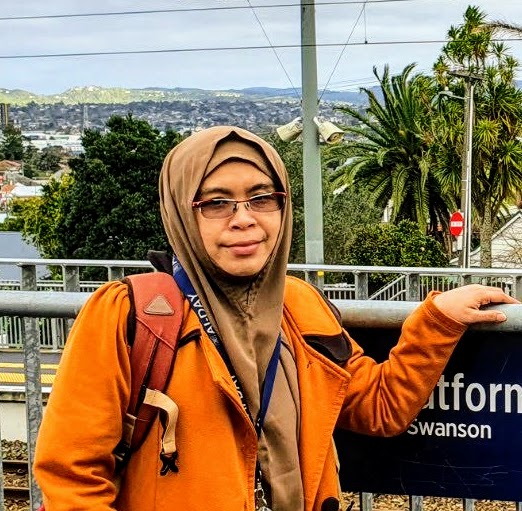
Naning Tri Wahyuni, Ph.D.
About SIR Fellow
She is an experienced professional at the tertiary level of Education with a bachelor’s degree in Applied Science (distinctive), a master’s degree in Education (magna cum laude), and a PhD degree in Applied Language Studies and Linguistics from the University of Auckland (with a distinguished graduate award). She received various scholarships and funding from my undergraduate to my master’s and PhD studies, signifying substantial degrees of her passion, effort, and accomplishment. She worked at the tertiary level of Education for decades as a tutor, instructor, consultant, lecturer, and researcher. She has lived overseas for over a decade (in Australia, the UK, and New Zealand) and has gained great work and study experience, including global networking, friendship, and relationships. She is an organised, personable, and action-oriented person with a deep passion for working with students from various cultural backgrounds, including internationally and multiculturally related backgrounds.
2023
Master’s degree in education (Major: English Language Education) from Universitas Muhammadiyah Surakarta, Indonesia
2015
A Diploma in Children's Education, National Open College-Southampton, The UK
2011
A Diploma in Early Learning Education (NVQ Level 2 – the UK Educational Standard), Eastleigh College. Southampton-United Kingdom.
2009
Bachelor’s degree in forestry (Major: Forest Product
Technology) from Universitas Gadjah Mada, Jogjakarta, Indonesia
2002
2022 - 2023
Casual academic staff at the University of Auckland of New Zealand, Department of Early Childhood Education Centre
2018 - 2022
English lecturer and Instructor. LPIDB (Language Centre of the Muhammadiyah University of Surakarta) and International Class programs, International Office, Muhammadiyah University Surakarta, Indonesia
2015 - 2018
Teacher educator and educational consultant at Al Abidin International Schools. Al Abidin Institution, Surakarta, Indonesia
2014 - 2018
a permanent staff at the Student Services Department,
University of Southampton, England, the United Kingdom
2009 - 2013
Wisnu Kristanto, Nur Hidayat, Naning Tri Wahyuni and Much Koiri (2023): Optimizing online English language learning and teaching, Education 3-13, http://doi.org/10.1080/03004279.2023.2251964.
Wahyudi, T. N., Adityarini, H., Harsono, H., Puspitasari, A., Wahyuni, N. T. (2023). The effect of the use of the internet for learning activities and pedagogic abilities on teacher performance. Journal of Higher Education Theory and Practice 23(9). https://doi.org/10.33423/jhetp.v23i9.6127.
Wahyuni, N. T. (2022). Investigating Primary School Students’ Development of Interest in English Language Learning: Classroom-Related and Parental Involvement. A Ph. D Thesis. https://researchspace.auckland.ac.nz/handle/2292/61839.
Wahyuni, N. T. (2022). Trial of synthetic phonics extended to storybook reading to improve the reading skills of Indonesian third graders enrolled in a bilingual school. International Journal of Instruction, 15(4), 1091-1112. https://doi.org/10.29333/iji.2022.15458a.
Wahyuni, N.T. (2020). A review: The power of interest for motivation and engagement, Renninger, K. A. & Hidi, S. E. (2016), New York: Routledge. TESOLANZ, 28:109 – 111. ISSN 1172-9694.
Wahyuni, N.T. (2020). Catalyst in the family system: The nexus between parental involvements and child's language learning development. Proceeding of CLL and ALANZ Symposium 2020, Association of Applied Linguistics in Aotearoa New Zealand. http://doi.org/10.13140/RG.2.2.19545.95846.
Wahyuni, N.T. (2019). Bringing Children's topic interest to improve their participation in English reading class. Proceeding of Inaugural Conference on Language Teaching and Learning: Cognition and Identity. The Education University of Hong Kong.
Wahyuni, N.T., Fauziati, E., Hikmat, M.K., (2016). The effectiveness of using phonics instruction and storybooks in English reading classes to improve student participation. Jurnal Penelitian Humaniora, 17/1.
Wahyuni, N. T. (2015). Developing Phonics-Based Combined with Book Reading Program In English Teaching Reading For Young Learners: Research And Development at an Indonesian Bilingual School. A master’s Thesis. UMS Repository.
Wahyuni, N.T., Fauziati, E., Hikmat, M.K., (2015). Exploring the Effectiveness of Phonics Instruction-Enhanced Book Reading Program in Developing Early Reading Skills of Indonesian Young Learners. UMS Repository.
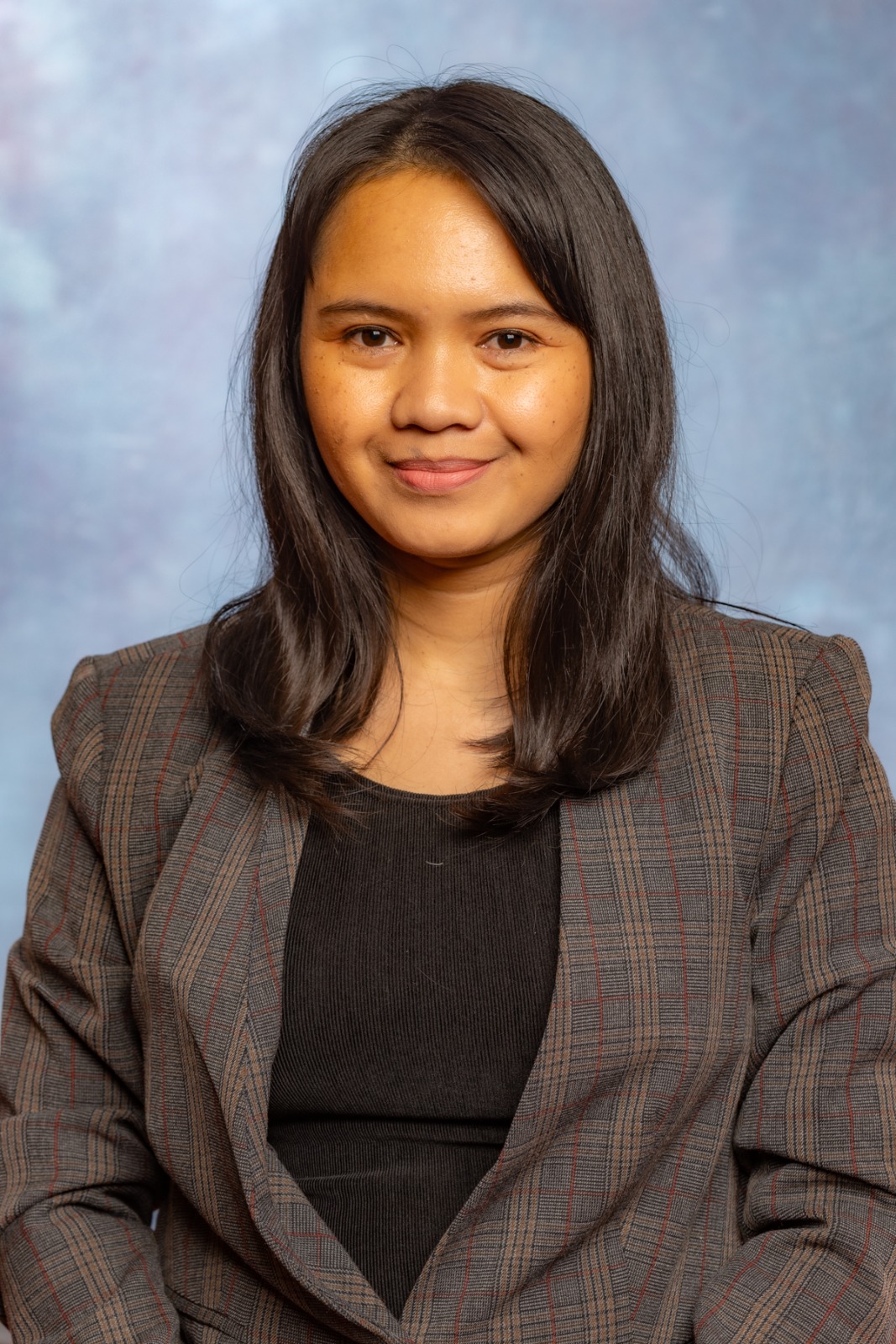
Maretha Dellarosa, Ph.D.
About SIR Fellow
The Ohio State University, U.S.A.
2018 - 2022
Master of Arts (M.A.) in Rethinking Early Childhood and Elementary Education (RECEE)
The Ohio State University, U.S.A.
2014 - 2016
Bachelor in Elementary Teacher Education Program,(S.Pd)
The State University of Surabaya, Indonesia
2007 - 2011
2023
Summer Associate, QualLab, College of Education and Human Ecology, The Ohio State University
2022
Guest lecturer for virtual teaching at Universitas Muhammadiyah Jakarta, Indonesia
2022
Guest lecturer for virtual teaching in English Department, Indonesian Islamic University
2020
Office Assistant at Buckeye Village Student Family Housing
2019 - 2022
Teacher assistant in Graham Primary School, Columbus, Ohio
2014 - 2015
Teaching Assistant, Mathematics, Faculty of Education, Elementary Teacher Program , The State University of Surabaya, Indonesia
2011
Private Teacher for elementary students at Crown Course, Indonesia
2010 - 2013
Served as a Teacher in “Kampung Pemulung” (Slum area)
2010 - 2012
Dellarosa, M. (2021). “Where am I?” A Critical Discourse Analysis of Religious Representation in Indonesia. IAFOR Journal of Education, 9(6).
https://doi.org/10.22492/ije.9.6.07
Combs, L. D., Dellarosa, M., Kim, M., Pittman, Alexander G-J, Gilbert, C., Smith, S. J., Smith, T., Valley, S. N. & Pasque, P. A. (2021). Radical interrelated qualitative space in the midst of multi-pandemics: A collaborative scholarly personal narrative. Cultural Studies Critical Methodologies. 21(6), 509-520. https://doi.org/10.1177/15327086211044827
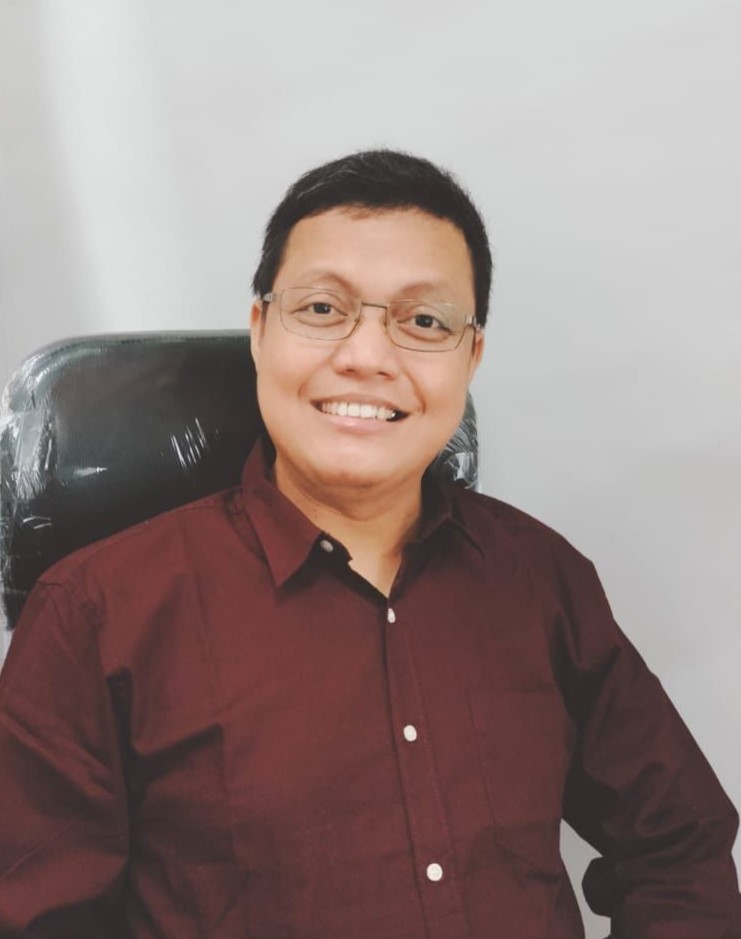
Arif Hidayat, Ph.D.
About SIR Fellow
2022 - 2023
Doctor of Philosophy in Education at Graduate School of International Development and Cooperation Hiroshima University
2018
Master of Science at Institute Teknologi Bandung
2007
Bachelor in Physics Education at Universitas Pendidikan Indonesia
2004
2009 - Now
Board of Directors at Nur Al Rahman School (Cimahi)
2019 - Now
Visiting Professor at Tashkent State University of Economics, Uzbekistan
2022
Visiting Professor at Illinois State University, USA
2013
Visiting Professor at Naruto University of Education, Japan
2011
Project Manager at STEM – PBL Indonesia (SEAMEO STEM Education Thailand and Head Foundation Singapore)
2022 - 2023
Project Manager at Regional Training of Lesson Study for Learning Community (Asia Africa Learning Improvement Network and Kementrian Pelajaran Malaysia)
2022
Project Manager at National Coordinator STEM Leadership (MoE Indonesia with NIE@NTU and Temasek Foundation Singapore)
2021 - 2023
Project Manager at National Science Educators Traning (MoE Indonesia and Nagoya University, Japan)
2018
Project Manager at Educational Training for Society 5.0 (Indonesia Universities Consortium and Tsukuba University, Japan)
2019
Hidayat, A (2022). Empowering Teachers to Create STEM Lesson. Teaching STEM in Southeast Asia: A Handbook for Educators. Head Foundation. https://headfoundation.org/wp-content/uploads/2022/08/Handbook-5-Teaching-STEM-in-Southeast-Asia-DIGITAL.pdf
Comparison of Nature of Science Profile in Indonesia, Malaysia, and Singapore Secondary Science Textbooks: Case of Electricity Lesson. PH Dhitareka, A Hidayat, P Siahaan - Jurnal Penelitian Pendidikan IPA, 2022 https://www.researchgate.net/publication/365934072_Comparison_of_Nature_of_Science_Profile_in_Indonesia_Malaysia_and_Singapore_Secondary_Science_Textbooks_Case_of_Electricity_Lesson
Hidayat, A (2022). Learning Leadership Revitalizations through SMART School toward Learning Society Post Pandemic Covid-19
Indicators for the measurement of teachers’ professional identity across Asia and Africa: a Delphi study. MA Samsudin, MC Moen, Hidayat, A. PTT Hai, B Hagos Hailu… - Journal of Asian and African Studies, 2021 https://journals.sagepub.com/doi/abs/10.1177/0021909621992785
Comparative institutional analysis of participation in collaborative learning. E Saito, TDH Khong, Y Sumikawa, M Watanabe, Hidayat, A- Cogent Education, 2020 https://doi.org/10.1080/2331186X.2020.1779556
Typologies of lesson study coordination: a comparative institutional analysis. E Saito, TDH Khong, A Hidayat, S Hendayana… - Professional Development in Education, 2020 https://doi.org/10.1080/19415257.2018.1561495
Technological pedagogical content knowledge (TPACK) instrument for Indonesia science pre-service teacher: Framework, indicators, and items development A Hidayat – UNNES Science Education Journal, 2019. https://journal.unnes.ac.id/sju/usej/article/view/35166
Developing And Validating A Technological Pedagogical Content Knowledge (TPACK) Instrument For Secondary Physics Preservice Teachers In Indonesia A Hidayat - UNNES Science Education Journal, 2019. https://journal.unnes.ac.id/sju/usej/article/view/23087