Unleashing the potential: spatializing middle school mathematics for enhanced learning
 Winarti, D.W., Patahuddin, S.M. & Lowrie, T. Unleashing the potential: spatializing middle school mathematics for enhanced learning. Educ Stud Math (2024). https://doi.org/10.1007/s10649-024-10343-3
Abstract
Keywords

Improving the Quality of Teaching in Basic Education in Indonesia

Improving the Quality of Teaching in Basic Education in Indonesia
July 29, 2024
Contributor: Supriyono | Editor: Dadi Darmadi
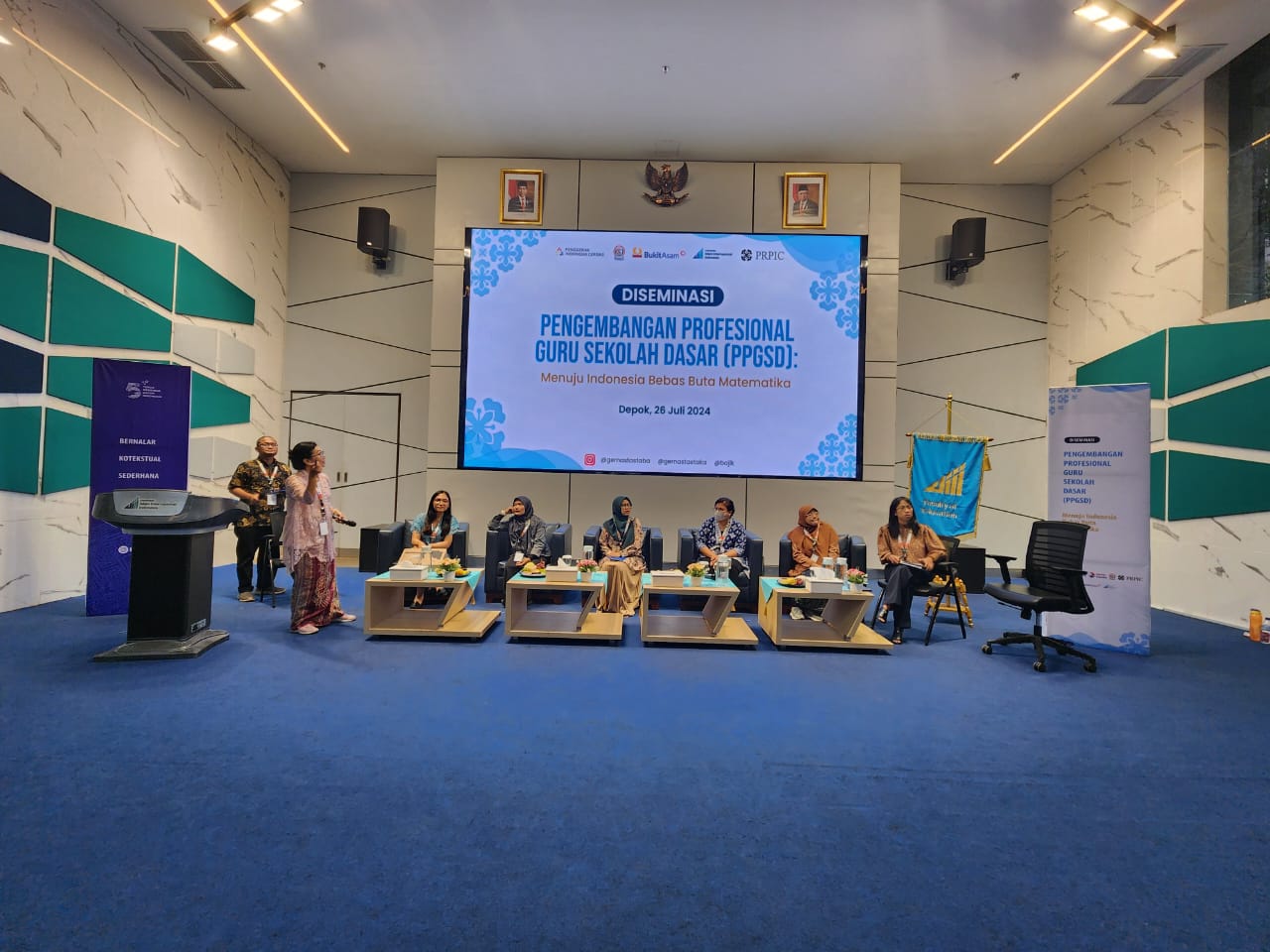
The UIII Faculty of Education recently facilitated the dissemination of professional development programs for elementary school teachers, organized by the Penggerak Indonesia Cerdas Foundation (Pengincer). The event, themed “Towards a Mathematically Literate Indonesia,” took place on July 26, 2024, in the Theater Room of Faculty A Building in Depok, West Java.
This event was a follow-up to the Memorandum of Understanding (MoU) signed between UIII's Faculty of Education and Pengincer on May 6, 2024. Pengincer is a non-profit organization dedicated to enhancing the quality of basic education in Indonesian Elementary Schools (ES) and Madrasah Ibtidaiyah (MI).
The dissemination was divided into two sessions. The first session addressed “Current Conditions and Initiatives in Mathematics Teacher Education in Elementary Schools,” with presentations by Arkhadi Pustaka (Sampoerna University), Dhita Puti Sarasvati (University of Indraprasta PGRI), and Regina Nurashari (Pengincer). Dr. Bambang Sumintono, Head of the PhD in Education program at UIII, served as the session’s discussant.
The second session focused on the “Impact and Results of Gernas Taskara Training on Elementary School Teachers.” Gernas Taskara, a national movement initiated by Pengincer in 2018, aims to eradicate mathematical illiteracy by empowering mathematics teachers in elementary schools. Speakers included Trimadona B. Wiratrisna (Pengincer), Hana Sofiyana (Pengincer), Deshinta Puspa Ayu D.A. (Sampoerna University), Faradillah Haryani (UIII PhD student), Arsyiyatul Alawiyah (Pengincer), and Ratna Widianti Utami (STAI Putra Galuh Ciamis). Dr. Destina Wahyu Winarti from UIII served as the discussant for this session.
“We would like to thank all parties who made this research and dissemination possible, especially PT. Bukit Asam Tbk, Perkumpulan Nusantara Utama Cita, and the Indonesian International Islamic University (UIII). Hopefully, this initial research can continue and provide significant benefits to basic education in Indonesia,” said Achmad Rizali, Chairman of the Board of Trustees of Pengincer.
UIII remains committed to improving the quality of teaching in basic education in Indonesia through research focused on literacy and numeracy. As a research-based graduate institution, UIII aims to produce cutting-edge research that positively impacts society.
Deakin University Visit: Educators Must Be Passionate
 Deakin Visit: Educators Must Be Passionate
By Muhammad Fayyaz Mumtaz
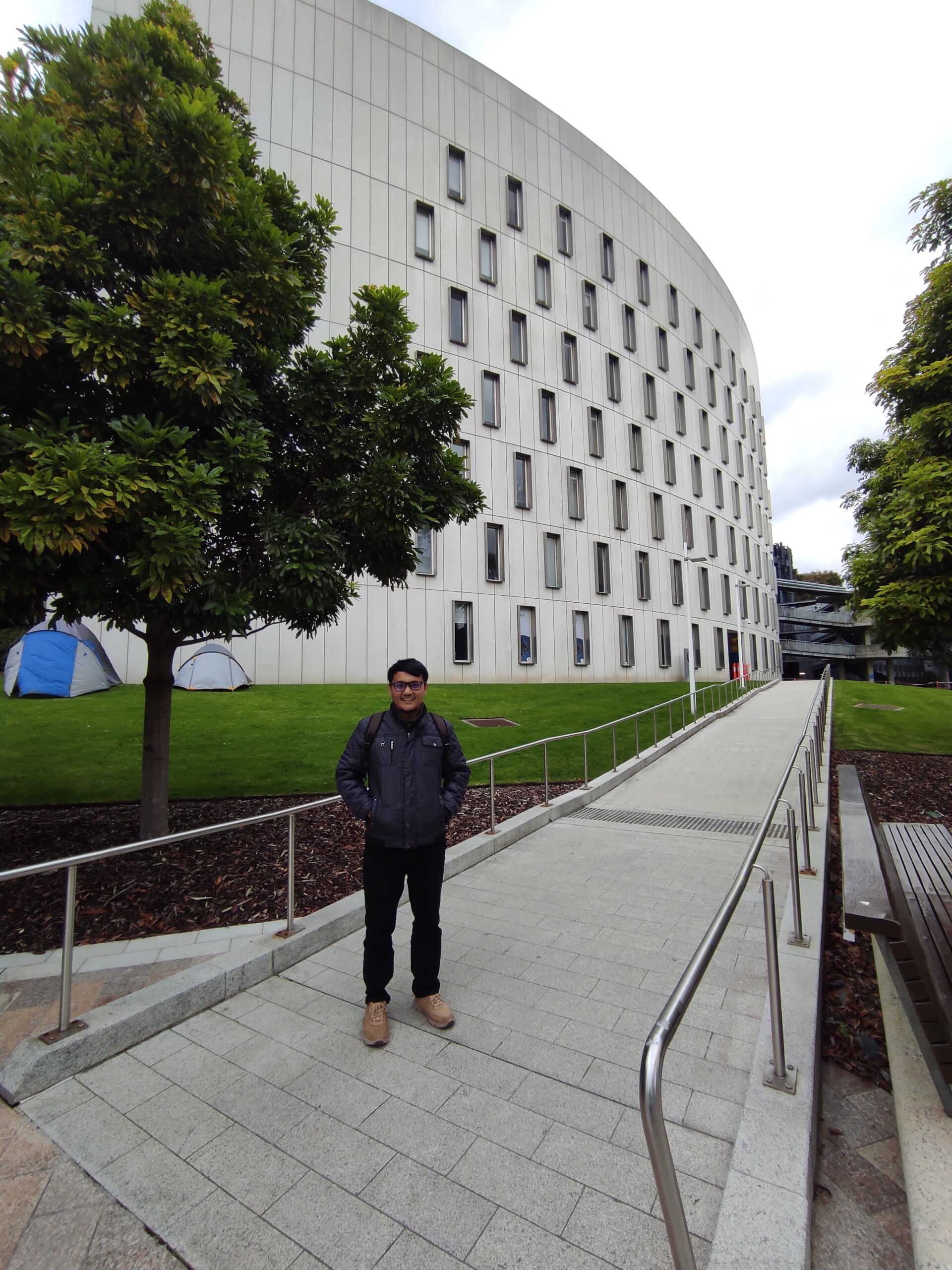
Getting the chance to visit Deakin University, Victoria, Australia, in my opinion, is one of the best gifts of 2024. How could it not be? Australia, as a country, is one I've been eager to visit. I sincerely hope to gain valuable experiences and lessons to reflect upon throughout my academic journey. Upon arrival at Melbourne airport on May 16th, I felt an extraordinary chill. Thick jackets and jeans seemed insufficient to fend off the cold air. The weather in Melbourne is very cold for someone like me who isn't particularly fond of cold weather. Nonetheless, I still smiled with joy and hoped to create beautiful memories about this journey of mine.
Regarding the cities of Melbourne and Burwood, they exceeded my expectations. I thought Melbourne would be like cities such as Singapore, Dubai, or other modern cities that are rather dull. But I was wrong. Melbourne is incredibly beautiful. Not only is the city well-organized and clean, but there are still many houses that give off an English vibe from the 80s-90s, reminiscent of sitcoms like Mr. Bean. Seeing the scarcity of tall buildings, especially in the area where I stayed in Burwood, where tall buildings are rare, adds to the memorable impression that I'll boast about to my friends because of how beautiful and aesthetic the city is.
Nevertheless, the initial experience of visiting Deakin University campus in Burwood left several positive impressions that are still vivid as I write this reflection. First, the university buildings looked new, tidy, and highly aesthetic. Never before had I felt like visiting a university was akin to visiting a 5-star hotel. Perhaps because I come from a rural area in West Java, I am easily impressed by modern interior nuances. The campus is serene and calming for a campus located in the midst of the city, in Burwood. Secondly, I was accompanied by Deb, one of the Deakin staff, who took us on a campus tour.
What impressed me most was when visiting the Visual Art class taught by a lecturer and (in my opinion, an artist), Dr. Fiona. She introduced us to how she teaches her students. Seeing how Dr. Fiona was so enthusiastic and passionate about her field, I, who was previously indifferent to anything related to music, became enthusiastic as well. Perhaps, I thought, this is the quality of teachers in developed countries like Australia, where they are not just teaching to make a living but genuinely want to share knowledge with passion and positive energy. Then I reflected, why was she so enthusiastic and passionate? Perhaps because Australia is a developed country, economically stable, thus it has a good education system. If the economy and education are well intertwined, it will undoubtedly produce the best and most passionate individuals.
Thirdly, my impression when meeting three PhD students, when they talked about their initial entry process, research, and responsibilities as PhD students, I got the impression that unlike what happens to my friends pursuing their PhDs in Indonesia, which seems more stressful, these Deakin doctoral candidates seemed relaxed yet professional, and they knew exactly what they were researching. This indicates the good quality of education at Deakin University, I believe. Because the better the education system, the less stressed the students are, perhaps. Especially when they explained a new term to me, colloquium, which I think can help in effective dissertation guidance mechanisms. In the Colloquium, they said they could have directed and structured discussions with specialized professors and could be efficient. I thought to myself, this is indeed what good research guidance looks like because it doesn't make you fearful but rather relaxed, and we know that a calm mind and soul usually produce positive outcomes.
In the following days, we visited several branch campuses such as Deakin in Melbourne and Deakin in Geelong. Deakin Geelong is a classic and magnificent building, perhaps equivalent to my home university, Universitas Indonesia, I thought. In Geelong, my friends and I met several PhD students and even attended an English writing class which, in terms of teaching method, I found to be very interactive and enjoyable. Even though the class lasted for two hours, time flew by so quickly, and it didn't feel long at all, seeing how new teaching methods like this were introduced into my life. The Deakin campus in Geelong is serene and peaceful yet interesting to stay at for a long time. Dr. Cheryl and Dr. Anna are the professors I often conversed with at Deakin Geelong. Specifically, during breaks in the cafeteria and in classes throughout the tour in Geelong. This is because both of them seemed interested in my research on Montessori, and it turns out that Dr. Anna specializes in childhood education, which is very relevant to my thesis.
During my moment in Geelong, another unique thing that amazed me was the presence of the 360 theatre. I found this theatre to be incredibly unique and potentially a learning tool for the future. How so? Upon entering the theatre, we were presented with educational videos about primary school that made us feel as if we were right there in the midst of the action. With a 360-degree screen, I believe that when students watch educational videos, it provides efficiency and a real-life experience, making the information they absorb more long-lasting. However, on the other hand, I also pondered that its usefulness might not be so frequent and urgent. Implementing and having a 360 theatre on university campuses in Indonesia, I believe, is not so important because what is more crucial for us is to first improve the system, and then the facilities and infrastructure. In contrast, for Deakin University, with a good system in place, it's reasonable to have luxurious options like this theatre.
Before we returned to our homeland, the meeting with Dr. Claire provided insights that will stay with me forever. It was during our discussion with her about research methodology that I gained a profound perspective. Dr. Claire's focus is on education and well-being. When we asked her about the methods commonly used in these fields of research, she mentioned qualitative research quite often. I was surprised. Why a university as advance and esteemed as this have a positive tendency towards qualitative research? As someone who admires quantitative research and tends to belittle the quality of qualitative studies, I became more open-minded in considering both research models.
From my discussion with Dr. Claire, I concluded that qualitative research can also have significant implications because when it is done well and properly, we can understand and analyse the root causes of a phenomenon. While quantitative research may be more mathematical and standardized, it serves to provide an initial overview of a research situation. Then, with the scalpel of qualitative methodology, the phenomena and problems of a study or research can be resolved. This realization inspired me to appreciate qualitative research more. Thanks to Dr. Claire and our discussion.
Anyway, actually I still want to write a long reflection about the journey at Deakin University specifically and Melbourne in general. However, the things I mentioned above are the impressive and inspiring ones. Before I conclude this writing, I want to summarize that Deakin University is a good campus with a well-structured system that inspires me to consider continuing my studies there, continuing the PhD I mean. With what is called a colloquium, the abundance of faculty members who are experts in their fields makes me even more interested in continuing my studies at Deakin, and even better if, by God's grace, I get the opportunity to be placed at the Geelong campus, I will be very happy.Top of Form
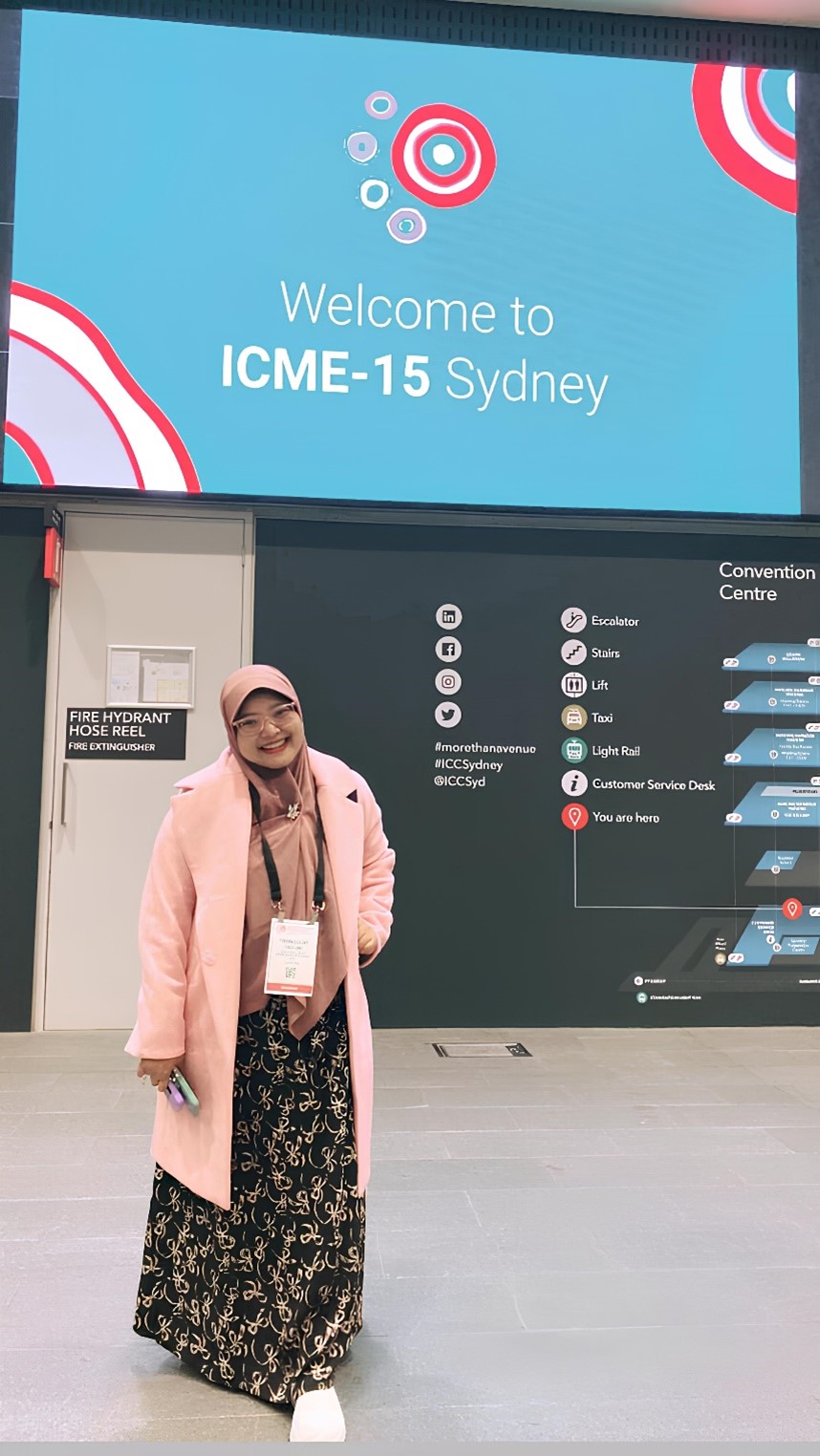
Perspective shifting towards Mathematics Education in Indonesia: A Reflection Journey toward Joining ICME-15 Conference.
 Perspective shifting towards Mathematics Education in Indonesia: A Reflection Journey toward Joining ICME-15 Conference.
By Faradillah Haryani
Ph.D Student batch 2 at Universitas Islam Internasional Indonesia
I never imagined I would attend the largest conference in mathematics education, meet many prominent figures, and gain new experiences and insights as an early researcher. I learned about this event from my undergraduate lecturer, Bu Sitti Maesuri P., who is also the supervisor of my current Ph.D. advisor, Dr. Destina. I regularly joined Zoom meetings organized by Ibu Sitti to discuss how to gain entry into this prestigious conference, plan my manuscript, and address financial aspects, particularly securing the Solidarity Fund, which is provided by the conference committee to selected participants.
The entire process took nearly a year, from preparing the manuscript to the start of the conference. I began working on the manuscript during my first month as a student at UIII in 2023, and it was accepted without revisions. Following this, I prepared my application for the Solidarity Fund, which required a recommendation letter from my Ph.D. supervisor, Dr. Destina. Concurrently, I applied for the prestigious UIII conference funding to cover expenses not addressed by the Solidarity Fund. Alhamdulillah, praises to Allah, both funding applications were accepted, allowing me to secure my place at the conference. Remarkably, out of 2,065 speakers from around the world, I am one of the 197 recipients of the Solidarity Fund, as highlighted in the ICME-15 statistics.
Attending the ICME-15 (The International Congress on Mathematical Education) conference, the largest mathematics education conference in the world, held at the International Convention Centre Sydney from July 7-14, 2024, has provided me with numerous new insights. It has given me a fresh perspective on the education landscape in the world and use it as the new eye to see education in Indonesia. While the conference primarily focuses on mathematics education, the issues discussed offer opportunities to examine the education field from both macro and micro perspectives.
From a macro perspective, global education is now confronted with the fundamental question: "Whose knowledge are we teaching, and is it relevant to every context in every country?" This question encourages educators, not just in mathematics but across all fields, to build awareness and scepticism regarding knowledge delivery. It prompts us in developing countries to recognize the value within our own contexts. However, this then does not necessarily mean to dismiss or detach from the knowledge historically linked to Western ideas. To compete on a global scale, it is essential to consider not only what works within our context, but also how to make it works to be the solid foundation of any knowledge that will be understood by students.
From a micro perspective, the conference aligns with our teaching methods and how concepts are delivered. It encourages us to ground our teaching methods before reaching for the sky. Are our foundations solid? Is our students' conceptual understanding strong enough? A study by Hamsah Verkat and her peers supports the idea that it is crucial to deeply understand basic concepts, such as the base-ten system, and the government also giving the support for strengthening this basic idea to the students, before advancing to more complex topics.
Studies from other developing countries, particularly those with a history of oppression, reveal the importance of valuing concepts that resonate with students' backgrounds. Instead of starting with advanced topics, they begin by having students take photographs of objects they believe relate to mathematics, then discuss these connections. This approach encourages students to explore their surroundings and appreciate mathematics within their immediate environment, fostering a positive disposition toward mathematics and enhancing critical thinking and reasoning skills.
Attending this conference has opened numerous avenues for collaboration. With prominent scholars in mathematics education present, I had the opportunity to see and even speak directly with influential figures whose seminal papers I have studied. I used this chance to connect, discuss my dissertation ideas, and receive valuable feedback. A humorous aspect of my experience was carrying my proposal booklet with me everywhere I went. This dedication paid off when a professor from Auckland University, who chaired my session, agreed to meet and discuss my dissertation on culturally responsive pedagogy in mathematics. He provided valuable reading references, such as Ole Skovsmose's works on Critical Mathematics Education, papers on decolonizing methodologies, and literature on ethnomathematics. I also had the opportunity to discuss my research over dinner with the head of Professional Development of the Algebra Project, a movement in the United States aimed at providing equitable mathematics access to African-American students. This meeting highlighted the importance of re-evaluating basic definitions of literacy to include math literacy and beyond. In addition to that, many practitioners expressed interest in my study and requested to stay in touch via email. A professor from Arizona University even invited me to join a study group focused on indigenous knowledge, the dynamics between the Global South and Global North, and decolonizing methodologies. Interestingly, only two people from Indonesia, including myself, have shown a genuine interest in this topic, even though it is a hotly debated issue worldwide. I feel truly blessed not only for the insights I gained about my research but also for the motivation and passion I witnessed among participants dedicated to advancing education.
Finally, what I love about this conference is how well the committee organizes everything, including the convenient mobile app that allows us to easily view and join sessions. The app provides automatic reminders for each session and facilitates networking by allowing us to scan barcodes to exchange contact information instantly. The format for delivering presentations is also unique. Instead of the typical front-stage presentation, I present through a group discussion for almost one hour. This kind setting allows me to send stronger message about my research and get immediate feedback suggestion and even acknowledgement. The whole conference structure is also impressive, starting with the early career researcher workshop, which includes methodology classes, sessions on topics in mathematics education, meetings with prominent journal editors, and classes on shaping our careers as researchers. This comprehensive approach has significantly contributed to my educational development. To conclude this reflection, I constantly ask myself, "What progress have you made today to build your career as a researcher?"
God in Awe and Intimacy: Jewish and Muslim Perspectives on Understanding and Pronouncing the Name(s) of God and its Relation to the Humanitarian Crisis
Yuliyanti, N. (2024). God in Awe and Intimacy: Jewish and Muslim Perspectives on Understanding and Pronouncing the Name(s) of God and its Relation to the Humanitarian Crisis. Teosofia: Indonesian Journal of Islamic Mysticism, 13(1), 1-18. doi:https://doi.org/10.21580/tos.v13i1.20534
Abstract
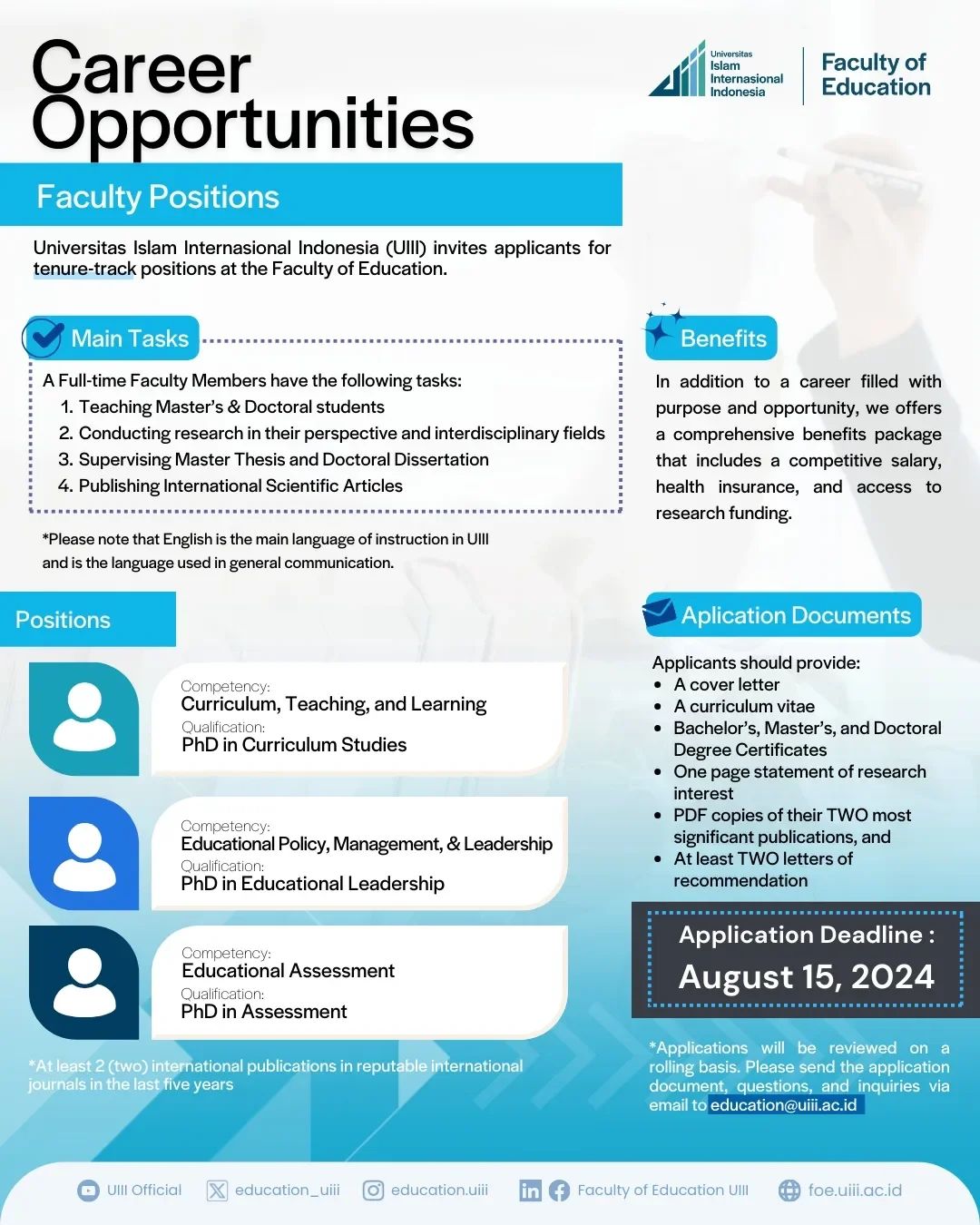
Career Opportunities 2024: Faculty Positions


 Career Opportunities
Dean of Faculty of Education Receives Grant for Women Scholars Empowerment in Global South
 Dean of Faculty of Education Receives Grant for Women Scholars Empowerment in Global South
July 18, 2024
Contributor: Achmad Jatnika | Editor: Supriyono
Professor Nina Nurmila, the Dean of the Faculty of Education at UIII, recently received a project grant of £25.4K from the British Academy (UK) to deliver training and mentorship to women scholars from the Global South, as part of an International Writing Workshops program.
The project, entitled “Decolonial Writing Workshops: Empowering Brazilian and Indonesian Women Scholars to Publish Global Academic Knowledge”, will be executed along with her colleagues, Dr. Leon Moosavi, Co-Director of the Liverpool Sociological Research Cluster, and Dr. Camila Prando from the University of Brasilia.
“Global North countries have always led the production of knowledge, thereby we follow their lead in this matter. Dr. Moosavi had an idea to break the barrier and decolonize the Global South's knowledge production. My attention is on gender, on women who still need much support in producing knowledge,” Professor Nurmila said.
Professor Nurmila elaborated that the project will target early-career women scholars in Indonesia and Brazil, aiming at honing their skills in producing research articles that can be published in well-reputed international journals. “We will provide what they need during the workshop, including day-care support for those with children,” she said.
The project will also facilitate South-South networking and collaboration between Brazilian and Indonesian scholars to produce new and valuable opportunities across the Global South.
UIII is always committed to promoting women’s participation and engagement in education by providing women-friendly facilities like daycare, and inclusive sports centers in the campus vicinity. We want women to feel safe on campus so that they can flourish during their learning journey.
Read more about the project here: Funding Success: £25.4k secured from the British Academy for decolonial writing workshops
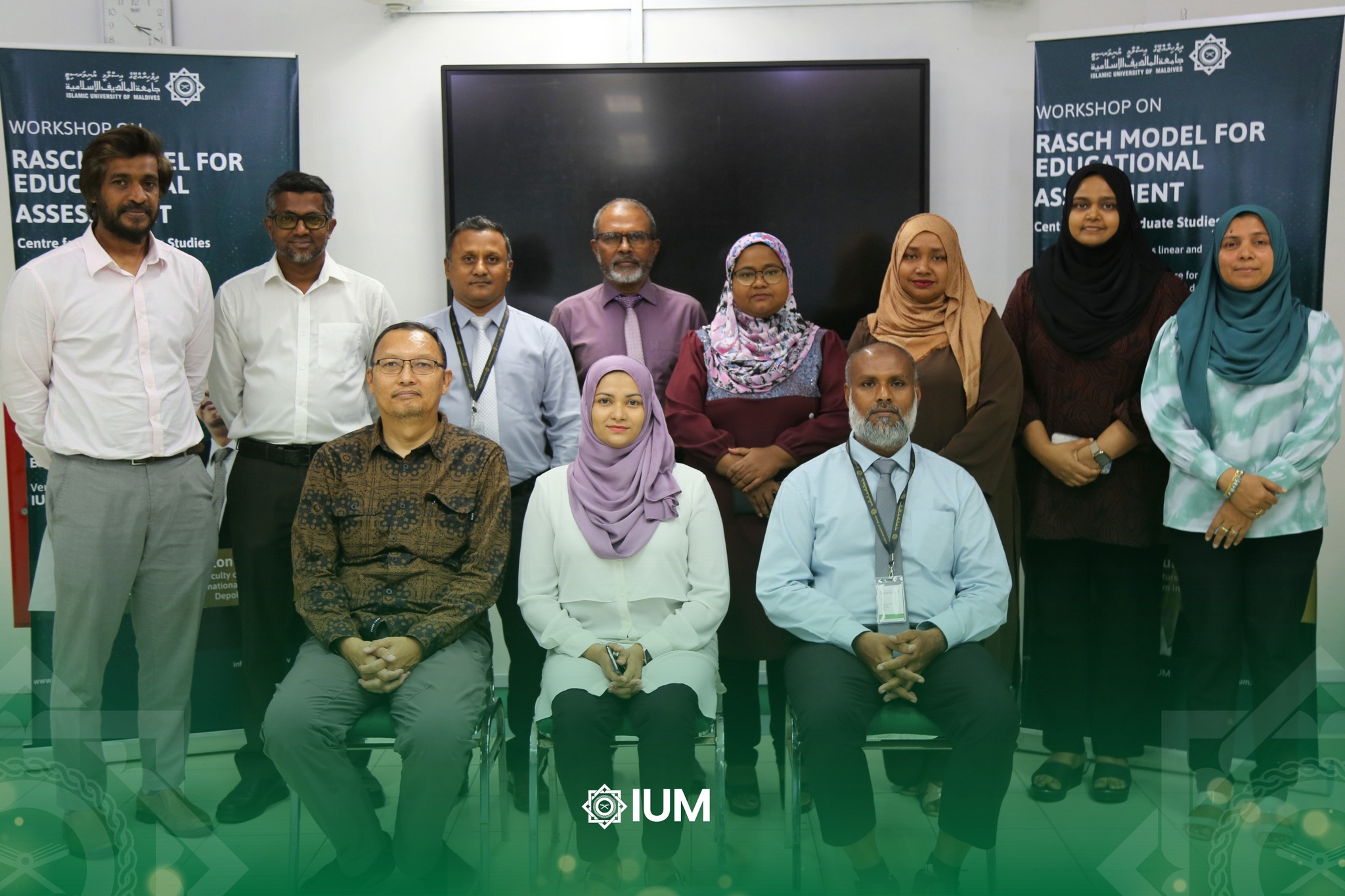
Workshop on Rasch Model at Islamic University of Maldives 15-16 July 2024
 Workshop on Rasch Model at Islamic University of Maldives
The Islamic University of Maldives (IUM) recently hosted an insightful workshop on the Rasch Model, a statistical technique widely used in educational assessment and psychometrics on 15-16 July 2024. The event attracted lecturers and researchers from Islamic University of Maldives, and officers from Ministry of Education of Maldives.
Dr. Bambang Sumintono, a lecturer from Faculty of Education, Universitas Islam Internasional Indonesia (UIII), who has expertise in educational measurement and Rasch model analysis, led the two days workshop. He introduced participants to the fundamentals of the Rasch Model, explaining its applications in analyzing test data and improving the validity and reliability of assessments using specific software, Ministep. The workshop featured interactive sessions, where attendees engaged in hands-on activities to better understand the construction and interpretation of Rasch models.
Previously, Dr Visal Moosa, deputy vice chancellor of research and innovation at Islamic University of Maldives, participated in Scholars in Residence program at Faculty of Education UIII, a kind of post-doctoral program. During his time in Universitas Islam Internasional Indonesia on September-November 2023, Dr Visal actively share his knowledge and expertise about systematic literature review, bibliometric analysis and educational management field. This time, a lecturer from UIII visited IUM in Male, Maldives, to share about Rasch model analysis.
Participants expressed enthusiasm for the practical knowledge gained, highlighting the Rasch model's potential to enhance the quality of educational assessments in the Maldives. The workshop is part of IUM's ongoing efforts to promote advanced research methodologies and support the professional development of lecturers and educators in the Maldives. Organizers hope to conduct more such events, fostering a community of practice around educational measurement and assessment in the region, and increase collaboration between two islamic universitis that come from Global South.


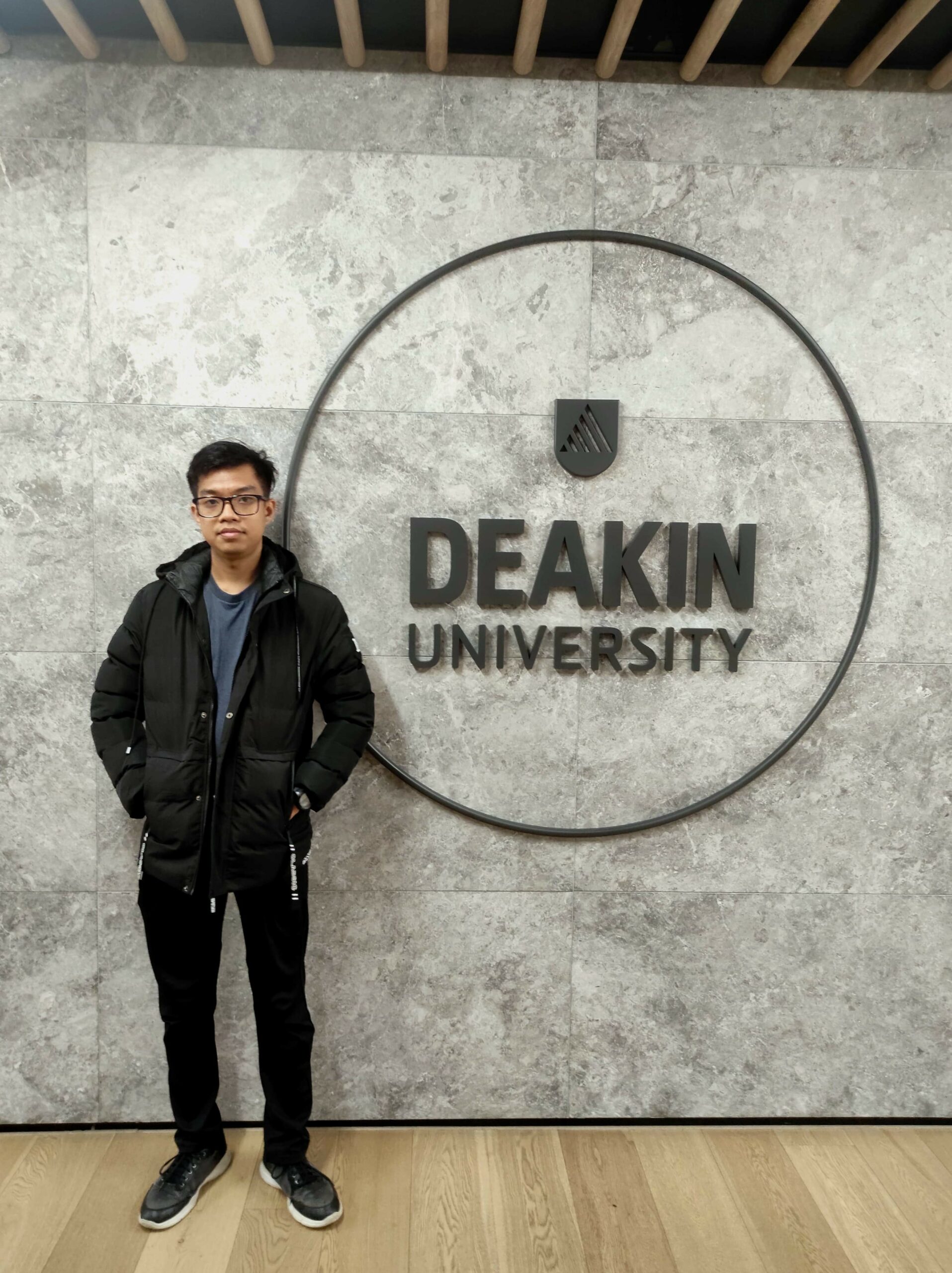
Reflection from visiting Deakin University, Australia
 Reflection from visiting Deakin University, Australia
By Eka Hermansyah
As John Dewey once described modern education, it must have an experiential foundation for students. This is precisely what I found during my visit to Deakin University from May 15 to 24, 2024. Education should facilitate student development rather than being a one-way process. I strive to deliver this reflection using my perspective as a student from Indonesia and to reflect on my experiences in both Australia and Indonesia, which of course, can be a matter of debate.
During my visit to Australia, I spent considerable time observing and consulting on research with experts at Deakin University. My observations covered the educational system, implementation of learning processes, staff-student interactions, and public facilities that support the educational system. I found that the system is not very different from Indonesia. However, when delved deeper at the management level, there are significant differences. One of them is the ethics of interacting with students, who are essentially children. The ease for students to approach the management for academic and well-being issues is a good example of how school management should be accessible and helpful to every component needing information related to education.
While in Victoria, we visited Deakin campuses in Burwood, Downtown, Waurn Ponds, and Geelong, as well as the State Library. Their facilities are notable in Indonesia, but in my humble opinion, Indonesia has issues with awareness and interest in using such facilities. Although it cannot be denied that in other parts of Indonesia, facilities are still lacking. Besides, on campus, we met with staff and lecturers and had the opportunity to discuss with international PhD students, including those from Indonesia. We discussed research, discipline focus in education, and opportunities for further studies in Australia. It is clear that postgraduate education abroad has different strategies and perspectives compared to education in Indonesia. Especially in terms of linearity, in Indonesia, linearity is often a requirement for having a career in the academic field, unlike in Australia (and perhaps in other global south countries), where multidisciplinarity is seen as a new opportunity because it opens more colorful discussions and provides new perspectives in academia.
We observed several classes at Deakin's Waurn Ponds campus, and what caught my attention the most was a class and discussion with Mr. Paul Garner. We attended the ECL210 class on literacy for primary teachers. The class was highly engaging and full of fruitful discussions. He successfully provided pre-service teachers with the experience of what it feels like to be primary school students, which is crucial for teachers to understand their role. His effort in teaching, even in the final week, demonstrated his passion for education. I was even more impressed when I learned that the challenges related to educational paperwork faced by teachers are similar to those in Indonesia. He was able to give his maximum effort despite having administrative tasks.
Furthermore, through discussions with lecturers, staff, and students, I found that the education systems in Indonesia and Australia are not vastly different. However, significant aspects that need improvement in Indonesia include collaboration between educators and academics. Additionally, pre-service teachers in Australia receive excellent facilities and support, resulting in high-quality outcomes. Not only do they see the essence of the educational world, but also the possibility of innovation and change in the educational world in the coming times is well considered. One example is the AR 360 room that can be used to create an artificial reality in the room so that students can learn using more real experiences. Continuing my PhD studies there would be very appealing given my experience at Deakin. It is important for me to consider Australia's culture and climate as an Indonesian before pursuing further education there, as undertaking a PhD is a commitment to becoming a full-time student and future academic.