
 Focus on Long-Term Impact, keeping your ultimate vision in mind even when progress feels slow
by Agustian Ramadana Putera
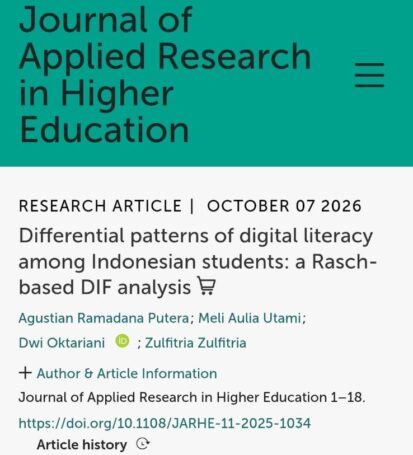
Publishing a paper in a reputable scientific journal is something I consider a distant achievement. When I got the news this morning that my paper draft had been accepted and officially published in the journal website, my first reaction was not just excitement. I felt very grateful, alhamdulillah bi ni’matihi tatimmu sholihat, and also reflective.
As a student who pursue Ph.D degree and as a novice researcher, I begin to realize that academic publication is not just about having paper published, read by plenty of people and hopefuly cited by other researchers. Behind every publication, there is a long process of learning and very slow progress: learning how to generate questions, synthesize the literature, collect and analyse the data, drafting the menuscript and respond to reviewer criticism, and probably learn to accept the first version of my draft is not rarely the best version.
This experience also triggered me to think about academic culture where novel researchers can grow. In numerous Indonesian universities, publication has become one parts of academic requirement encountered by many students, especially master and doctoral. In several cases, students may be required to publish their writings in reputable journal and this becomes the prerequisite for them to graduate. Through formal policy, institutions attempt to encourage students to involve in scholarly conversation and introduce them to standards of academic publishing. This probably add another burden to students who in fact is not having skills, expertise and experience in journal article publication.
Yet another side of the story exists.
When publication is manifested as primary requirement of graduation, students may view research differently. They probably conduct research because they have to. They may pick a research topic due to its manageability, not because they are really curious about the topic. They may then be keen on publication because they want to graduate as soon as possible, instead of the desire to contribute to a wider academic community. In this case, I never declare that publication policy is totally flawed in principle. The concern is probably what happen around that obligation.
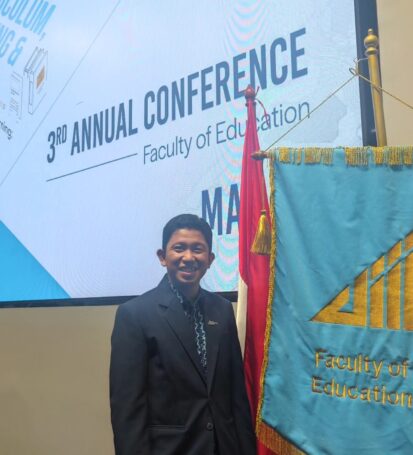
Do students obtain sufficient support that help them to develop as novice researcher? Do they have people who are willing to discuss their idea, check their draft, and accompany them throughout difficult revision time? Do they feel research as an intellectual journey or just like another administrative responsibility? For me personally, this is where academic culture of Faculty of Education (FoE), Universitas Islam Internasional Indonesia (UIII) has made a meaningful distinction.
I have been blessed to encounter an environment that encourage me to see research not merely as something that must be finished, but as something that can be developed. The support from academics, staff, colleague, and my wife, who is also student of FoE UIII and author of this paper, has given me space to ask question, reflect on mistakes, refine my thinking, and of course keep trying.
As a novice researcher who is always learning, this kind of condition matter enormously. A productive research cannot be achieved by setting a high publication target. It begins from an environment where students can learn safely, ask question continuously, and feel backed enough to keep improving.
This is indeed crucial for PhD students, particularly for those who will be in academics field for their chosen career. We are still learning how to navigate the academic world. We are learning to transform curiosity into research questions, observation into evidence, idea into scholarly contribution, and so forth. How well students develop is significantly influenced by the environment in which learning actually takes place.
This is the reason why I view this publication more than just my private accomplishment. Because of the fortune I received from FoE UII, I hope that I am able to provide a similar environment for my students later. I want them to feel research not as forced obligation, but as an opportunity to explore ideas and satisfy curiosity. If the support I obtained today change the way I approach research, hopefully I can inherit that experience to the students I supervise in my university.