 PhD Student by Enrollment, Policy Nerd by Circumstance
by Rahayu
Education policy and politics? Basically, a package deal. And lucky me, I’ve had the privilege of experiencing both sides. From the education world to the political arena, I get to see how political decisions shape classroom realities and how education on the ground challenges the policies made at the top. Because behind every policy is power and authority, behind every decision is politics, and behind every PhD student is someone who voluntarily signed up to study the whole thing. Yes, it’s me. I did this to myself.
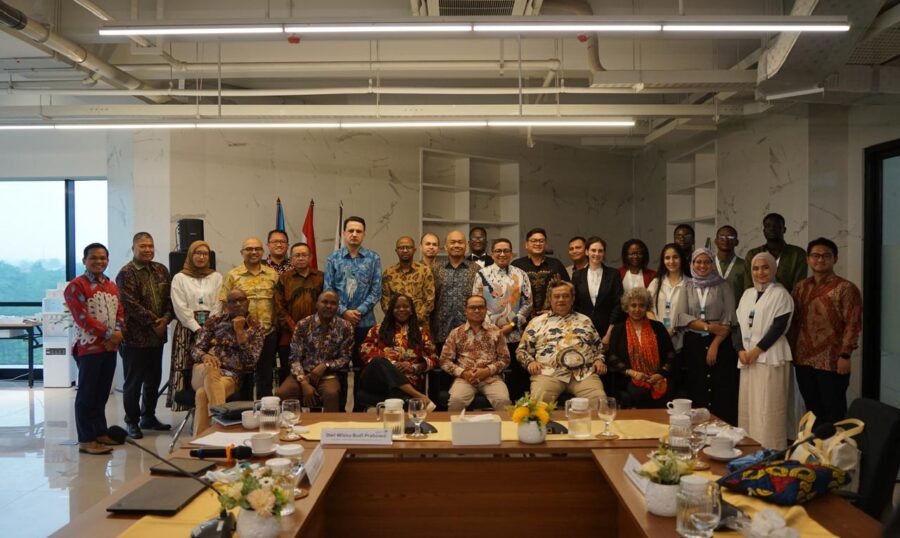
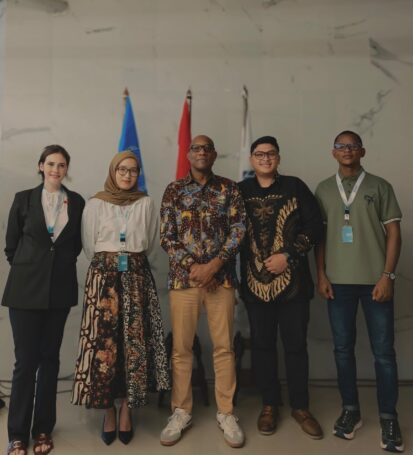
And somehow, the plot keeps expanding. Getting involved in the think tank world as a Founding Associate at Kertanegara Institute has already given me a new perspective on policy beyond academia. Yesterday (10/27), thanks to Dr. Philips Vermonte, the Dean of the Faculty of Social Sciences, I got the chance to learn from a diplomatic event featuring Permanent Representatives to the UN from eight countries. For real, my PhD journey is PhD-ing.
To be honest, I’m thankful for the opportunity to learn at the Faculty of Education at UIII, where my PhD is pushing me to see education beyond the classroom. Education is not just about pedagogy. It’s also about policy, governance, power, politics, and the whole system behind what eventually happens in the classroom. Needless to say, I’m not leaving my expertise; I’m upgrading it. From my very first semester, I began looking beyond micro level and start asking who designed the macro-level in the first place. Same passion. Broader lens. Sharper POV. Right?
Yesterday’s diplomatic event really got me thinking about how power operates beyond national borders and how global influence is built. It is not through diplomacy alone; it also depends on how countries educate and prepare their next generations to think critically, understand power, and participate in shaping the world. Education cannot guarantee that every voice will be heard, but it can help young people develop the tools to question existing systems, engage with global issues, and participate in shaping their futures.
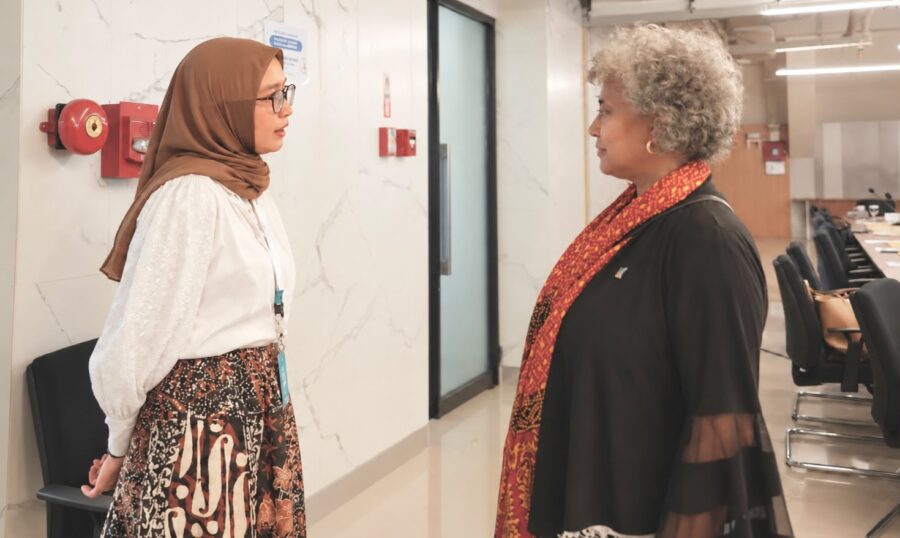
During the discussion, I had the opportunity to raise a question to Ambassador Lippwe of the Federated States of Micronesia about how smaller nations can make their voices heard in a world where political and economic power is unevenly distributed. This question became more tangible during my conversation with Ambassador Lippwe. His diplomatic experience ended up with another perspective about something beyond international representation: what does it take to ensure that people have not only a voice, but also the capacity to make that voice count?
I know I am privileged. Throughout my PhD, I have received support from my beloved lecturers in both Education and Political Science, who have encouraged me to cross disciplinary boundaries, challenging assumptions, and asking bigger questions. Not everyone gets that kind of support. I have been given the opportunity to question the system rather than simply learn how to operate within it.
But at the same time, that also makes me wonder: What about those who are not as lucky as I am? What happens to students and educators whose questions are dismissed, whose perspectives are overlooked, or whose voices never reach the spaces where decisions are made? How many valuable ideas never get the chance to develop simply because people lack the access, support, or institutional recognition they need?
This is what makes me questioning further about the systems behind education. Inequality is not only about who gets access to a classroom. It is also about who gets access to opportunities, whose knowledge is taken seriously, and who has the power to influence decisions. Some people are given the space to question the system. Others are expected to live with its consequences. Does that ring a bell for you?
Well, speaking of opportunities, my PhD keeps opening the right doors. Right after the session, I had a surprisingly long conversation with Ambassador Lippwe. He wanted to know what had shaped my way of thinking. He even wrote down his email address on a piece of paper. And then came the line I wasn’t expecting: “If you happen to come to New York, let me know. I’ll welcome you to UN Headquarters.”
New York and the UN Headquarters? Definitely going on my wishlist.