 Lesson Learned and Future Collaboration: A Reflection on Joining a Summer Program at Shaanxi Normal University (SNNU)
by Destina Wahyu Winarti
Lecturer at the Faculty of Education, UIII
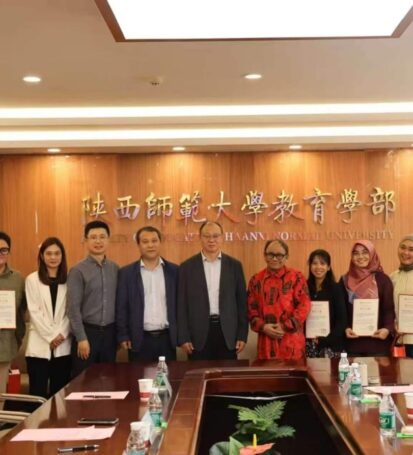
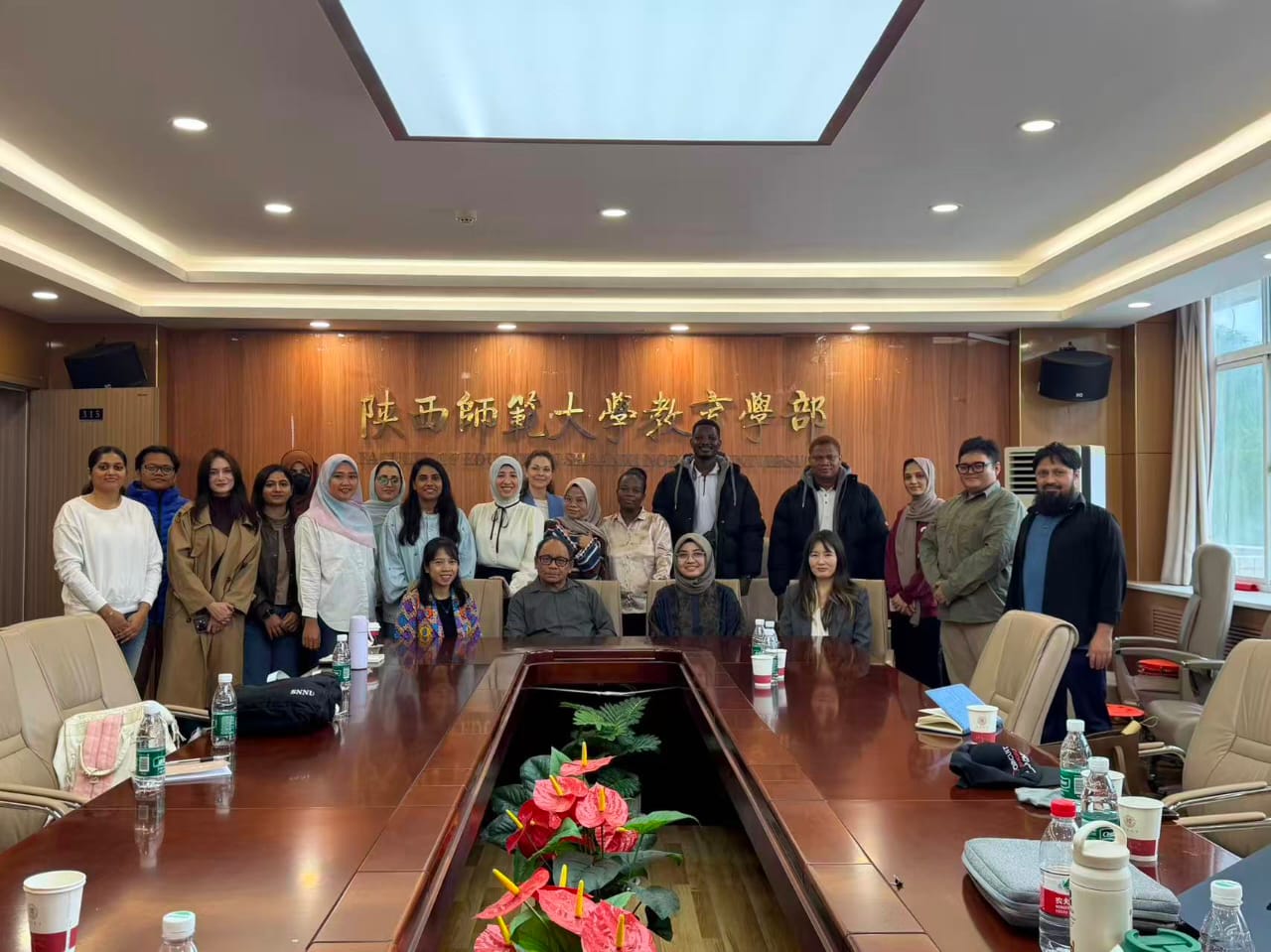
The opportunity to participate in the Summer Program at Shaanxi Normal University, in Xi’an, China was a meaningful and insightful experience for me, both academically and personally. Funded by the Chinese Government Scholarship 2026, the program was held from 14 to 29 September 2026 and was designed to foster international academic exchange and research collaboration. Five participants from Indonesia, including myself, joined this program which was particularly designed for graduate students and early-career researchers.
One of my first impressions of SNNU was the academic environment at Yanta Campus. The arrangement was quite different from what I am accustomed to in Indonesia. During our visits to three Professors’ laboratories, I noticed that professors and their postgraduate students worked together in the same space. Ph.D and master’s students generally worked on research projects related to their supervisors’ areas of expertise. I found this arrangement particularly interesting because it seemed to encourage close interaction between supervisors and students. Being physically together also created opportunities for frequent discussion, exchange of ideas, and informal academic conversation. In my view, this environment can help sustain students’ engagement and perseverance in their research.
I was also struck by the relationship between professors and students. Despite working in the same room and interacting frequently, I observed a strong sense of respect toward professors. This reminded me of the cultural differences I experiences during my own education in the Netherlands and Australia, where relationships between students and lectures tend to be more informal. As someone from an Asian cultural background, I found the academic cultural I observed at SNNU familiar and, in some ways, more aligned with my own cultural understanding of respect for teachers.
A particularly valuable part of the program was the opportunity to work closely with Professor Ma Hongliang, Vice Dean of the Faculty of Education and head of the AI and STEM Education Research Center. From the second day of the program, we began discussing possibilities for future collaborative research. I found this especially exciting because our research interests intersect in STEM Education, although we approach it from somewhat different perspectives. Professor Ma’s work focuses strongly on teachers’ professional development (PD), Artificial intellegence or AI, robotics, applications, and the practical implementation of STEM Education, while my research interest focuses more on spatial thinking, students learning, and the conceptual foundations and values of STEM education.
Our discussion helped me reflect on my own research direction. I realized that I have increasingly focused on understanding what STEM education means, why particular aspects of STEM learning are important and how spatial thinking can contribute to meaningful STEM learning. At the same time, Professor Ma’s work offers a strong connection to the practical implementation of STEM through technologies such as AI and robotics. I believe these complementary perspectives provide a promising foundation for collaboration between SNNU and UIII. Together, we hope to explore STEM education not simply as the integration of Science, Technology, Engineering and Mathematics or as the use of advanced technologies, but as an approach that develops meaningful ideas, values and students’ interests in STEM fields.
The workshops offered during the program also provided valuable learning opportunities. The sessions covered STEM teachers’ Professional Development (by Prof, Ma Hongliang), designing better video-based learning (by Prof, Pi Zhongling), generated instructional videos and the design of video-based pedagogical agents (by Prof. Zhou Yun) and assessing students’ computational thinking (by Dr. Wang Qin). These topics were closely connected to my research interest and provided new perspectives that may inform my future research and potential collaborations with SNNU.
Beyond the academic activities, I also appreciated the opportunity to learn about Chinese education and culture. Visiting the Museum of Education at SNNU Chang’an campus helped me understand how education, teacher education, history, and traditional culture have developed in China. The museum’s integration of education, research, cultural preservation and art provides a broader perspective on the relationship between education and society.
The visit to Xi’an Gaoxin No. 50 Primary School was another memorable experience. Seeing the school environment, students’ activities, and learning facilities allowed me to observe aspects of primary education in China firsthand. I was particularly interested in the school daily schedule, from 8.00 am to 4.30 pm, which is relatively long compared with many Indonesian primary schools. This observation made me wonder about the relationship between the amount of time students spend at school and their academic development, wellbeing and attitudes toward learning. It is a question that I would be interested in exploring further rather than simply assuming that longer school hours necessarily lead to better outcomes.
Overall, the summer program at SNNU gave me so much more than exposure to another university and education system. It encouraged me to reflect on my own academic identity, research interest, and assumptions about education. Not every practice I observed in China can or should be directly applied to the Indonesian context. However, the experience reminded me that international academic exchange is precisely valuable because it allows us to see our own practices from a different perspective.
Most importantly, I see this program not as the end of an academic visit, but as the beginning of a potential long-term relationship between SNNU and UIII. I hope that the connections established during these two weeks will develop into meaningful collaborative research, particularly in STEM education, teacher professional development, AI, and spatial thinking, while ultimately contributing to efforts to build students’ interest and engagement in STEM fields.