Lunch Talk #49:
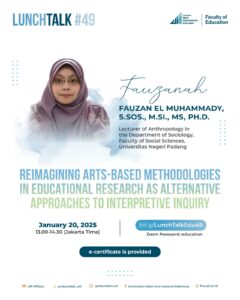
You are invited to join the Lunch Talk #49 at the Faculty of Education, UIII
Fauzanah Fauzan El Muhammady, S.Sos., M.Si., MS, Ph.D. (Lecturer of Anthropology in the Department of Sociology, Faculty of Social Sciences, Universitas Negeri Padang) will share about: "Reimagining Arts-Based Methodologies in Educational Research as Alternative Approaches to Interpretive Inquiry".
Arts-based methodologies offer an alternative approach in educational research, helping explore feelings, perspectives, and meanings that are difficult to express through words alone. They provide creative and inclusive ways to understand complex learning, teaching, and leadership experiences.
Day/Date: Tuesday/January 20, 2025
Time: 13.00-14.30 (Jakarta Time)
Place: Theater, Faculty A Building
Online participation:
https://bit.ly/LunchTalkEdu49
E-Certificate is provided
Thank you!

BRIN Said Yes While My PhD Struggle Continued
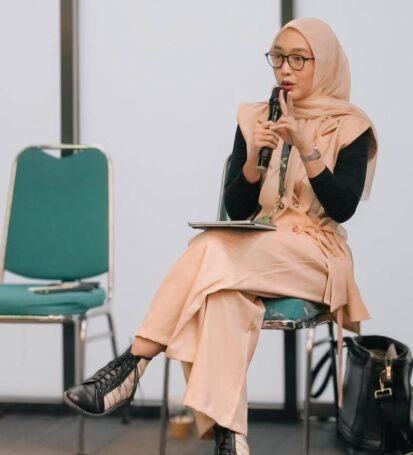 BRIN Said Yes While My PhD Struggle Continued
by Rahayu
Starting a PhD really humbled me in ways no academic warning ever could. One minute I thought, “Ayu, you got this,” and the next minute I was reading the same paragraph five times like it was written in ancient civilization code. Apparently, becoming a Year 1 PhD student at Faculty of Education, Universitas Islam Internasional Indonesia means developing three personalities at once: a researcher, a professional overthinker, and a full-time deadline survivor.
There were days when my laptop witnessed more emotional breakdowns than my actual productivity. The readings kept multiplying, the theories kept getting more complicated, and somehow everyone in academia casually uses words like epistemology as if that alone does not increase my blood pressure. PhD life truly feels like intellectual suffering with a tuition fee (thanks God I am funded by LPDP Scholarship).
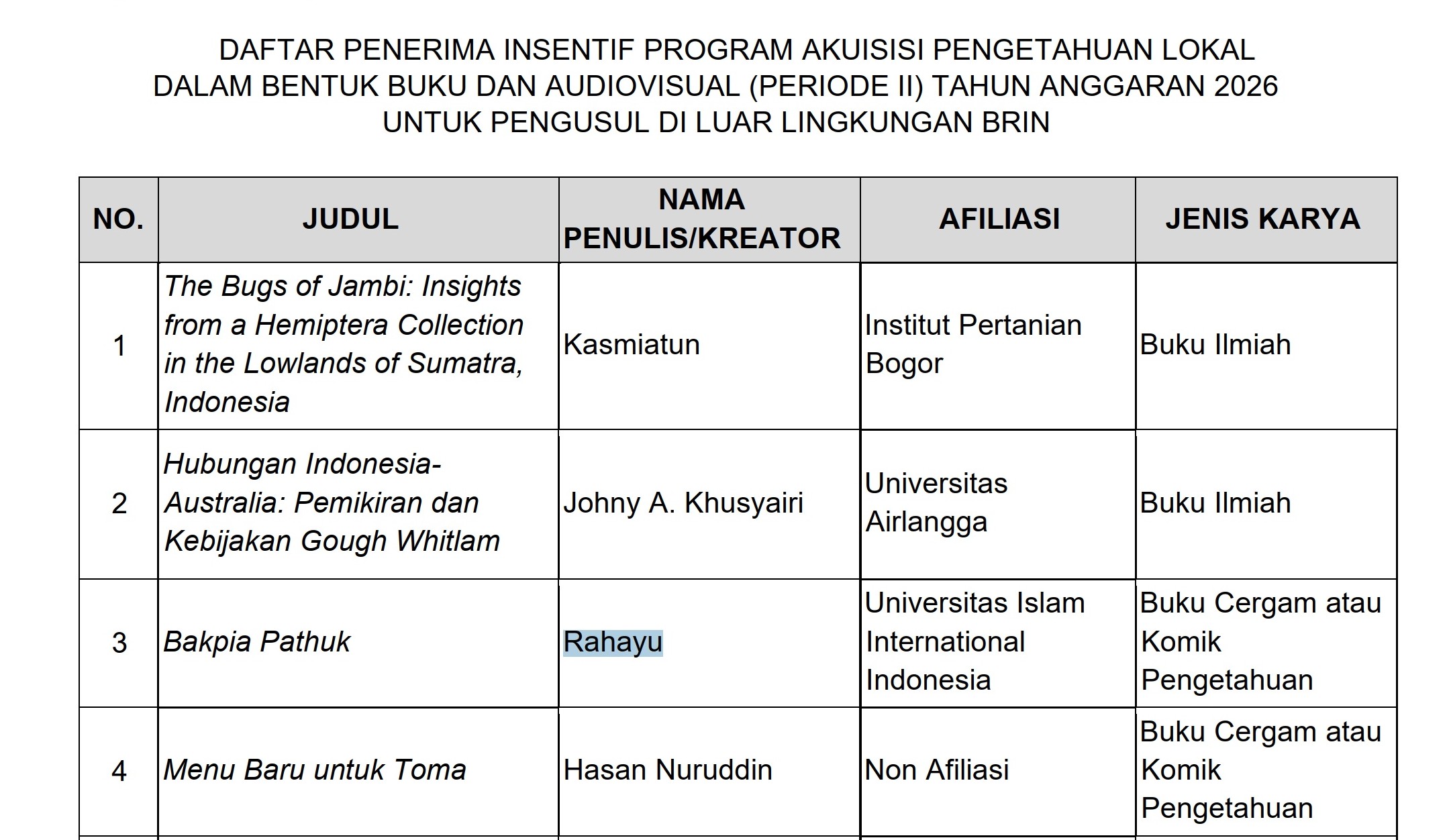
But somewhere between the chaos, sleep deprivation, and dramatic internal monologues of “why did I choose this path,” one of my works was accepted into the 2026 BRIN Local Knowledge Acquisition Program. Honestly, the timing felt almost disrespectful because I was literally in survival mode when the news came in. BRIN said yes while my brain was still in 'PhD fatigue' era.
And maybe that is the funny part about this education journey. Sometimes growth does not look inspirational and cinematic. Sometimes it looks like crying over assignments at 2 AM, surviving on caffeine, doubting your entire existence, and still submitting the work anyway. At one point, the exhaustion got so real that i feel the urge to disappear from academia entirely and open a tiny aesthetic coffee shop in some urban neighborhood where my biggest problem would be whether the espresso are single origin. Academia really teaches you that confidence is optional, but deadlines are not.
This experience reminded me that progress can happen even when life feels messy. Apparently, suffering academically does not automatically cancel the achievement. Sometimes you are still moving forward even while internally buffering.
So yes, my PhD survival mode continues. The stress is real, the readings are really challenging, and the imposter syndrome still visits uninvited (many times). But for today, at least, I celebrate the small slay: surviving Year 1 and making it to BRIN at the same time.
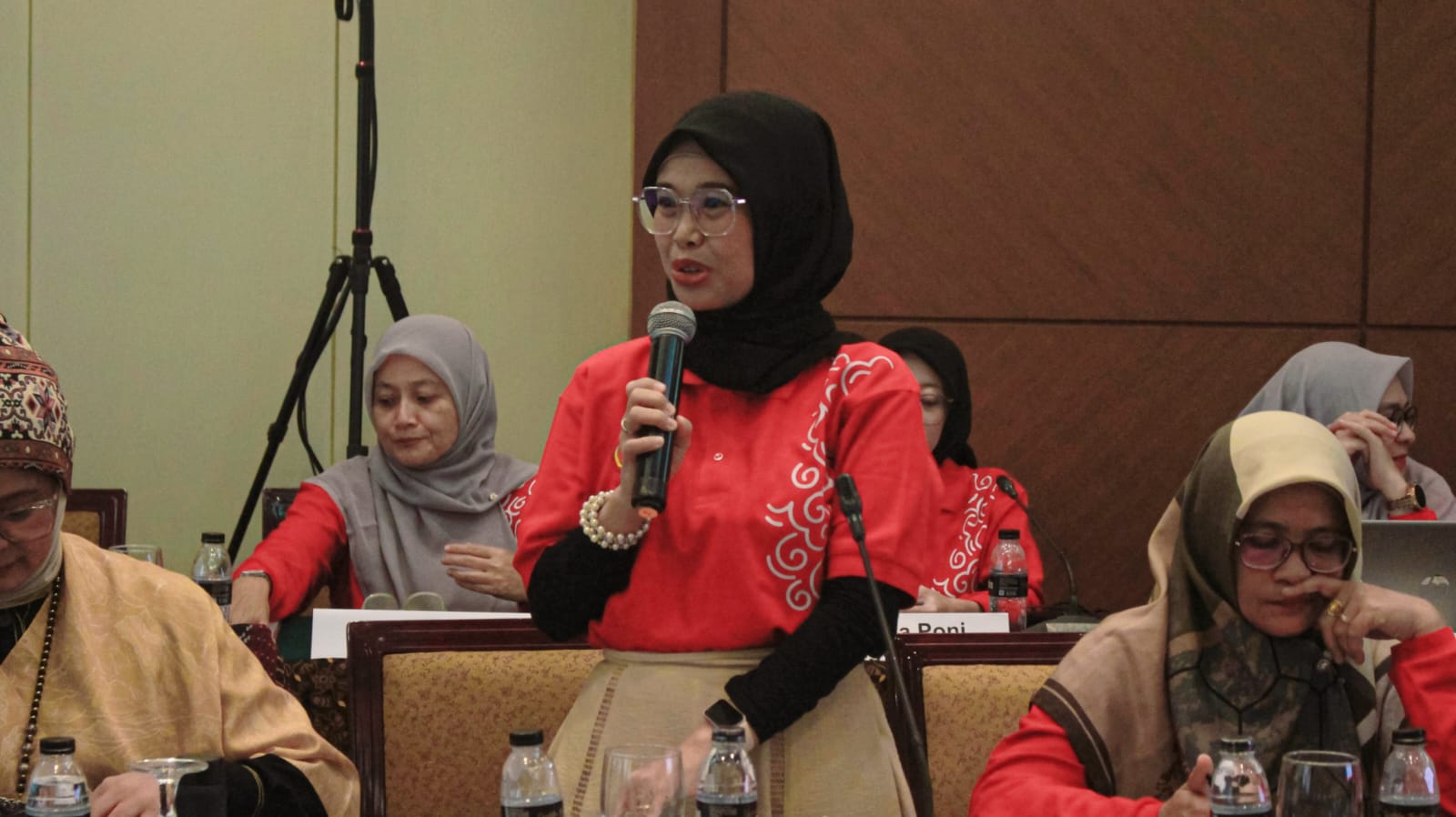
Faculty of Education UIII Conducts Community Engagement in Cilegon to Strengthen Education and Social Inclusion
Year: 2025 | Faculty: FIP
Activity date status: 16 December 2025 – to be verified
Verification note: Inferred from the decree filename “SK Kegiatan PkM 16 des.pdf”; verify against the final report.
Source metadata: PKM: Pengabdian kepada Masyarakat Fakultas Ilmu Pendidikan 2025 | Tim: Fakultas Ilmu Pendidikan UIII
Community engagement by a faculty can become a collective platform that brings together different areas of expertise. The Faculty of Education UIII community engagement activity in Cilegon reflected this broader approach by linking educational development with social inclusion and public service.
The activity involved a team from the Faculty of Education and was recorded in the dataset as a 2025 community engagement program. While the spreadsheet does not provide detailed activity themes, the faculty’s profile suggests that the program can be framed around education, inclusion, learning quality, and community partnership. Cilegon provides a meaningful local context for discussing how educational institutions can respond to community needs.
A faculty-level program has the advantage of bringing multiple perspectives into one engagement. It can include teacher development, student support, inclusive education, literacy, parent engagement, or community learning. Such an approach allows the university to respond flexibly to conditions encountered in the field.
For UIII, the activity demonstrates that community engagement is not limited to individual lecturer projects. It can also become a faculty identity, showing how academic units contribute collectively to the Tri Dharma mandate and to the wider public good.
A feature article should be completed with the exact theme, location, partner institution, participant number, and key outputs from the Cilegon activity report. Because the available spreadsheet is limited, the current draft should be treated as a framework. The strongest message to develop is that educational engagement becomes most meaningful when universities enter communities with humility, listen to local needs, and work collaboratively toward more inclusive learning environments.

UIII Mainstreams Wasatiyyah Islam for Coexistence through Dayah-Based Participation in Aceh
Year: 2025 | Faculty: FIP
Activity date status: Exact activity date not available in the accessible spreadsheet/public sources
Verification note: Only year 2025 is available in the spreadsheet.
Source metadata: PKM: Mainstreaming Wasatiyyah Islam for Coexistence in Aceh Through Dayah: A Participatory Initiative Bridging Local Traditions and Global Discourse | Tim: Andar Nubowo, Nurul Izzah Febilia
Dayah are deeply rooted institutions in Aceh’s religious and social life. They shape learning, authority, community values, and local identity. UIII’s project on mainstreaming wasatiyyah Islam for coexistence in Aceh through dayah recognized the importance of engaging these institutions as partners in building dialogue between local traditions and global discourse.
The Faculty of Education team used a participatory approach, which is significant because religious moderation cannot be imposed from outside. It must be discussed, interpreted, and lived within local institutions that communities trust. Wasatiyyah, commonly understood as moderation, balance, and justness, becomes meaningful when connected to everyday religious education and social relations.
The project likely explored how dayah can support coexistence while preserving their own intellectual traditions. This balance is important. Global conversations on moderation often sound abstract unless they are grounded in local histories, languages, and community practices.
For UIII, the activity shows how Islamic thought, education, and community engagement can support one another. It also reflects a respectful model of partnership in which local religious institutions are not treated as objects of reform, but as knowledge partners with their own authority.
A feature article can highlight the meeting between tradition and contemporary challenges. It should include the dayah involved, participant voices, and examples of how wasatiyyah was discussed. The core editorial message is that coexistence becomes stronger when moderation is rooted in trusted local institutions and connected to wider conversations on peace, dignity, and shared life.
UIII Encourages Youth Interfaith Dialogue for Religious Understanding and Inclusion
Year: 2025 | Faculty: FIP
Activity date status: Exact activity date not available in the accessible spreadsheet/public sources
Verification note: Only year 2025 is available in the spreadsheet.
Source metadata: PKM: Building Peace through Dialogue: A Youth Interfaith Camp for Religious Understanding and Inclusion | Tim: Prof. Nina Nurmila, Uswatun Hasanah, Nanik Yuliyanti
Religious understanding is not built only through textbooks. It is also formed through encounter, conversation, and the willingness to listen to people from different backgrounds. UIII’s Youth Interfaith Camp for Religious Understanding and Inclusion created a space where young people could learn peace through direct dialogue.
The Faculty of Education team approached interfaith engagement as a form of youth empowerment. In diverse societies, young people need opportunities to ask questions, challenge stereotypes, and understand how religious identity can coexist with citizenship, friendship, and shared public responsibility. A camp format is especially valuable because learning continues beyond formal sessions into meals, group activities, and informal exchanges.
The project matters because intolerance often grows where communities remain distant from one another. When young people meet, share stories, and work together, difference becomes less abstract. They begin to see one another not as representatives of categories, but as people with hopes, concerns, and moral commitments.
For UIII, this initiative fits a broader peacebuilding and inclusion agenda. It demonstrates how education can help prevent polarization by cultivating habits of dialogue and respect early in life.
A feature story can focus on the camp experience: the first meeting, moments of hesitation, shared activities, and reflections after dialogue. Final publication should include participant diversity, partner institutions, and safeguarding procedures. The central message is that interfaith peace is built when young people are trusted to encounter difference openly, honestly, and humanely.
UIII Holds Research Clinic and Symposium to Strengthen Research Capacity at IAIN Kerinci
Year: 2025 | Faculty: FIP
Activity date status: Exact activity date not available in the accessible spreadsheet/public sources
Verification note: Only year 2025 is available in the spreadsheet.
Source metadata: PKM: Research Empowerment at IAIN Kerinci: Research Clinic and Symposium | Tim: Prof. Suwarsih Madya, Luqyana Azmiya Putri
Research culture grows when scholars have access to mentoring, critical feedback, and academic dialogue. UIII’s Research Empowerment at IAIN Kerinci project responded to this need through a research clinic and symposium designed to strengthen researchers’ capacity and confidence.
The Faculty of Education team treated research empowerment as a form of community engagement. Universities often serve communities through training or outreach, but they can also serve fellow academic institutions by helping improve research design, writing, methodology, and publication readiness. In this sense, academic capacity building becomes part of public service.
A research clinic is useful because it allows participants to discuss concrete problems in their own work. Instead of receiving only general lectures, they can examine research questions, methods, data, arguments, and writing challenges. A symposium, meanwhile, creates a wider space for presenting ideas and building scholarly networks.
For UIII, the activity reflects an institutional commitment to strengthening the Indonesian higher education ecosystem. As a graduate university with international aspirations, UIII can contribute by sharing academic standards and collaborative habits with partner institutions.
A feature story can portray the clinic as a space where ideas are sharpened and researchers gain confidence. It should include the number of participants, areas of research discussed, and feedback from IAIN Kerinci academics. The main editorial message is that research quality improves through dialogue, mentorship, and communities of practice that help scholars move from isolated work toward shared intellectual growth.
From Empathy to Action: UIII Trains Peer Counselors in Dewan Anak Mataram, Lombok
Year: 2025 | Faculty: FIP
Activity date status: Exact activity date not available in the accessible spreadsheet/public sources
Verification note: Only year 2025 is available in the spreadsheet.
Source metadata: PKM: Youth Speak, Peers Listen: Empathy Training for Peer Counselors in Dewan Anak Mataram, Lombok | Tim: Charyna Ayu Rizkyanti, Alda Nurul Haliza, Alya Chairunnisa
Young people often turn first to their peers when they face confusion, pressure, or emotional difficulty. This makes peer counseling an important strategy for youth well-being, but it must be supported by training and ethical guidance. UIII’s project Youth Speak, Peers Listen brought empathy training for peer counselors to Dewan Anak Mataram in Lombok.
The Faculty of Education team focused on helping young participants listen more carefully, respond more responsibly, and understand the boundaries of peer support. Empathy is not simply feeling sorry for another person. It requires attention, patience, non-judgmental communication, and the ability to recognize when someone needs adult or professional help.
The activity is important because children and adolescents are increasingly exposed to social pressure, academic expectations, digital comparison, and family challenges. Peer counselors can become trusted companions when they are trained to support friends safely and respectfully.
For UIII, the program strengthens the connection between educational psychology, child participation, and community empowerment. It also reflects a commitment to youth agency. Children and adolescents can contribute to healthier social environments when they are equipped with the right skills.
A feature article can focus on the phrase Youth Speak, Peers Listen as both a title and a message. It should include the voices of participants, the training methods, and the role of Dewan Anak Mataram. Final publication should protect minors’ privacy and use photos only with consent. The core message is that empathy becomes social action when young people learn how to listen with care and respond with responsibility.
UIII and SOKOLA RIMBA Bridge Cultures and Classrooms through Responsive Mathematics Teaching
Year: 2025 | Faculty: FIP
Activity date status: Exact activity date not available in the accessible spreadsheet/public sources
Verification note: Only year 2025 is available in the spreadsheet.
Source metadata: PKM: Bridging Cultures and Classrooms: A Professional Development Program in Culturally Responsive Mathematics Teaching in Collaboration with SOKOLA RIMBA | Tim: Dr. Destina Wahyu Winarti, Faradillah Haryani
Mathematics is often seen as universal, but the way it is taught is always shaped by culture, language, and classroom experience. UIII’s professional development program in culturally responsive mathematics teaching, conducted in collaboration with SOKOLA RIMBA, addressed the need to connect mathematical learning with the lives and contexts of learners.
The Faculty of Education team approached teacher development as a bridge between cultures and classrooms. Culturally responsive teaching recognizes that students bring knowledge, practices, and ways of thinking from their communities. When teachers acknowledge these resources, mathematics can become less intimidating and more meaningful.
Collaboration with SOKOLA RIMBA gives the project a distinctive social dimension. The organization is associated with education for communities whose learning needs may not fit conventional school models. This makes the project especially relevant for discussions about inclusion, equity, and the adaptation of pedagogy to local realities.
For UIII, the activity demonstrates how educational research can support teachers who work in diverse settings. It also aligns with the idea that quality education must be responsive, not one-size-fits-all. A mathematics lesson that respects learners’ contexts can improve both understanding and confidence.
A feature story can highlight the meeting point between academic pedagogy and community-based education. It should include the training activities, teacher participants, and examples of culturally grounded mathematics tasks. The strongest editorial message is that inclusive education is built when teachers learn to see students’ cultural worlds as assets for learning rather than obstacles to be overcome.
UIII Invites Parents to Write Children’s Stories that Promote Tolerance and Moderate Values
Year: 2025 | Faculty: FIP
Activity date status: Exact activity date not available in the accessible spreadsheet/public sources
Verification note: Only year 2025 is available in the spreadsheet.
Source metadata: PKM: Narratives for Change: A Community Writing Initiative with Parents to Promote Tolerance, Diversity, and Moderate Values in Children’s Literature | Tim: Tati Lathipatud Durriyah, Lakhaula Sahrotul Aulia, Ajeng Satiti Ayuningtyas Okta Ferdiana, Agus Suprapto
Children learn values not only from formal lessons, but also from stories told at home, in classrooms, and in community spaces. UIII’s Narratives for Change project invited parents to take part in a community writing initiative that promotes tolerance, diversity, and moderate values through children’s literature.
The Faculty of Education team recognized parents as important cultural educators. When parents write or share stories, they help shape how children understand difference, kindness, justice, and coexistence. Children’s literature can make complex values accessible through characters, plots, images, and everyday conflicts that young readers can understand.
The project is significant because values such as tolerance and moderation must be introduced early and gently. Moral education is more effective when children can imagine it through stories rather than receive it only as instruction. A story about friendship across difference, for example, can open a child’s imagination more effectively than a lecture on diversity.
For UIII, the activity combines literacy, family engagement, and peace education. It also shows how community service can empower parents as knowledge producers. They are not merely receiving content from experts; they are creating narratives that reflect their own hopes for children.
A feature article can foreground parents sitting together, writing, revising, and discovering that their experiences can become meaningful stories. Final publication should include examples of story themes, participant reflections, and whether the writings will be compiled or published. The central message is that children’s books can become small but powerful tools for building a more tolerant society.