
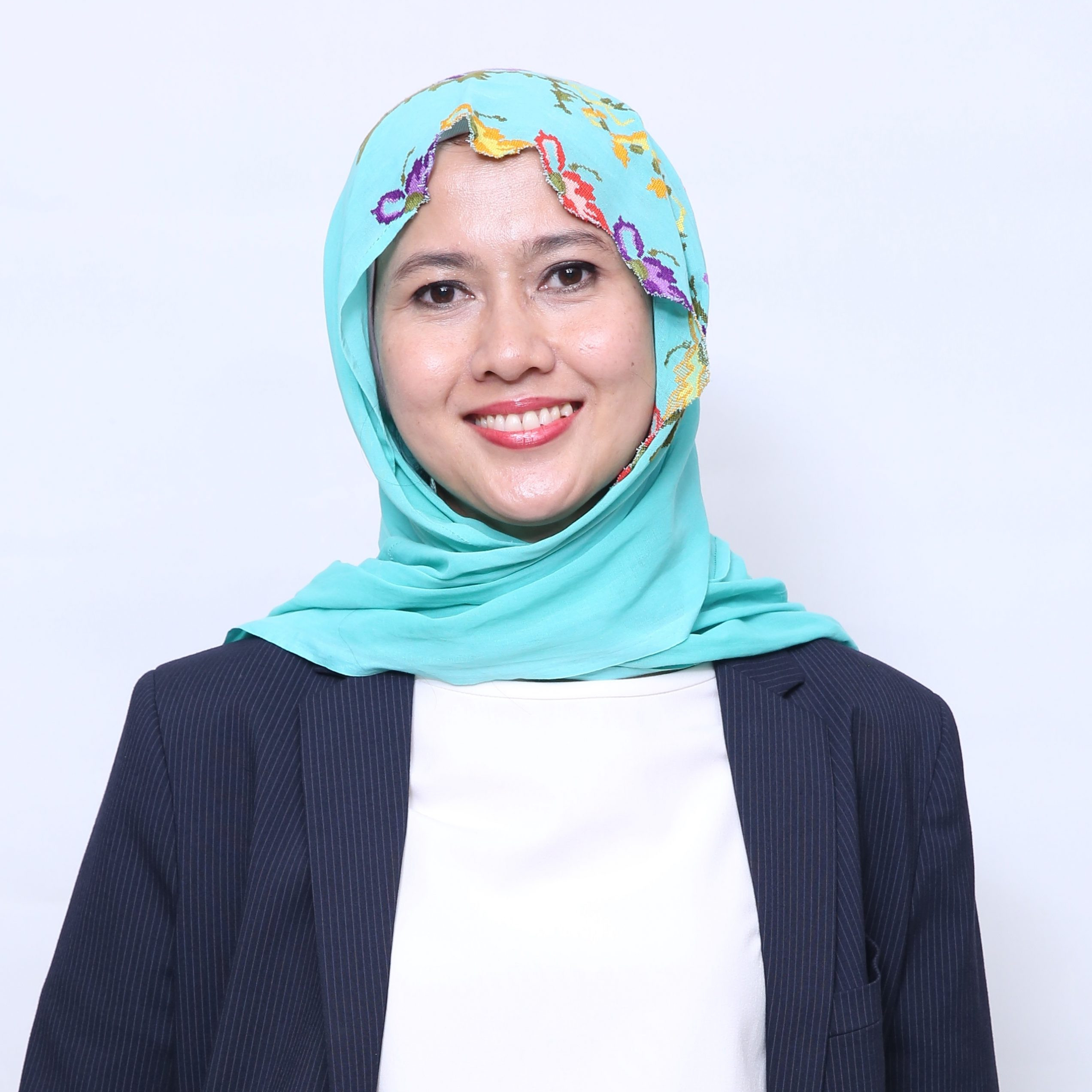
Assoc. Prof. Tati D. Wardi, Ph.D
About Researcher
Assoc. Prof. Tati D. Wardi, Ph.D hold a doctoral degree in Literacy and Literature for Children and Young Adults from The Ohio State University, USA, where she worked under the eminent Professor Barbara Kiefer, and Patricia Enciso. My doctoral research examined how Indonesian preservice teachers read and responded to children’s literature in an introductory course. My research interests have grown outward from that starting point. She moved from preservice teacher response to in-service teachers’ classroom practice, then to the ecological conditions that enable or constrain what teachers can do with books, and most recently to how young children respond to picturebooks in multilingual settings and to what digital and AI-mediated environments change about reading itself. She served on the Literacy Expert Team of the Indonesian Ministry of Education from 2020 to 2024 and was selected as one of the Buffett-EDGS Visiting Scholars at the US-based Northwestern University in 2026.





Position
Associate Professor, Faculty of Education, Universitas Islam Internasional Indonesia (UIII)
Current Research
- Children’s Literature, Teacher Agency, and Reading Engagement in Indonesia
This strand asks why learning to decode does not reliably become reading for pleasure. It draws on a decade of classroom studies with Indonesian elementary teachers and treats book scarcity and thin library curation as structural conditions rather than as cultural indifference to reading. The work is being consolidated into a single-author monograph under contract with Routledge, due in 2028.
Keywords: reading engagement, children’s literature, teacher agency, literacy policy, reading for pleasure
- Picturebook Response in a Multilingual Early Childhood Setting
Conducted at the UIII daycare, a Montessori-informed classroom where children and teachers move across Indonesian, English, and home languages. Video-recorded read-alouds, free-reading sessions, and teacher reflections document children’s talk, gesture, and embodied response. One manuscript is under review with a co-authoring MA student. The dataset remains open for new sub-studies.
Keywords: picturebook read-aloud, early childhood literacy, reader response, translanguaging, playful literacies
- Digital Literacy Practices in Algorithmically Curated Social Media
Funded by the UIII Faculty-Based Research Grant 2026. This mixed methods study examines how Indonesian university students read and interpret religious content in curated feeds. A survey of 300 students is integrated with think-aloud interviews conducted in Bahasa Indonesia. The study treats algorithmic curation as a reading problem, asking what comprehension looks like when the text has been selected for the reader. Two MA students lead the survey and fieldwork strands.
Keywords: algorithmic literacy, digital literacy, think-aloud, mixed methods
- Generative AI, Literacy, and Teacher Agency in Global South Classrooms
This strand asks what conditions make critical judgment about AI tools possible, and what teachers do when outputs do not match their students’ languages or worlds. Evidence comes from graduate educators from Indonesia, Afghanistan, Uganda, and The Gambia who designed bilingual materials and evaluated one another’s work. Findings so far indicate that recognition, not access, is the central equity problem. One article from this project is currently being considered for publication by BERA’s Review of Education.
Keywords: critical AI literacy, teacher agency, multilingual materials, educational equity
- Gender, Reform, and Academic Careers in Indonesian STEM Higher Education
A team project funded by the Ministry of Religious Affairs (MORA) through the AIR Fund scheme, with a comparative Malaysian component. The study analyzes why women’s participation in Indonesian science does not convert into senior academic rank. The project includes leading the literature review and contributing to the interview strand, reading co-authorship networks as a map of who is admitted to scholarly apprenticeship.
Keywords: gender equality in STEM, academic career trajectories, knowledge production
Supervision
She welcome MA and PhD students across all five strands and can take a small number of students as research apprentices on existing projects, with a path toward co-authorship. Students gain training in classroom observation, qualitative coding, interview and think-aloud methods, mixed methods design, and academic writing for international journals.