Learning Beyond the Classroom: A Reflection on Research, Collaboration, and Academic Growth
By Nofi Maria K. and Munaya Nikma R.
The publication of our article in a Scopus Q2 journal became one of the most meaningful experiences in our journey as PhD students at the Faculty of Education, Universitas Islam Internasional Indonesia. Looking back, this achievement was not merely about seeing our names published in an international journal. More importantly, it became part of a meaningful learning journey that allowed us to see more clearly how academic work is shaped through collaboration, responsibility, persistence, and continuous reflection. This journey began when our academic advisor, Dr. Destina Wahyu Winarti, invited us to participate as research assistants in a research project under RKI (Riset Kolaborasi Indonesia) scheme with UNNES (Universitas Negeri Semarang) and USK (Universitas Syiah Kuala). At the beginning, we imagined our role mainly as assisting with several technical aspects of the project. However, throughout the process, we were given opportunities to become involved in various stages of the research activities, including preparation meetings, collaborative discussions, workshop implementation, data management, as well as manuscript and project outcome development. Through these experiences, we realized that research is an interconnected process requiring communication, coordination, and sustained commitment over time.
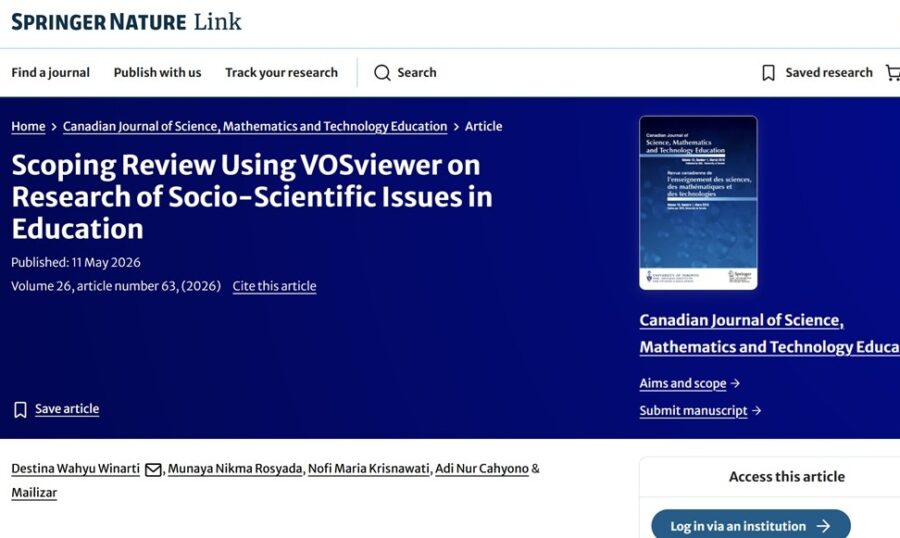
As PhD students who were still learning to navigate academic writing and publication, these experiences became important spaces for learning. Many things that initially felt unfamiliar gradually became easier to understand because we were actively involved in the process rather than only learning about it theoretically. Being involved directly in these activities helped us realize that manuscript writing cannot be separated from the broader research journey itself. The discussions, collaborative activities, exchanges of ideas, and revisions throughout the project eventually became important foundations in shaping the manuscript and preparing it for publication. Through the activities, we learned to explore potential ideas and research design opportunities to write and publish within our research project topic, as reflected in the article we eventually published.
Our published article discusses the development of research related to socio-scientific issues in education, specifically within the science and STEM (Science, Technology, Engineering, and Mathematics) education. We identified several major themes related to socio-scientific issues, including sustainability, climate change, and social justice. Our findings then highlight the needs of interdisciplinary practices in education to promote socio-scientific context in the teaching and learning process, such as through STEM Education. Furthermore, we found that teacher training for socio-scientific contexts has become prevalent in recent years. These insights have informed one of the aims of our research project, which is to hold workshops for teachers to enhance their understanding of socio-scientific issues and integrate these concepts into classroom learning activities. By aligning our research outcomes with the goals of the RKI project, we hope that our work will extend beyond theoretical discourse and written publication to create meaningful impacts on teachers and students as key stakeholders in education.
Throughout the writing process, we gradually learned how collaborative academic writing is built through different roles and responsibilities. Under the guidance of our lecturer as the first author, we contributed to various stages of manuscript development, including conceptual discussions, exploring research gaps and building research novelty, deciding on the appropriate methodology, developing the literature review, data collection, analysis, and interpretation, drafting, editing, and revision processes. Although our roles differed, this collaboration taught us that meaningful academic work is always built collectively. Every contribution, regardless of its form, becomes an important part of interconnected contributions that support one another.
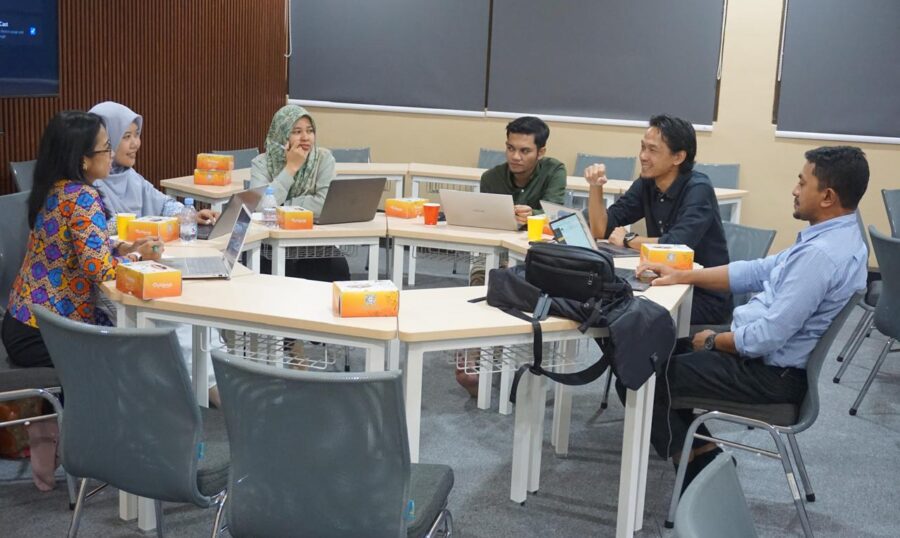
One of the most meaningful aspects of this journey was the trust and guidance given by Dr. Destina Wahyu Winarti throughout the entire process. For us, being trusted to participate directly in a collaborative international publication process became a valuable learning opportunity. Beyond research and writing techniques, we also gained valuable insights from observing how academic collaboration is managed, how ideas are negotiated through discussion, and how scholarly work requires both intellectual openness and consistency. Looking back, many of the things we understand today about academic writing were not learned instantly, but developed gradually through continuous practice, feedback, and shared learning experiences throughout the project. Through revising arguments and improving clarity, we realized that academic writing is not only about presenting knowledge, but also about communicating ideas responsibly and coherently.
The revision stage also became an important part of this learning experience. Feedback from the review process helped us recognize aspects of the manuscript that still required clarification and improvement. Through this process, we realized that even small revisions can strengthen the coherence and quality of academic writing. We realize that the review process also taught us to be accountable for the arguments we presented, particularly to address reviewers’ feedback carefully and comprehensively. More importantly, the experience reminded us that feedback should not always be viewed as criticism to be avoided, but as part of the academic conversation that helps sharpen arguments, improve clarity, and strengthen the overall quality of scholarly work. Beyond the review process itself, effective communication between authors and journal editors also plays an important role in achieving successful publication. As authors, we sometimes need to actively monitor the ongoing review and submission process to ensure timely correspondence.
More than the publication outcome itself, this journey gradually changed the way we view research and academic work as graduate students. Research no longer felt distant or intimidating, but instead became something that can be learned progressively through involvement, collaboration, and sustained practice. Some meaningful lessons emerged through ordinary moments throughout the process, including meetings, collaborative revisions, and responding to feedback. Finally, we would like to express our sincere gratitude to our supervisor, Dr. Destina Wahyu Winarti, and collaborators who guided us throughout this journey. Their trust and mentorship became valuable parts of our academic learning journey. This experience also reminded us that there is still much for us to continue learning throughout our academic journey. As science and research continue to evolve, we as students and researchers (regardless of the expertise area we worked on) should cultivate curiosity, maintain a lifelong learner mindset, and develop a consistent habit of reading to broaden our knowledge and perspectives. We hope this reflection can serve not only as a record of our experience, but also as a reminder that every academic journey develops gradually through persistence, collaboration, and continuous learning.