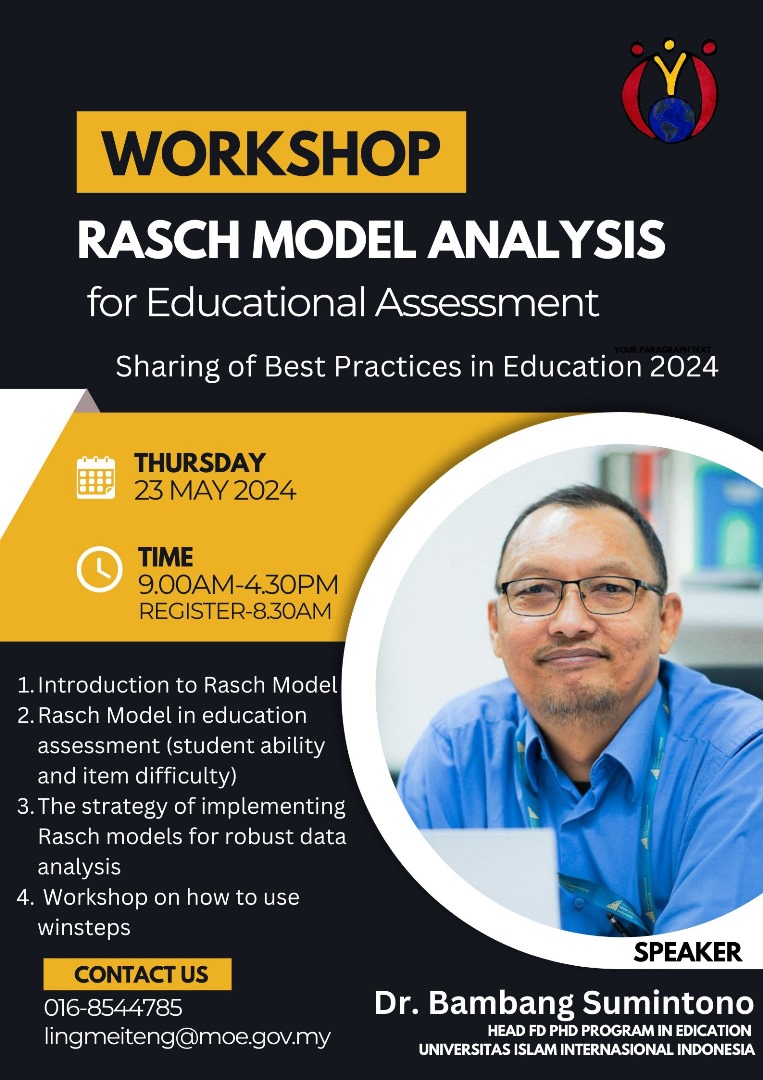
FoE UIII's lecturer provided workshop about Rasch Model measurement for teachers in Miri, Sarawak, Malaysia
 The Rasch model is a powerful tool in cognitive testing, transforming raw scores into interval measures, which allows for more precise and meaningful interpretations of test results. On Thursday 23 May 2024, Dr Bambang, one of the lecturer in Faculty of Education UIII, provided whole day workshop for teachers in Miri, Sarawak, Malaysia. The workshop introduces the fundamentals of the Rasch model, focusing on its application in cognitive assessment, particularly about instrument analysis as well as person analysis. Participants learned how the model ensures that test items are appropriate for different ability levels, providing a fair and accurate measure of cognitive skills. Through hands-on sessions, attendees will practice calibrating test items and interpreting Rasch output using relevant software. Key topics include item difficulty, person ability estimation, and the creation of invariant measurement scales. The workshop is designed especially for teachers to enhance their understanding of test adn item development, and data analysis in cognitive testing. By the end, workshop participants equipped with the skills to apply the Rasch model to improve the reliability and validity of cognitive assessments in their respective teaching subject.


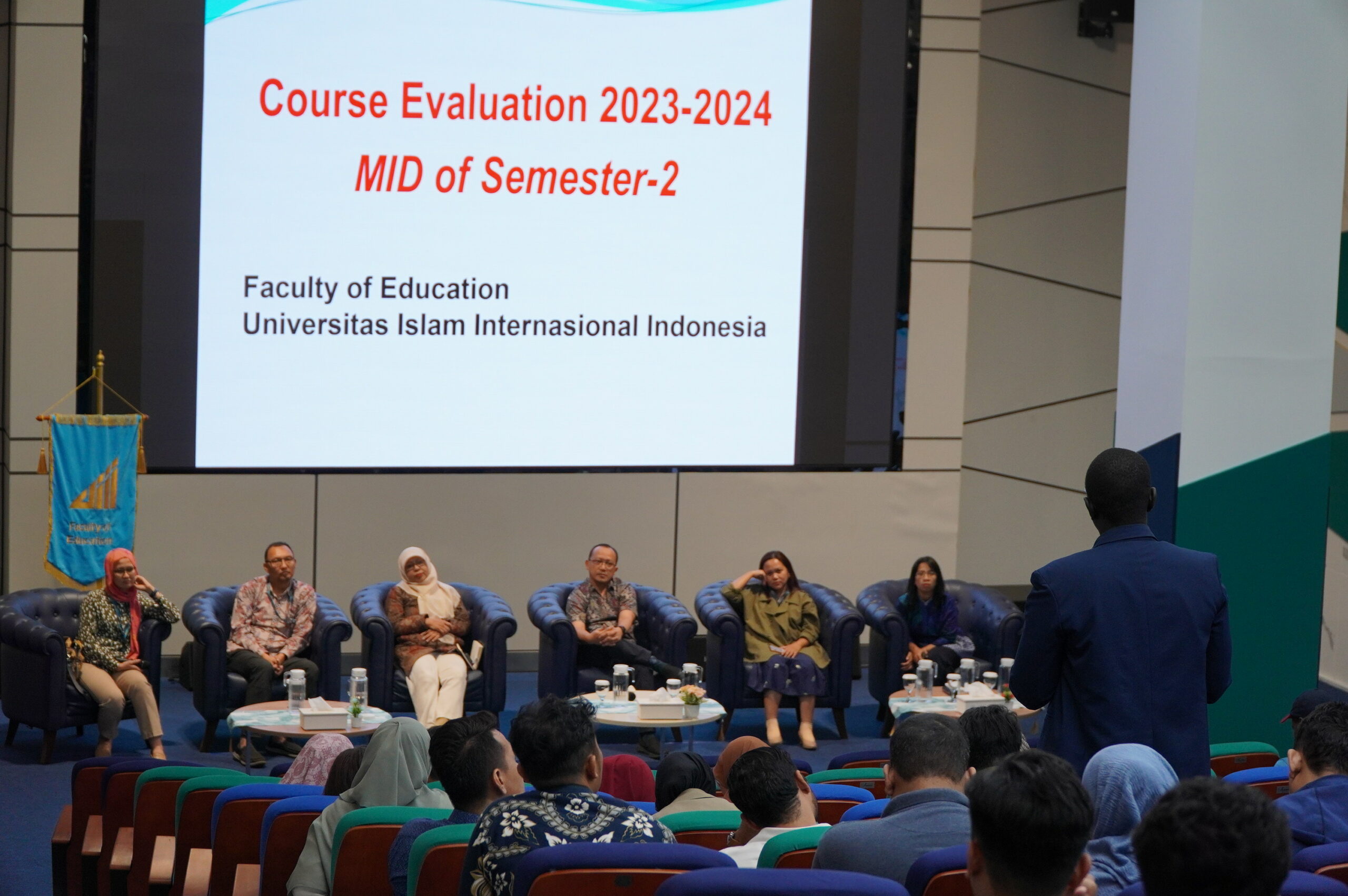
Course Evaluation: Mid Semester 2023/2024
 Faculty of Education UIII's course evaluations serve as valuable feedback mechanisms from students to express their opinions on the quality of teaching, course content, and overall learning experience they had in a semester. The students got the opportunity twice in a semester to give their assessment about the course, in the middle of semester as well as in the end of semester. These evaluations typically consist of structured questions (close ended with rating scale) and also open-ended comments, allowing students to rate aspects such as instructor effectiveness, course organization, clarity of materials, and relevance to learning objectives. They provide instructors with insights into their teaching methods and areas for improvement, in the four dimension which are: Course Materials and Structure, Course Delivery, Learning Assessment, Lecturer's Connection and Encouragement, Student Engagement and Involvement, and General / Overall Rating. Moreover, course evaluations aid universities in assessing the effectiveness of their academic programs and identifying areas for enhancement. By soliciting student feedback, the faculty can continuously refine their courses to meet the evolving needs of students and maintain high standards of education. Ultimately, course evaluations play a crucial role in fostering a culture of accountability, transparency, and continuous improvement within our faculty and university.


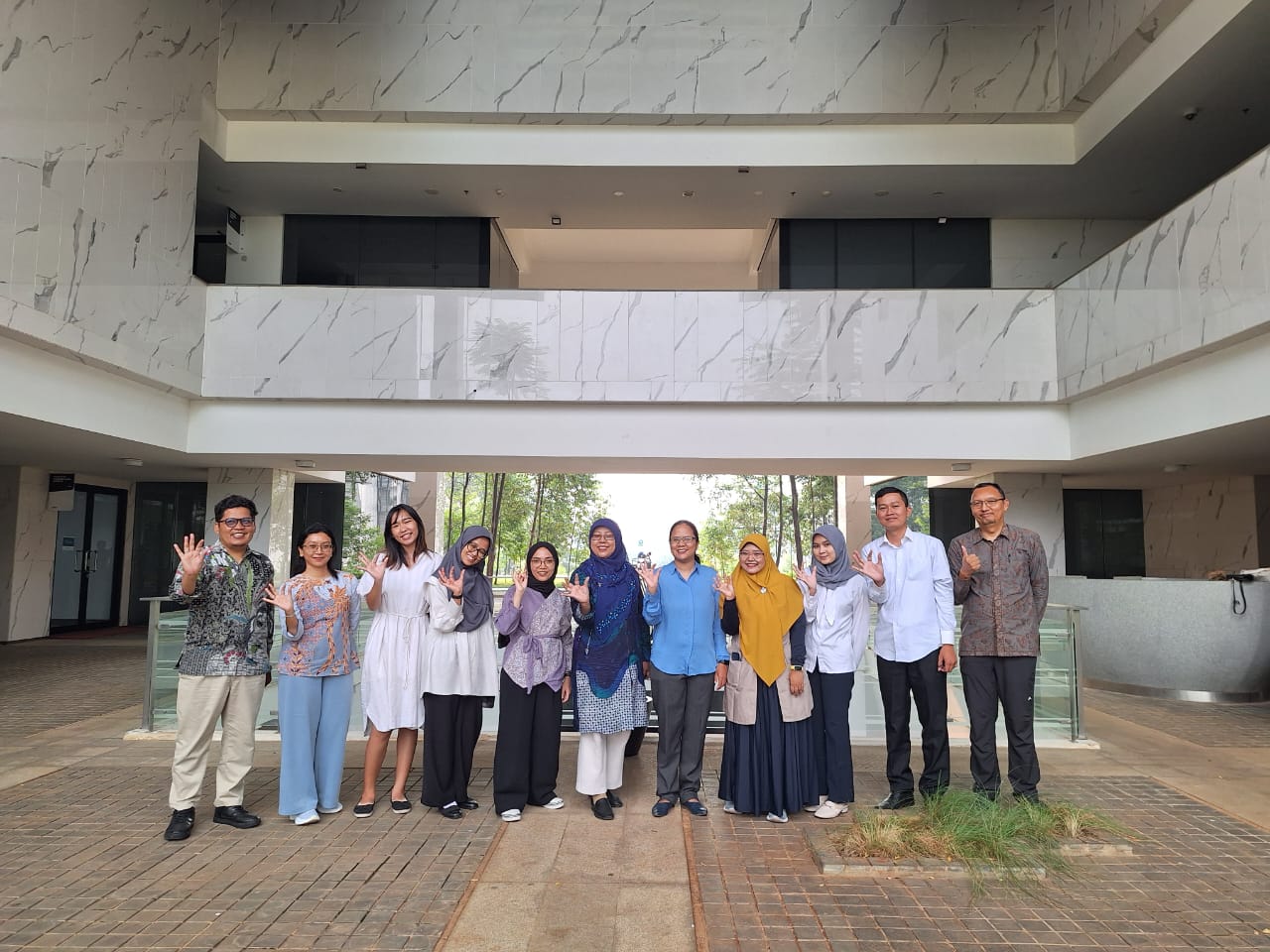
Yayasan Penggerak Indonesia Cerdas (Pengincer) visited Faculty of Education UIII
 Yayasan Penggerak Indonesia Cerdas (Pengincer), especially the Pengincer Research Center (PRC) unit have visited Faculty of Education, Universitas Islam Internasional Indonesia on Monday, 6 May 2024. Previously, last year, Pengincer researchers attended summer course of research methods organized by Faculty of Social Sciences UIII. They learned some research skills which included experimental research design, case studies design, how to use Quirkos to do qualitative data coding, and Rash Model Analysis for instrument testing. All of this equiped Pengincer reseracher to do their own research. For the next collaboration, Pengincer join with FoE UIII will conduct their research disemination activities about literacy and numeracy study on July 2024 at beuatiful UIII campus in Depok, West Java.


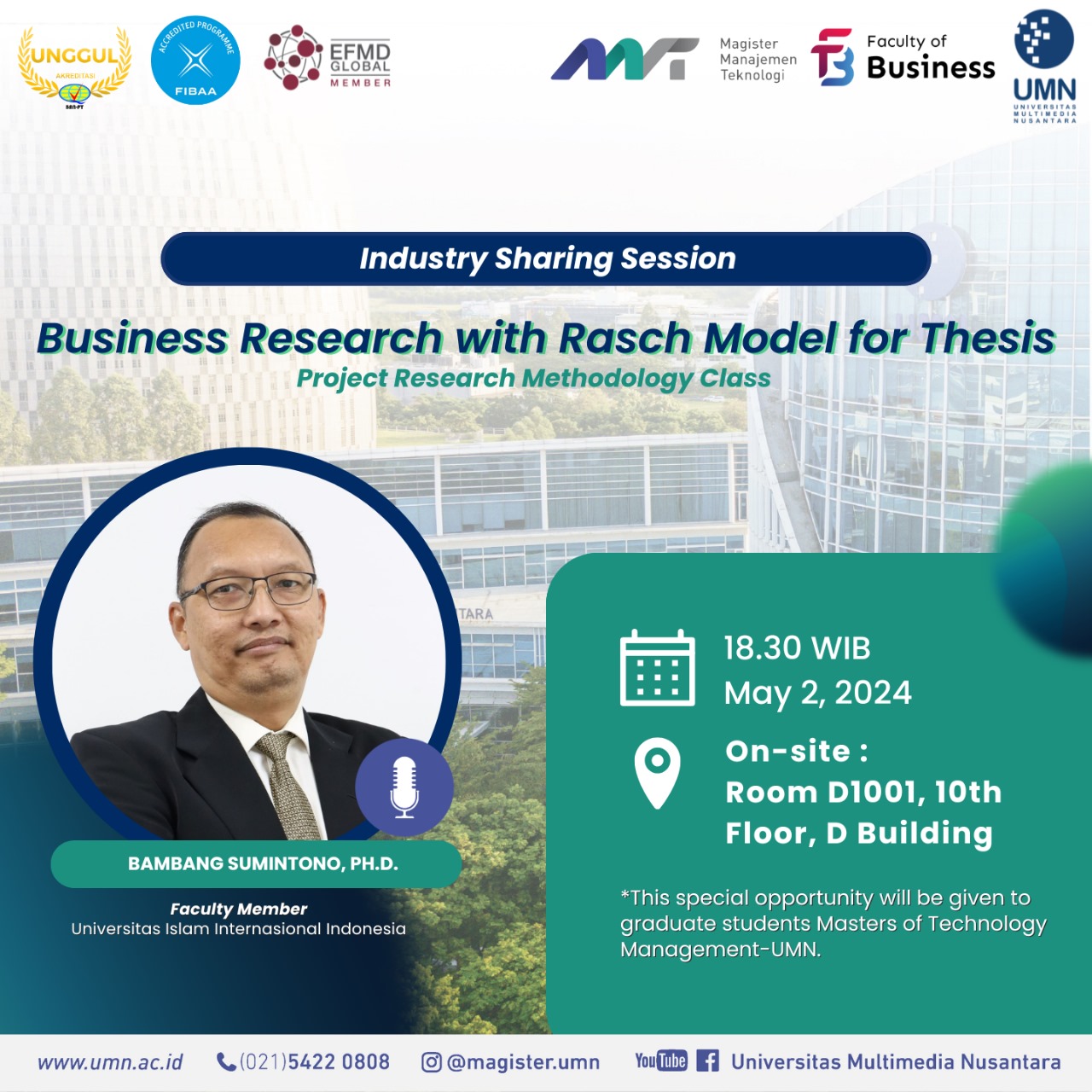
FoE UIII's staff as a guest lecture at Universitas Multimedia Nusantara, Serpong, Tangerang
 The Rasch model is a powerful tool in measurement theory, particularly in educational and psychological assessments as well as for business research. It provides a framework for understanding how individuals respond to items on a scale and how these responses relate to their underlying ability or trait. In a guest lecture on the Rasch model, key points would include its fundamental principles, such as the requirement of item independence and the concept of person and item parameters. Additionally, discussing practical applications, such as test development, item analysis, and person ability in the context of business research, would be valuable. It's important to address common misconceptions and challenges in implementing the Rasch model, along with strategies for interpretation and validation. Demonstrating its versatility in business research, like customer satifcation, employee motivation, consumer product choice or market research, would highlight its broad utility. Overall, this guest lecture aims to equip participants with a foundational understanding and practical insights into utilizing the Rasch model effectively. The guest lecturer conducted on 2nd May 2024 at Universitas Multimedia Nusantara building in Serpong, Tangerang, which master of technology management, faculty of business students attended the lecture.

Extending the Dialogue: Responding to Indonesian Multicultural Children’s Literature Cap Go Meh
 Durriyah, T., & Dewayani, S. (2024). Extending the Dialogue: Responding to Indonesian Multicultural Children’s Literature Cap Go Meh. Journal of Language and Literature, 24(1), 240-251. doi:https://doi.org/10.24071/joll.v24i1.7310
Abstract
Cap Go Meh is an Indonesian picture book with interreligious and multiethnic themes and has been translated to English and been awarded for promoting multiculturalism. Studies that focus on reader response to interreligious theme of children’s literature are scarce. This study examines a reading engagement of a group of Muslim preservice to Cap Go Meh read aloud. Using a framework of reader response theory that pays attention to cultural influences including religions, this qualitative study posed a question: How do Indonesian Muslim preservice teachers respond to the multicultural story in Cap Go Meh. The respondents’ writing responses generated two major themes. One was concerned with how the preservice teachers relate to Cap Go Meh and how its narrative leads to their reflections about diversity. The other one focused on how the participants might extend the story of Cap Go Meh and highlighted the preservice teachers’ concerns with the role of adults (parents) in the story. Additional data from one participant could potentially show a case for furthering literary experiences using multicultural children’s literature. The researchers note that responses to sensitive issues such as religious diversity occur mostly in a context where there is encouragement from teachers. In this case, it is crucial to highlight the importance of bringing multicultural children’s literature like Cap Go Meh as a medium to discuss the lives and perspective of others.

Beyond the classroom walls: exploring parental involvement on children’s interest development in EFL learning (A case from Indonesia)
 Wahyuni, N. T., & Bee Tin, T. (2024). Beyond the classroom walls: exploring parental involvement on children’s interest development in EFL learning (A case from Indonesia). Education 3-13, 1–15. https://doi.org/10.1080/03004279.2024.2340548
ABSTRACT
This study reports the findings of a case study that followed a group of Indonesian primary school EFL learners (10–11 years old). They were observed in school and at home and interviewed with their parents. The study highlights various ways children can develop an interest in learning English and how parents help shape their children’s interests. Four students who demonstrated different patterns of interest development were selected for detailed analysis. Through these cases, the study attempts to understand the role of parents in developing interest in EFL learning. All four child participants were provided with a similar supportive learning environment at school, suggesting that their differences may have primarily been attributed to their different home learning environments, parental involvement, and parenting styles.
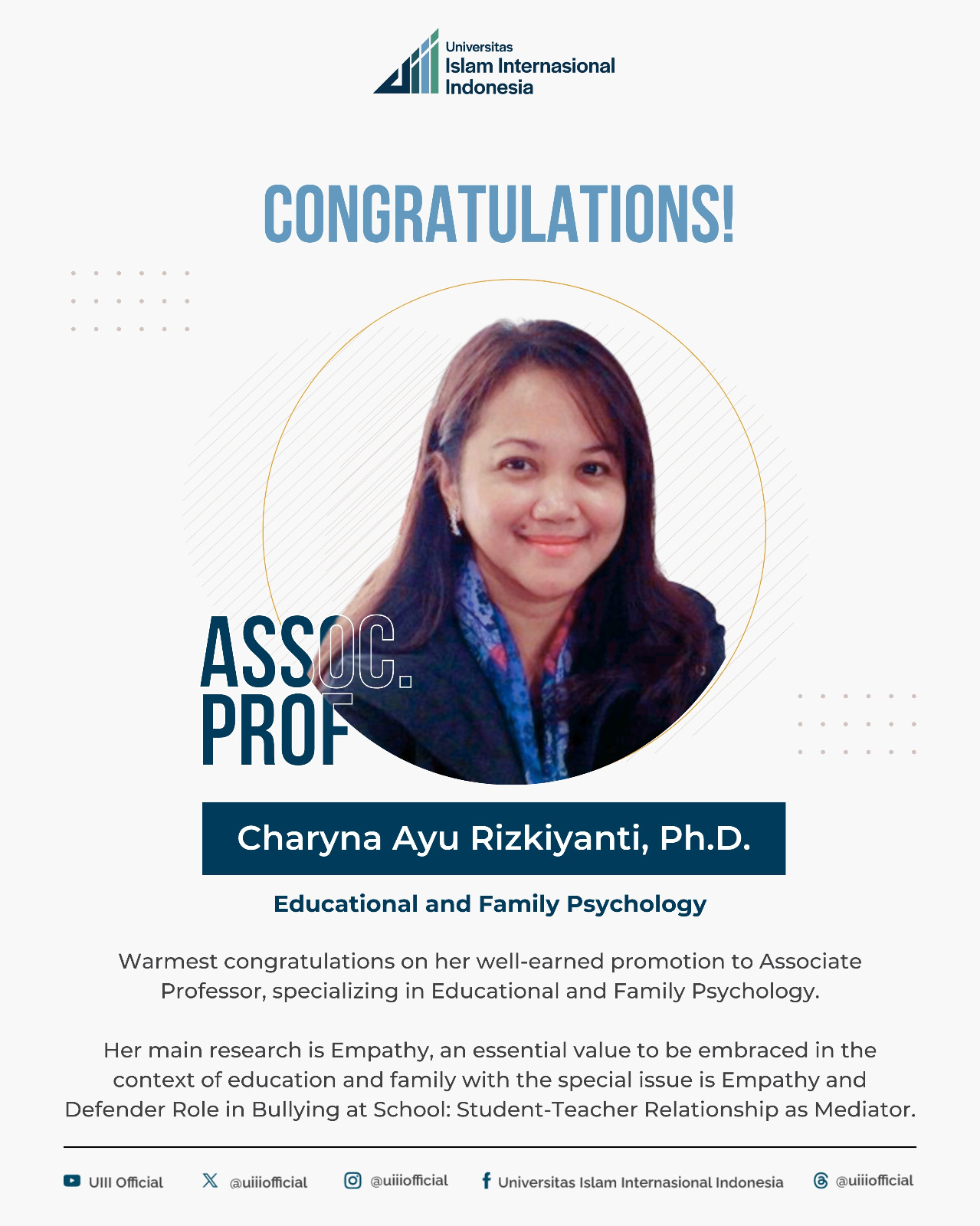
Dr. Charyna Ayu Rizkiyanti promotion to Associate Professor

CONGRATULATIONS
Warmest congratulations on her well-earned promotion to Associate Professor, specializing in Educational and Family Psychology.
Associate Prof. Charyna Ayu Rizkiyanti, Ph.D
Her main research is Empathy, an essential value to be embraced in the context of education and family with the special issue is Empathy and Defender Role in Bullying at School: Student-Teacher Relationship as Mediator.
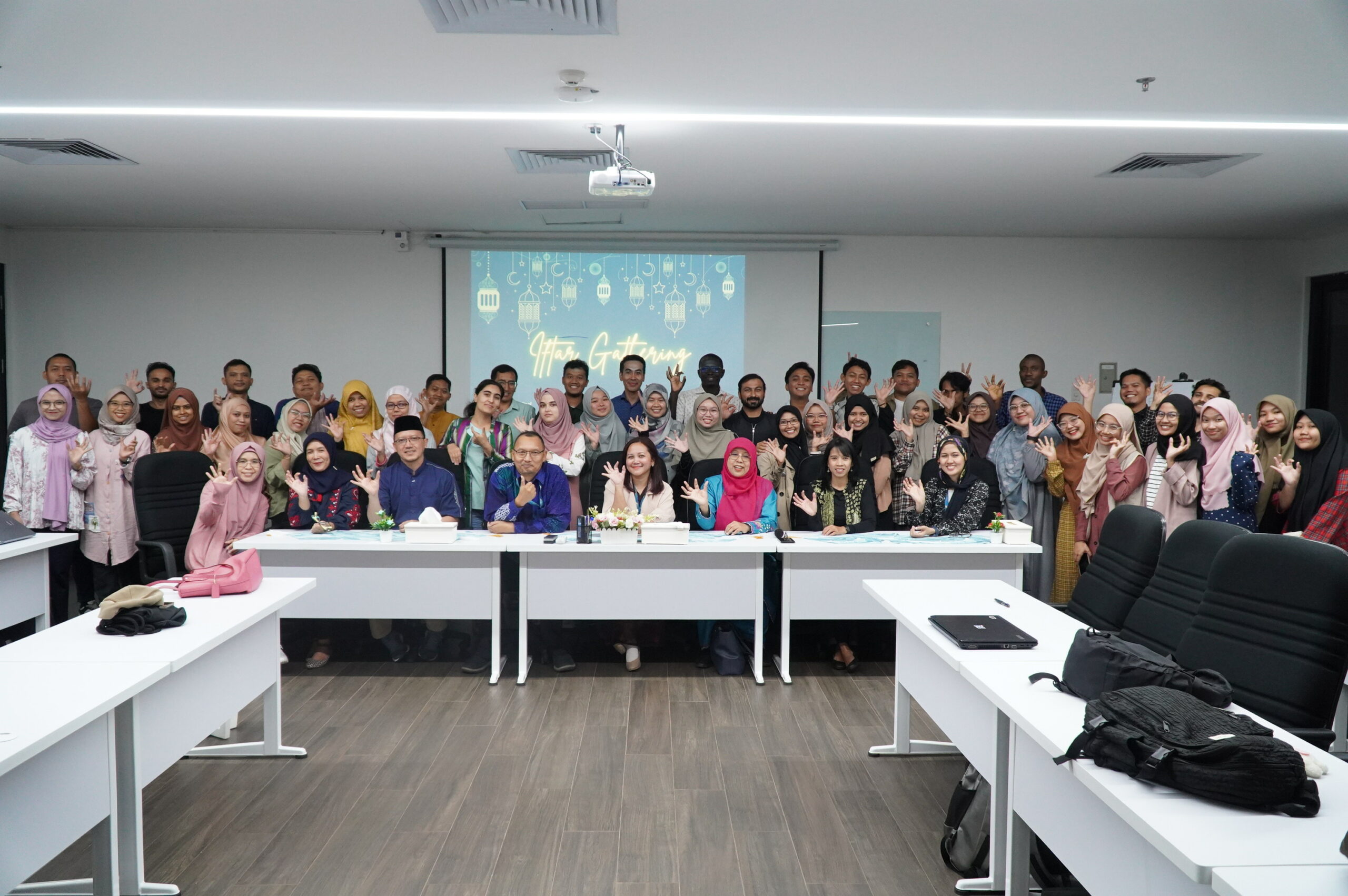
Ramadan breakfasting gathering at Faculty of Education UIII
 UIII faculty of education students, lecturers and staff is buzzing with excitement as we gather for a ramadan breakfasting on Tuesday, 2 April 2024. This vibrant event brings together everyone to share the latest updates about 'annual conference' that to be held on end of May 2024, 'graduate forum and student colloquium' that will be conducted early of July 2024, as well as introduce two scholars in residence fellow to our students. Some international students from Gambia, the Philipines, Pakistan and Thailand share their experience about fasting in Indonesia and reflect to their country of origin's custom during ramadan.
Q & A Session

Karamo (MA Student) from Gambia

Sarah (MA Student) from the Philipines

Khizer Hayat (MA Student) from Pakistan

Insof Waeji (MA Student) from Thailand


Indulge in a delectable spread of breakfasting menu in our iftar: various traditional cake and soto (Indonesian chicken soup).
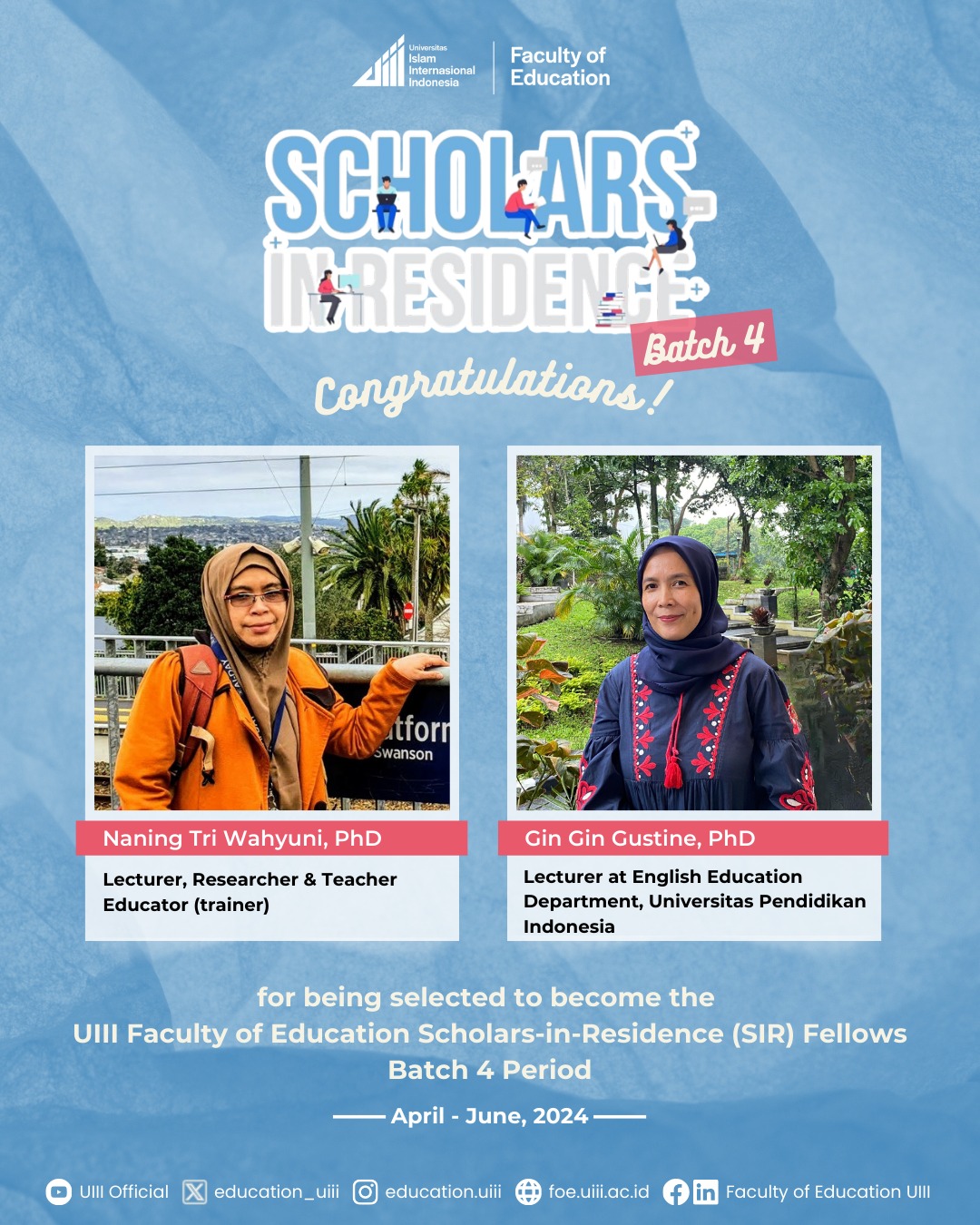
Scholars in Residence Fellow Batch 4
 Welcome to our esteemed Scholars in Residence fellow in batch 4! We're thrilled to have Naning Tri Wahyuni, PhD. and Gin Gin Gustine, PhD. join our dynamic research community. As a postdoctoral fellow, both of you bring a wealth of knowledge, fresh perspectives, and invaluable expertise to Faculty of Education, Universitas Islam International Indonesia. Your dedication to advancing scholarly inquiry and pushing the boundaries of knowledge is inspiring. We're excited to collaborate with you on groundbreaking research projects, fostering innovation and academic excellence. Together, we'll embark on an enriching journey of discovery, learning, and professional growth. Your contributions will undoubtedly shape the future of our institution and leave a lasting impact on the academic landscape. Once again, welcome aboard!

Photo Session after Welcoming SIR Fellow Batch 4

Campus Tour